KAMPALA, Uganda (AP) — A bill by Ugandan authorities whose stated purpose is to deter foreign interference has drawn widespread criticism as concern grows over its all-encompassing definition of a foreign agent and its potential to hurt the work of civic groups.
The “Protection of Sovereignty” bill is being examined by lawmakers who could pass it within days despite criticism by banks, traders, the political opposition, civic groups and others who depend on remittances in foreign currency from abroad.
Many critics say the sovereignty bill really seeks to weaken opposition parties and civic groups, which usually depend on generous grants to do their work in governance and human rights, in a sign of what they see as increasing government repression.
Charles Onyango-Obbo, a prominent Ugandan political commentator, said the bill’s clauses were “unprecedented” in their reach and consequences. “They redefine who is foreign,” he said. “They extend control from politics into everyday economic and social life.”
The bill's definition of a foreigner includes “a non-Ugandan citizen” as well as “a Ugandan citizen residing outside Uganda," in addition to other categories of individuals and companies not domiciled in the East African country. That includes students, businesspeople, migrant workers, diplomats and others who live abroad.
If the bill is passed in its current version, Ugandans abroad would have to register as foreign agents to avoid delays in the processing of transactions through the banks, which would be punished for non-compliance.
Authorities are backing the bill, citing a need for social cohesion and protection from meddlers who would interfere in Uganda's internal affairs. Opponents say the law, if enacted, would directly or indirectly affect almost every Ugandan at home or abroad.
“It does not protect sovereignty,” Isaac Ssemakadde, president of the Uganda Law Society, said in a statement. “It destroys the sovereignty — the people's right to self-determination — that belongs to Ugandans.”
The legislation forbids foreign agents from obtaining grants or other monetary support from external sources in excess of 400 million Ugandan shillings — roughly $110,000 today — within a 12-month period without the approval of the interior minister.
In a letter to the office of the attorney general, the Uganda Bankers' Association warned of a range of consequences for banking operations — notably by introducing other regulators other than the central bank, undermining foreign investment, and creating an unpredictable environment for commercial banks.
As most commercial banks have foreign shareholders and borrow offshore, “compliance and reputational risk rise overnight” when routine banking triggers the foreign agent's label, the group said.
Civic leaders have voiced strong criticism of the bill, which comes months after President Yoweri Museveni won his seventh term. Museveni has repeatedly accused his most prominent rival, Bobi Wine, of being an unpatriotic agent of foreigners. The authoritarian Museveni, 81, has held power since 1986.
“If you want to regulate and close civil society, go in the NGO Act and put that,” Sarah Bireete, the leader of the Center for Constitutional Governance group, told reporters. “If you want to deregister civil society in Uganda, go to the constitution, amend it and say there will be no civil society in Uganda. But to hide behind protection of sovereignty, that you want to control civil society, why don’t you go to the law managing civil society and amend it?”
Wine, who went into hiding after January's election and is now in temporary exile in the U.S., denies the charges and asserts that Museveni must be held accountable for his excesses during his long rule. Wine, who has wide support among young people in urban areas, officially took 24.7% of the vote, a result he rejected as fake.

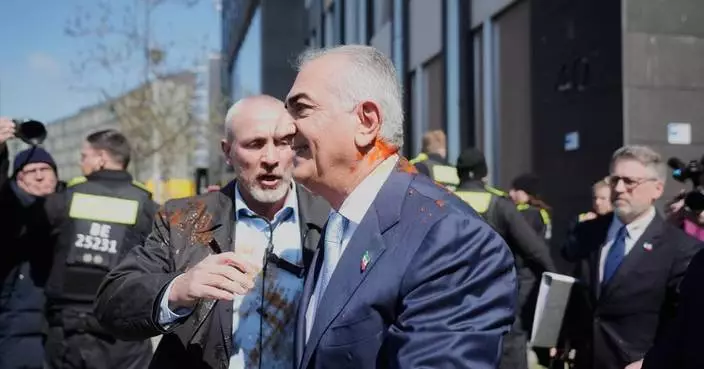
FILE -Pop star-turned-opposition lawmaker Bobi Wine, whose real name is Kyagulanyi Ssentamu, waves to supporters accompanied by his wife Barbara Itungo Kyagulanyi at his home in Kampala, Uganda, Sept. 20, 2018. (AP Photo/Ronald Kabuubi, File)
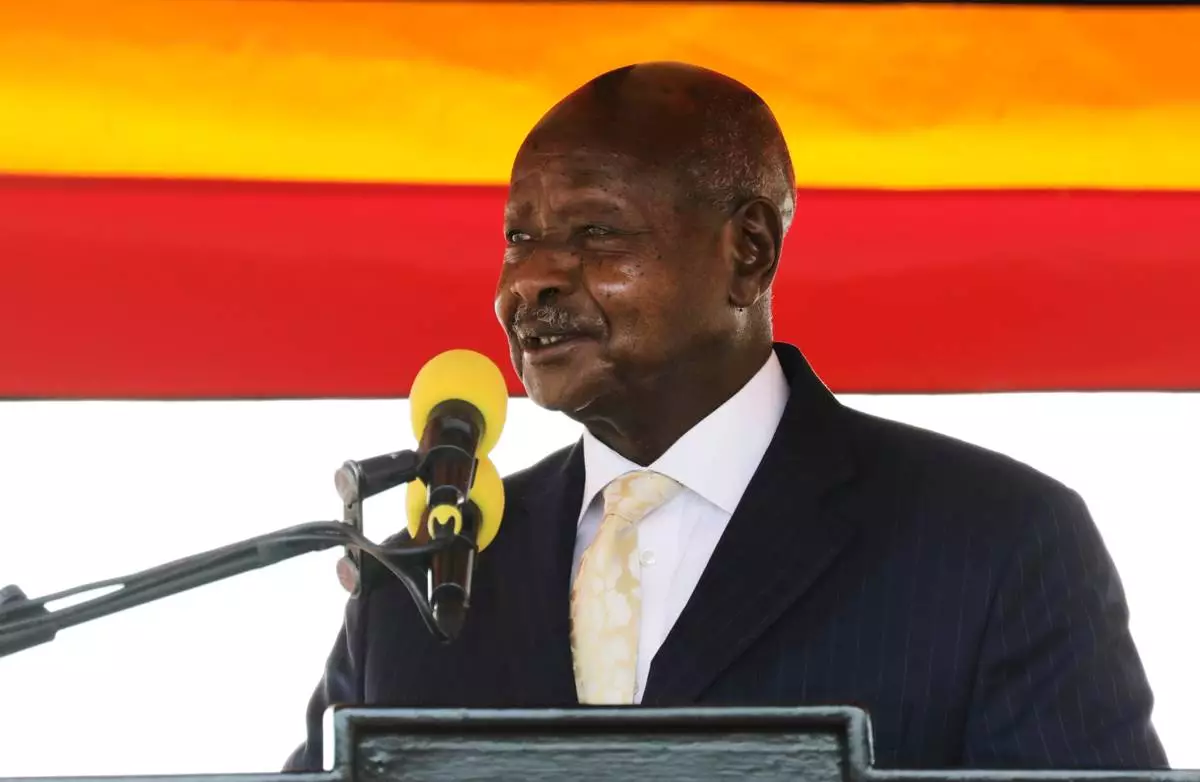
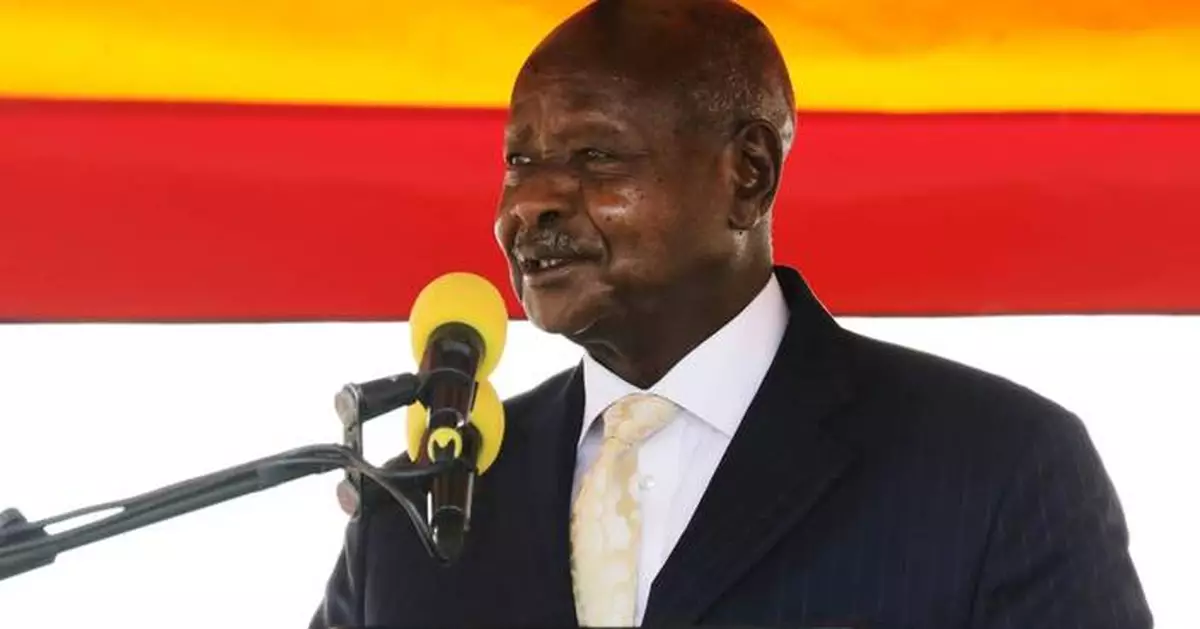
FILE - Ugandan President Yoweri Museveni speaks during the 60th Independence Anniversary Celebrations, in Kololo, Uganda, Oct. 9, 2022. (AP Photo/Hajarah Nalwadda, file)
BRUSSELS (AP) — The European Union on Thursday approved a massive loan package to help Ukraine meet its economic and military needs for the next two years, the bloc’s Cypriot presidency said, after Hungary lifted its veto.
The EU also approved a new raft of sanctions against Russia over its war on Ukraine. The measures were prepared early this year and set to be announced in February to mark the fourth anniversary of the conflict, but Hungary and Slovakia opposed the move.
Hungary and Slovakia have been locked in a feud with Ukraine since Russian oil deliveries to the two EU countries were halted in January after a pipeline was damaged. Ukrainian officials blamed the damage on Russian drone attacks.
Ukraine desperately needs the 90-billion-euro ($106 billion) loan package to prop up its war-ravaged economy and help keep Russian forces at bay. Hungary angered its EU partners by reneging on a December deal to provide the funds.
“Today the Council approved the final element needed to allow for the disbursement of the 90-billion-euro loan for Ukraine,” Cypriot Finance Minister Makis Keravnos said. “Loan disbursements will start flowing as soon as possible, providing vital support for Ukraine’s most pressing budgetary needs.”
THIS IS A BREAKING NEWS UPDATE. AP’s earlier story follows below.
BRATISLAVA, Slovakia (AP) — The flow of Russian oil to Slovakia through the Druzhba pipeline that crosses Ukraine has resumed, Slovak Economy Minister Denisa Saková said Thursday, a breakthrough in an issue that has caused a major diplomatic spat in Europe.
The development is expected to unblock a large financial assistance package for war-ravaged Ukraine.
Populist Slovak Prime Minister Robert Fico welcomed the development, calling it “good news.”
“Let’s hope a serious relation between Ukraine and the European Union has been established,” Fico said. He thanked all those involved in solving the issue, including the European Commission and Hungary.
Hungary and Slovakia were locked in a feud with Ukraine since Russian oil deliveries to Hungary and Slovakia through the pipeline were halted in January after the pipeline was damaged.
Ukrainian officials blamed the damage on Russian drone attacks.
Hungary’s nationalist Prime Minister Viktor Orbán, who was recently defeated in an election, accused Ukraine of deliberately delaying repairs — an allegation that Ukrainian President Volodymyr Zelenskyy denied.
Fico said Thursday he still didn’t believe the pipeline was damaged at all and alleged that the pipeline and oil “were used in the current geopolitical battle.”
Ukraine and most of its European backers oppose imports of Russian oil which have helped to fund Russian President Vladimir Putin’s war against Ukraine, now in its fifth year. But unlike the rest of the European Union, Hungary and Slovakia still depend on Russia for their energy needs.
For two months, the two countries have accused Ukraine of failing to repair the damaged pipeline. Citing the issue, Hungary blocked a massive EU loan to Ukraine while Slovakia refused to endorse new sanctions against Russia until the supplies resumed.
The flow resumed after three months at 2 a.m. Thursday, the Slovak economy ministry said, lifting a major obstacle to approving the EU funds for Ukraine later Thursday, just as EU leaders gather for a summit in Cyprus.
Ukraine desperately needs the 90 billion euro ($106 billion) loan package, originally agreed in December, to prop up its war-ravaged economy and help keep Russian forces at bay for the next two years.
The 27-nation EU had originally intended to use frozen Russian assets as collateral for the loan. But that option was blocked by Belgium, where the bulk of the frozen assets are held.
In December, the Czech Republic, Hungary and Slovakia agreed not to stop their EU partners from borrowing the money on international markets as long as the three countries did not have to take part in the scheme.
But Orbán, who has repeatedly blocked EU aid to Ukraine, angered the other 24 countries by later reneging on that deal over the pipeline dispute and as campaigning heated up ahead of the April 12 election that he lost in a landslide.
The EU has also been trying since February to push through a new raft of sanctions against Russia, which Hungary and Slovakia have blocked due to the oil feud.
Fico said he expected both issues to be solved on Thursday.
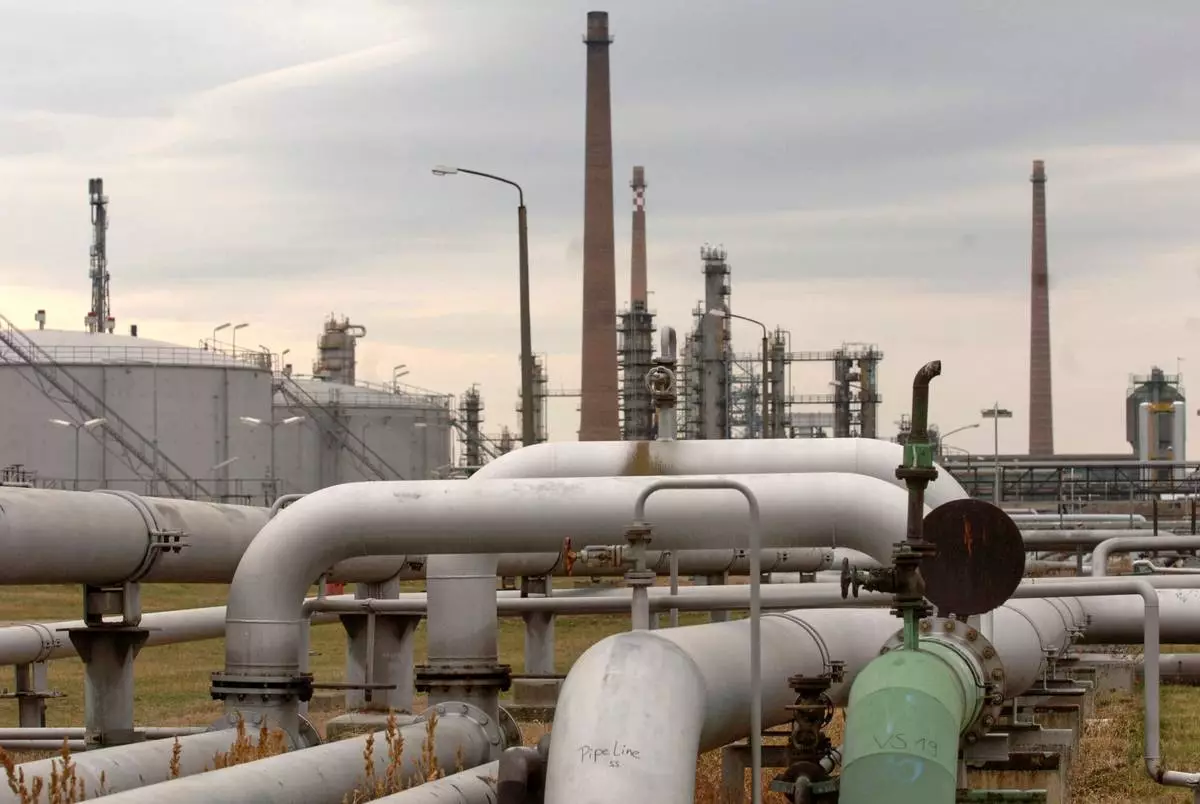
FILE - A general view of a pumping station at the end of the Druzhba oil pipeline in the east German refinery PCK in Schwedt, Jan. 10, 2007. (AP Photo/Sven Kaestner, File)