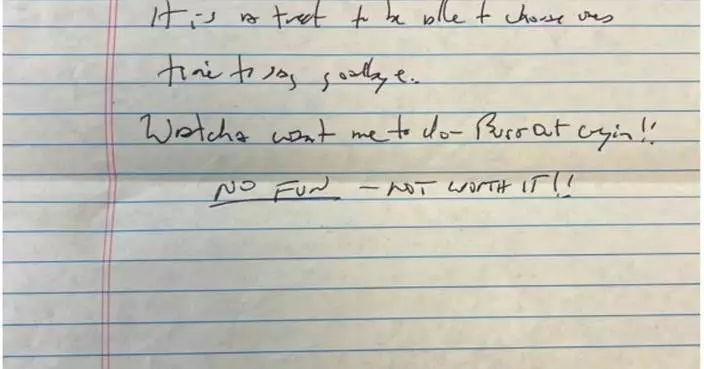
A note that Jeffrey Epstein 's former cellmate claims to have found after the financier's first suspected jail suicide attempt in 2019 has been made public — not because of the Justice Department's release of records related to the sex offender, but as part of an unrelated case.
The government's explanation: It never had the note.
“The note has not yet been authenticated, and this is the first time DOJ is seeing it as well," the department said Thursday when asked why it wasn't part of the voluminous Epstein files.
Nicholas Tartaglione said he discovered the handwritten note in a book after the disgraced financier was found in their cell at a Manhattan federal jail with a strip of bedsheet around his neck. Epstein was subsequently moved to a different cell, where a few weeks later, he was found dead, alone, in a suicide.
Tartaglione, a former police officer then facing murder charges, said he gave the note to his lawyers to protect himself against any claim that he might have harmed Epstein while they were in custody together. Epstein was awaiting trial on sex trafficking charges at the time.
Since 2021, the note had been in a vault in federal court in New York. It somehow became part of proceedings between Tartaglione and his lawyers over their representation in his murder case. Anything related to that dispute was sealed out of the public's eye by the judge because it involved attorney-client privilege.
Tartaglione, a former suburban New York officer turned drug dealer, was convicted in April 2023 in the strangulation death of one man and the execution-style murders of three other people. He said he discovered the note in a book he was reading in his jail cell.
The New York Times petitioned U.S. District Judge Kenneth Karas to release the note, noting that Tartaglione, now serving a life sentence, has talked publicly about it. The judge agreed to the request Wednesday, adding that Epstein's privacy interests in the note had been “vastly reduced” due to his death.
“They investigated me for month — found nothing!!!” said the short note, which is hard to decipher in some places and has not been authenticated. “It is a treat to be able to choose” the “time to say goodbye,” the note continues. “Watcha want me to do — Bust out cryin!!
“NO FUN. NOT WORTH IT!!” the note concludes.
According to jail records, Epstein had friction marks and skin irritation on his neck from the suspected July 23, 2019, suicide attempt. Jail officers said he was breathing heavily but responsive. Epstein told a guard Tartaglione had attacked him, but later recanted.
Jail officials subsequently placed Epstein on suicide watch for 31 hours before downgrading him to psychiatric observation, which was his status when he killed himself on Aug. 10, 2019.
The Justice Department did not object to releasing the note. Deputy U.S. Attorney Sean Buckley told the judge the public was interested in the circumstances surrounding Epstein’s death.
Buckley also said that while two Justice Department lawyers were included in the proceedings between Tartaglione and his attorneys in 2021, they were barred by the judge from disclosing anything from those hearings to protect his attorney-client privilege. So if they did see the note, they weren't allowed to tell anyone about it.
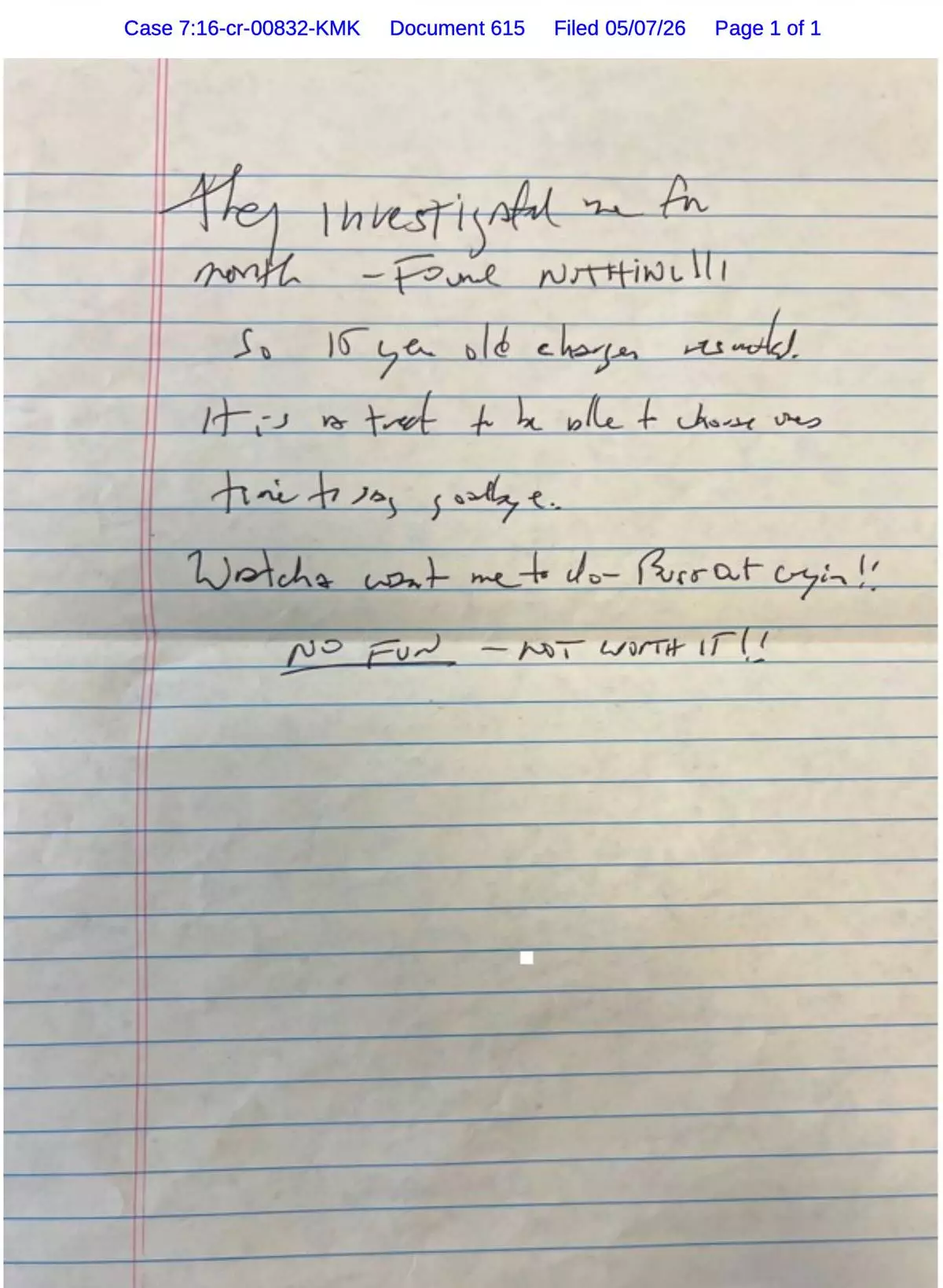
This document, released Thursday, May 7, 2026, by the U.S. District Court for the Southern District of New York, shows a note that Jeffrey Epstein’s former cellmate said he found after Epstein’s reported suicide attempt in July 2019. (U.S. District Court for the Southern District of New York via AP)
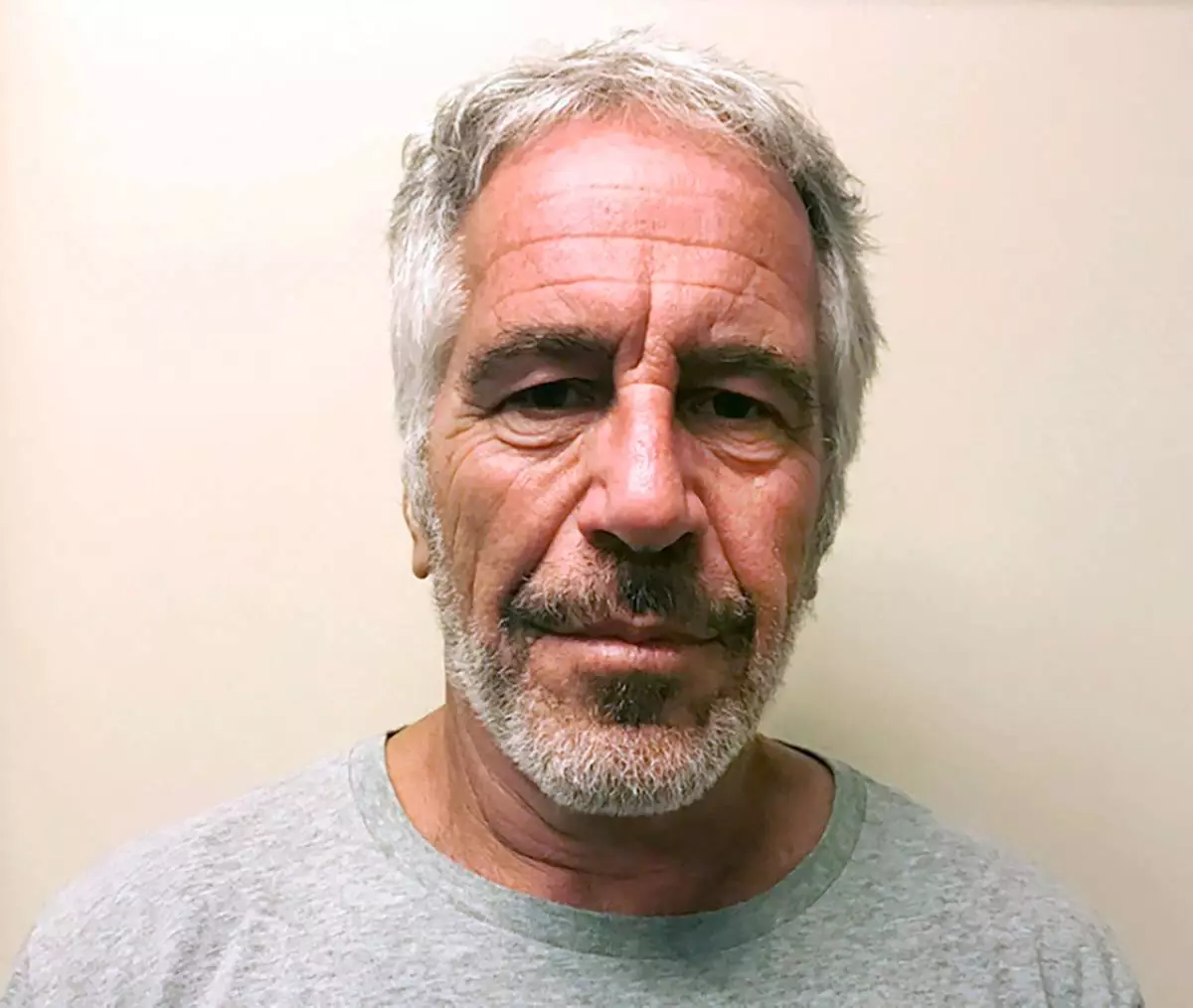
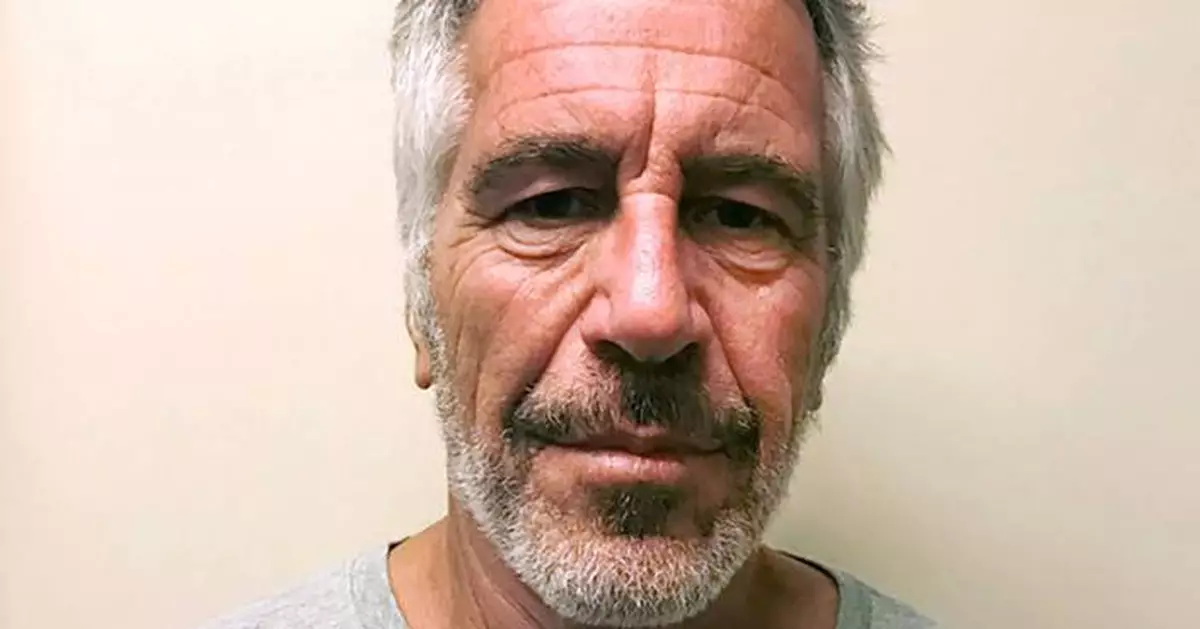
FILE - This March 28, 2017, photo provided by the New York State Sex Offender Registry shows Jeffrey Epstein. (New York State Sex Offender Registry via AP, File)
BOULDER, Colo. (AP) — A judge sentenced a man to life in prison without the possibility of parole Thursday after he pleaded guilty to killing one person and injuring a dozen others in a 2025 firebombing attack on a demonstration in Boulder, Colorado, in support of Israeli hostages in Gaza.
Speaking to the court through an interpreter, Mohamed Sabry Soliman apologized to the victims and expressed regret for the attack last June as not in line with Islamic teaching.
Yet Soliman, an Egyptian national who federal authorities say was living in the U.S. illegally, targeted the victims because they were Jewish, Boulder County District Judge Nancy Salomone pointed out before sentencing him.
“You chose a time and a place and a set of circumstances and weapons that were designed to inflict the most pain that you could,” Salomone said.
Besides life in prison, Soliman's sentence includes hundreds of years for dozens of charges including attempted murder, assault and attempted assault.
The June 1 attack rattled Boulder, a scenic city of 100,000 people near the mountains northwest of Denver.
Posing as a gardener, Soliman attacked the demonstrators on Pearl Street, a quaint downtown pedestrian mall lined with shops and restaurants. Jewish community members had been demonstrating there weekly in support of Israeli hostages held in the Gaza Strip since Oct. 7, 2023.
Yelling “Free Palestine," Soliman lit and threw two Molotov cocktails out of 18 he'd brought in a box. The bursting bottles filled with gasoline badly burned Karen Diamond, 82, and injured a dozen others.
Diamond died three weeks later after what her sons in a statement called “indescribable pain.”
Soliman still faces federal hate crimes charges. He has pleaded not guilty while prosecutors in that case weigh whether to seek the death penalty.
The attack could have been even worse, Boulder County District Attorney Michael Dougherty told the court before the sentencing. Soliman tried twice to buy a gun and was denied, Dougherty said. So he “decided to set them on fire" in what Dougherty called a “cowardly” crime.
Soliman entered the U.S. in August 2022 on a tourist visa that expired in February 2023. He filed for asylum and was granted a work authorization in March 2023, but that also expired, federal authorities said.
He worked a series of low-paying jobs. At the time of the attack, Soliman was living with his wife and their five children in an apartment in Colorado Springs.
Federal authorities alleged Soliman planned the attack for a year, and an FBI affidavit said Soliman told police after his arrest that he sought "to kill all Zionist people," a reference to the movement to establish and protect a Jewish state in Israel.
Soliman said in court that he respected Jewish people he has known, but questioned the deaths of innocent people in Israeli attacks on Gaza.
“Yes, I am against Israel and I can’t deny that. And that is my right,” Soliman said.
Soliman’s federal defense lawyers argue he should not have been charged with hate crimes because he was motivated by opposition to Zionism. An attack motivated by someone’s political views is not considered a hate crime under federal law.
State prosecutors identified 29 victims in the attack. Thirteen were physically injured. The others were considered victims because they could have been hurt. A dog was also injured in the attack, and Soliman was charged with animal cruelty.
Soliman’s wife, Hayam El Gamal, and their children spent 10 months in immigration detention until April, when a federal judge in Texas ordered their release. The couple divorced in April.
An immigration appeals court had dismissed their case to stay in the U.S. and issued a deportation order. But U.S. District Judge Fred Biery in San Antonio allowed their release on the condition that El Gamal and her oldest child, who is 18, wear electronic monitoring.
Soliman’s attorneys seek to block the family’s deportation until a judge determines they won’t need to be present for court proceedings in his federal case.
Associated Press writer Jacques Billeaud in Phoenix contributed to this story.
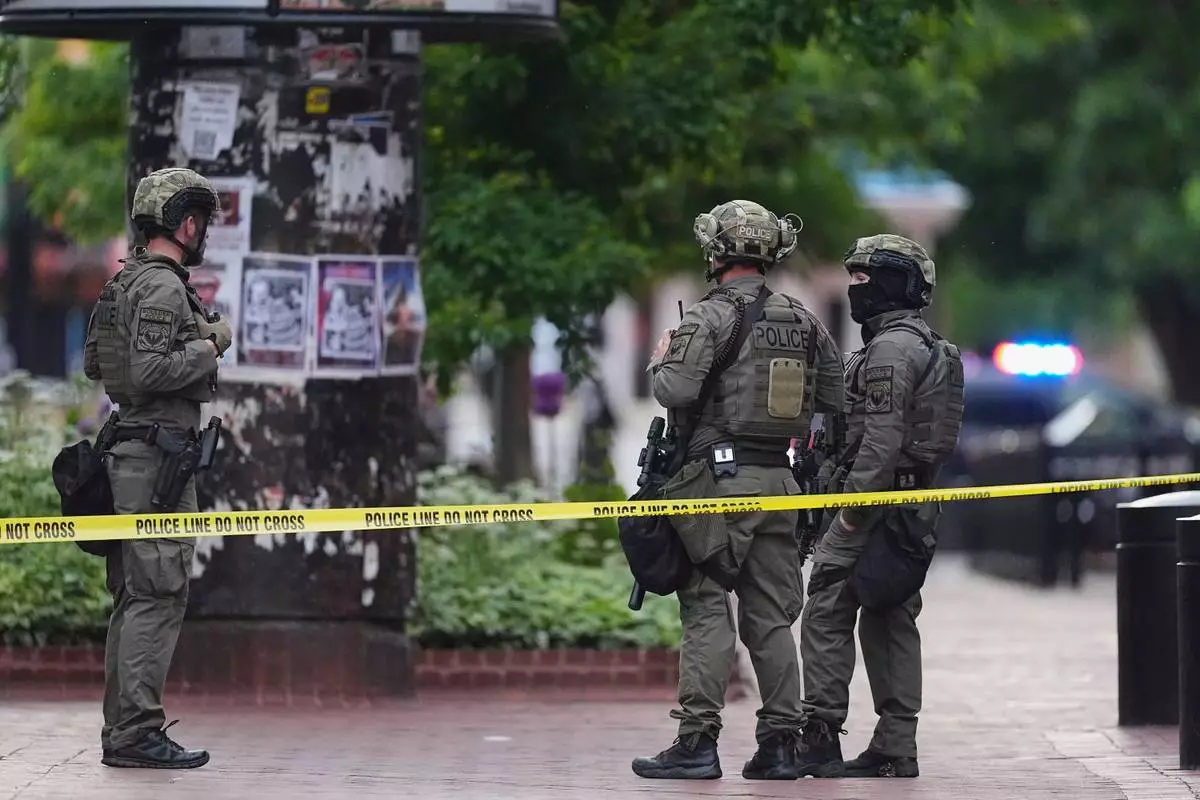
FILE - Law enforcement officials investigate after an attack on the Pearl Street Mall, June 1, 2025, in Boulder, Colo. (AP Photo/David Zalubowski, file)
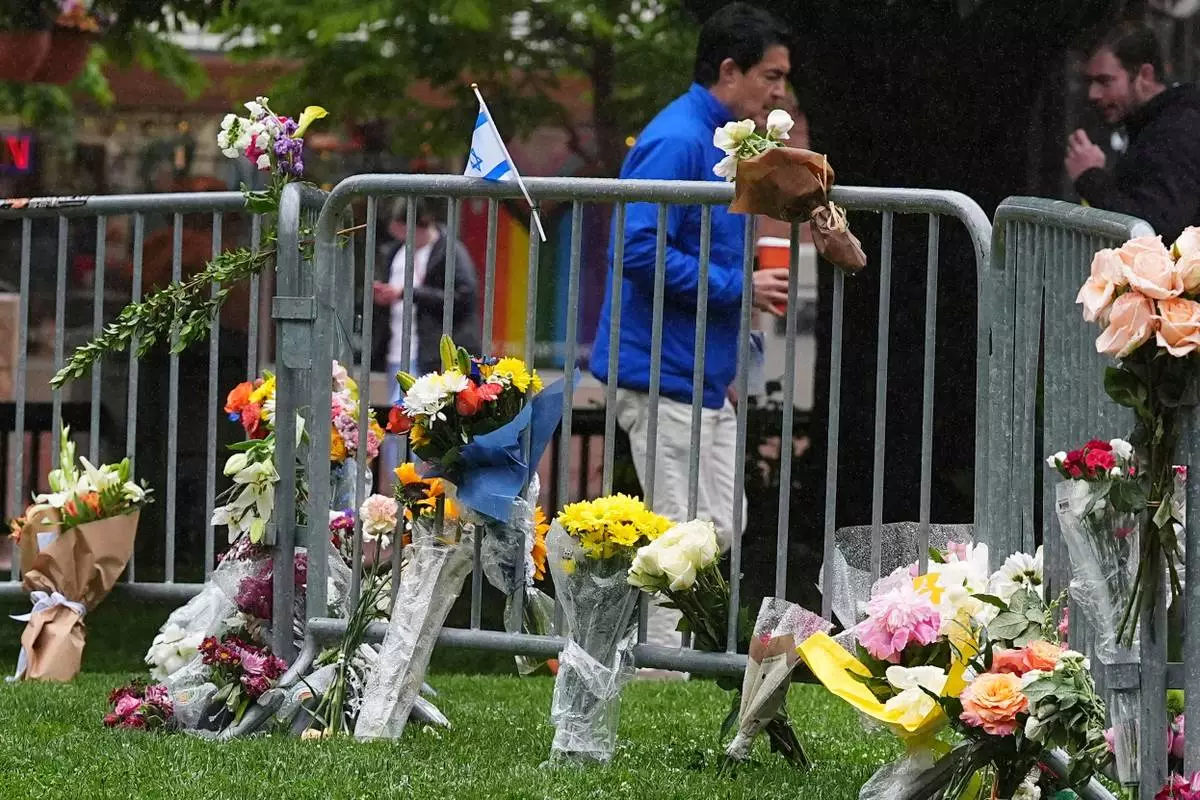
FILE - Bouquets of flowers stand along a makeshift memorial for victims of an attack outside of the Boulder County courthouse on June 3, 2025, in Boulder, Colo. (AP Photo/David Zalubowski, file)