The NCAA will expand its DIvision I basketball tournaments from 68 to 76 teams next season. The change isn't expected to radically disrupt the familiar bracket for most casual fans. Here is a breakdown of some key numbers to know:
0 — The number of mid-major schools that advanced past the first weekend of either tournament the last two seasons.
1 in 9.2 quintillion — The estimated odds against picking a perfect bracket even before adding eight games to the mix.
4 — Games matching No. 12 seeds and No. 16 seeds in the opening round.
8 — The number of teams being added to each tournament (men and women). It's also the number of new games being added to each tourney.
15 — The number of years since the NCAA last expanded the tournaments (from 64 to 68 in 2011).
120 — Total number of games for the two tournaments over seven days between the bracket announcement and the conclusion of the secound round.
131 — As in $131 million, the amoung of new revenue the NCAA expects to share with tournament participants under the expansion.
300 — As in $300 million, the extra funding the NCAA expects to get from new advertising opportunities tied to expansion, including the addition of liqour ads that had largely been off limits.
2032 — The year the current $8.8 billion broadcast deal between the NCAA and partners like CBS, TNT and others expires, raising the potential for more change.
350,000 — As in $350,000, the value of a NCAA-distributed "unit' for a men's team that reached the tournament.
AP March Madness: https://apnews.com/hub/march-madness

FILE - A basketball goes throw the net before an Elite Eight game between Iowa and Illinois in the NCAA college basketball tournament Saturday, March 28, 2026, in Houston. (AP Photo/Eric Gay, File)

FILE - North Carolina State guard Jr. Paul McNeil (2) rises for a shot during the first half in a First Four college basketball game in the NCAA Tournament against Texas, March 17, 2026, in Dayton, Ohio. (AP Photo/Kareem Elgazzar, File)
FILE - The Final Four logo is seen on the court prior to the NCAA college basketball tournament national championship game between UConn and Michigan at the Final Four, April 6, 2026, in Indianapolis. (AP Photo/AJ Mast, File)
ARROYO GRANDE, Calif. (AP) — Scientists specializing in human decomposition and soil took samples from the ground Thursday outside a home connected to the man convicted of killing 19-year-old college student Kristin Smart in 1996. Her body was never found.
The San Luis Obispo County Sheriff's Office served a search warrant Wednesday on the home of Susan Flores, whose son Paul Flores was convicted in 2022 of killing Smart. Authorities have not answered questions about what prompted the search.
Tim Nelligan, an expert in soil vapor testing, confirmed by phone Thursday that he was on the premises, gathering samples from the yards of Flores and a neighbor. He said is team has, in general, “come up with a methodology to assess soil vapor" and its relation to “human cadaver decomposition,” but that he could not discuss the current investigation.
Smart went missing from California Polytechnic State University in May 1996 after returning from an off-campus party. Prosecutors alleged she was killed during an attempted rape and that the last person she was seen with was Paul Flores, a fellow student. She was declared legally dead in 2002.
The decades-old case has captivated the public, fueled in part by a podcaster who helped investigators by bringing forward additional witnesses. Chris Lambert of the “Your Own Backyard” podcast first reported the search of the home in the central coast town of Arroyo Grande, about 100 miles (160 kilometers) northwest of Los Angeles.
Attempts to reach Susan Flores for comment Wednesday and Thursday were not successful. She has never faced criminal charges related to the case.
Nelligan and other scientists poked instruments into the soil and pulled up long tubing. Soil vapor sampling, which is an evolving science, involves collecting underground gas samples to detect volatile organic compounds associated with human decomposition.
Lambert, the podcaster, said he did not know much about the search, but was optimistic investigators could locate Smart's body. He said past searches of Susan Flores' home have never been thorough.
“This property in particular has been overlooked for quite some time," he said Thursday in front of the house.
Paul Flores and his father, Ruben Flores, were arrested in 2021.
Prosecutors alleged Smart’s remains were buried on Ruben Flores’ property and later moved. He was acquitted of accessory charges. That property is different from the one currently being searched.
Paul Flores was sentenced in March 2023 to prison, where he has been physically attacked at least twice.
In 2024, a judge ruled that Paul Flores must pay just over $350,000 to Smart's family for costs they incurred after her death.
The family has said it would forgo restitution if Flores would tell them where the woman's body was. Flores’ attorney, Harold Mesick, said in 2024 that the defense did not know where her remains are. Flores maintains his innocence.
The county district attorney’s office said Wednesday it was helping the sheriff's office with the investigation.
“While those responsible for Kristin’s death — and those with knowledge of her whereabouts — could provide answers at any time, we remain firmly committed to using every lawful tool available to locate Kristin’s remains and to support her family until she is brought home,” District Attorney Dan Dow said in a statement.
—-
This version corrects the spelling of Tim Nelligan's name on second reference.
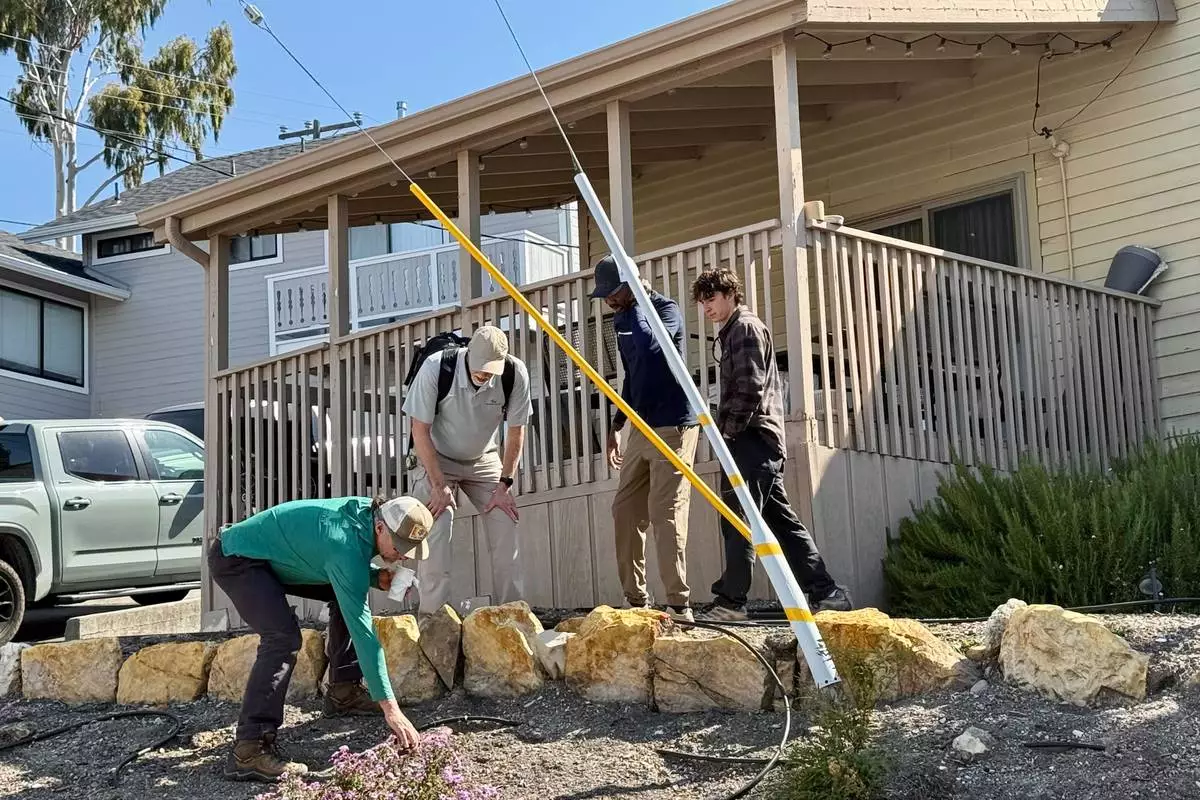
Authorities take samples from the soil Thursday, May 7, 2026, from the neighboring yard of a home in Arroyo Grande, Calif., connected to the man convicted of killing Kristin Smart. (AP Photo/Haven Daley)
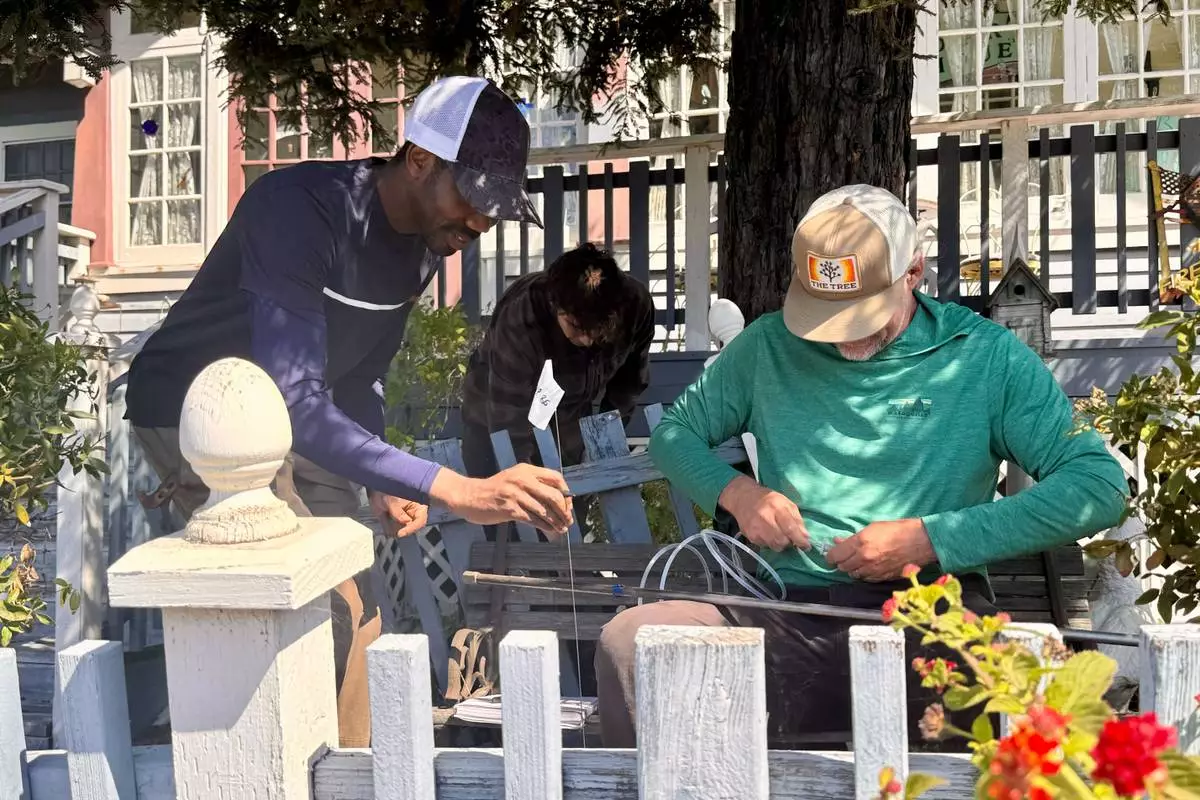
Authorities take samples from the soil Thursday, May 7, 2026, from the front yard of a home in Arroyo Grande, Calif., connected to the man convicted of killing Kristin Smart. (AP Photo/Haven Daley)
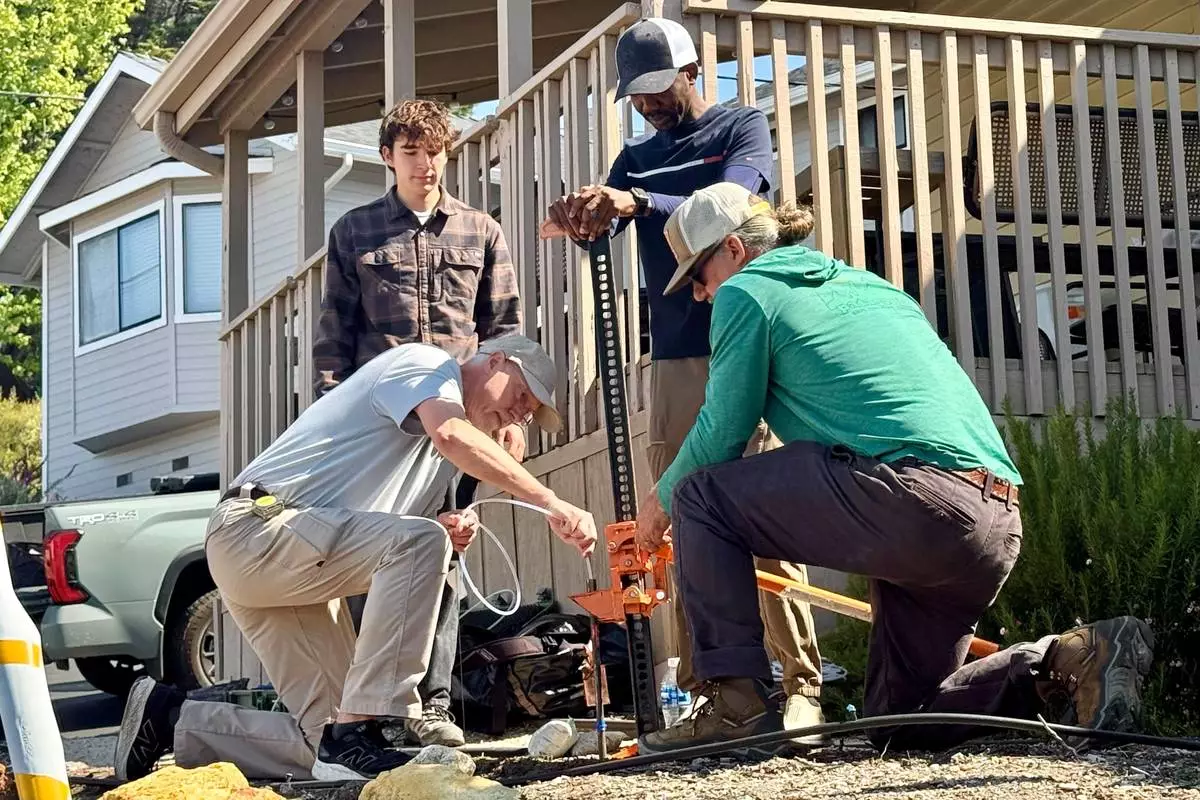
Authorities take samples from the soil Thursday, May 7, 2026, from the neighboring yard of a home in Arroyo Grande, Calif., connected to the man convicted of killing Kristin Smart. (AP Photo/Haven Daley)
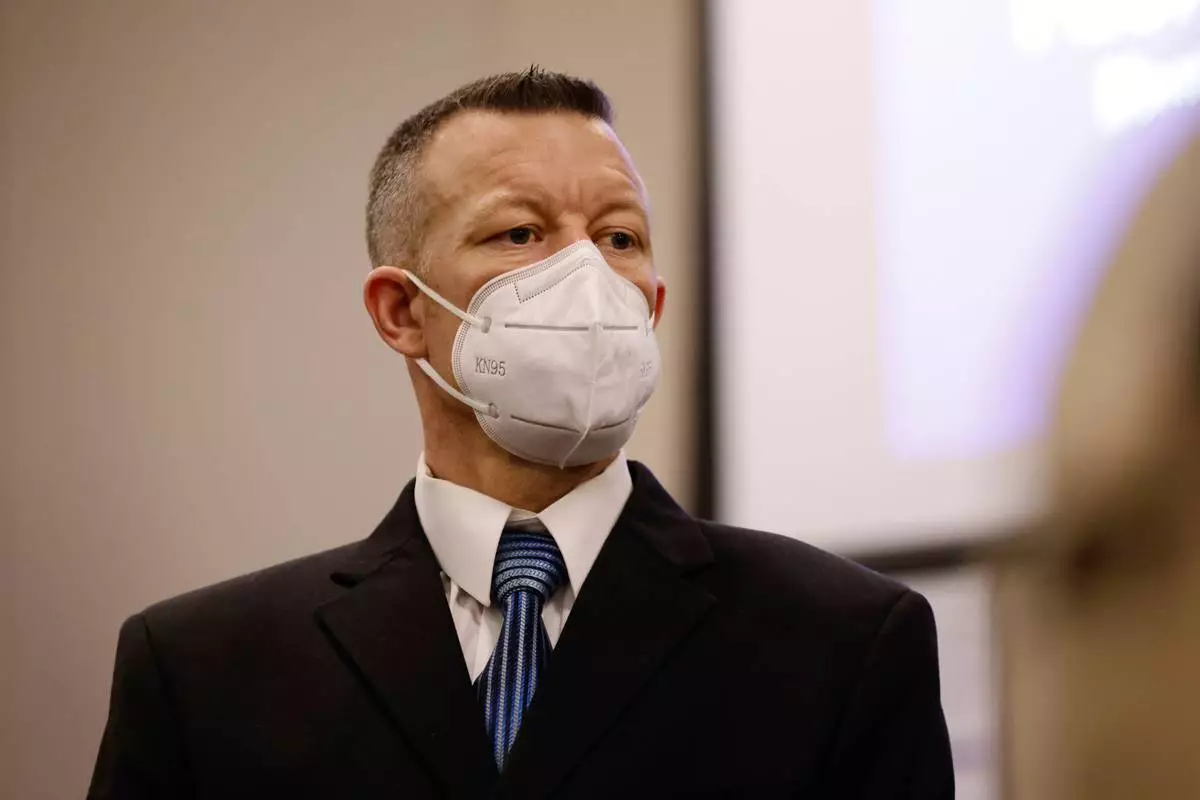
FILE - Paul Flores listens during his murder trial in Monterey County Superior Court in Salinas, Calif., on July 18, 2022. (Daniel Dreifuss/Monterey County Weekly via AP, Pool, File)
FILE - This undated photo released by the FBI shows Kristin Smart, the California Polytechnic State University, San Luis Obispo student who disappeared in 1996. (FBI via AP, File)
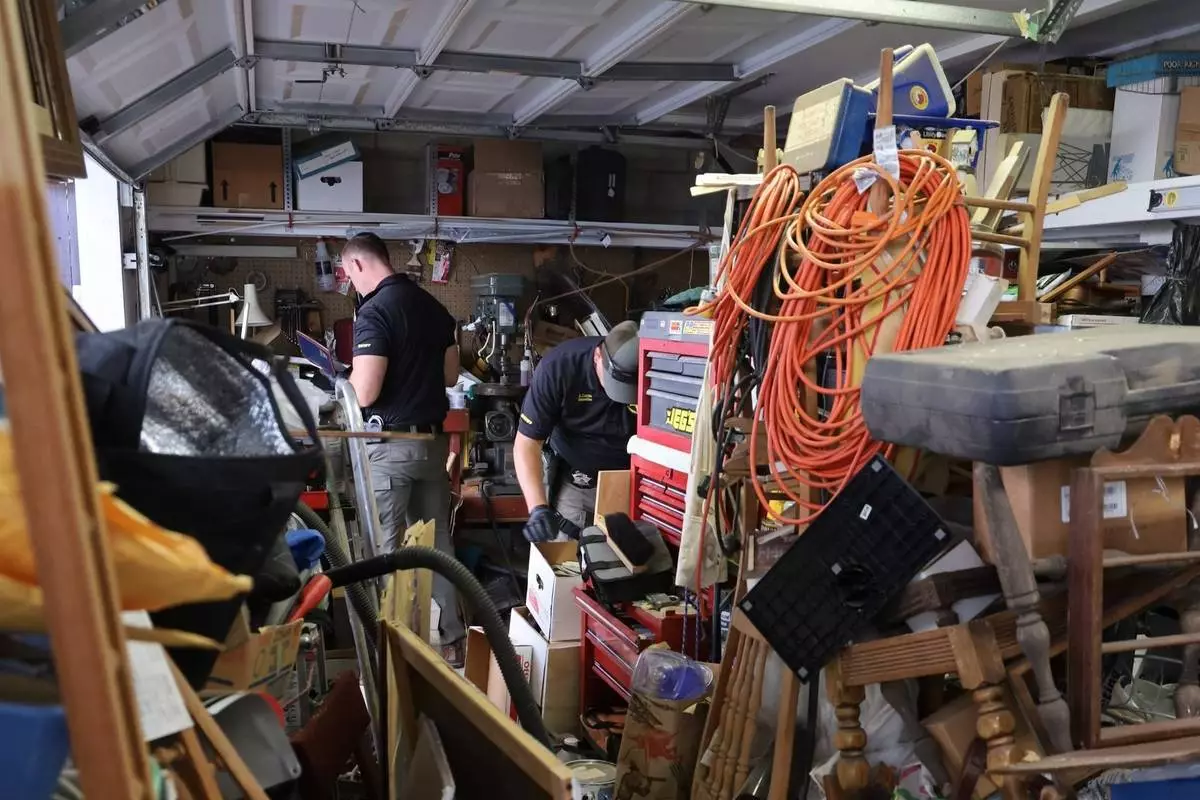
This photo provided by San Luis Obispo County Sheriff's Office shows authorities conducting a search on Wednesday, May 6, 2026, at a home in Arroyo Grande, Calif., connected to the man convicted of killing Kristin Smart. (San Luis Obispo County Sheriff's Office via AP)