Brazil, as the world's largest exporter of soybeans, has emerged as a beneficiary of the trade tensions between China and the U.S which have had a direct impact on the global soybean market, according to industry insiders.
The tumultuous tariff dispute between China and the United States which erupted last year and dented American soybean exports, helped to push Brazil's soybean shipments to record highs in 2025.
As the leading global soybean exporter, Brazil sends about 70 percent of its soybeans to China, highlighting how pivotal the Chinese market is to Brazilian soybean farmers.
Rodolpho Botelho's family has owned a farm in the state of Parana for some 200 years. In the 1970s, they switched from growing coffee to soybeans. In more recent decades, they have seen a major market shift as a new large buyer emerged.
"China entered the market very strongly in the 1990s, buying soybeans. And from the 2000s onward there was a real revolution in the production system, mainly aimed at meeting Chinese demand. China needs a lot of soybean, especially for feeding livestock," said Botelho, who owns the Fazenda Capao Redondo farm.
Botelho acknowledged that Brazilian producers have made gains from the trade tensions between China and the United States, but in the long run, he remains confident in the competitiveness of Brazilian soybeans, even if China and the U.S. do reach a deal.
"It's not the best situation for Brazil, because China might prefer to buy from the United States even if it is more expensive, as it did at the end of the year. But it also shows that Brazil is a strong potential supplier to the international market, and a competitive one. China knows Brazil produces larger exportable volumes and at more competitive prices than the Americans," he said.
The impact of the trade tensions on the global soybean industry is felt most acutely in the trading market.
Cezar Brum, a trader at Agrinvest, a company that sells Brazilian grains, especially soy and corn, to markets around the world including China, said U.S. soybean prices in Chicago moved in response to the ups and downs of China-U.S. negotiations.
"We are already seeing some effects from this rapprochement between China and the United States. And it should continue. It seems the relationship between the two countries is being maintained with the goal of restoring the ties that were very beneficial before," said Brum.
China is by far the world's largest buyer of soybeans, importing more than 100 million tons annually and accounting for over 60 percent of global trade.
Against this backdrop, Jose Carlos Hausknecht, managing partner of consulting company MB Agro, warned that any shifts in China-U.S. relations could quickly reshape soybean markets around the world.
"When these two economies fight each other, they provoke oscillations in the market, and it's very difficult for the players of the market to position themselves, or [to determine] when to buy, when to sell and there is a lot of volatility in the market and it is very difficult to navigate on this situation," said Hausknecht.
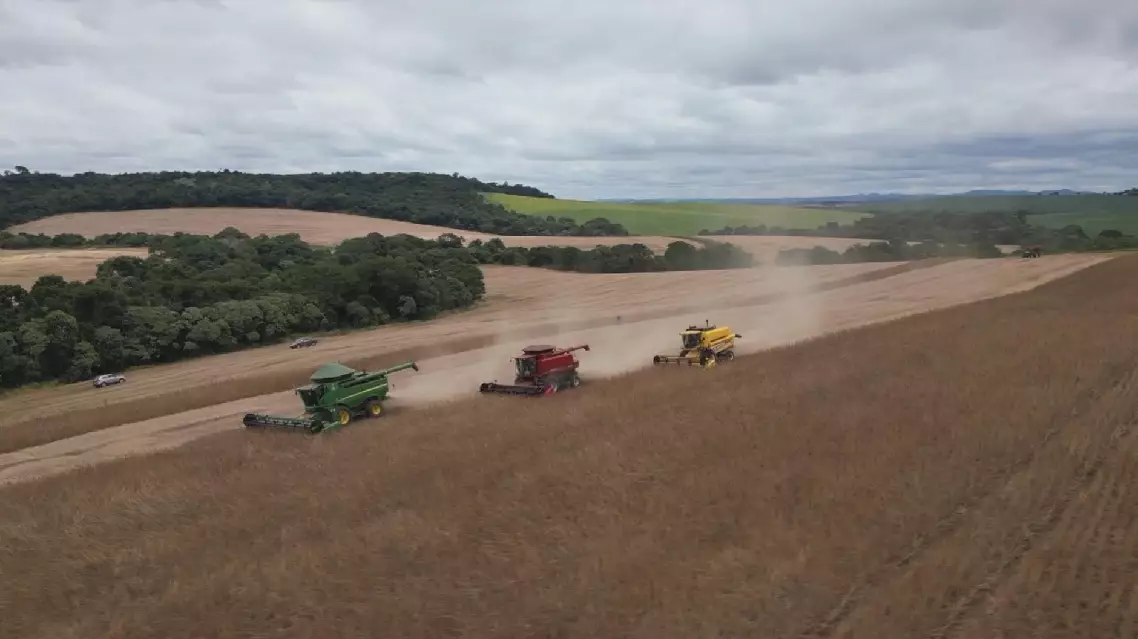
Brazilian soybean farmers reap rewards amid US-China trade disputes