Skip to Content Facebook Feature Image

94 people evacuated from hantavirus-hit cruise ship on Sunday: Spanish health official

China

China

China

94 people evacuated from hantavirus-hit cruise ship on Sunday: Spanish health official

2026-05-11 14:56 Last Updated At:15:37

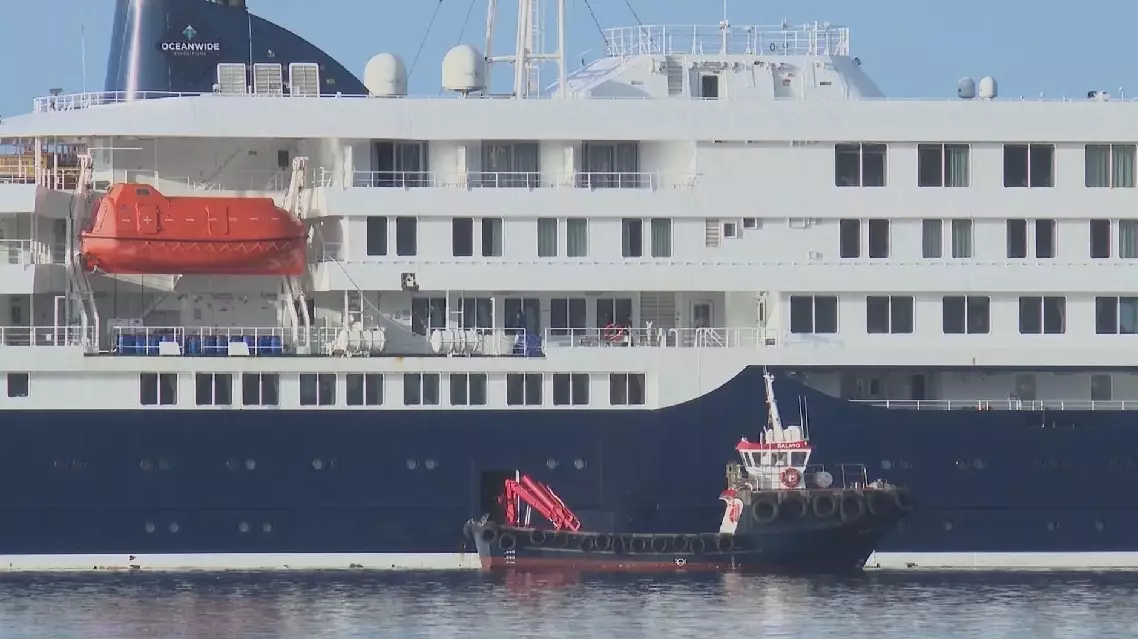
Spanish authorities have confirmed that 94 people had been evacuated from the hantavirus-hit cruise ship MV Hondius as of Sunday evening, with these evacuated passengers and crew of the stricken vessel being sent on to be repatriated and quarantined in their home countries.

Spanish Health Minister Monica Garcia confirmed that the operation had been carried out after the cruise ship had earlier been anchored off the Spanish island of Tenerife. The 94 evacuated people, which includes 19 different nationalities, were safely disembarked at the Port of Granadilla before being transferred in sealed vehicles directly to airports.

Following these evacuations, the ship will now sail with the remaining personnel on board to Rotterdam in the Netherlands for a deep disinfection and further evacuation process which will be supervised by officials from the World Health Organization (WHO).

The first group to be repatriated on Sunday were Spanish nationals, with a plane carrying them to the capital Madrid, where they were taken onwards to the Gomez Ulla Hospital. Spanish government officials said that all members of this group are currently asymptomatic but will remain quarantined at the hospital with no public contact.

Five French nationals aboard the cruise ship were returned to their home country via a medical evacuation flight on Sunday afternoon, with one of them developing symptoms during the repatriation flight, French Prime Minister Sebastien Lecornu said.

The passengers have been placed under strict isolation until further notice, with Lecornu saying they were receiving medical care and would undergo further tests and health assessments. He also said that a decree would be issued later on Sunday to introduce appropriate isolation measures for close contacts in order to protect the general population.

Citizens from Ireland, the United Kingdom, Greece, Belgium and other countries were also returned to their countries via military flights. They will be examined and quarantined at local health service institutions upon arrival.

The final two flights are scheduled to depart later, with one flight bound for Australia set to carry six passengers, while another for the Netherlands to transport 18 passengers. Both flights will also include people from other countries that did not arrange their own repatriation flights.
94 people evacuated from hantavirus-hit cruise ship on Sunday: Spanish health official

94 people evacuated from hantavirus-hit cruise ship on Sunday: Spanish health official

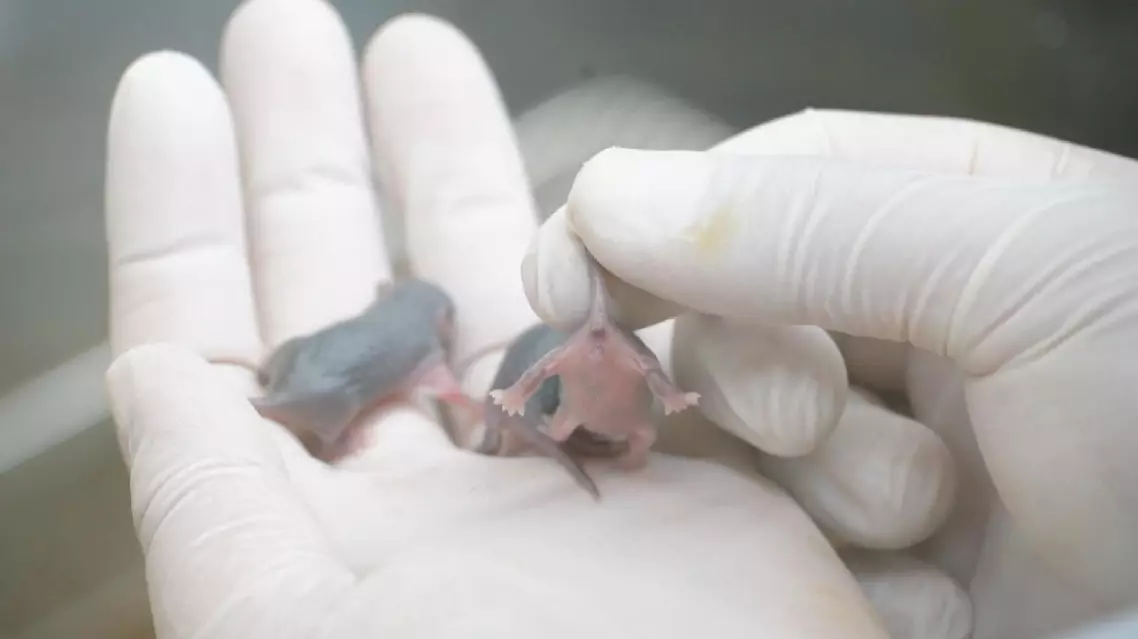
China is completing a research system for embryonic development in orbit spanning from lower vertebrates to higher mammals in a bid to decode how space environments affect reproduction and lay the groundwork for future long-term human habitation in space.

As space exploration pushes further into the cosmos, whether life can be nurtured in space has become a key question for scientists, because any long-term human presence in space -- or eventual interstellar migration -- will require solving the challenges of reproduction and health maintenance beyond Earth.

To this end, Chinese researchers have designed a comprehensive research system to study the development of zebrafish embryos, mouse embryos, and artificial embryos derived from stem cells, covering lower vertebrates, lower mammals, and higher mammals.

On Monday morning, China sent payloads for five space life science experiments to its space station aboard the Tianzhou-10 cargo craft, targeting critical issues such as how the space environment damages early-stage mammalian embryos, the regulatory mechanisms behind bone loss and myocardial changes under microgravity, and the construction and development of artificial human embryos in space.

The human embryo research of the latest mission will be the finishing touch to build the research system, according to Li Tianda, associate researcher at the Institute of Zoology, Chinese Academy of Sciences.

"We hope to integrate our researches on mice, zebrafish, the current research on embryos, and future gestation studies on mice to systematically understand how the space environment influences embryonic development in Earth-originating life forms, including vertebrates like zebrafish, mammals like mice, and primates like human in future studies. In the future, we will develop regulatory and intervention mechanisms to gain a deeper understanding of the reproductive process during long-term manned space missions," Li said.

China builds space embryo research system to lay groundwork for deep space exploration

China builds space embryo research system to lay groundwork for deep space exploration

Recommended Articles