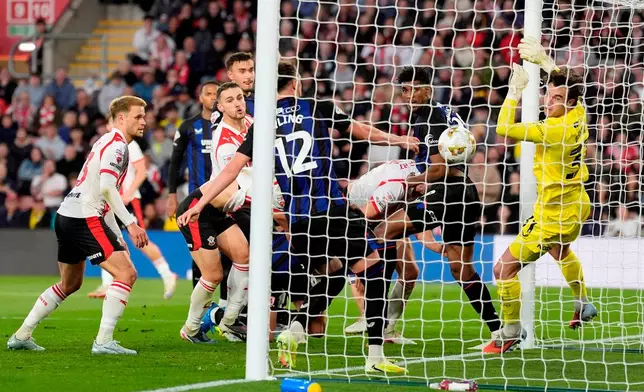
Southampton brushed off a spying controversy to advance past Middlesbrough after extra time in the Championship playoffs on Tuesday and get to within one win of a return to the Premier League.
In a heated second leg that saw both coaches square up to each other at one point, Southampton rallied for a 2-1 victory at its home stadium at St. Mary's and seal a win on aggregate by the same score. The decisive goal — scored by Shea Charles when his cross curled into the bottom corner — came with four minutes left of extra time.
Click to Gallery
Southampton's Flynn Downes, left, and Middlesbrough's Leo Castledine battle for the ball during the EFL Championship play off semifinal soccer game between Southampton and Middlesbrough, Tuesday, May 12, 2026, in, Southampton, England. (Andrew Matthews/PA via AP)
Southampton's Ross Stewart, center partially obscured, scores their first goal of the game during the EFL Championship play off semifinal soccer game between Southampton and Middlesbrough, Tuesday, May 12, 2026, in, Southampton, England. (Andrew Matthews/PA via AP)
Southampton's Ross Stewart, top, scores their first goal of the game during the EFL Championship play off semifinal soccer game between Southampton and Middlesbrough, Tuesday, May 12, 2026, in, Southampton, England. (Andrew Matthews/PA via AP)
Middlesbrough goalkeeper Sol Brynn reacts after the final whistle in the EFL Championship play off semifinal soccer game between Southampton and Middlesbrough, Tuesday, May 12, 2026, in, Southampton, England. (Andrew Matthews/PA via AP)
Southampton's Welington, right, and Ryan Manning celebrate at the final whistle in the EFL Championship play off semifinal soccer game between Southampton and Middlesbrough, Tuesday, May 12, 2026, in, Southampton, England. (Andrew Matthews/PA via AP)
The two games were played under a cloud, with Southampton having been charged by the English Football League with a breach of its regulations following accusations that unauthorized filming of Middlesbrough’s training took place last week.
The EFL requested that an independent disciplinary commission undertake a hearing “at the earliest opportunity” but Southampton asked for more time to complete an internal review into the issue, meaning any punishment would likely be meted out before the playoff final with Hull on May 23.
That final is the richest one-off game in world soccer, with the winner assured a windfall of at least 200 million pounds ($270 million) in future earnings via things like prize money and broadcast revenue in the Premier League.
Tensions between Southampton and Middlesbrough boiled over at the end of the first half when the respective coaches — Tonda Eckert and Kim Hellberg — got in each other's faces on the touchline while being spoken to by the referee. After the first leg, which finished 0-0, Hellberg said he “couldn’t believe my eyes or ears” when he heard about the spying allegations and accused Southampton of trying to “cheat.”
Following another first-half exchange — between Middlesbrough's Luke Ayling and Southampton’s Taylor Harwood-Bellis — the BBC and Sky Sports reported that Ayling accused Harwood-Bellis of using discriminatory language.
Southampton is seeking an immediate return to the Premier League after relegation last season. Before that, it was in the top flight from 2012-23.
Hull was last in the Premier League in 2017.
Steve Douglas is at https://twitter.com/sdouglas80
AP soccer: https://apnews.com/hub/soccer

Southampton's Flynn Downes, left, and Middlesbrough's Leo Castledine battle for the ball during the EFL Championship play off semifinal soccer game between Southampton and Middlesbrough, Tuesday, May 12, 2026, in, Southampton, England. (Andrew Matthews/PA via AP)

Southampton's Ross Stewart, center partially obscured, scores their first goal of the game during the EFL Championship play off semifinal soccer game between Southampton and Middlesbrough, Tuesday, May 12, 2026, in, Southampton, England. (Andrew Matthews/PA via AP)

Southampton's Ross Stewart, top, scores their first goal of the game during the EFL Championship play off semifinal soccer game between Southampton and Middlesbrough, Tuesday, May 12, 2026, in, Southampton, England. (Andrew Matthews/PA via AP)
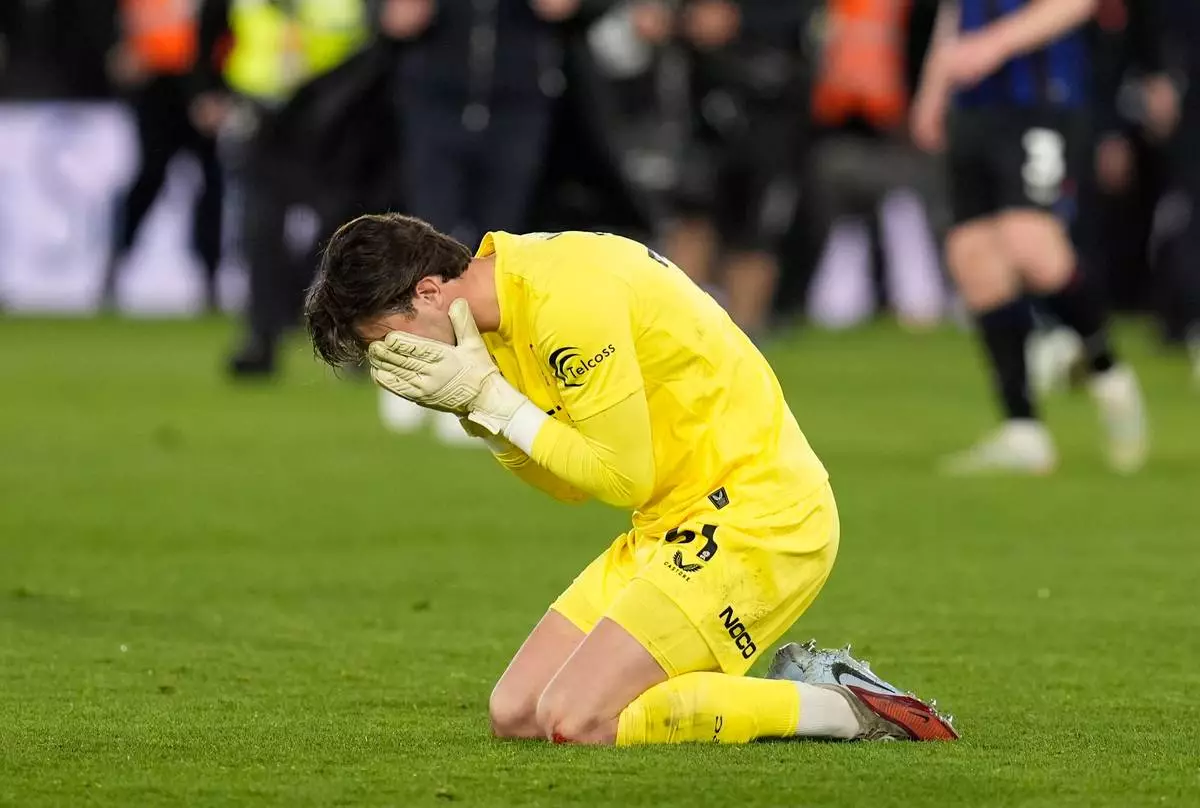
Middlesbrough goalkeeper Sol Brynn reacts after the final whistle in the EFL Championship play off semifinal soccer game between Southampton and Middlesbrough, Tuesday, May 12, 2026, in, Southampton, England. (Andrew Matthews/PA via AP)

Southampton's Welington, right, and Ryan Manning celebrate at the final whistle in the EFL Championship play off semifinal soccer game between Southampton and Middlesbrough, Tuesday, May 12, 2026, in, Southampton, England. (Andrew Matthews/PA via AP)
MOSCOW (AP) — Russia on Tuesday test-fired a new intercontinental ballistic missile as part of efforts to modernize the country's nuclear forces, a launch hailed by President Vladimir Putin just days after his claim that the fighting in Ukraine is nearing an end.
Putin said that the nuclear-armed Sarmat missile would enter combat service at the end of the year. It was built to replace the aging Soviet-built Voyevoda.
“This is the most powerful missile in the world,” Putin declared, adding that the combined power of the Sarmat’s individually targeted warheads is more than four times higher than that of any Western counterpart.
The Russian leader has repeatedly brandished the nuclear sword after sending troops into Ukraine in February 2022 to try to deter the West from ramping up support for Ukraine.
After overseeing a military parade on Red Square on Saturday commemorating the defeat of Nazi Germany in World War II, which for the first time in nearly two decades didn’t include heavy weapons, Putin declared the conflict in Ukraine is coming to an end.
Since coming to power in 2000, Putin has overseen efforts to upgrade the Soviet-built components of the Russian nuclear triad — deploying hundreds of new, land-based intercontinental ballistic missiles, commissioning new nuclear submarines and modernizing nuclear-capable bombers.
Russia’s effort to revamp its nuclear forces pushed the United States to launch a costly modernization of its arsenal.
The last remaining nuclear arms pact between Russia and the U.S. expired in February, leaving no caps on the world's two largest atomic arsenals for the first time in more than a half-century and fueling fears of an unconstrained nuclear arms race.
The Sarmat — designated “Satan II” in the West — is meant to replace about 40 Soviet-built Voyevoda missiles. Its development began in 2011 and before Tuesday, the missile had only one known successful test and reportedly suffered a massive explosion during an abortive test in 2024.
Putin said Tuesday that the Sarmat — part of a slew of new weapons that Putin revealed in 2018, claiming they would render any prospective U.S. missile defenses useless — is as powerful as the Voyevoda but with a higher precision. It is capable of suborbital flight, he said, giving it a range of more than 35,000 kilometers (21,700 miles) and an extended capability to penetrate any prospective missile defenses.
Moscow's new weapons include the Avangard hypersonic glide vehicle, capable of flying 27 times faster than the speed of sound. The first vehicles have already entered service.
Russia has also commissioned the new nuclear-capable Oreshnik intermediate-range ballistic missile, and used its conventionally-armed version twice to strike Ukraine. Oreshnik's range of up to 5,000 kilometers (3,100 miles) makes it capable of reaching any target in Europe.
Putin also announced Russia was in the “final stages” of the development of the nuclear-armed Poseidon underwater drone and the Burevestnik cruise missile powered by miniature atomic reactors.
The Poseidon is designed to explode near enemy coastlines and cause a radioactive tsunami. The Burevestnik has virtually unlimited range thanks to nuclear propulsion, allowing it to loiter for days, circling air defenses and attacking from an unexpected direction.
Putin has described those new weapons as part of a Russian response to the U.S. missile shield that Washington developed after its 2001 withdrawal from a Cold War-era U.S.-Soviet pact that limited missile defenses.
Russian military planners have feared a missile shield could tempt Washington to launch a first strike that would knock out most of Moscow’s nuclear arsenal in hopes of intercepting a small number of surviving missiles fired in retaliation.
"We were forced to consider ensuring our strategic security in the face of the new reality and the need to maintain a strategic balance of power and parity,” Putin said.
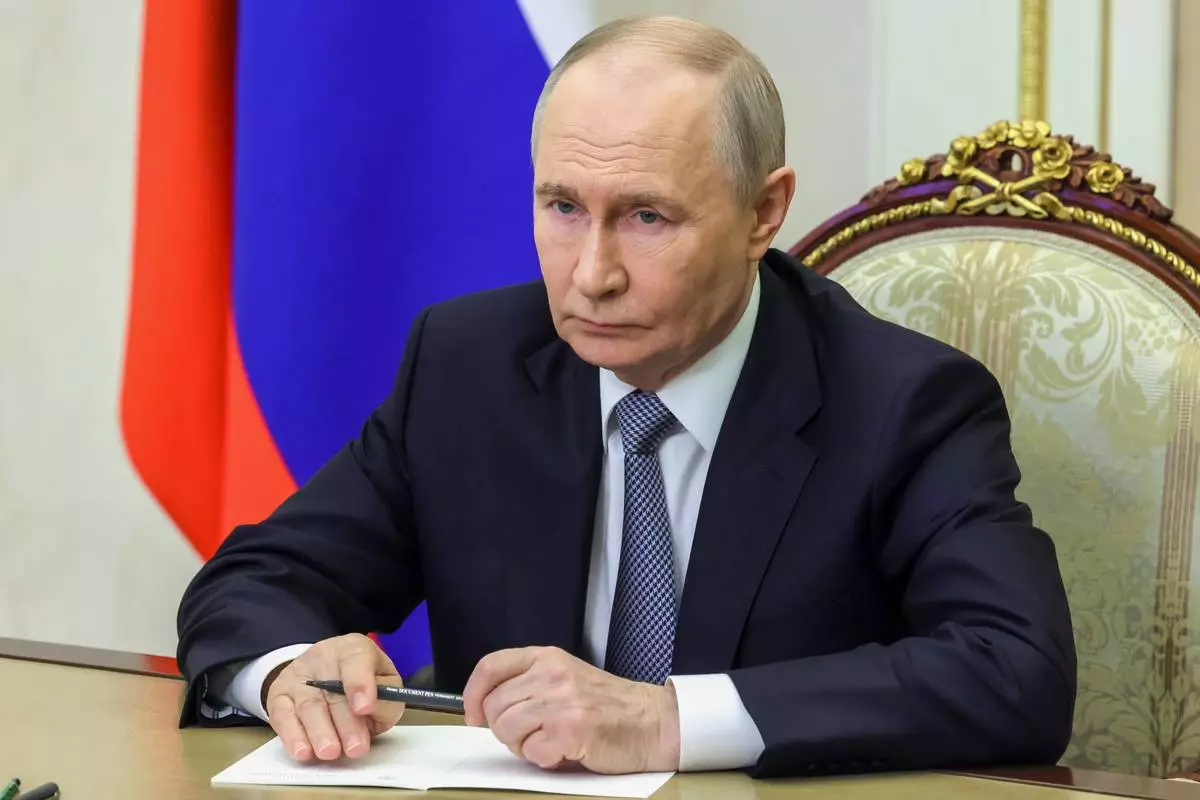
Russian President Vladimir Putin listens as Russian Strategic Missile Forces chief, Col. Gen. Sergei Karakayev reports to him on a successful test launch of the Sarmat intercontinental ballistic missile. at the Kremlin in Moscow, Tuesday, May 12, 2026. (Mikhail Metzel/Sputnik, Kremlin Pool Photo via AP)
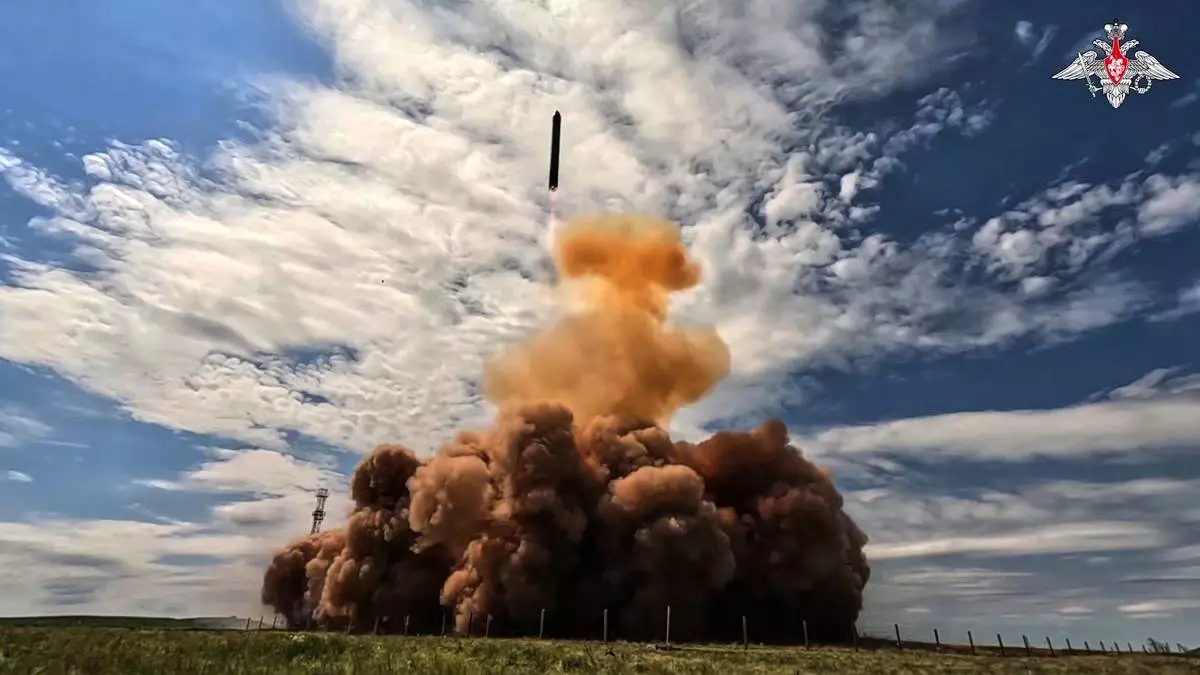
In this image made from video provided by Russian Defense Ministry Press Service on Tuesday, May 12, 2026, Russia's new Sarmat intercontinental ballistic missile is test launched at an unspecified location in Russia. (Russian Defense Ministry Press Service via AP)
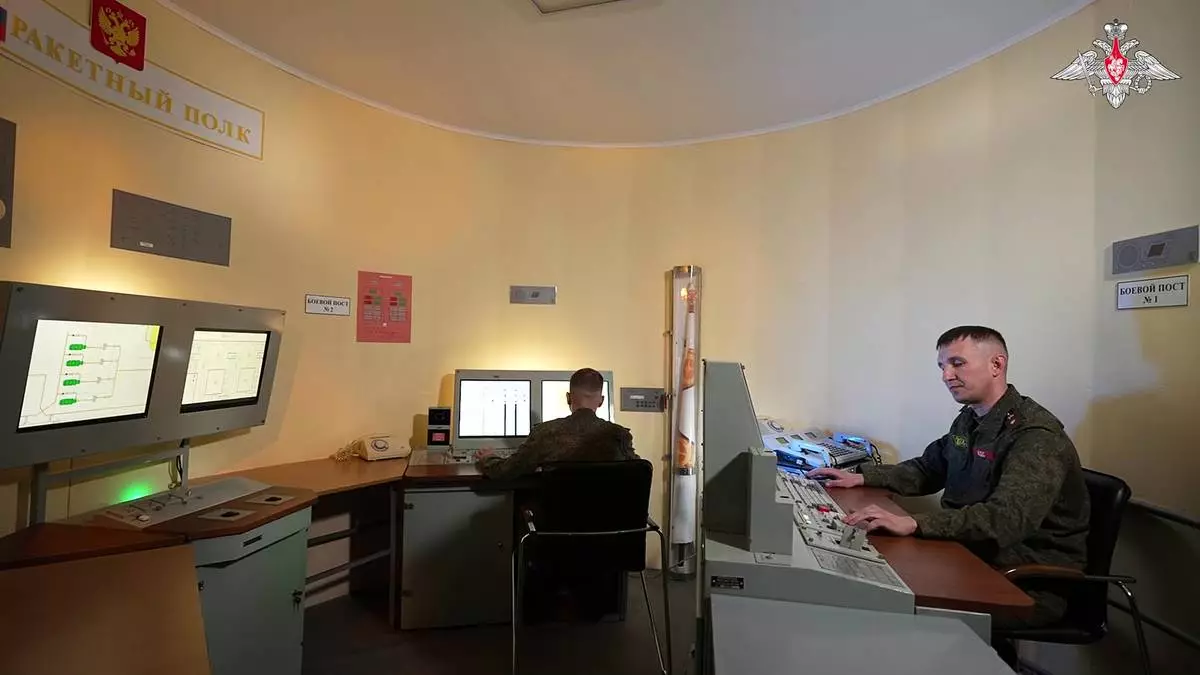
In this image made from video provided by Russian Defense Ministry Press Service on Tuesday, May 12, 2026, Russian servicemen oversee a test launch of the new Sarmat intercontinental ballistic missile at an unspecified location in Russia. (Russian Defense Ministry Press Service via AP)
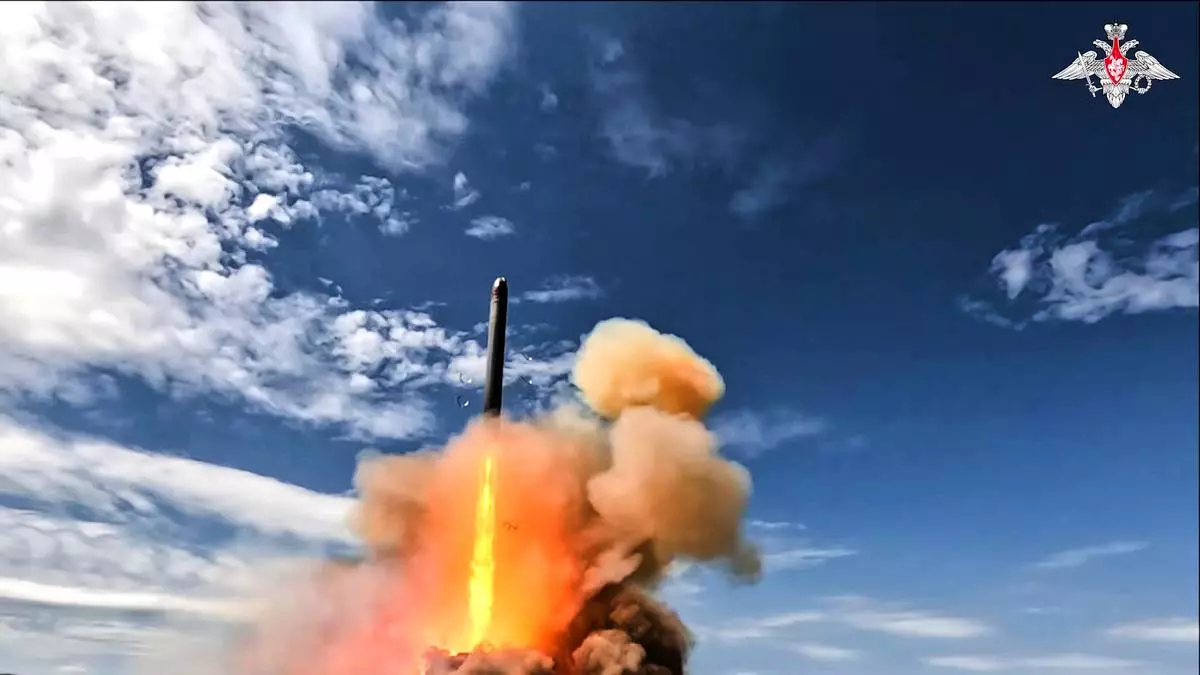
In this image made from video provided by Russian Defense Ministry Press Service on Tuesday, May 12, 2026, Russia's new Sarmat intercontinental ballistic missile is test launched at an unspecified location in Russia. (Russian Defense Ministry Press Service via AP)
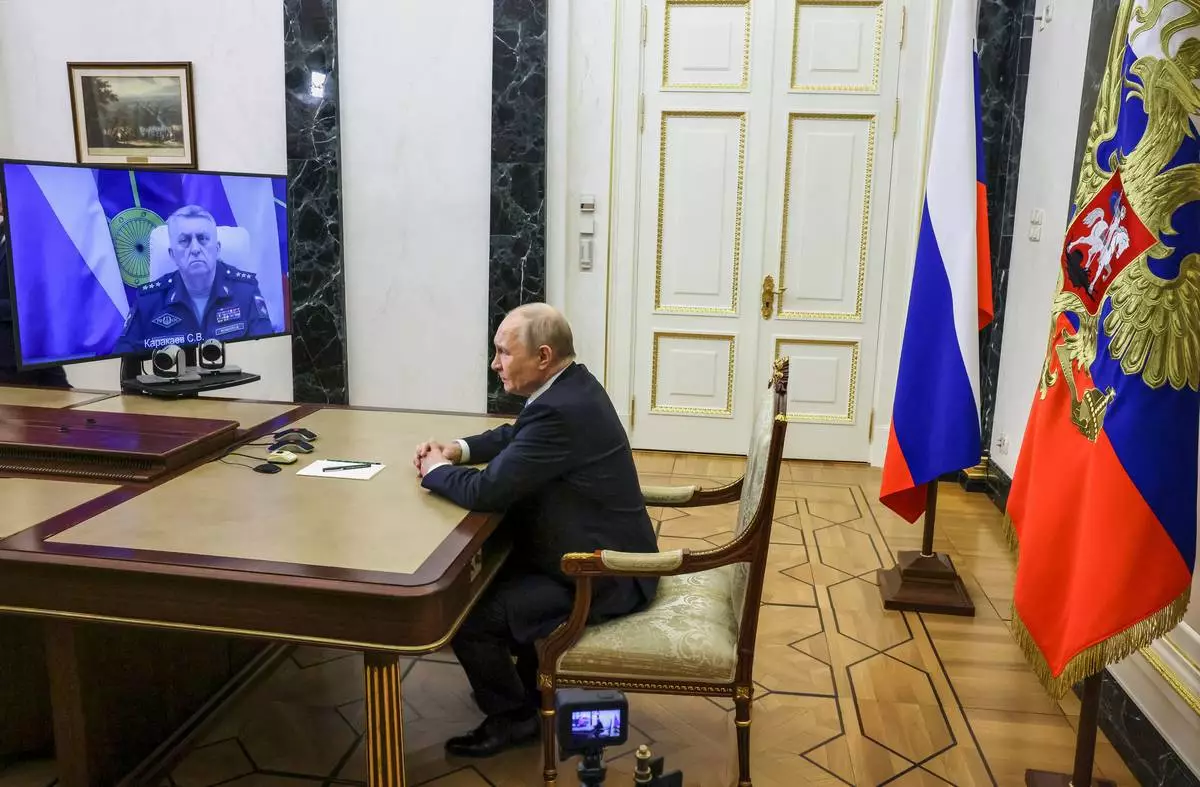
Russian Strategic Missile Forces chief, Col. Gen. Sergei Karakayev, left on the screen, reports to President Vladimir Putin on a successful test launch of the Sarmat intercontinental ballistic missile at the Kremlin in Moscow, Tuesday, May 12, 2026. (Mikhail Metzel/Sputnik, Kremlin Pool Photo via AP)