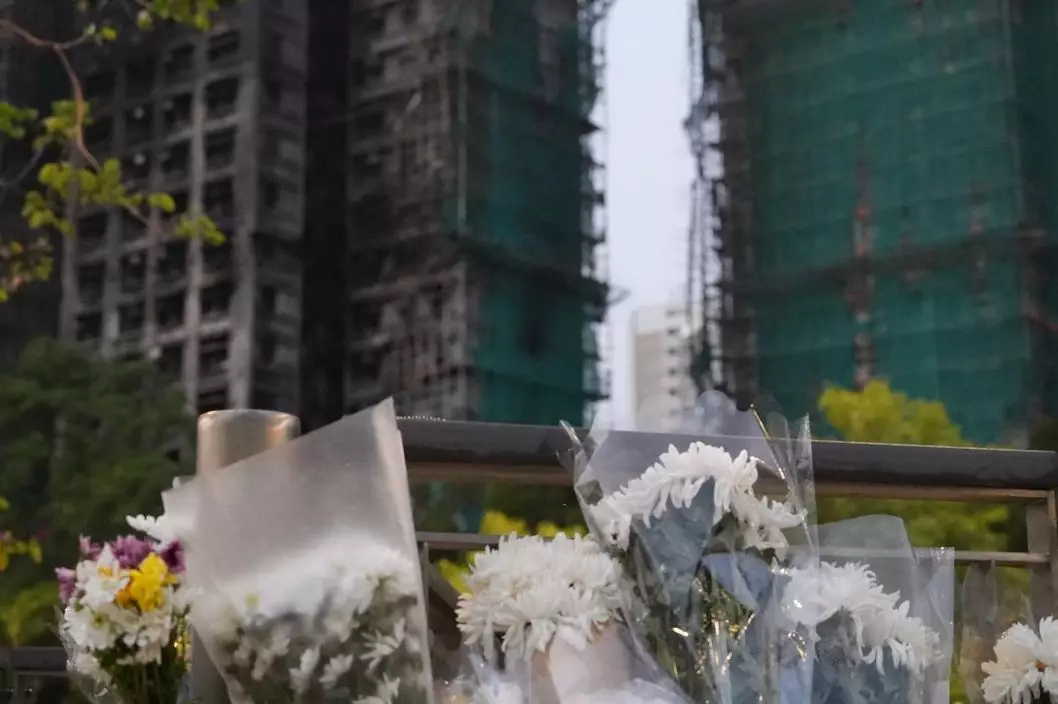
The government has arranged for residents of Wang Chi House, who were not directly affected by the fire at Wang Fuk Court, to return to their units in batches again over five days, starting this Wednesday (May 13). Each allocated unit may be entered by up to four people at a time, with each visit lasting up to three hours. During this period, residents are allowed to go up and down the building multiple times.

The government has arranged for residents of Wang Chi House, who were not directly affected by the fire at Wang Fuk Court, to return to their units in batches again over five days, starting this Wednesday (May 13). Photo by Bastille Post

Photo by Bastille Post

Photo by Bastille Post

Photo by Bastille Post
Mr. Lam, who has lived in Wang Chi House for over 30 years, said his parents are too elderly to go upstairs, so he brought a large suitcase to pack their belongings. "This time, I've retrieved things that hold sentimental value, like photo albums. To be honest, I'm not sure when I'll be able to come back again in the coming days to retrieve more." He said he has felt quite depressed these days, after all, he had lived here for many years, and many of his neighbors have already left after the fire. His parents didn't express any particular thoughts; they just wanted to go home. Mr. Lam said he would livestream to his parents while packing upstairs and ask them if they needed anything.
Click to Gallery
The government has arranged for residents of Wang Chi House, who were not directly affected by the fire at Wang Fuk Court, to return to their units in batches again over five days, starting this Wednesday (May 13). Photo by Bastille Post
Photo by Bastille Post
Photo by Bastille Post
Photo by Bastille Post

Mr. Lam, Photo by Bastille Post

Ms. Lam, Photo by Bastille Post

Photo by Bastille Post

Photo by Bastille Post
Mr. Lam, Photo by Bastille Post
Ms. Lam, who lives on the sixth floor of Wang Chi House, said she hurried to retrieve her work-related awards this time. "As a driver, I've collected many safety awards and service awards. All the awards I could achieve in 26 years have been obtained." She had hoped to take everything from her home that she had accumulated over decades, but couldn't finish. "The new appliances from the renovation hold so many memories. I wanted to take the furniture too." She said if given another chance, she would hire a moving company to assist her.

Ms. Lam, Photo by Bastille Post
Ms. Lam said she hopes that all Wang Fuk residents can soon be arranged with a new place to settle in, as they are currently living in interim housing. "Since the government has the plan, it would be best to arrange it quickly," she said. As a retiree, she had once hoped to enjoy her retirement life in the renovated unit; however, the fire took that wish away. She now has to rebuild her life for the future. When asked about the retrieval arrangement, Ms. Lam said the government has done well, with social workers, police, and volunteers all willing to lend a hand.
Photo by Bastille Post
Photo by Bastille Post