Skip to Content Facebook Feature Image

Left in the Cold: Japan Sidelined as Trump Courts Beijing

Blog

Left in the Cold: Japan Sidelined as Trump Courts Beijing
Blog

Blog

Left in the Cold: Japan Sidelined as Trump Courts Beijing

2026-05-15 08:43 Last Updated At:08:45

US President Donald Trump touched down in Beijing aboard Air Force One on the night of May 13 to kick off his state visit. This much-anticipated summit between the world's two superpowers is commanding global attention. Yet, over in Tokyo, the Japanese government finds itself stranded on the diplomatic sidelines with decidedly mixed feelings.
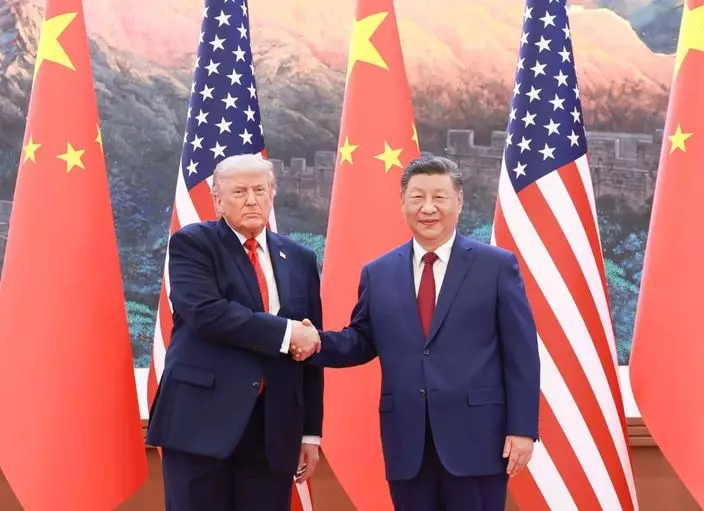
President Xi Jinping sits down for talks with US President Donald Trump.
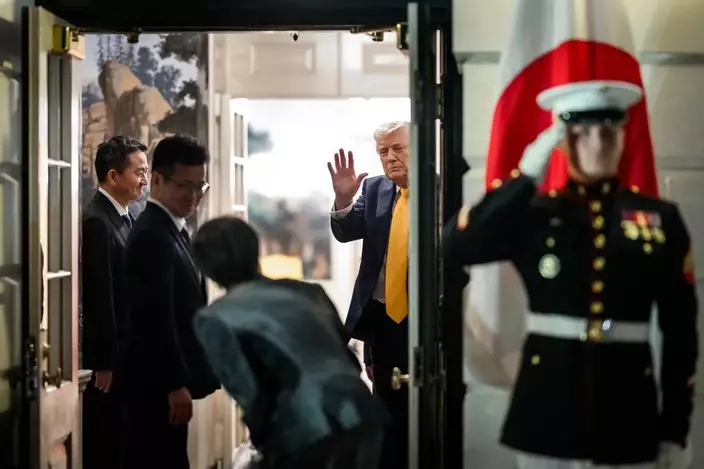
President Xi Jinping sits down for talks with US President Donald Trump.

Japanese leaders racked their brains trying to engineer a pre-Beijing stopover for Trump, according to Nikkei Asia. Tokyo hoped to use the detour to bend America's ear on the so-called "Chinese military threat." But as fresh conflict erupted in Iran, Trump’s itinerary shifted continuously, and Japan’s carefully laid plans evaporated completely.

More Images
President Xi Jinping sits down for talks with US President Donald Trump.

President Xi Jinping sits down for talks with US President Donald Trump.

A White House photograph from March this year captures Prime Minister Sanae Takaichi during her strategic visit to Washington.
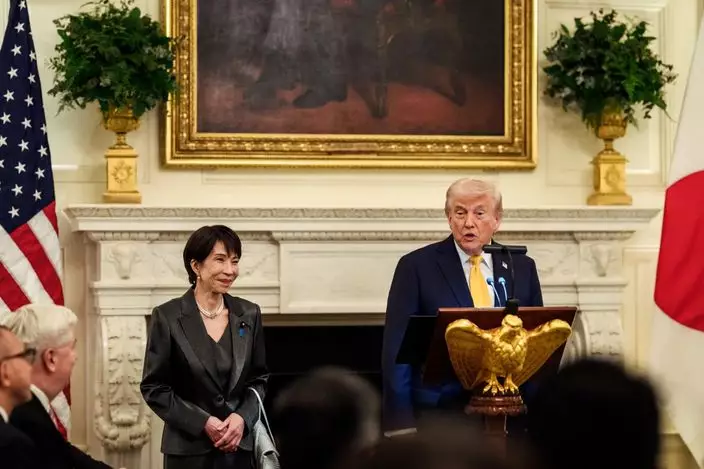
A White House photograph from March this year captures Prime Minister Sanae Takaichi during her strategic visit to Washington.
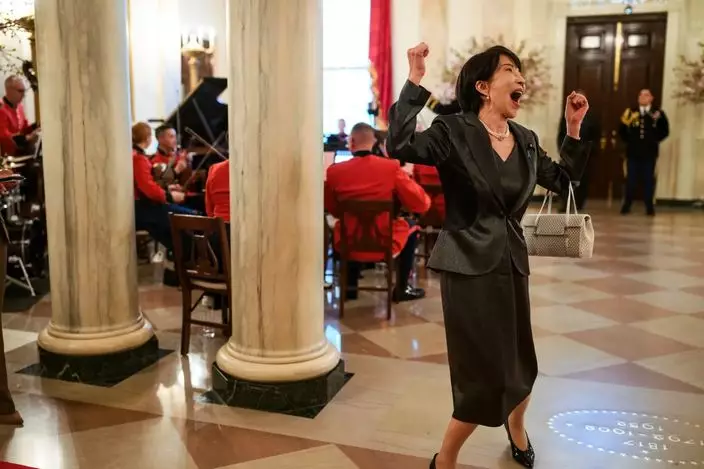
A White House photograph from March this year captures Prime Minister Sanae Takaichi during her strategic visit to Washington.

A White House photograph from March this year captures Prime Minister Sanae Takaichi during her strategic visit to Washington.

A White House photograph from March this year captures Prime Minister Sanae Takaichi during her strategic visit to Washington.

A White House photograph from March this year captures Prime Minister Sanae Takaichi during her strategic visit to Washington.

A White House photograph from March this year captures Prime Minister Sanae Takaichi during her strategic visit to Washington.

A White House photograph from March this year captures Prime Minister Sanae Takaichi during her strategic visit to Washington.

Make no mistake: Tokyo's initial calculations were highly elaborate. Prime Minister Sanae Takaichi phoned Trump on January 2 to push for a Washington trip ahead of his China tour. When Takaichi finally met Trump at the White House in March, the entire visit was built on the premise that a US-China summit would follow shortly after.

A White House photograph from March this year captures Prime Minister Sanae Takaichi during her strategic visit to Washington.

A White House photograph from March this year captures Prime Minister Sanae Takaichi during her strategic visit to Washington.

The Japanese government relentlessly sought avenues to push its "China threat" narrative to the US president. Beyond Takaichi's Washington trip, officials floated multiple proposals inviting Trump for a strategic transit in Japan before heading to Beijing. Tokyo viewed this as a prime opportunity to parade the ironclad strength of the US-Japan alliance.

A White House photograph from March this year captures Prime Minister Sanae Takaichi during her strategic visit to Washington.

A White House photograph from March this year captures Prime Minister Sanae Takaichi during her strategic visit to Washington.

Takaichi wanted to deliver a blunt warning directly to Trump, according to Nikkei Asia. She intended to argue that any warming of US-China relations would ultimately benefit only Beijing. By doing so, Takaichi hoped to convince the US leader that the American-Japanese alliance remains an indispensable tool for keeping China in check.

Geopolitical reality then struck hard when US and Israeli forces launched military strikes against Iran on February 28. The sudden Middle East conflict forced Trump to delay his China trip, shifting the focus of US-Japan discussions entirely to securing safe navigation in the Strait of Hormuz. Japan's grand strategy, which hinged on an April US-China summit as a vital foreign policy anchor, began to crumble. Following her Washington trip, Takaichi admitted to aides that a Japanese stopover had been discussed, but shifting schedules left the entire prospect hanging in the balance.

Even after Washington locked in Trump's rescheduled Beijing itinerary, Japan continued working the back channels for a presidential pit stop. A senior Japanese government official confirmed as recently as early May that Tokyo officially requested a brief Trump visit. That frantic diplomatic effort ultimately yielded nothing.

Why is Tokyo gripped by such anxiety? The reality is that the Japanese government has long harboured deep fears about being marginalised by warming relations between Washington and Beijing, as highlighted by Nikkei Asia.

The unease traces back to October 2025, when Trump labelled the US and China as a "G2" following a bilateral summit. While his precise meaning remained murky, the phrase signalled a new global order jointly managed by the two powers. For Tokyo, this trajectory presents massive risks: diminished US military engagement in East Asia could weaken deterrence over Taiwan Strait tensions or North Korean missile threats. Furthermore, Japan fears that allied efforts to restrict China's access to vital economic security sectors like semiconductors and rare earths could be severely compromised.

Japan has navigated this precarious diplomatic tightrope between the US and China before. When Trump first captured the presidency in November 2016, then-Prime Minister Shinzo Abe scrambled to the United States to court the president-elect before inauguration day. From that first handshake, Abe consistently hammered home the alleged "military threat" from China to ensure Trump valued the US-Japan alliance as a bulwark against Beijing.

Now, history appears to be repeating itself with a bitter twist. This time around, Tokyo failed to secure even a fleeting transit stop from the US president.

Washington did attempt some last-minute diplomatic damage control on May 12, dispatching Treasury Secretary Scott Bessent to Tokyo just hours before Trump left for China. Bessent held a brisk 15-minute courtesy call on Takaichi to align bilateral positions, later telling reporters that the Prime Minister made no specific demands regarding China. He followed up with a 35-minute session with Finance Minister Satsuki Katayama to discuss foreign exchange volatility driven by Middle East turmoil. While a senior Japanese foreign affairs official praised the finance ministers' dialogue as highly significant, the modest scale of these meetings fell dramatically short of Tokyo's original grand designs.

Japan-China relations are currently languishing at their lowest ebb in more than a decade, leaving Tokyo intensely nervous about the impending Trump-China discussions. Jeremy Chan, a senior analyst at Eurasia Group, noted that Bessent's quick trip was a clear reassurance play meant to signal that Washington has not forgotten its Asian ally. Yet, Chan pointed to a harsh underlying truth: “The US can never provide enough assurances to Tokyo and Seoul, particularly amid growing doubts in both capitals about long term US commitments to their national security,” he added.

As bilateral friction with China simmers, Tokyo is collectively holding its breath while Trump’s Beijing visit takes centre stage. Japan started the year dreaming of a "Tokyo first" presidential tour, only to watch its hopes for a minor stopover evaporate completely. In this high-stakes game of great-power diplomacy, Japan's acute fear of being pushed to the periphery is probably more intense than ever.


Mao Paishou

** 博客文章文責自負,不代表本公司立場 **

President Xi Jinping met with US President Donald Trump at the Great Hall of the People in Beijing, stressing that the common interests between China and the United States far outweigh their differences and that a stable China-US relationship serves the interests of the whole world. Both sides, he said, should be partners rather than rivals.

President Xi noted that transformation not seen in a century is accelerating across the globe, and the international situation is fluid and turbulent. Can China and the United States overcome the Thucydides Trap and create a new paradigm of major-country relations? Can we meet global challenges together and provide greater stability for the world? Can we build a bright future together for our bilateral relations in the interest of the well-being of the two peoples and the future of humanity? These are the questions vital to history, to the world, and to the people. They are the questions of our times that the leaders of major countries need to answer together.

President Xi stressed that China and the United States have more common interests than differences, that each country's success is an opportunity rather than a threat to the other, and that a stable China-US relationship serves the interests of the world as a whole. Both sides should be partners, not adversaries — achieving mutual success and shared prosperity, and forging the right way for major countries to get along in the new era. 

President Xi said he looks forward to exchanging views with President Trump on major issues concerning both countries and the world, and stands ready to work together with President Trump to set the course and steer the giant ship of China-U.S. relations, so as to make 2026 a historic, landmark year that opens up a new chapter in China-US relations.

US President Donald Trump said during the bilateral meeting that he has known President Xi Jinping for a long time, and that even when difficulties arise, the two sides are able to resolve them expeditiously, in which he has full confidence in a bright future for both countries. Trump once again spoke highly of Xi Jinping as a great leader, and said he was honoured to be his friend. He noted that the US side has brought with it a number of business leaders on this visit, and expressed the hope that the meeting will further elevate US-China relations.

Nameplates at the meeting showed that those present included US Secretary of State Marco Rubio, Secretary of Defense Pete Hegseth and Trade Representative Jamieson Greer. Also on the list was US Treasury Secretary Scott Bessent, who had just concluded the seventh round of China-US economic and trade consultations the previous day.

Accompanying President Trump on his visit to China were his second son Eric Trump and a delegation of more than a dozen American business representatives from sectors including science and technology, finance, aviation and agriculture, among them Apple CEO Tim Cook, NVIDIA founder and CEO Jensen Huang, and Tesla CEO Elon Musk.

At a time when global economic uncertainty continues to rise, many American companies have chosen to continue developing in step with the Chinese market. These enterprises have benefited from China’s opening-up and attach great importance to the enormous opportunities in the Chinese market. American business and academic figures told Xinhua in earlier interviews that the stable and sound development of China-US economic and trade relations not only concerns the companies themselves, but will also have a profound impact on global economic growth, the stability of production and supply chains, and confidence in international markets. 

Dennis Simon, Senior Fellow at the Quincy Institute for Responsible Statecraft, told Xinhua that China–US economic cooperation has proven more resilient than many observers expected. “A stable U.S.-China relationship will significantly improve the business outlook for multinational corporations, reduce uncertainties in global supply chains, and thereby boost confidence in international markets.” 

Former US Commerce Secretary Carlos Gutierrez said: A more stable and constructive U.S.-China trade and economic relationship will benefit the entire world. Teng Shaojun, President of the US–China Public Affairs Association, added that stable ties give businesses a predictable operating environment. “For American companies, the Chinese market is one where they need to learn, adapt, and jointly innovate. By leveraging their respective strengths and cooperating, both countries’ enterprises stand to gain mutual benefits.”

Thomas Fingar, former US Assistant Secretary of State and fellow at Stanford University's Freeman Spogli Institute for International Studies, made a telling observation. Despite frictions in economic and trade relations, many US companies with production bases in China have not withdrawn — they have grown alongside the Chinese market. That staying power, Fingar said, underscores just how solid the foundations of the bilateral relationship truly are.

The message from the US business community is unmistakable: the cooperation space between China and America is vast. More and more American business and academic voices advocate planning the future on the basis of shared interests — handling differences and frictions with an open, pragmatic approach. 

The wider expectation, under the strategic guidance of head-of-state diplomacy, is that China and the US will hold to engagement over confrontation, and win-win outcomes over zero-sum competition — expanding the list of cooperation, shortening the list of problems, and contributing constructively to the future of both economies and the world.

Recommended Articles