The South Carolina Republican stepped onto Fox News on March 8 boasting that a US-driven regime change in Iran would be "China's nightmare." American media fired back: China has already done the homework and it may even gain an advantage during geopolitical crises.".
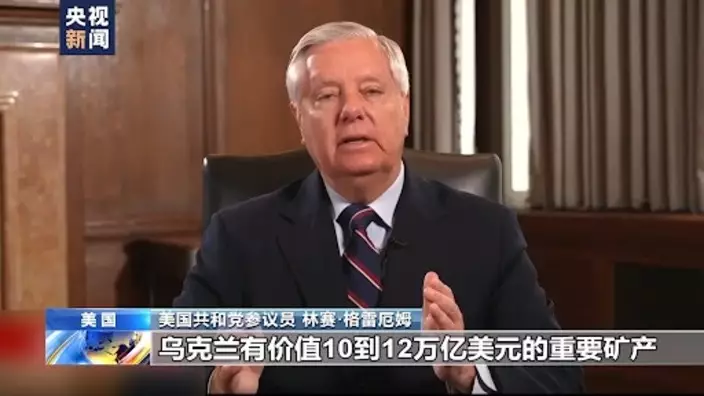
US Republican Senator Lindsey Graham
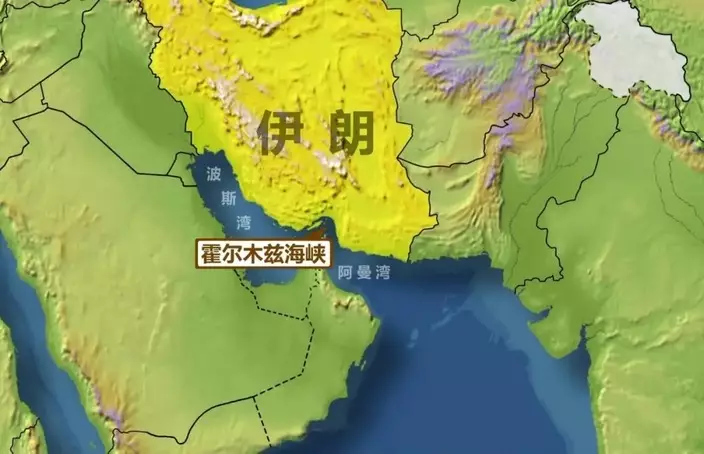
Graham told Fox News that if America successfully overthrows the Iranian government, the operation would rank as "the best money ever spent." "Nobody," he declared, will "threaten [the US] in the Strait of Hormuz again" and Washington would install a "friendly" government in Tehran.
Click to Gallery
US Republican Senator Lindsey Graham
The report notes that after years of planning, China is more resilient than most countries in facing prolonged oil and gas price spikes.
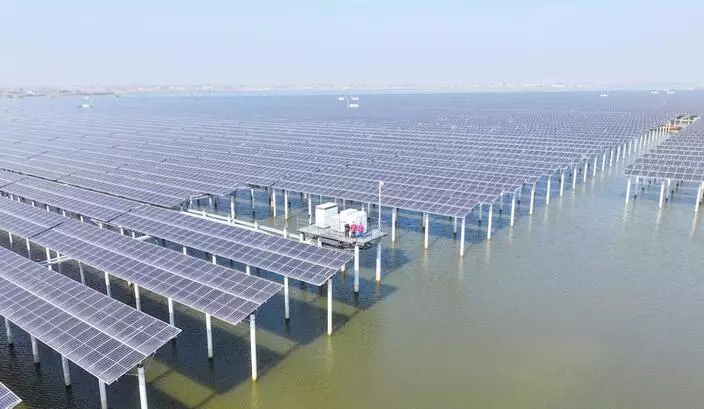
About one-third of China’s energy consumption comes from electricity, and more than one-third of that is generated from solar, wind and hydropower.
China is in a leading position in the manufacturing and use of electric vehicles.
The current crisis may spur a global push for clean energy innovation—and China has already built a strong presence in this field.
Strait of Hormuz
Graham then pivoted to China. "Venezuela and Iran hold 31% of the world's oil reserves," he said. Control that share, and America would "make a ton of money"—a scenario he called "China's nightmare." The math sounds seductive. The Washington Post wasn't buying it though. On March 13, the paper published a detailed rebuttal, arguing that after years of careful strategic planning, China is now more capable than most countries of weathering a prolonged surge in oil and gas prices.
The report notes that after years of planning, China is more resilient than most countries in facing prolonged oil and gas price spikes.
China's Multi-Layered Energy Fortress
Think of China's energy strategy as a multi-layered fortress. Massive crude oil reserves, a fast-growing electric vehicle industry, and enormous investment in coal, renewables, and energy storage all combine to give Beijing a commanding defensive position against supply shocks. As solar and wind projects multiply and new coal-fired plants come online, China's economy is running increasingly on domestic electricity—not imported fossil fuels.
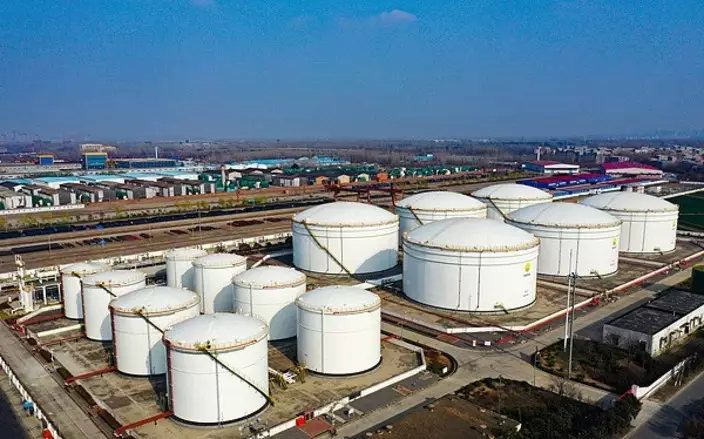
The numbers back that up. China holds around 1.3 billion barrels of crude oil reserves—enough to weather six full months of Hormuz supply disruption. Its rapid buildout of coal-fired generation provides a robust backstop, keeping industrial output and grid stability intact even when import lines go dark.
About one-third of China’s energy consumption comes from electricity, and more than one-third of that is generated from solar, wind and hydropower.
Ben Cahill, an energy expert at the University of Texas at Austin, puts it plainly: China treats import dependence as a strategic vulnerability and has spent years building walls against it. Data from Columbia University's Center on Global Energy Policy confirms the payoff—roughly one-third of China's total energy consumption now comes from electricity, and more than a third of that electricity flows from solar, wind, and hydropower, mostly generated with domestic components.
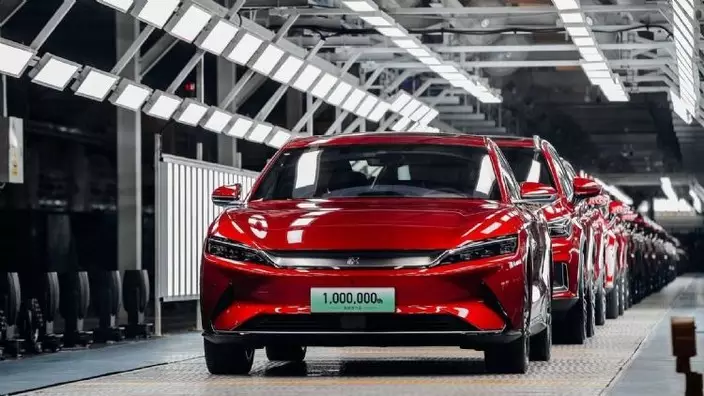
China is in a leading position in the manufacturing and use of electric vehicles.
On the roads, the transformation is equally striking. Most new cars sold in China are now EVs, making it the world leader in both EV production and use. The International Energy Agency credits China's energy transition with avoiding an additional 1.2 million barrels of oil demand per day since 2019—structural savings that give Beijing lasting insulation from precisely the kind of supply shocks Graham is gleefully predicting.
Weaning Off the Hormuz Lifeline
Rush Doshi, Director of the China Strategy Initiative at the Council on Foreign Relations, brings a two-decade perspective. China has systematically reduced its reliance on seaborne oil imports, he notes. Crude flowing through the Strait of Hormuz now accounts for only 40–50% of China's total seaborne oil imports—down significantly from earlier levels.
The contrast with the US is stark. The Washington Post notes that America lags badly in renewable energy and EVs, with an aging power grid pushing electricity costs higher. President Trump's moves to block clean energy projects and slash renewable subsidies have further strangled the growth of wind and solar—leaving the US far more exposed to global oil shocks than its own hawkish rhetoric would suggest.
The irony runs deeper still. The very energy crisis Graham is celebrating could make China an even more attractive partner in renewable energy cooperation. Solar panel glass and grid storage equipment still rely partly on fossil fuels in their production—but China already holds a commanding position in clean energy innovation.
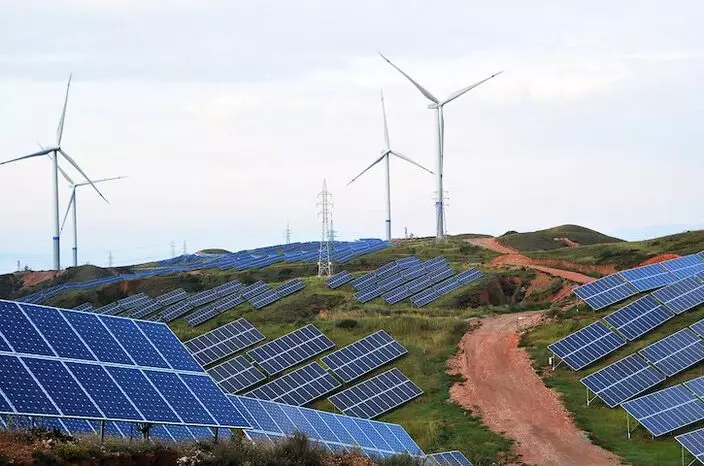
The current crisis may spur a global push for clean energy innovation—and China has already built a strong presence in this field.
American energy policy expert Sarah Ladislaw frames it succinctly: "The current crisis could accelerate the global search for clean energy innovation—and China is already ahead in that field."
Jason Bordoff, founding director of Columbia's Center on Global Energy Policy, captures the emerging paradox head-on. "If you are, say, in Europe, you might not have wanted to increase your dependence on China for all the stuff you need for electrification, like critical minerals and batteries and solar panels," he says. "But in a world where now the oil and gas market looks pretty risky, too, increasing dependence on China for energy may start to look a little different."
Mao Paishou
** The blog article is the sole responsibility of the author and does not represent the position of our company. **
The New Year barely begins, and Washington drops a flashbang on global diplomacy. A sitting president is forcibly detained and taken out of his own country — a move that blows past diplomatic convention and rams straight into international law’s red lines. On Taiwan, the chatter instantly turns into self-projection, as some people try to shoehorn a faraway conflict into the island’s own storyline. Anxiety spreads fast.
Maduro in cuffs, in a US federal courtroom — the raid’s image problem. (AP)
The South China Morning Post says the US action against Venezuela ignites a fierce debate on the island. Some commentary links the raid to the PLA’s recent encirclement drills around Taiwan, arguing parts of those exercises look, at least in form, like the US’s so-called “decapitation operations”: essentially a leadership-targeting operation. Some American scholars also warn this kind of play could set a dangerous precedent and invite copycats.
“Justice Mission-2025” rolls on as the Eastern Theater Command drills.
That debate doesn’t stay academic for long. It pumps up the island’s unease, with some people asking whether the same kind of military method could one day be copied and pasted into the Taiwan Strait. Even if it mostly lives in public talk, a high-tension political environment turns speculation into something that feels like risk.
People on the island don’t read the US move the same way. A small minority treats it as a US power flex, packed with intel integration, precision strike, and long-range reach. But the more clear-eyed view is harsher: such action chips away at the basic consensus of international order — because if major powers can raid at will and topple other countries’ leaders for their own aims, “rules” stop acting like rules.
Anxiety turns into politics
That worry quickly lands in Taiwan’s political arena. On Jan 5, multiple Taiwan legislators pressed Deputy Defense Minister Hsu Szu-chien at the legislature, asking how he views the US action against Venezuela and whether the PLA might replicate a similar model in the Taiwan Strait. Hsu doesn’t answer head-on. Rather, he merely mentioned preparing and drilling for all kinds of sudden contingencies.
Then he pivots to money. He urges the legislature to pass military budget appropriations quickly and plays up the urgency of delays eating into “preparation time.”
That kind of sidestep, unsurprisingly, only deepened public unease.
SCMP, citing multiple security experts, says the DPP authorities try to play down the association — but outsiders don’t fully rule it out. The reason, those experts argue, is the PLA’s continuing push to improve its ability to shift from exercises to real combat. On the island, that alone works like an anxiety amplifier.
Back in the real world, the PLA Eastern Theater Command has been running “Justice Mission-2025” exercises since Dec 29 last year. Official statements spell out the purpose: a stern warning to “Taiwan independence” separatist forces and external interference, and a move aimed at safeguarding national sovereignty and unification. The message is public and clear, there’s no gray area.
Some US think-tank voices pull a more confrontational takeaway from the US action. American Enterprise Institute senior fellow Hal Brands warns the US raid on Venezuela could create a “demonstration effect,” and he speculates China would watch those tactics closely. Some military commentators on the island seized the moment to hype fears, claiming the mainland might act during a “window” when US power is stretched thin.
That line of talk sounds like analysis, but it functions like a panic pump. US scholar Lev Nachman even says bluntly on social media that if a sudden military action hits the Taiwan Strait, the island could suffer “instant collapse” — not just militarily, but as a psychological shock to society.
KMT Chairperson Cheng Li-wun, in an interview, points to Donald Trump repeatedly stressing a shift of strategic focus toward affairs in the Americas. She says the Venezuela incident should be examined through the framework of international law, and she calls for disputes in any region to be resolved by peaceful means rather than force.
Cheng also reiterates the KMT position: uphold the “1992 Consensus,” oppose “Taiwan independence,” and urge Lai Ching-te to clearly oppose “Taiwan independence,” not touch legal red lines, and avoid continuously raising cross-strait conflict risks.
Rules talk meets reality
International reaction also turns critical of Washington’s approach. Multiple governments and regional organizations speak up quickly, condemning the action as a violation of the UN Charter, which explicitly prohibits using force to threaten or violate another nation’s territorial integrity and political independence. The telling part is the silence: the Western countries that often talk about “international rules” either zipped their mouths, or danced around the question this time.
Reuters says that even though China, Russia, and others clearly condemn the US behavior, the Trump administration is unlikely to face strong pressure from allies as a result. That selective muteness, by itself, drains the credibility of the international order.
On Jan. 5, Chinese Foreign Ministry spokesperson Lin Jian commented again, saying the US actions clearly violate international law and the basic norms of international relations, and violate the purposes and principles of the UN Charter. China calls on the US to ensure the personal safety of President Maduro and his wife, immediately release them, stop subverting the Venezuelan government, and resolve issues through dialogue and negotiation.