Forget what you thought you knew—global opinion is swinging fast. The Economist’s latest survey lands like a jolt across Western capitals, with its blunt verdict: China’s cultural clout, economic horsepower, and diplomatic finesse are soaring. The United States, meanwhile, finds itself tripping over Trump-era policy stumbles. Suddenly, the world stage isn’t a one-man show. China is catching up—fast.
The Economist calls the spike in support for China “startling”. Global Times isn’t buying it. For years, Western media stuck to the storyline—China’s rise must trigger anxiety. But people aren’t buying fear-mongering anymore. The data tells a different story. Pragmatism wins. China’s steady growth and consistent, peaceful diplomacy are finding friends everywhere. It’s not magic; it’s momentum. The more China delivers—on trade, stability, real benefits—the more the world leans in.
Click to Gallery
China’s support explodes in global poll, leaving the US playing catch-up.
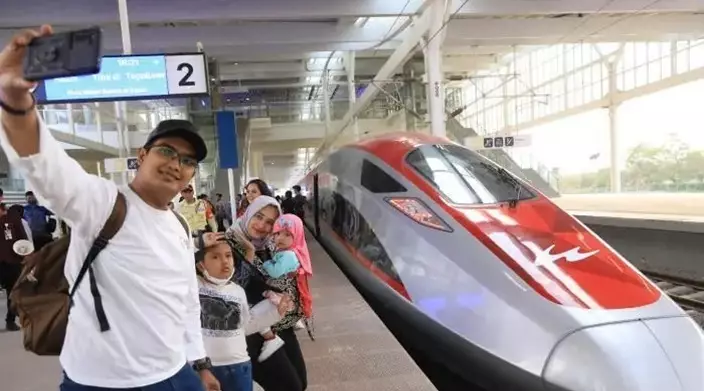
Indonesia’s high-speed bullet—Jakarta–Bandung Rail powers new opportunities.

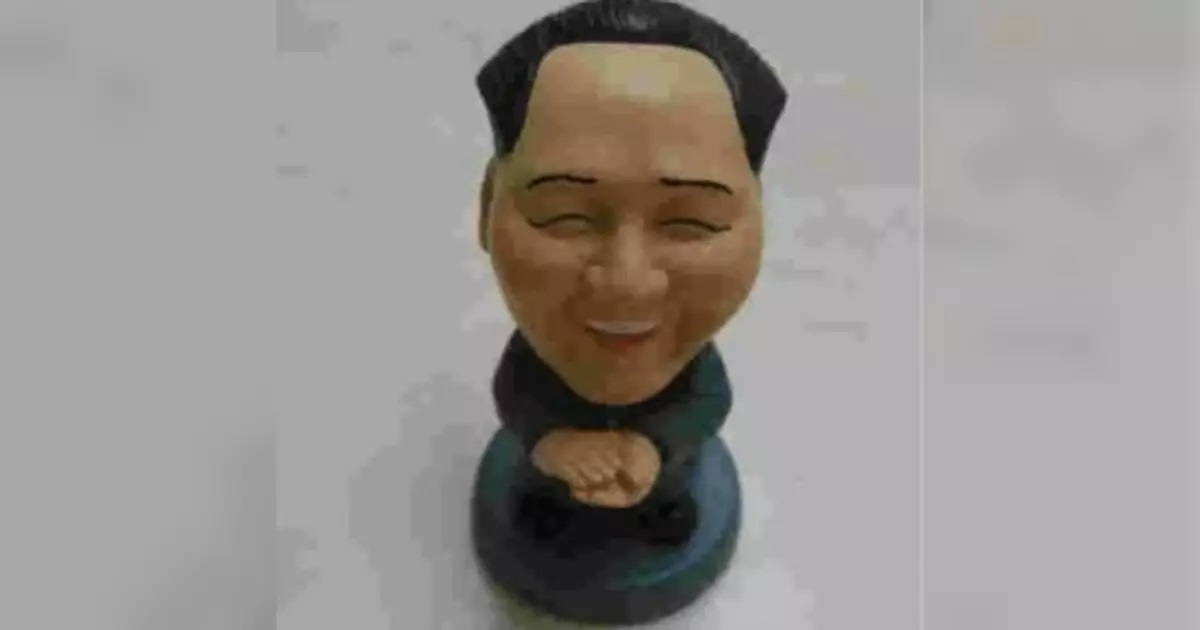
Labubu: China’s soft power icon storms abroad, collecting fans everywhere.
TikTok: The youth can’t get enough, and China leads the digital dance.
China’s support explodes in global poll, leaving the US playing catch-up.
Breadth, Depth, and Changing Minds
Follow the numbers. In a massive poll by the Economist and GlobeScan—32,000 voices, 32 countries, July to September 2025—China’s support rockets 11 points to 33%. The United States slumps to 46%, shy of a majority anywhere. Nearly 40% call China’s global footprint “positive”—a jump from Trump’s first term. Just ask the next generation.
Gen Z isn’t sitting on the fence—they’re almost split. 41% support the United States, 39% champion China. That’s neck and neck. Flip to the over-65 crowd and the gap yawns wide—America still gets the nod by thirty points.
Look south—the warmth toward China spikes in developing nations. Young people everywhere are more open, more enthusiastic. Recent research covering 46 countries had sixty percent rating China “positive.” The global South and the global youth are jumping on the China train, and it’s not a coincidence—it’s payoff for years of tangible benefits.
Indonesia’s high-speed bullet—Jakarta–Bandung Rail powers new opportunities.
China Delivers Real Results
The startling swing may be “partly thanks to China’s Belt and Road Initiative”, which has, in the past 10 years, “seen tens of billions of dollars invested” in regions like Africa and the Middle East.
Infrastructure isn’t a talking point—it’s a revolution. Belt and Road, global initiatives, iconic mega-projects like the China-Laos Railway, Jakarta–Bandung High-Speed Rail, Budapest–Belgrade Railway, and the Port of Piraeus don’t just flash headlines. They deliver: 420,000 new jobs, nearly 40 million people escaping poverty. China is laying track and lifting economies—and the world is noticing.
Labubu: China’s soft power icon storms abroad, collecting fans everywhere.
The Youth Go "Cool China"
Young people crave what’s fresh—and China’s got cool factor now. Innovation, culture, and brands like Labubu, TikTok, and Black Myth: Wukong are racking up fans overseas. Foreigners aren’t just watching—they’re coming, eager to engage. This vibrant, two-way flow builds new bridges, solidifying China's reputation as a destination, not just a headline.
TikTok: The youth can’t get enough, and China leads the digital dance.
China’s style of governance, with results for all to see, has smashed the old myth that “to modernize means to Westernize.” Countries are waking up—there’s more than one road to prosperity, and China’s path offers a real alternative for developing nations craving independence.
Global Times pulls no punches: “Unlike the rise of some major powers in history that came with war and expansion, China has always adhered to the principle of peaceful development.” In messy times, China’s steady hand—UN peacekeeping, hot-spot negotiations, and regional dialogue—makes it the stabilizing force the world is looking for.
China rejects hegemonic power tactics and calls for win–win deals with everyone. Rich nations get calls for mutual respect; developing countries get partnership with no strings attached. Dignity and trust aren’t just wordplays—they’re laid down as the new rules. As the Global Times concluded: “This approach has allowed more nations to feel respected and treated as equals, and many, especially those in the Global South, see China as a trustworthy partner”.
Mao Paishou
** The blog article is the sole responsibility of the author and does not represent the position of our company. **
The New Year barely begins, and Washington drops a flashbang on global diplomacy. A sitting president is forcibly detained and taken out of his own country — a move that blows past diplomatic convention and rams straight into international law’s red lines. On Taiwan, the chatter instantly turns into self-projection, as some people try to shoehorn a faraway conflict into the island’s own storyline. Anxiety spreads fast.
Maduro in cuffs, in a US federal courtroom — the raid’s image problem. (AP)
The South China Morning Post says the US action against Venezuela ignites a fierce debate on the island. Some commentary links the raid to the PLA’s recent encirclement drills around Taiwan, arguing parts of those exercises look, at least in form, like the US’s so-called “decapitation operations”: essentially a leadership-targeting operation. Some American scholars also warn this kind of play could set a dangerous precedent and invite copycats.
“Justice Mission-2025” rolls on as the Eastern Theater Command drills.
That debate doesn’t stay academic for long. It pumps up the island’s unease, with some people asking whether the same kind of military method could one day be copied and pasted into the Taiwan Strait. Even if it mostly lives in public talk, a high-tension political environment turns speculation into something that feels like risk.
People on the island don’t read the US move the same way. A small minority treats it as a US power flex, packed with intel integration, precision strike, and long-range reach. But the more clear-eyed view is harsher: such action chips away at the basic consensus of international order — because if major powers can raid at will and topple other countries’ leaders for their own aims, “rules” stop acting like rules.
Anxiety turns into politics
That worry quickly lands in Taiwan’s political arena. On Jan 5, multiple Taiwan legislators pressed Deputy Defense Minister Hsu Szu-chien at the legislature, asking how he views the US action against Venezuela and whether the PLA might replicate a similar model in the Taiwan Strait. Hsu doesn’t answer head-on. Rather, he merely mentioned preparing and drilling for all kinds of sudden contingencies.
Then he pivots to money. He urges the legislature to pass military budget appropriations quickly and plays up the urgency of delays eating into “preparation time.”
That kind of sidestep, unsurprisingly, only deepened public unease.
SCMP, citing multiple security experts, says the DPP authorities try to play down the association — but outsiders don’t fully rule it out. The reason, those experts argue, is the PLA’s continuing push to improve its ability to shift from exercises to real combat. On the island, that alone works like an anxiety amplifier.
Back in the real world, the PLA Eastern Theater Command has been running “Justice Mission-2025” exercises since Dec 29 last year. Official statements spell out the purpose: a stern warning to “Taiwan independence” separatist forces and external interference, and a move aimed at safeguarding national sovereignty and unification. The message is public and clear, there’s no gray area.
Some US think-tank voices pull a more confrontational takeaway from the US action. American Enterprise Institute senior fellow Hal Brands warns the US raid on Venezuela could create a “demonstration effect,” and he speculates China would watch those tactics closely. Some military commentators on the island seized the moment to hype fears, claiming the mainland might act during a “window” when US power is stretched thin.
That line of talk sounds like analysis, but it functions like a panic pump. US scholar Lev Nachman even says bluntly on social media that if a sudden military action hits the Taiwan Strait, the island could suffer “instant collapse” — not just militarily, but as a psychological shock to society.
KMT Chairperson Cheng Li-wun, in an interview, points to Donald Trump repeatedly stressing a shift of strategic focus toward affairs in the Americas. She says the Venezuela incident should be examined through the framework of international law, and she calls for disputes in any region to be resolved by peaceful means rather than force.
Cheng also reiterates the KMT position: uphold the “1992 Consensus,” oppose “Taiwan independence,” and urge Lai Ching-te to clearly oppose “Taiwan independence,” not touch legal red lines, and avoid continuously raising cross-strait conflict risks.
Rules talk meets reality
International reaction also turns critical of Washington’s approach. Multiple governments and regional organizations speak up quickly, condemning the action as a violation of the UN Charter, which explicitly prohibits using force to threaten or violate another nation’s territorial integrity and political independence. The telling part is the silence: the Western countries that often talk about “international rules” either zipped their mouths, or danced around the question this time.
Reuters says that even though China, Russia, and others clearly condemn the US behavior, the Trump administration is unlikely to face strong pressure from allies as a result. That selective muteness, by itself, drains the credibility of the international order.
On Jan. 5, Chinese Foreign Ministry spokesperson Lin Jian commented again, saying the US actions clearly violate international law and the basic norms of international relations, and violate the purposes and principles of the UN Charter. China calls on the US to ensure the personal safety of President Maduro and his wife, immediately release them, stop subverting the Venezuelan government, and resolve issues through dialogue and negotiation.