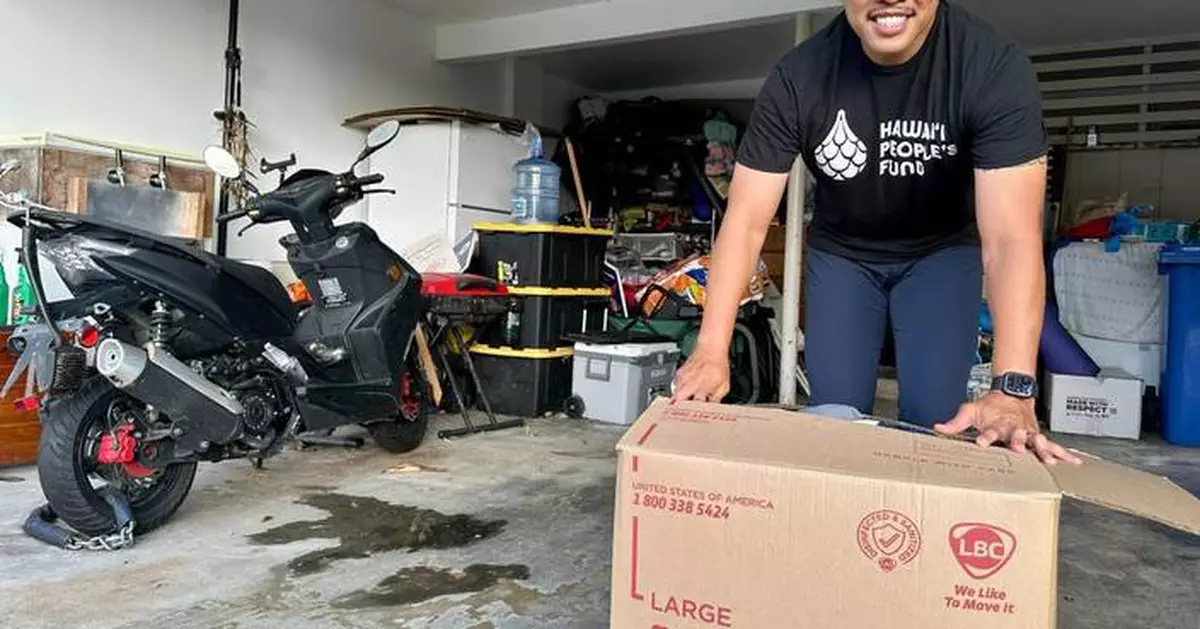
PHOENIX (AP) — Beginning in the 1970s, just about every Filipino household in America was either hauling balikbayan boxes in person or mailing them to relatives back in the Philippines.
These care packages that held goodies from the U.S. were seen as an expression of support during hard economic times — as well as one of pure love.
“Balik" and “bayan,” Tagalog for “return” and “homeland," respectively, was what President Ferdinand Marcos Sr. called the tourism initiatives he established in 1973. After declaring martial law a year earlier, he wanted to compel Filipino immigrants to come back and visit and further “legitimize his new dictatorial regime,” says Adrian De Leon, an assistant professor of history at New York University and author of “Balikbayan: A Revenant History of the Filipino Homeland.”
The balikbayan program proved “incredibly profitable” for the government as middle-class Filipino Americans came and spent capital.
“The dollar stretches way more,” De Leon says. “Bulk buying becomes a way through which overseas Filipinos are incentivized to maintain an economic connection to their homeland so that the government can take cuts from it and use it for like everything.”
The practice of shipping balikbayan boxes grew from there. Initially, canned meat like Spam was a staple of these boxes. Over time, small luxuries like skin-care products, clothes and candy became sought after, too. Then American entertainment like music cassettes and movies on Betamax were tossed in.
“What might have been letters being sent back home, now with the balikbayan box, you’re sending back American pop culture," De Leon says. “Filipinos are doing the work of American soft power for Filipinos at home.”
Sending balikbayan boxes has thrived as its own industry. There are a handful of shipping companies in the U.S. that market door-to-door delivery to the Philippines. Filipino immigrants visiting the country get quicker entry at Manila’s Ninoy Aquino International Airport through a designated “balikbayan lane.”
Jamming as many gifts as possible into a balikbayan box remains culturally ingrained in the Filipino diaspora. Filipino American comedian Rex Navarrete has typically made it a stand-up bit, advising: “One thing you should never pack in a balikbayan box is air.”
Part of a recurring series, “American Objects,” marking the 250th anniversary of the United States. For more American objects, click here. For more stories on the anniversary, click here.
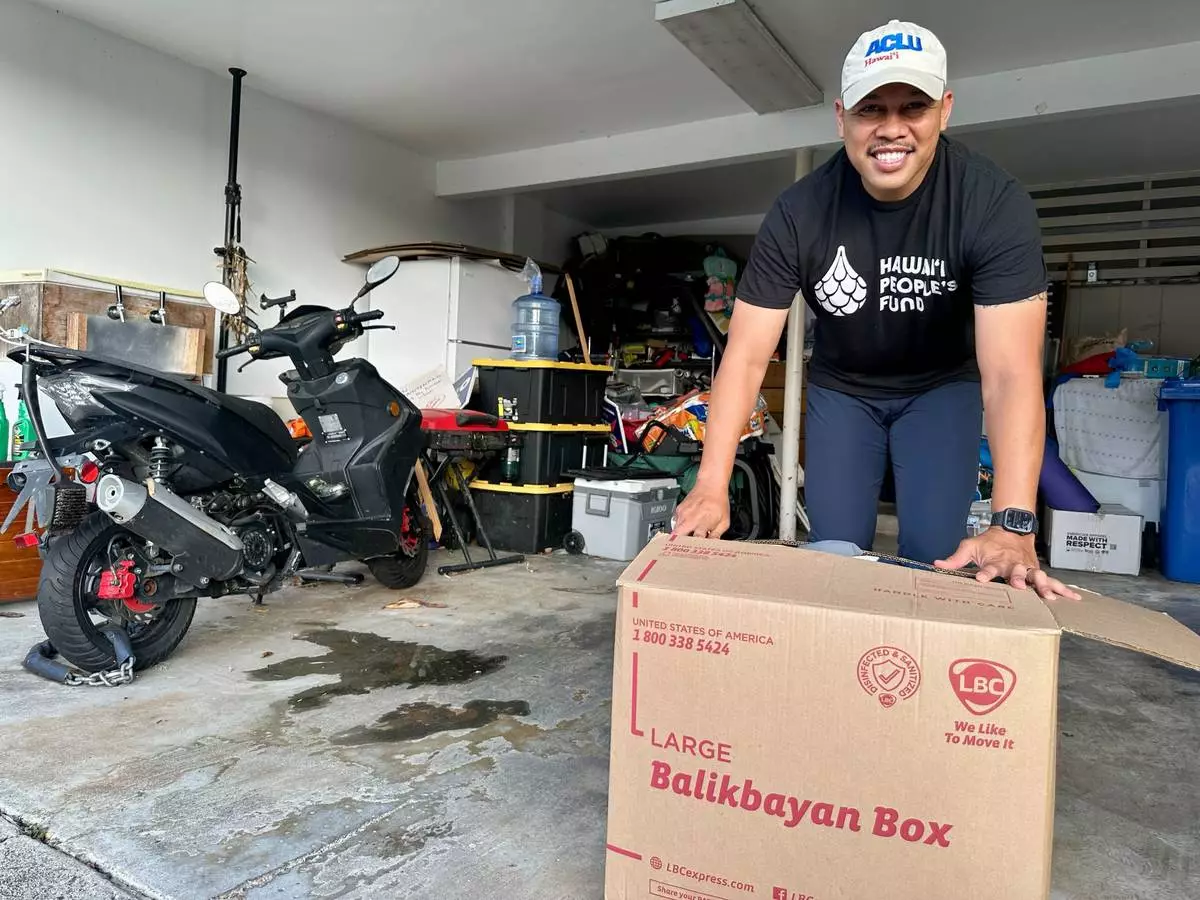
Sergio Alcubilla stands with a balikbayan box he sealed in Honolulu, on Monday, May 11, 2026. (AP Photo/Jennifer Sinco Kelleher)
NEW DELHI (AP) — Iran ’s foreign minister said a lack of trust is the biggest obstacle in negotiations to end the war with the U.S., saying Friday that Tehran would be open to diplomatic help, particularly from China, to help ease tensions. Meanwhile, Israel and Lebanon extended their ceasefire following talks in Washington, U.S. officials said.
Iranian Foreign Minister Abbas Araghchi said contradictory messages have “made us reluctant about the real intentions of Americans.”
“We are in doubt about their seriousness,” he told reporters in New Delhi, adding that negotiations would move forward if Washington was ready for a “fair and balanced deal.”
U.S. President Donald Trump earlier this week dismissed Iran's latest formal proposal as “garbage.” While Iran was said to include some nuclear concessions, Trump has said he wants to remove highly enriched uranium from the country and prevent it from developing nuclear weapons. Iran says its nuclear program is for peaceful purposes.
With talks between Iran and the U.S. at a standstill during the shaky ceasefire, tensions remain high and threaten to tip the Middle East back into open warfare and prolong the worldwide energy crisis sparked by the conflict.
Iran still has a chokehold on the Strait of Hormuz, a vital waterway where a fifth of the world’s oil passed through before the war, and America is blockading Iranian ports.
Trump and Chinese President Xi Jinping, who finished talks on Friday, agreed the strait needs to be reopened.
In Washington, Israel and Lebanon agreed to a 45-day extension of their ceasefire after two “productive” days of talks, which will be followed by more negotiations June 2-3, State Department spokesman Tommy Pigott said.
A shaky truce between Israel and the Hezbollah militant group in Lebanon had been due to end on Sunday.
“We hope these discussions will advance lasting peace between the two countries, full recognition of each other’s sovereignty and territorial integrity, and establishing genuine security along their shared border,” Pigott said on social media.
Despite the ceasefire, both sides continue to trade strikes.
The Israeli military said Friday it struck Hezbollah sites in southern Lebanon after reporting hostile aircraft alerts and launches from across the border. Lebanon’s health ministry said nearly 40 people were wounded in Israeli strikes near the coastal city of Tyre. One strike “leveled” a primary health center and also damaged the neighboring Hiram Hospital, wounding six medical staff members, the statement said.
Araghchi said Friday that Iran would welcome diplomatic support from other countries, particularly from China, citing Beijing’s previous role in facilitating the restoration of ties between Iran and Saudi Arabia.
Beijing has shown little public interest in U.S. requests to get more involved, even though Trump told Fox News’ Sean Hannity that Xi had in their conversations offered to help.
Pakistan said Thursday it was continuing diplomatic efforts to help ease regional tensions. But it declined to disclose details of the discussions or say whether the U.S. had formally responded.
“The clock on diplomacy has not stopped. The peace process is working,” Pakistani Foreign Ministry spokesperson Tahir Andrabi told reporters in Islamabad.
Trump has demanded a major rollback of Iran’s nuclear activities while Iran says it has a right to enrich uranium.
Israeli Prime Minister Benjamin Netanyahu, who launched the war with Trump on Feb. 28, also wants Iran’s highly enriched uranium removed from the country.
Iran’s foreign minister said Friday that the issue of its enriched uranium stockpile is one of the most difficult subjects in negotiations with the U.S.
Russia has previously offered to take the stockpile if Iran is willing to give it up. Araghchi said Russia’s proposal was not currently under active discussion, but could be revisited.
“When we come to that stage, obviously we will have more consultations with Russia and see if the Russian offer can help or not,” he said.
A Chinese private security company said it lost communication Thursday with a ship it was operating as an offshore work platform — the same day the United Kingdom Maritime Trade Operations center reported that a ship anchored off the United Arab Emirates coast had been seized.
Sinoguards said it had “been informed through relevant channels" that the vessel Hui Chuan was taken into Iranian waters for documentation and compliance inspection by the authorities.
The company's emailed statement said there was no indication of any injuries on the ship and that it was cooperating.
The security company and the U.K. maritime center did not say who was behind the seizure. It happened as a senior Iranian official reiterated his country’s claim of control over the Strait of Hormuz and another said it had a right to seize oil tankers connected to the U.S.
The U.S. seized vessels in the Gulf of Oman last month and on Friday the foreign minister of Pakistan said it had secured the return of 11 Pakistani nationals and 20 Iranian citizens who were aboard those vessels. “All individuals are in good health and high spirits,” said the foreign minister, Ishaq Dar, said.
The United Arab Emirates is speeding up the completion of a new pipeline that will allow the Gulf federation to export more oil without routing it through the Strait of Hormuz.
Sheikh Khaled bin Mohammed bin Zayed Al Nahyan, the crown prince of Abu Dhabi, directed state oil company ADNOC to accelerate work on the pipeline, the Abu Dhabi Media Office said Friday.
The oil company already runs a pipeline designed to carry 1.5 million barrels a day from its oil fields to the port of Fujairah on the Gulf of Oman.
The new pipeline, expected to double the company’s export capacity through that port, will become operational next year, the media office said.
Schreck reported from Dubai, United Arab Emirates. Associated Press reporters Munir Ahmed in Islamabad; Koral Saeed in Abu Snan, Israel; Matthew Lee in Washington; and Mae Anderson in New York contributed.
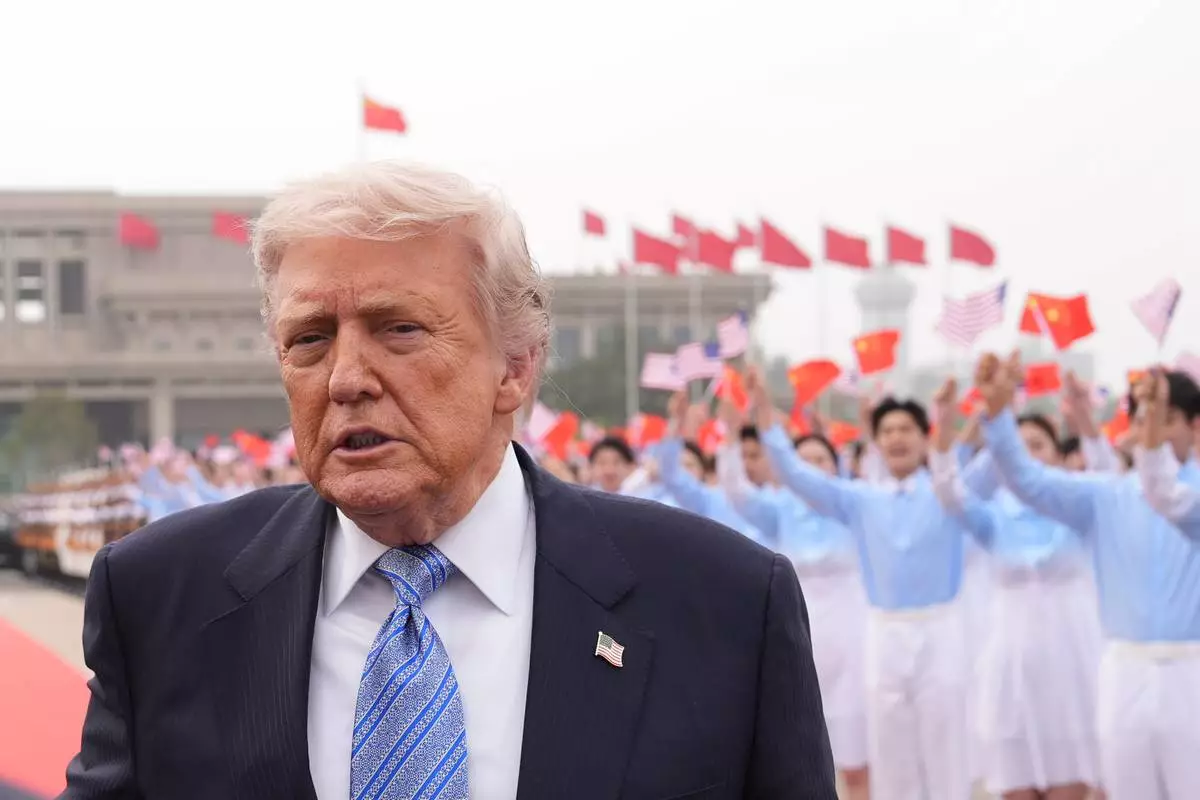
President Donald Trump walks to board Air Force One, Friday, May 15, 2026, at Beijing Capital International Airport in Beijing. (AP Photo/Mark Schiefelbein)
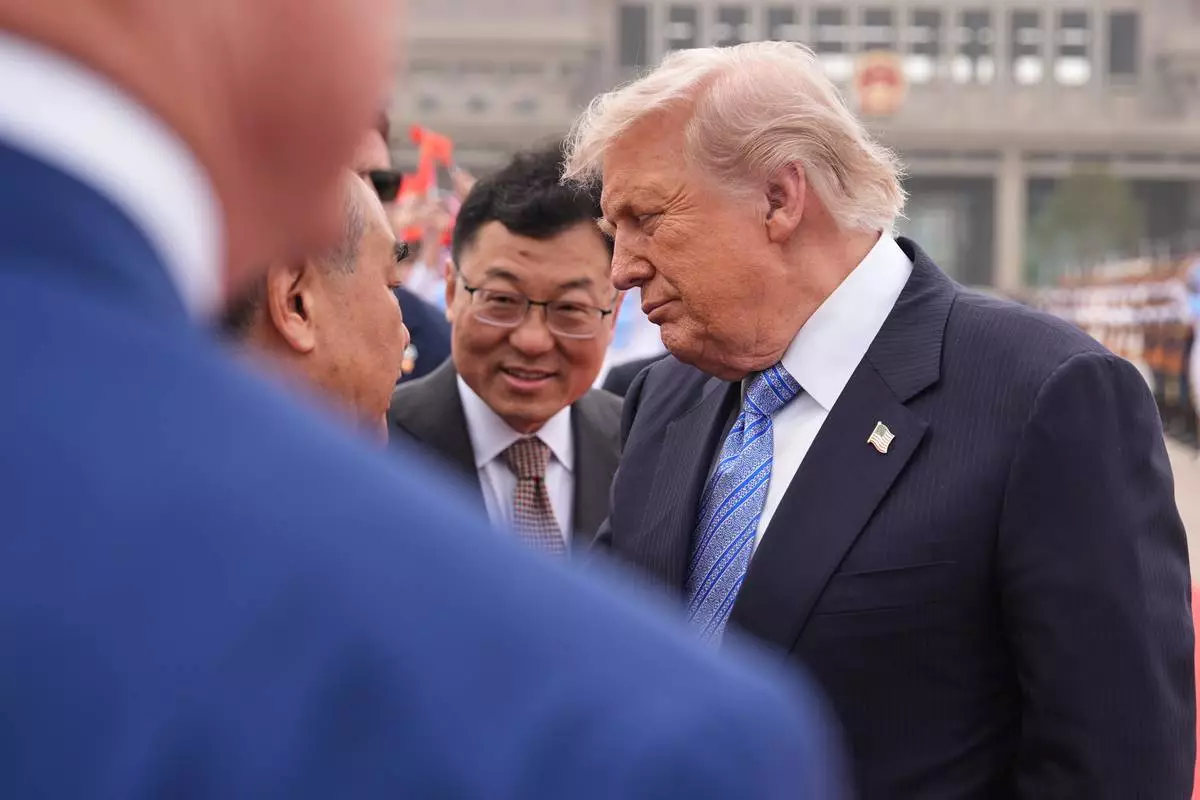
President Donald Trump interacts with China's Foreign Minister Wang Yi before boarding Air Force One, Friday, May 15, 2026, at Beijing Capital International Airport in Beijing. (AP Photo/Mark Schiefelbein)
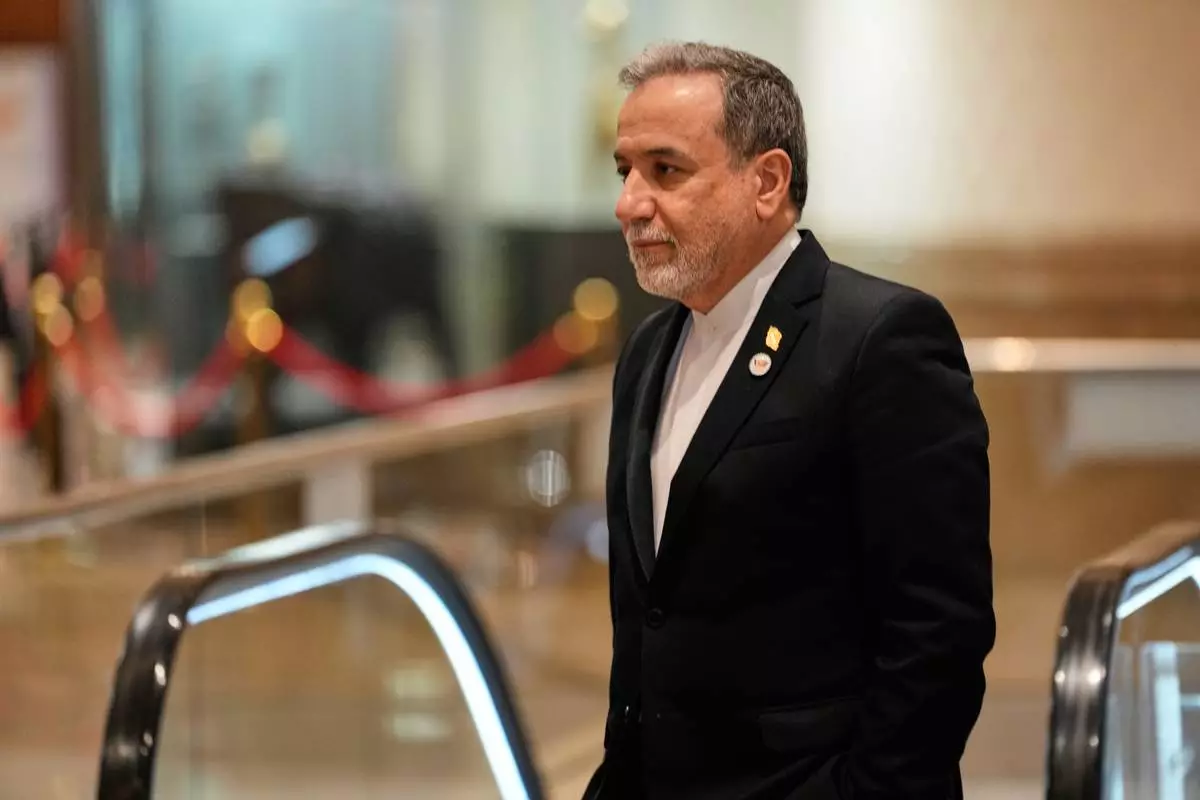
Iranian Foreign Minister Abbas Araghchi arrives for a meeting during the two-day BRICS summit in New Delhi, India, Thursday, May 14, 2026. (AP Photo/Manish Swarup)