SAN JOSE, Calif.--(BUSINESS WIRE)--May 16, 2026--
TetraMem Inc., a Silicon Valley–based semiconductor company developing analog in-memory computing (IMC) solutions, today announced the successful tape-out, manufacturing, and initial silicon validation of its MLX200 platform, a 22nm multi-level RRAM-based analog IMC system-on-chip (SoC).
This press release features multimedia. View the full release here: https://www.businesswire.com/news/home/20260516556464/en/
The achievement marks a significant step toward the commercialization of analog computing architectures based on emerging non-volatile memory technologies, addressing the growing challenges of data movement, power consumption, and thermal constraints in modern AI systems.
As AI workloads continue to scale, system performance is increasingly constrained by the cost of moving data between memory and compute units. Analog in-memory computing offers a fundamentally different approach by performing computation directly within memory arrays, significantly reducing data movement and improving system-level efficiency. TetraMem’s MLX200 platform integrates multi-level RRAM arrays with mixed-signal compute engines to enable high-throughput vector-matrix operations within memory, while maintaining compatibility with advanced CMOS processes.
The multi-level RRAM technology demonstrated at the TSMC 22nm process provides key attributes required for practical deployment, including CMOS compatibility with minimal additional process complexity, low-voltage and low-current operation, strong retention and endurance characteristics, and high multi-level capability that supports improved memory and compute density. Early silicon results indicate consistent functionality across arrays, supporting the viability of this approach for both embedded non-volatile memory and compute-in-memory applications.
This milestone builds on TetraMem’s earlier work on the MX100 platform, fabricated on the TSMC 65nm CMOS process, where the company demonstrated multi-level RRAM devices with thousands of conductance levels (“Thousands of conductance levels in memristors integrated on CMOS,” Nature, March 2023), as well as high-precision analog computing capabilities (“Programming memristor arrays with arbitrarily high precision for analog computing,” Science, February 2024). These prior results established a strong scientific and engineering foundation for scaling the technology to more advanced nodes.
Since 2019, TetraMem has worked closely with the world leading semiconductor foundry to advance RRAM technology from early-stage research into manufacturable silicon. The progress achieved at 22nm reflects continued development in process integration, device uniformity, and system-level co-design.
The MLX200 and MLX201 platforms are designed to support power- and latency-sensitive edge AI applications, including voice and audio processing, wearable devices, IoT systems, and always-on sensing. Evaluated sampling is expected to begin in the second half of 2026, and multi-level RRAM memory IP is available for evaluation and potential licensing.
Dr. Glenn Ge, Co-founder and CEO of TetraMem, commented, “ This milestone reflects years of close collaboration with our foundry partner TSMC and demonstrates the feasibility of bringing multi-level RRAM and analog in-memory computing from computing architecture breakthrough into advanced-node commercial silicon. We believe this approach provides a practical path to improving energy efficiency and scalability for next-generation AI systems.”
The successful realization of the MLX200 platform highlights the viability of multi-level RRAM-based analog computing on advanced semiconductor processes. TetraMem will continue to advance this technology to support emerging AI workloads with improved energy efficiency and system scalability.
About TetraMem
TetraMem is a Silicon Valley–based semiconductor company pioneering analog in-memory computing using multi-level RRAM technology. Its architecture integrates memory and compute to significantly reduce data movement and improve energy efficiency for AI workloads. With a strong foundation in device, circuit, and system co-design, TetraMem is advancing scalable solutions for edge AI and future high-performance computing, working closely with leading foundries and ecosystem partners to bring fundamental science breakthrough technologies into commercial variable volume production.

Photograph of the MLX200 chip with a five-cent coin for size reference
PEA RIDGE, Ark. (AP) — Walmart and Amazon are racing to speed up online order deliveries in rural areas of the U.S., a rich source of untapped sales that major retailers long wrote off as too sparsely inhabited, too remote or too impoverished to serve profitably.
Walmart has a running start in the contest to build a loyal customer base in rural America. Roughly 90% of U.S. residents live within 10 miles of a Walmart store, and 45% of the company’s full-service Supercenters are in places with populations under 20,000, according to a report by investment bank Morgan Stanley.
Competition for the underserved market, which the bank's analysts estimated could be worth up to $1 trillion in annual sales, has intensified as remote workers swell the populations of small towns and communities on the far fringes of metropolitan areas.
The same technology that makes it possible for more people to do office work from wherever they want is making it easier for the nation’s two biggest retail companies to get merchandise to them more efficiently.
Amazon last year invested $4 billion to bring same-day or next-day deliveries to 4,000 smaller cities, towns and rural communities. They included places like the coastal town of Lewes, Delaware, Milton, Florida, a city hat is considered the state's canoe capital, Padre Island, Texas, which is about 37 miles from Corpus Christi, and Abbeville, Louisiana, known for its Cajun food scene.
In a letter to shareholders last month, CEO Andy Jassy said the average monthly number of Amazon customers receiving same-day deliveries doubled in 2025 compared to the year before. Amazon is using artificial intelligence-based tools to better forecast demand, while opening small micro hubs in rural areas.
“While other companies have been backing away from these customers, we’ve been running to them,” Jassy wrote.
The turf battle between the Goliath of e-commerce and Walmart is taking place as FedEx, UPS and the U.S. Postal Service are scaling back or slowing deliveries to some rural areas to cut costs or to concentrate on more profitable businesses.
“These folks want the same types of opportunities, services, experiences, as folks that maybe are more familiar with things like ultra-fast delivery that have been available in places like Manhattan,” David Guggina, now the CEO of Walmart U.S, told The Associated Press last fall.
Here's a look at why and the many ways Walmart and Amazon are cultivating customers in rural America:
The final step of a package’s journey from a distribution hub to a shopper’s home has always presented challenges in rural areas. Delivery drivers have to travel longer distances between stops and sometimes navigate narrow or unpaved roads in thinly populated areas, adding time that increases per-package labor and fuel costs, experts say.
Rural areas also used to be thought of as less financially well-off and therefore less desirable for retailers. But over the past decade, rural counties have shown steady growth in productivity and income, according to consulting firm McKinsey.
The median household income in rural counties rose 43% between 2010 and 2022, reaching an all-time high of nearly $60,000 a year, McKinsey said. Since the pandemic, more exurban communities located as far as 60 miles from a major city's downtown have been among the fastest-growing places in the U.S., the U.S. Census Bureau reported.
The $1 trillion rural shoppers spend annually on electronics, clothing, home furnishings and other merchandise accounts for 20% of all retail purchases in the U.S. except for cars and gasoline, according to Morgan Stanley.
Amazon and Walmart are not the only companies that see potential demand from former city dwellers who grew accustomed to having groceries, clothes and other products brought to their doors quickly.
In an apparent move to stave them off in the countrysides and small towns where it staked a claim, Dollar General in January extended its same-day delivery service to more than 17,000 of the discount chain's 20,000 stores. More than 80% of Dollar General's same-day orders arrived in an hour or less, CEO Todd Vasos told investment analysts in March.
Rural lifestyle retailer Tractor Supply is increasing its direct delivery services to shoppers, particularly for bulky items like fence panels and riding lawnmowers. It announced plans in January to add more than 150 delivery hubs this year for a total of 375, covering more than half of its stores and reaching over 15 million customers.
Both Amazon and Walmart are expanding their use of delivery drones to speed up shipments from stores or order fulfillment centers. They also using methods that reflect their own roots and taking pages from each other's playbooks.
Befitting its origins in traditional retail, Walmart is equipping its physical stores with robotic technology technology that picks and packs online orders from a storage area stocked with the most popular delivery items for each location.
The automated retrieval system helped a Walmart Supercenter in Bentonville, Arkansas, home to Walmart's headquarters, deliver groceries within a 30-mile radius, up from 10 miles just a few years ago, Doug Sanders, Walmart’s senior director of e-commerce store fulfillment, said late last year.
The company further credits the adoption of a hexagonal mapping system with making same-day deliveries available to 12 million more households. The system replaced traditional service boundaries like ZIP codes, which can leave out small areas at the edges, executives said.
The switch also gives Walmart an expanded view of which nearby stores might have the items needed to fulfill customers' orders. Instead of shoppers having to place separate orders from multiple locations to get everything they want, drivers now can retrieve packages from more than one store in their service area.
Amazon, which started as an online bookseller and this year closed its Amazon Fresh supermarkets and Amazon Go convenience stores, is putting local infrastructure in place to shorten the distance between its warehouses and rural areas.
The company is setting up small delivery stations to serve a group of nearby communities based on travel drive time, customer demand, and delivery efficiency, the company said. Packages that were assembled at Amazon’s massive fulfillment centers are sent to the hubs for sorting before local gig workers and contractors pick the up for delivery.
The goal is to halve the time it takes from when a customer places an order to when it arrives, from as many as five days to less than two days, according to Holly Sullivan, Amazon’s vice president of worldwide economic development.
For example, a newly opened station in Roanoke, Virginia, delivers tens of thousands of packages every day that previously weren’t getting to the customer nearly as quickly, station manager Patrick Hamilton said. Delivery routes from the facility can reach customers roughly 90 minutes away by road, spanning both the city and surrounding rural communities.
Dalton Klinger is the operations manager of the Chamber of Commerce for St. George, Utah, a city with a population of 100,000 located in the northeastern part of the Mojave Desert. The city’s mountainous surroundings are difficult for deliveries, but an Amazon station has helped speed them up.
Klinger, who has lived in St. George since 2021, said his Amazon orders of essentials like canned tuna and jars of tomato sauce that used to take four days now get to him in two.
“People are wanting faster deliveries,” he said. “It’s all about instant gratification.”
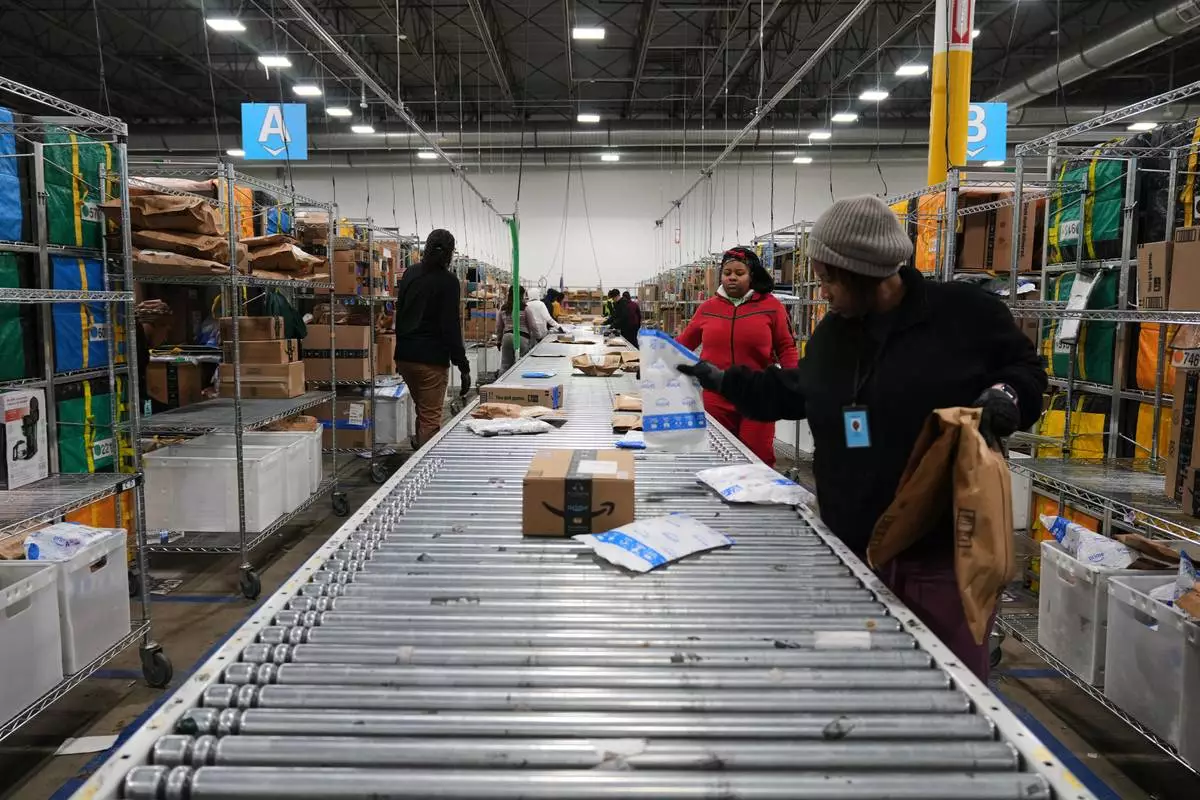
Amazon employees sort packages at a last-mile delivery center in Seaford, Del., Wednesday, Jan. 21, 2026. (AP Photo/Stephanie Scarbrough)

A drone operated by Zipline flies to make a delivery from a Walmart store in Pea Ridge, Ark., Friday, Sept. 26, 2025. (AP Photo/Charlie Riedel)
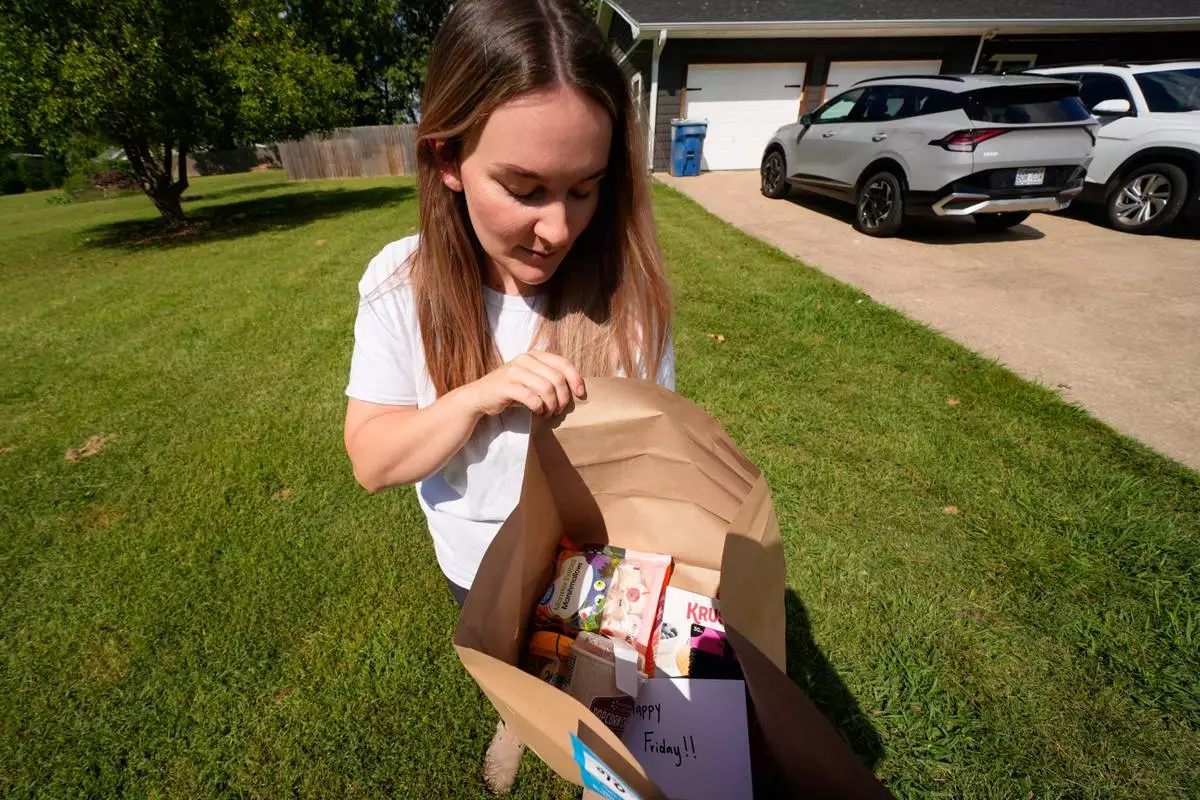
Emily Ingram checks her Walmart order after it was delivered by a drone operated by Zipline in Pea Ridge, Ark., Friday, Sept. 26, 2025. (AP Photo/Charlie Riedel)
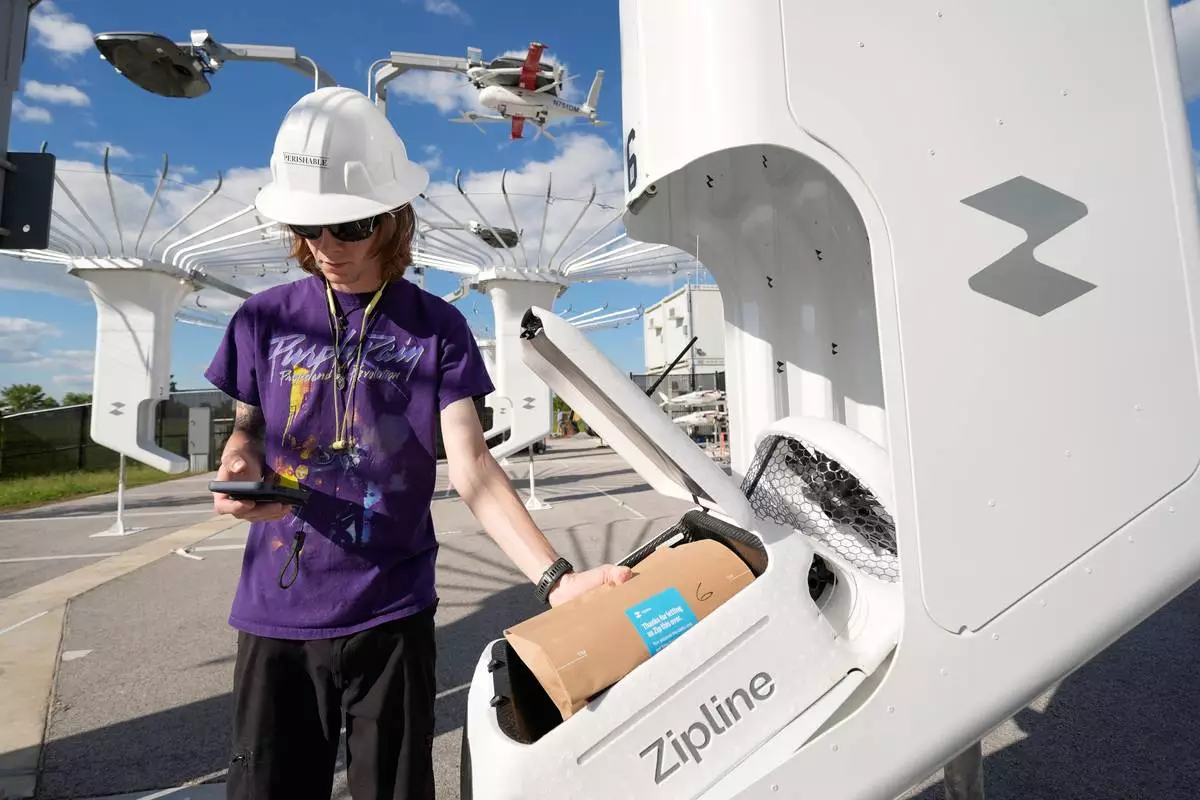
A Zipline employee loads a drone with an order at a Walmart store in Pea Ridge, Ark., Friday, Sept. 26, 2025. (AP Photo/Charlie Riedel)
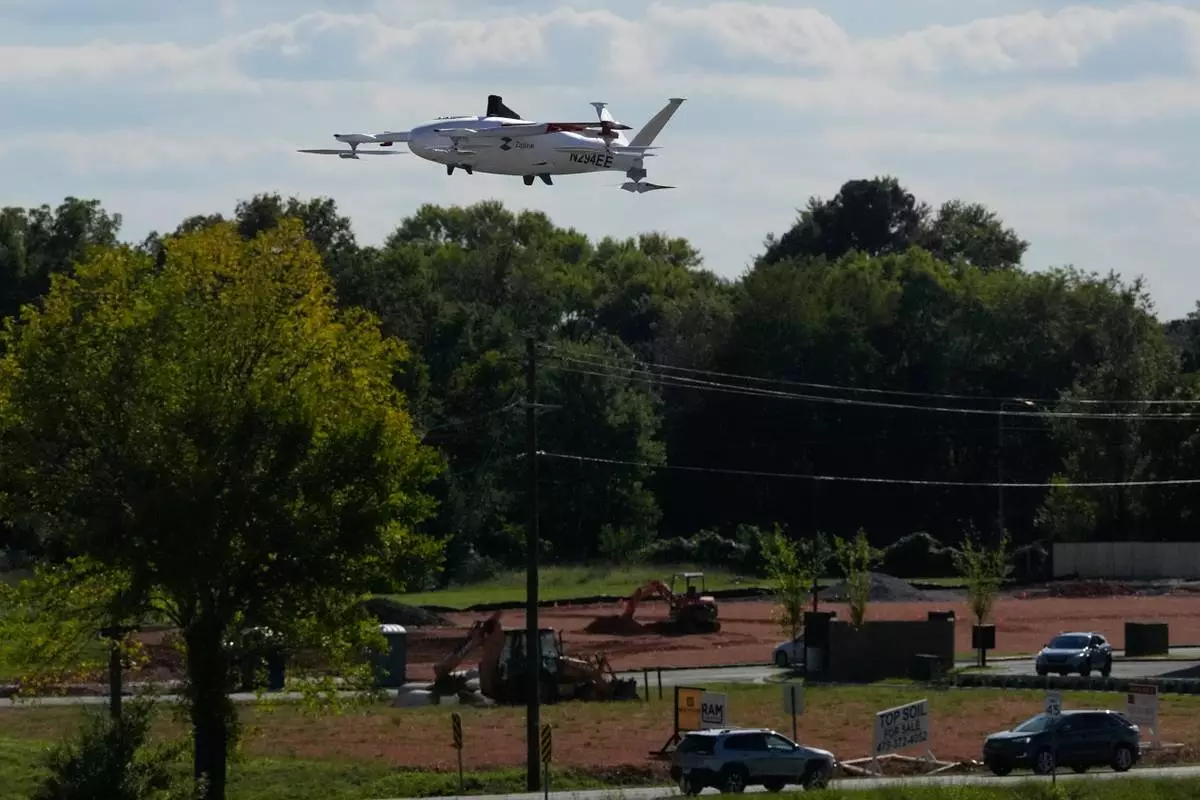
A drone operated by Zipline flies to make a delivery from a Walmart store in Pea Ridge, Ark., Friday, Sept. 26, 2025. (AP Photo/Charlie Riedel)