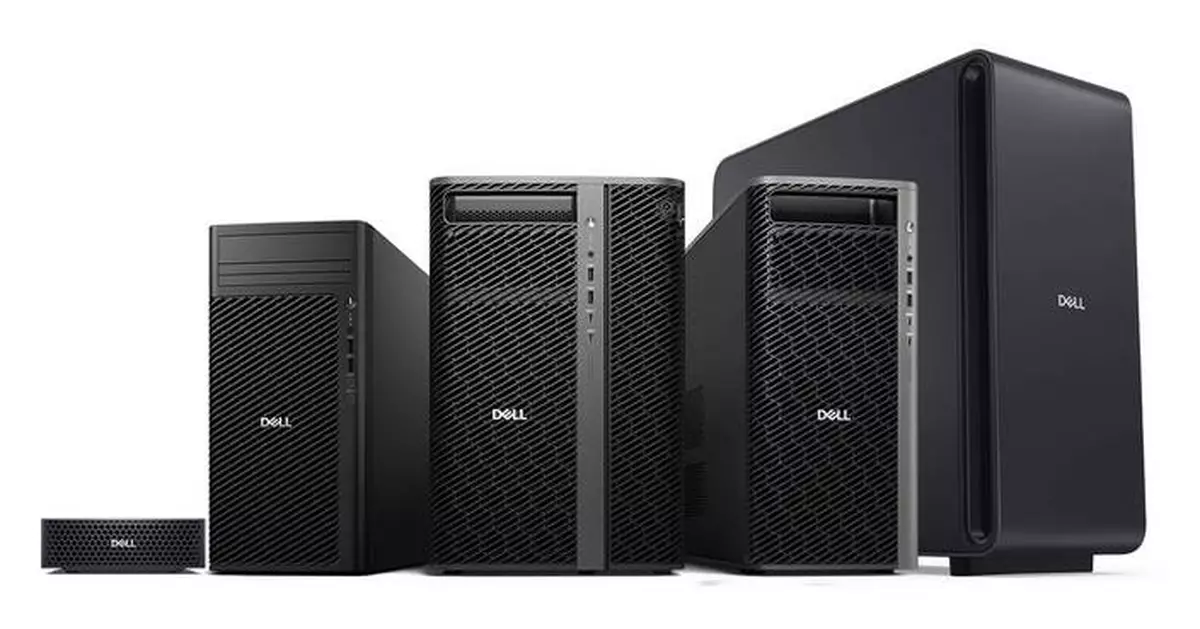
Skip to Content Facebook Feature Image

Dell Technologies Delivers Production-Ready Agentic AI from Deskside to Data Center

Business

Dell Technologies Delivers Production-Ready Agentic AI from Deskside to Data Center
Business

Business

Dell Technologies Delivers Production-Ready Agentic AI from Deskside to Data Center

2026-05-19 01:00 Last Updated At:01:11

LAS VEGAS--(BUSINESS WIRE)--May 18, 2026--

Dell Technologies World-- Dell Technologies (NYSE: DELL) introduces Dell Deskside Agentic AI, a new addition to the Dell AI Factory with NVIDIA that gives workgroups the ability to deploy and scale agentic AI workflows locally without the cost, latency and data sovereignty constraints of cloud-only approaches. With the NVIDIA OpenShell runtime now supported across the entire Dell AI Factory with NVIDIA, enterprises benefit from a single security and policy enforcement layer from deskside workstations to Dell PowerEdge XE servers.

This press release features multimedia. View the full release here: https://www.businesswire.com/news/home/20260518580963/en/

Why it matters

As AI workflows shift toward agentic architectures, token usage compounds at an accelerating rate, driving cloud costs that can quickly become unsustainable despite falling token prices. Cloud-only strategies fall short on what matters at scale: economics, security and data sovereignty. Organizations running agentic AI need infrastructure that addresses all three and scales with workloads without requiring a rebuild every time they mature.

The Dell AI Factory with NVIDIA delivers an enterprise-ready path from the desk where decisions are made to the data center where they scale. For agentic AI workloads of various sizes, organizations can break even versus public cloud API costs in as little as three months with Dell Deskside Agentic AI. 1 Deskside systems keep inferencing local, costs predictable and data secure, giving businesses greater control over their AI environment. NVIDIA OpenShell gives developers and IT teams a secure, sandboxed environment to build, deploy and govern AI agents across the Dell AI Factory with NVIDIA from workstations to servers. Teams can build and iterate more freely while reducing exposure to unpredictable cloud inference costs, bandwidth expenses and IP risks.

A complete solution for production-ready deskside agentic AI

Dell Deskside Agentic AI is built around the reality that roughly over 50% of agentic workflows run on open-weight models. 2 This is where the 30-billion to 284-billion parameter model range performs bulk reasoning that efficiently drives operations forward. From coding assistants and research agents to highly secure, private AI assistants for regulated industries, the solution offers a range of Dell high-performance workstations, each sized for different workload and budget requirements. These pair with the NVIDIA NemoClaw reference stack and Dell Services to handle heavy AI workloads wherever they make the most economic sense. With Dell Deskside Agentic AI, organizations can reduce spend up to 87% compared to cloud APIs, over two years. 3

Reliable framework for every workload

Deploying agentic AI in production requires a consistent framework that protects sensitive data, integrates with current operations and covers the full infrastructure stack. NVIDIA OpenShell, now supported across the entire Dell AI Factory with NVIDIA, gives organizations a sandboxed environment to build, deploy and govern agents with privacy and security controls at runtime. It spans Dell high-performance workstations through Dell PowerEdge XE servers on Canonical Ubuntu and Red Hat AI in the Dell AI Factory with NVIDIA. Developing and deploying agents closer to data improves governance, security and operational control.

NVIDIA AI-Q 2.0 blueprint support gives organizations a tested foundation to deploy multi-agent workflows handling research, decision support and complex tasks, accelerating the move from pilot to production. Now available as the Dell-NVIDIA AI-Q 2.0 Reference Architecture, powered by Dell AI Data Platform, it is engineered for demanding on-premises workloads in regulated industries including financial services, public sector and manufacturing.

Perspectives

Jeff Clarke, chief operating officer, Dell Technologies:
"The most efficient token is the one produced closest to the data, and most enterprise data isn't in the cloud. Dell Deskside Agentic AI gives every workgroup a secure local environment to run agents, keep costs predictable and keep IP inside the building. What works at the desk scales to the data center. That's a deployment model for the next decade."

Justin Boitano, vice president, AI Platforms, NVIDIA:
“As enterprises reshape and scale the future of work with agentic AI, they’re seeking infrastructure that spans the full enterprise — from our desks where work happens to the AI factories where intelligence scales. With NVIDIA OpenShell across the Dell AI Factory with NVIDIA, enterprises can develop locally, scale securely and deploy agentic AI on one consistent platform.”

Ryan Shrout, president, Signal65:
“As enterprises transition from AI experimentation to full-scale production, the need for secure, scalable and cost-effective infrastructure has never been greater. Dell Deskside Agentic AI, as part of the Dell AI Factory, bridges the gap between local control and enterprise scalability, while providing headroom for continued iteration. This deskside to data center capability is unique and empowers organizations to harness the full potential of agentic AI while maintaining data sovereignty and predictable costs.”

Availability

Additional resources

About Dell Technologies

Dell Technologies (NYSE: DELL) helps organizations and individuals build their digital future and transform how they work, live and play. The company provides customers with the industry's broadest and most innovative technology and services portfolio for the AI era.

©Intel, the Intel logo and other Intel marks are trademarks of Intel Corporation or its subsidiaries.
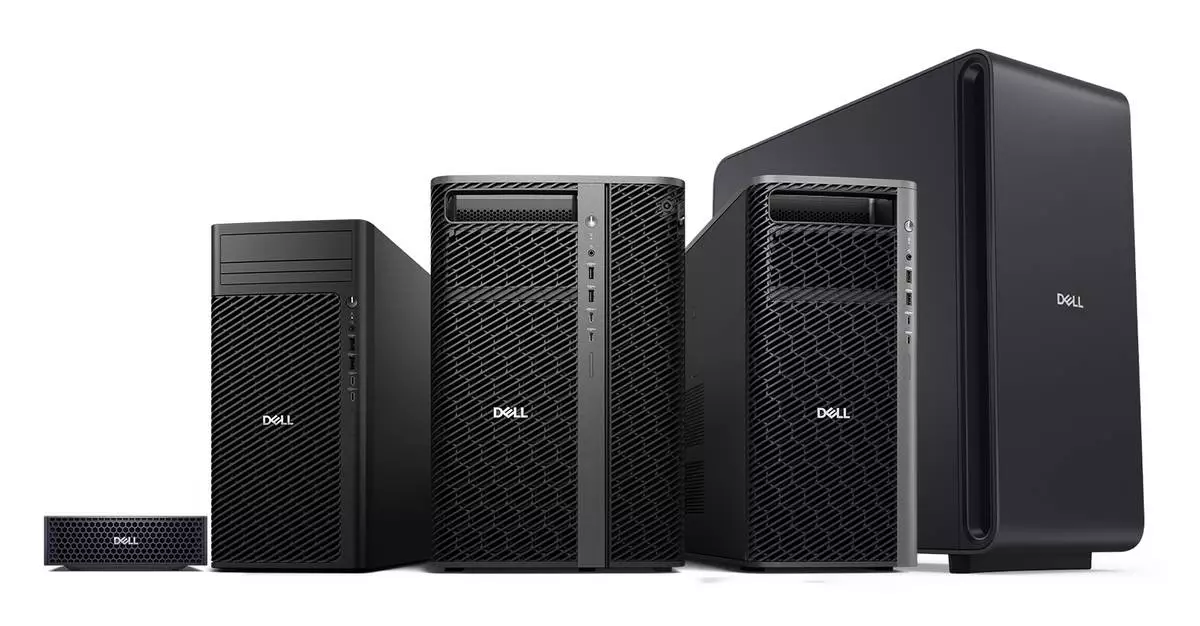
 

Dell Deskside Agentic AI

Dell Deskside Agentic AI

NEW YORK (AP) — Oil prices swung Monday after a scare overnight where prices popped and then moderated, and the yo-yo moves kept stock markets worldwide unsettled.

The S&P 500 was down 0.5% after flipping between modest gains and losses. The Dow Jones Industrial Average fell 35 points, or 0.1%, as of 12:47 p.m. Eastern time. The Nasdaq composite was down 1%, though it remains near its all-time high set last week like the S&P 500.

The center of the action recently has been the world’s bond markets, where climbing yields have cranked up the pressure on economies and stock markets worldwide. Higher yields make it more expensive for households and businesses to borrow, which U.S. homebuyers are all too familiar with because of higher mortgage rates.

Higher interest rates could also make it more difficult for companies to borrow to build huge data centers for artificial-intelligence technology, which has been driving much of the U.S. economy’s growth.

Yields have been climbing for several reasons, and at the top of them have been oil prices. The war with Iran has trapped many oil tankers in the Persian Gulf instead of delivering crude to customers worldwide, which in turn has driven up crude’s price.

The price for a barrel of Brent crude oil, the international standard, got as high as $112 overnight after President Donald Trump told Iran on his social-media platform Sunday that “the Clock is Ticking, and they better get moving, FAST, or there won’t be anything left of them.”

Prices eased from there on hopes the two sides can reach a deal that would get oil flowing worldwide again. The price for a barrel of Brent crude was at $110.93, up 1.5% from Friday. That's well above its roughly $70 price from before the war.

That drop in oil prices helped boost stock markets that hadn’t finished trading yet, and France’s CAC 40 index went from a loss of 1.2% to a gain of 0.4%. By that point, Japan’s Nikkei 225 had already finished 1% lower, with Hong Kong's Hang Seng down 1.1%.

On Wall Street, Dominion Energy pushed upward on the U.S. stock market after NextEra Energy agreed to buy it in an all-stock deal to create the world’s largest regulated electric utility by market value. Dominion rallied 8.9%, and NextEra fell 6.4%.

Boston Scientific climbed 4% after saying it would spend $2 billion on its previously announced stock buyback program of $5 billion by the end of June. Such purchases send cash directly to investors and boost the company’s per-share earnings.

Delta Air Lines rose 0.4%, aided by lower oil prices and news that Berkshire Hathaway bought more than $2.6 billion of the airline’s stock. Berkshire Hathaway built a reputation as a value investor able to buy stocks at low prices under its former leader, Warren Buffett.

Pulling downward on Wall Street was Regeneron Pharmaceuticals. It dropped 9.9% after reporting discouraging data from a trial of a treatment for melanoma.

This upcoming week will offer little in terms of data on the U.S. economy, but a heavily anticipated report on Nvidia’s latest quarterly results will arrive Wednesday. The chip company has routinely blown past analysts’ expectations each quarter, while forecasting even bigger growth than Wall Street had thought. It will likely need to keep up such momentum to keep AI stocks driving the market to more records.

Target, Home Depot and Walmart will also report their latest quarterly results this week.

In the bond market, the yield on the 10-year Treasury was at 4.59%, unchanged from late Friday. It climbed as high as 4.63% overnight when oil prices were at their heights.

The yield on the 10-year Japanese government bond rallied toward its highest level since the late 1990s.

Yields worldwide have been climbing on fears about higher inflation caused by higher oil prices, which in turn could push central banks not only to abandon the thought of cutting interest rates but also consider hiking rates. Higher rates would slow inflation but at the cost of hurting the economy and dragging on prices for stocks and other investments.

Several solid reports on the U.S. economy recently, along with worries about the U.S. government’s huge and growing debt problem, are also pushing upward on yields.

AP Business Writers Chan Ho-him and Matt Ott contributed to this report.

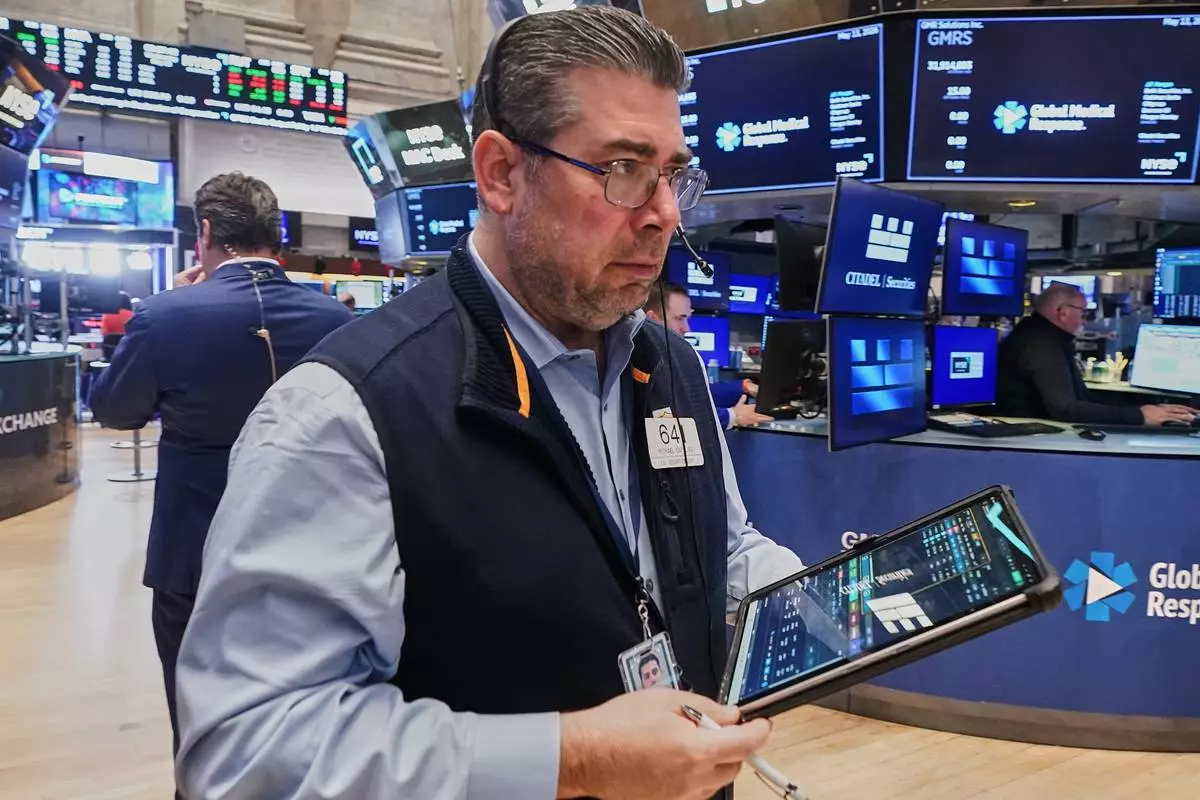
Trader Michael Milano, center, works with colleagues on the floor of the New York Stock Exchange, Wednesday, May 13, 2026. (AP Photo/Richard Drew)

Trader Michael Milano, center, works with colleagues on the floor of the New York Stock Exchange, Wednesday, May 13, 2026. (AP Photo/Richard Drew)

Trader Michael Capolino works on the floor of the New York Stock Exchange, Wednesday, May 13, 2026. (AP Photo/Richard Drew)

Trader Michael Capolino works on the floor of the New York Stock Exchange, Wednesday, May 13, 2026. (AP Photo/Richard Drew)

A Global Medical Response helicopter sits in front of the New York Stock Exchange before the planned IPO of GMR Solutions, Inc., Wednesday, May 13, 2026. (AP Photo/Richard Drew)

A Global Medical Response helicopter sits in front of the New York Stock Exchange before the planned IPO of GMR Solutions, Inc., Wednesday, May 13, 2026. (AP Photo/Richard Drew)

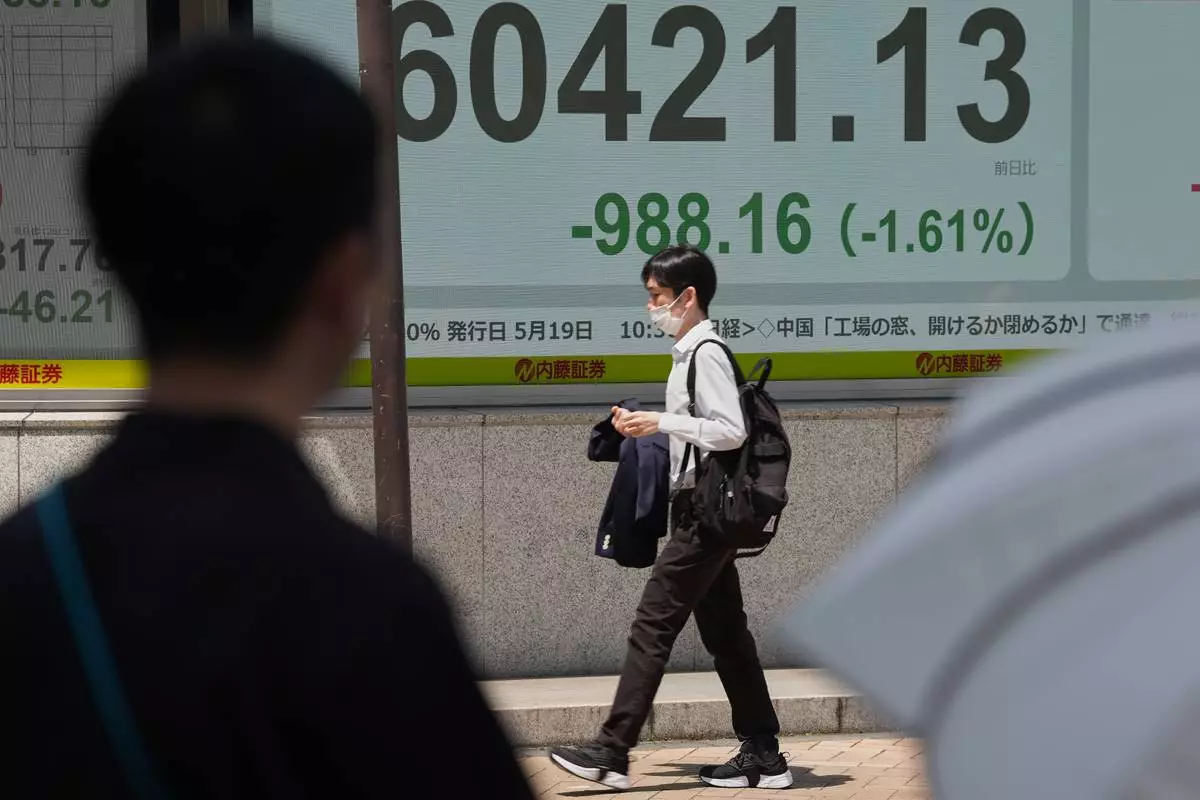
A person walks in front of an electronic stock board showing Japan's Nikkei index at a securities firm Monday, May 18, 2026, in Tokyo. (AP Photo/Eugene Hoshiko)

A person walks in front of an electronic stock board showing Japan's Nikkei index at a securities firm Monday, May 18, 2026, in Tokyo. (AP Photo/Eugene Hoshiko)

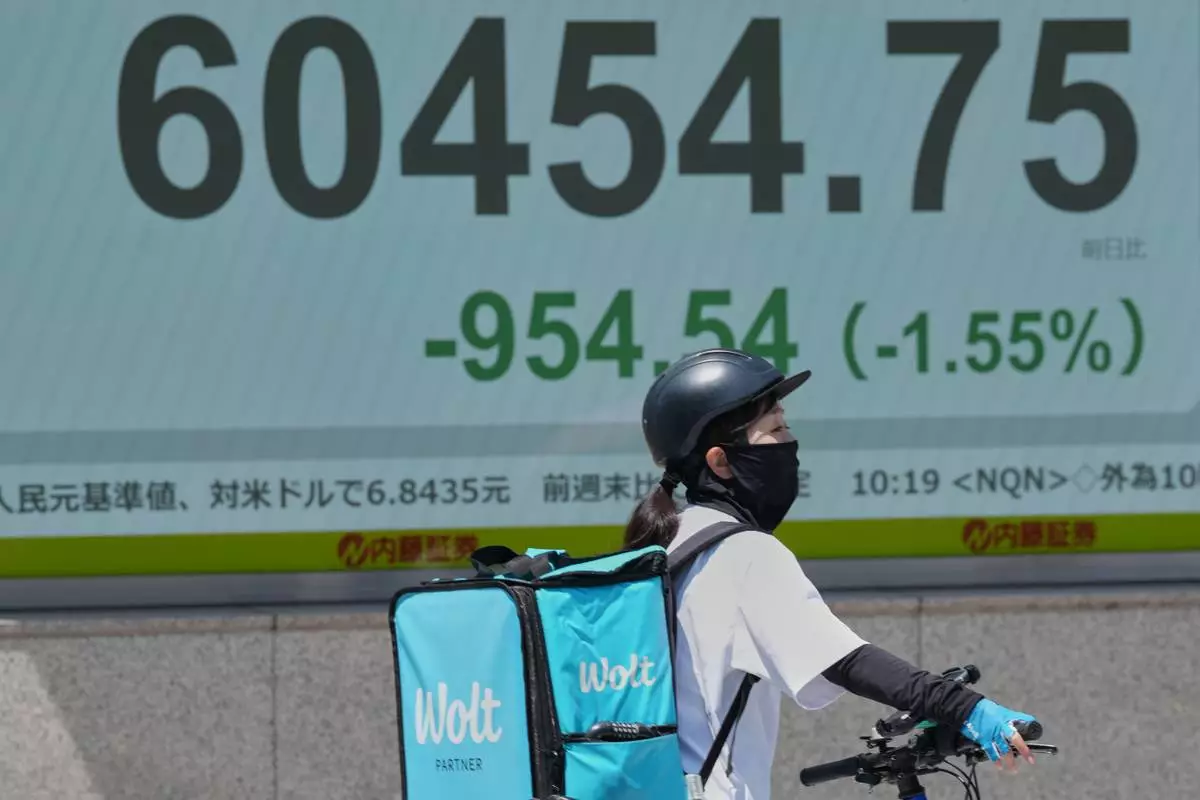
A delivery person on a bicycle waits for a traffic light near an electronic stock board showing Japan's Nikkei index at a securities firm Monday, May 18, 2026, in Tokyo. (AP Photo/Eugene Hoshiko)

A delivery person on a bicycle waits for a traffic light near an electronic stock board showing Japan's Nikkei index at a securities firm Monday, May 18, 2026, in Tokyo. (AP Photo/Eugene Hoshiko)

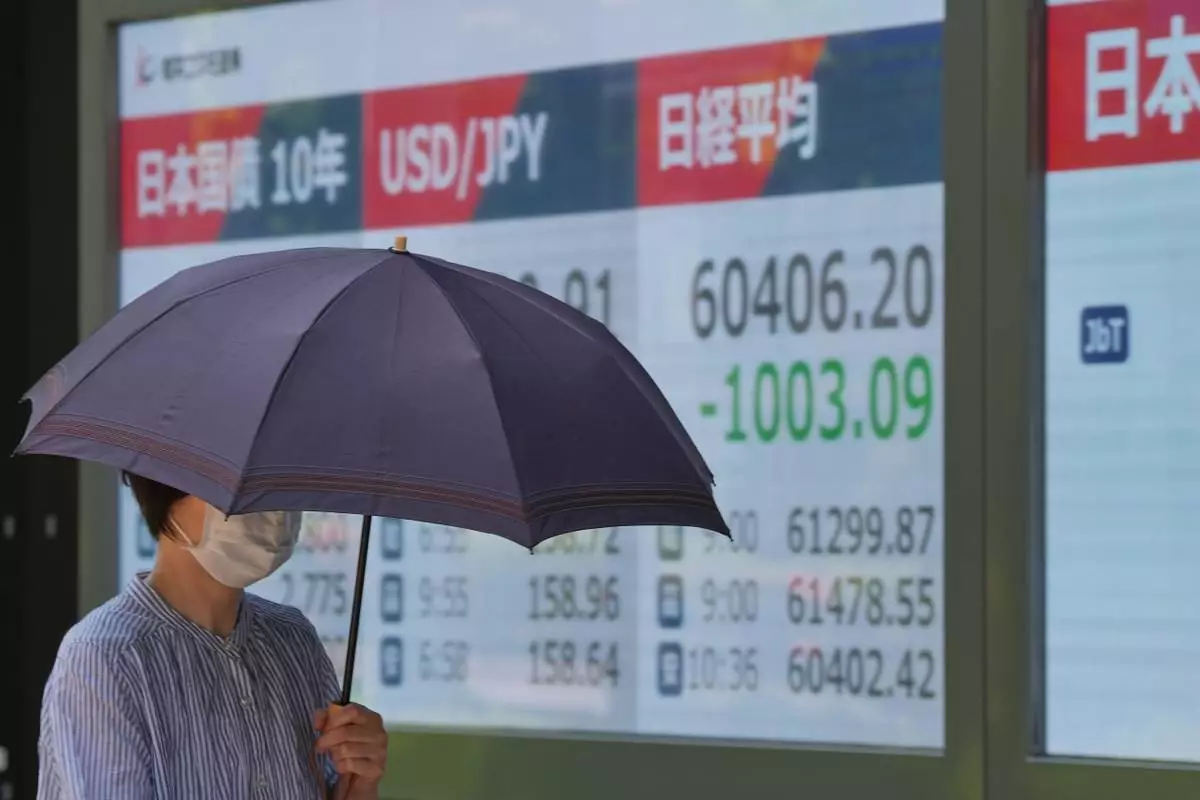
A person walks in front of an electronic board at a business building showing Japan's Nikkei index, Monday, May 18, 2026, in Tokyo. (AP Photo/Eugene Hoshiko)

A person walks in front of an electronic board at a business building showing Japan's Nikkei index, Monday, May 18, 2026, in Tokyo. (AP Photo/Eugene Hoshiko)

A person walks in front of an electronic stock board showing Japan's Nikkei index at a securities firm Monday, May 18, 2026, in Tokyo. (AP Photo/Eugene Hoshiko)

A person walks in front of an electronic stock board showing Japan's Nikkei index at a securities firm Monday, May 18, 2026, in Tokyo. (AP Photo/Eugene Hoshiko)

Recommended Articles