Skip to Content Facebook Feature Image

Affordable Care Act enrollment projected to plunge by 5 million as costs spike, analysis shows

News

Affordable Care Act enrollment projected to plunge by 5 million as costs spike, analysis shows
News

News

Affordable Care Act enrollment projected to plunge by 5 million as costs spike, analysis shows

2026-05-20 02:37 Last Updated At:02:41

NEW YORK (AP) — Nationwide enrollment in the Affordable Care Act health insurance marketplace could plummet by nearly 5 million people this year, shrinking the number of participants in the program by more than 20%, according to a new analysis from the healthcare research nonprofit KFF.

Those who remain covered are also paying more for healthcare than they used to, the group found, with the average enrollee's deductible growing by more than $1,000 and the average monthly premium payment rising by $65.

“No matter how you slice it, people are paying more,” said Cynthia Cox, a vice president of KFF who co-authored the report.

The projected drop-off, much starker than initial federal data suggested, reveals how rising health costs, in part due to the Jan. 1 expiration of subsidies that had helped the vast majority of enrollees pay for their coverage, are forcing Americans to make tough decisions mid-year about whether to keep or go without health coverage.

It's an issue that could play heavily in this year's midterm elections, where voter concerns about economic stressors have taken top billing in many of the most competitive races around the nation.

ACA enrollment could fall from 22.3 million Americans in 2025 to around 17.5 million this year, according to KFF's report, which relied on federal and state data as well as findings from the actuarial firm Wakely Consulting Group.

That's a significant drop for the government's flagship subsidized health insurance program for working-age Americans who don't qualify for Medicaid. In recent years, ACA plans have become a popular choice for gig workers, farmers, ranchers, hairstylists and others who don't get their health coverage through an employer.

Part of the reason for such a large decline is that many Americans were auto-renewed in their plans from last year, Cox said. In many cases, those plans are now far more expensive because of expired subsidies and other market factors.

When people become unable to pay the monthly fees partway through the year, they lose the coverage, Cox said.

A higher proportion of middle-income Americans dropped coverage compared to other groups, the report found. That group makes too much money to qualify for the remaining subsidies in the program that are reserved for low-income enrollees. But they don't make enough to comfortably afford their health coverage without the COVID-era enhanced subsidies that are now expired.

Drops in ACA sign-ups were seen across most states, KFF found, though states that had their own exchanges retained a larger percentage of enrollees than states that relied on the federal marketplace.

The Trump administration has maintained that federal efforts to root out fraud in the ACA program are responsible for most of this year's drop-offs. The Centers for Medicare and Medicaid Services, whose final 2026 enrollment data is not yet public, didn't immediately respond to a request for comment on KFF's report.

Last year, anticipating the expiration of the COVID-era subsidies that had boosted enrollment and offset costs for ACA users for the past four years, KFF had projected that premium payments would more than double in 2026.

As it turned out, premium payments jumped by a more modest 58% on average, the new analysis found. That was partially because many people downgraded to lower-premium, higher-deductible plans that will cost them more money only if they use the coverage, KFF's report said.

“People are trying to hang on to their health insurance coverage any way they can, even if that means they have a deductible of $7,000,” Cox said.

Others kept the same plans and are struggling to manage higher monthly costs. Caitlin McElroy, 38, in Orlando, Florida, saw her premium payment soar from $32 to $89 per month, but she needs the coverage to manage her Crohn's disease and her mental health.

On her modest salary, she makes it work by sacrificing social events, delaying utility payments and cutting fresh produce out of her diet when she can't afford it.

“I try to just cut corners wherever I can,” she said in an interview.

The potential good news, Cox said, is that insurers seem to have predicted and already made adjustments for many of the marketplace changes that are playing out.

That could mean future health costs don’t have to rise so sharply.

“I’m hopeful that this could be a one-time market correction and that we might not need to see such a high premium spike in the coming year,” Cox said.
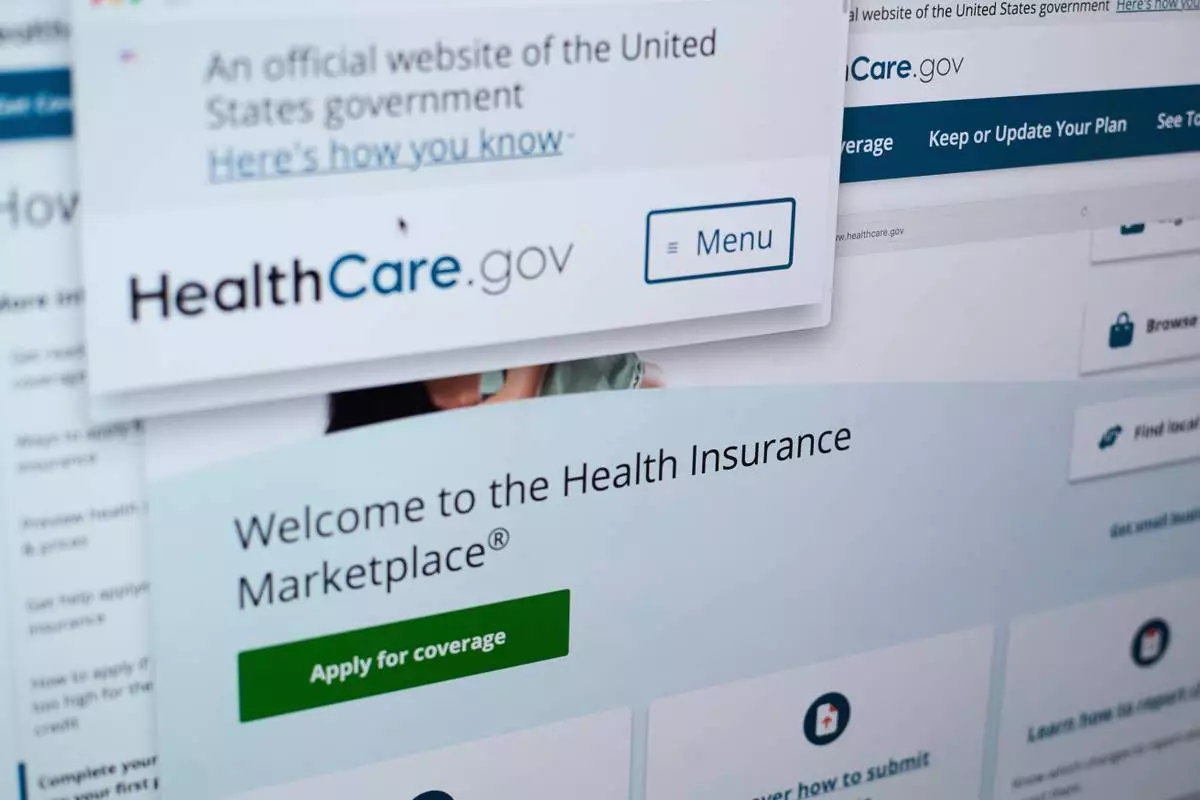
FILE - Pages from the U.S. Affordable Care Act health insurance website healthcare.gov are seen on a computer screen in New York, Aug. 19, 2025. (AP Photo/Patrick Sison, File)

FILE - Pages from the U.S. Affordable Care Act health insurance website healthcare.gov are seen on a computer screen in New York, Aug. 19, 2025. (AP Photo/Patrick Sison, File)
WASHINGTON (AP) — Secretary of State Marco Rubio will travel this week to a NATO foreign ministers meeting in Sweden, where U.S. plans to reduce troop levels in Europe coupled with President Donald Trump’s often inconsistent stance on the alliance have created concern while the world grapples with the fallout from the Iran war and rising energy prices.

The State Department said Tuesday that Rubio would attend the NATO meeting in Helsingborg on Friday, one of the last senior-level NATO gatherings before alliance leaders meet at a summit in Ankara, Turkey, in July.

Rubio will then travel on to India and plans to visit four cities, including Kolkata, Agra, Jaipur and New Delhi, where he will see Indian officials and is expected to meet with his Indian, Australian and Japanese counterparts, the other three members of the so-called “Quad” grouping of Indo-Pacific democracies.

In Sweden, Rubio will echo previous U.S. demands “for increased defense investment and greater burden sharing in the alliance,” the State Department said in a statement.

It added that he would also focus on Arctic issues and meet with NATO's Arctic members “to discuss our shared economic and security interests in the Arctic and our strengthened posture in the High North.”

The statement did not mention Greenland by name, but Trump has rankled Europeans with persistent talk about wanting to take over the Danish territory. Trump's special envoy for Greenland, Louisiana Gov. Jeff Landry, visited the island this week.

Greenland’s Prime Minister Jens-Frederik Nielsen said Monday that he had a respectful and positive meeting with Landry, but that he made it clear that the Greenlandic people insist on self-determination.

“The Greenlandic people are not for sale. Greenlandic self-determination is not something that can be negotiated,” Nielsen was quoted by Danish TV 2 as saying after meeting Landry.

For Europeans nervous about Trump, Rubio's presence at transatlantic meetings has often been welcomed because of his less antagonistic nature and calm demeanor.

He has been dispatched on several such missions this year, including to the Munich Security Conference in February, and more recently to Italy, where he met with Italian officials and the pope after Trump criticized the pontiff for his stances on crime and the Iran war.

Ahead of the NATO foreign ministers meeting, the alliance's top military officer said Tuesday that he doesn’t expect any more drawdowns of American troops from Europe — at least not anytime soon — beyond the 5,000 that Trump announced would leave the continent.

The remarks by U.S. Lt. Gen. Alex Grynkewich follow Trump’s surprise announcement of the move early this month. The U.S. leader has bickered with allies over the Iran war and called for changes.

The Pentagon later said it would draw down thousands of troops in Europe by canceling deployments to Poland and Germany as opposed to yanking out forces already stationed there.

Asked Tuesday about Trump’s plans regarding troop levels in Poland, Vice President JD Vance said the administration’s focus is on promoting “European independence and sovereignty.” He also disputed that the U.S. is reducing troop levels in Poland.

“What we did is that we delayed a troop deployment that was going to go to Poland,” Vance told White House reporters. “That’s not a reduction. That’s just a standard delay in rotation that sometimes happens in these situations.”

Trump’s announcement blindsided NATO and came despite U.S. promises to coordinate military moves with its allies and avoid creating security gaps.

Trump was notably angry at Germany, after Chancellor Friedrich Merz said the United States was being “humiliated” by the Iranian leadership and criticized what he called a lack of U.S. strategy in the war.

Associated Press writers Lorne Cook in Brussels and Seung Min Kim in Washington contributed.

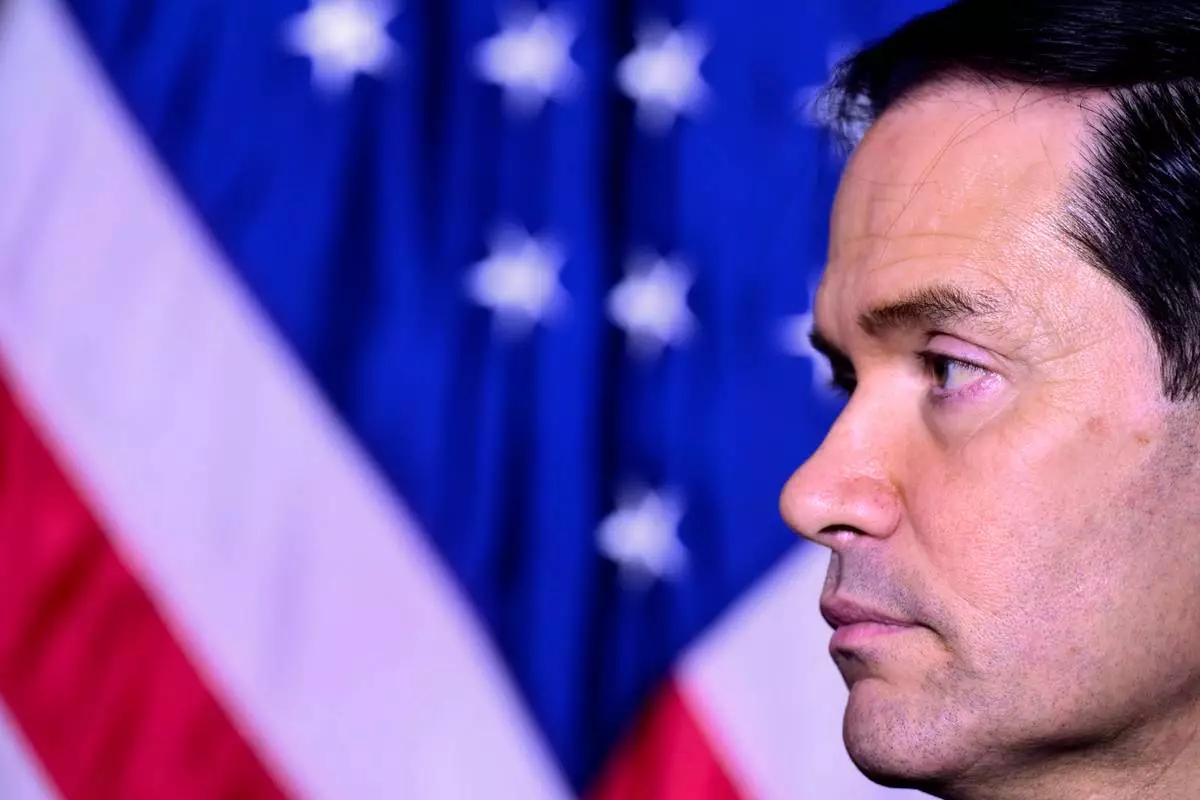
US Secretary of State Marco Rubio attends at a press conference at the US Embassy in Rome, Friday, May 8, 2026. (Stefano Rellandini/Pool Photo via AP)

US Secretary of State Marco Rubio attends at a press conference at the US Embassy in Rome, Friday, May 8, 2026. (Stefano Rellandini/Pool Photo via AP)

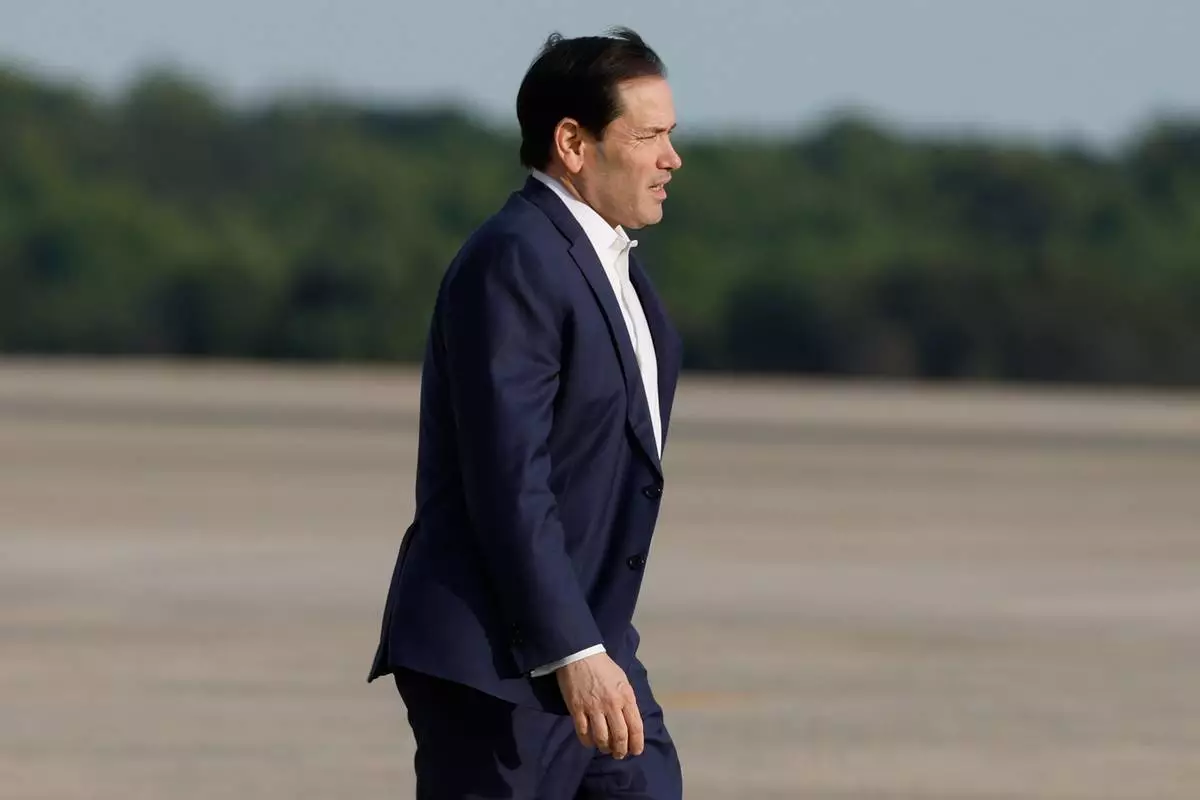
Secretary of State Marco Rubio departs Air Force One upon President Trump's arrival at Joint Base Andrews, Md., Friday, May 15, 2026. (AP Photo/Luis M. Alvarez)

Secretary of State Marco Rubio departs Air Force One upon President Trump's arrival at Joint Base Andrews, Md., Friday, May 15, 2026. (AP Photo/Luis M. Alvarez)

Recommended Articles