UNITED NATIONS (AP) — Responding to Middle East crises and rising oil prices, the United Nations on Tuesday lowered its forecast for global economic growth and raised the prospects for inflation this year.
U.N. economists said global GDP growth is now forecast at 2.5% for 2026, down from 2.7% in January, and they said it could fall to only 2.1% “in a more adverse scenario.”
That would be one of the weakest growth rates this century, outside of the COVID-19 pandemic and the global financial crisis of 2008, Shantanu Mukherjee, director of economic analysis in the U.N. Department of Economic and Social Affairs, said at a news conference.
On a somewhat positive note, he said, “we are not close” to a recession, but life can get harder for billions of people, and some countries may see their economies contract.
Global inflation is projected to rise to 3.9% this year, 0.8% higher than forecast in January, before the U.S. and Israel launched airstrikes on Iran. Iran responded by blocking the Strait of Hormuz, a critical waterway for shipments of oil, natural gas, fertilizer and other petroleum products.
“ Increased energy prices are a potent factor, as are the prices of refinery products that are crucial to industrial production and commercial transport,” Mukherjee said.
But he stressed that not all countries will experience the same rate of inflation.
In richer developed countries, inflation is projected to rise from 2.6% in 2025 to 2.9% in 2026. In developing countries, inflation is forecast to accelerate from 4.2% to 5.2% as higher costs for energy, transportation and imported goods erode real incomes.
The impact of the Iran war has been highly uneven, with the most severe economic damage concentrated in West Asia, a region comprised of 21 Arab countries, including those in the Persian Gulf, according to the World Economic Situation and Prospects report for mid-2026.
Economic growth in the region is projected to plunge from 3.6% in 2025 to 1.4% in 2026, “driven not only by the energy shock but also by direct infrastructure damage and severe disruptions to oil production, trade and tourism.”
In Africa, average growth is projected to drop only slightly, from 4.2% last year to 3.9% this year, according to the report. And in Latin America and the Caribbean, it is forecast to slow from 2.5% to 2.3% in 2026.
In the United States, the economy is expected to remain “comparatively resilient” with 2% growth forecast this year, broadly similar to 2025, it said.
By contract, Europe “is more exposed, with heavy reliance on imported energy straining households and businesses,” the economists said. Economic growth in the European Union is expected to slow from 1.5% in 2025 to 1.1% in 2026, while growth in the United Kingdom is forecast to drop further, from 1.4% last year to 0.7% this year.
In Asia, the U.N. said China’s diversified energy mix, sizable strategic reserves and government actions are providing a buffer, so its economic growth is only expected to slow from 5% in 2025 to 4.6% this year.
India is forecast to remain one of the fastest growing major economics, with its economy expanding by 6.4% this year, although that is lower than its 7.5% growth in 2025.
“The question for China, similar to the case of India and other countries, is just how long with this conflict and the impact of the conflict last, because all these different buffers are clearly limited,” senior U.N. economist Ingo Pitterle told reporters.
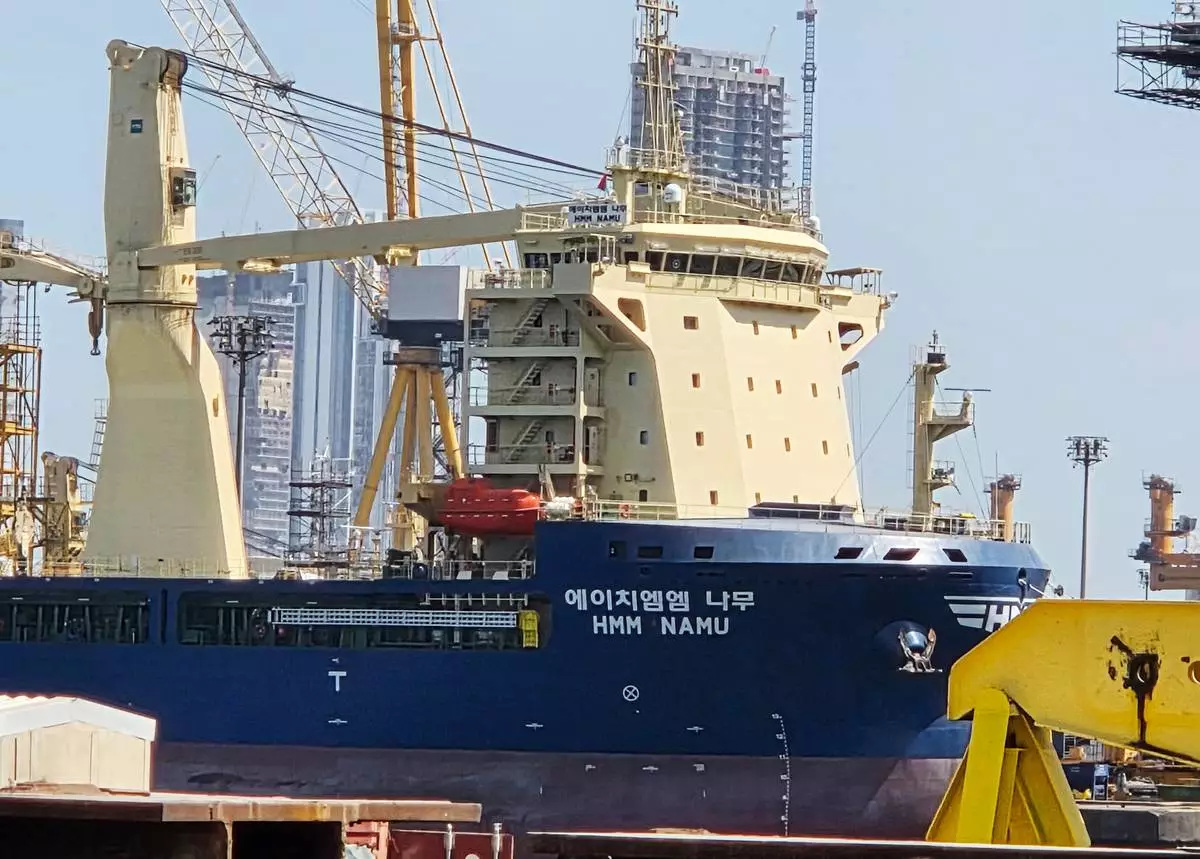
The South Korean-operated vessel HMM NAMU is docked after being damaged from a fire following an explosion in the Strait of Hormuz, at a port in Dubai, United Arab Emirates, Friday, May 8, 2026. (Kim Sang-hun/Yonhap via AP)
NEW YORK (AP) — U.S. authorities added new torture charges Thursday to their case against former Venezuelan President Nicolás Maduro, ramping up pressure on the ousted authoritarian leader already fighting drug trafficking offenses.
Maduro, who was previously charged with participating in a conspiracy to send cocaine into the U.S., is now also facing allegations of human rights abuses during his time as president of the oil-rich South American nation.
“He authorized the use of torture against specific individuals and oversaw a system designed to use torture, arbitrary detention and violence as a means of repression against the political opposition,” says the revised indictment, which newly charges Maduro and his wife, Cilia Flores, with torture conspiracy.
The allegations include electric shocks, beatings and asphyxiation at Maduro’s behest.
Asserting that thousands of Venezuelans were “harassed, threatened, arrested, prosecuted, assaulted, tortured, or killed” by people acting at the behest of Maduro's government, the indictment alleges that the abuse included electric shocks, beatings and asphyxiation. Maduro, the indictment claims, signed off on torture methods, sought and got updates on specific victims' treatment, watched a video of a forced confession and personally threatened the killing of one prisoner’s child “as a form of psychological torture.”
Flores, a former legislator and attorney general, helped develop the repressive system and ordered the torture of some specific people, the indictment contends.
A message seeking comment was sent to Maduro's lawyer; Flores was in court for a previously scheduled hearing, where her attorney said he hadn't yet had time to review the new allegations. Both Maduro and Flores have been behind bars in New York since early January when forces seized them from their Caracas home in a middle-of-the-night raid.
Both have pleaded not guilty in the U.S. drug case first brought years ago against them and numerous alleged co-conspirators. They had already been facing potential life prison sentences if convicted.
Maduro has been under investigation for years by the International Criminal Court over allegations of crimes against humanity, tied to his crackdown on opponents. He has always denied any wrongdoing.
The revised indictment includes several mentions of the involvement of Venezuela’s feared DGCIM military intelligence agency, which was headed for many years by one of Maduro’s co-defendants, Gen. Hugo Carvajal. He broke with Maduro years ago, pleaded guilty last year to drug trafficking charges in New York, and has offered to testify against his former boss.
The indictment alleges that the torture victims included three U.S. citizens, who were not named in the court documents.
One of those Americans was punched, subjected to electric shocks and forced to eat his own vomit during eight months of imprisonment, the indictment says. Another was beaten badly enough to necessitate a long hospital stay and had a gun stuck in his mouth. A third was handcuffed, hooded and beaten for two days every half an hour, suffering a permanent eye injury, the indictment said.
Maduro has long ignored lawsuits brought in U.S. courts by Americans who alleged they were beaten while in custody in Venezuela.
Among those who sued is Matthew Heath, a former U.S. Marine corporal from Tennessee. He was arrested at a roadblock in Venezuela in 2020 and held in custody for more than two years.
In May, Heath and another former prisoner won a $300 million default judgment against Maduro and other top Venezuelan officials for overseeing a pattern of torture. The lawsuit, brought under a federal anti-terrorism law, included allegations of waterboarding, electrocution, threats of rape with a nightstick, administration of mind-altering medications and the repeated use of a cramped cell nicknamed “El Tigrito.”
“It’s incredible to see a dictator in court,” Heath said Thursday upon learning of the new charges. “The Maduro prosecution will do more to prevent the kidnapping of Americans by rogue regimes than a hundred press releases from the United Nations.”
Flores, meanwhile, was in court Thursday so her lawyers could urge a judge to free her from jail and put her under house arrest because she has heart problems.
Their attorneys have asked for the case to be dismissed on the grounds that they have immunity as the leader and first lady of a foreign country.
Lawyers for Flores, 69, have also argued that she has medical issues that cannot be treated effectively in jail, and that she could instead be allowed to live under 24-hour guard at a residence in New York.
They also said she suffered permanent scarring when she was “thrown against a wall or dresser” during the U.S. military action that led to her capture.
Her lawyers say she has lost 25 pounds (11 kilograms) while imprisoned at the Metropolitan Detention Center in Brooklyn and has been told that she might need heart surgery. They said she has “lingering lightheadedness, dizziness and shortness of breath” and might have suffered a minor heart attack in July.
Prosecutors opposed the bail request. In a court filing, they wrote that Flores would pose an “extreme risk of flight and danger to the public” if released. They also said she has been taken from the jail to get treatment at a local hospital, when care was needed.
President Donald Trump’s administration has defended the raid to capture Maduro as a “surgical law enforcement operation.” Maduro has called himself a prisoner of war and his capture a kidnapping.
Flores is charged with participating in a cocaine importation conspiracy with her husband, Maduro, who served as Venezuela's president from 2013 until his capture by American forces in January.
Lawyers for Flores said she was no threat to flee because she is “intent on supporting her husband with her constant presence.”
Goodman reported from Miami. Associated Press writers Larry Neumeister and Jennifer Peltz in New York contributed to this report.
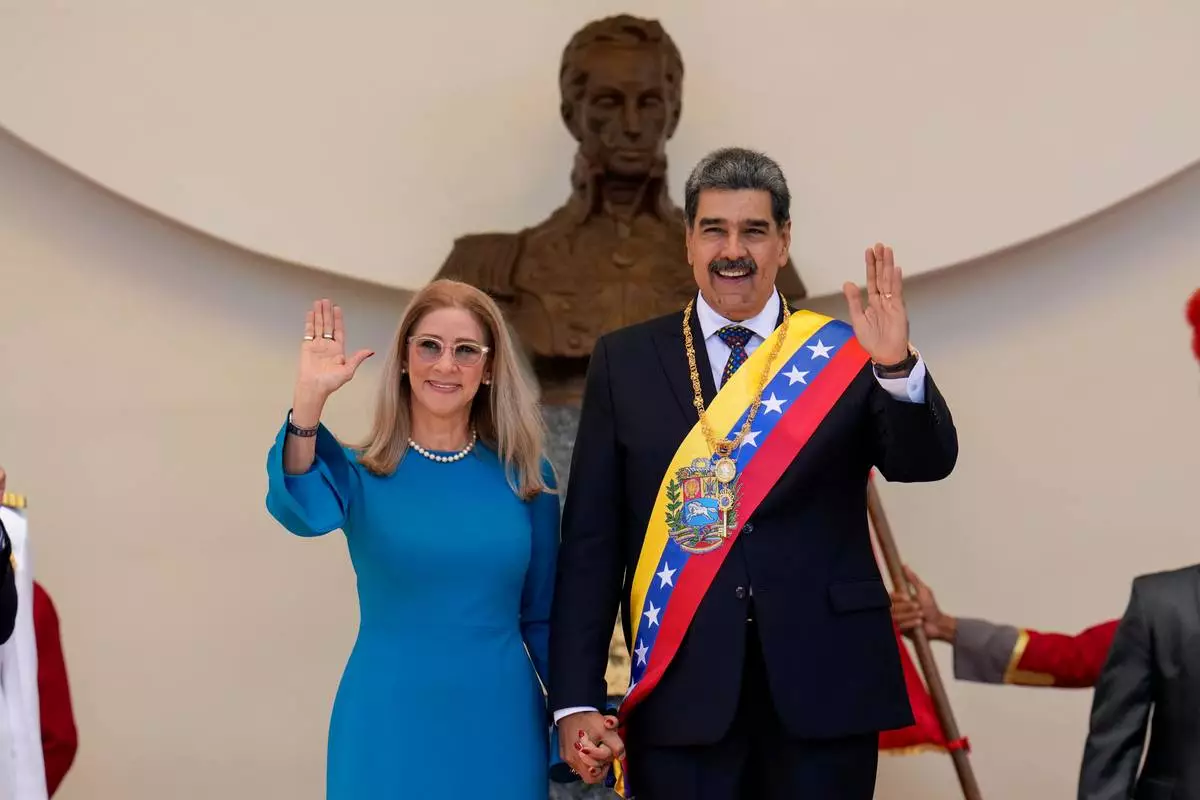
FILE - Venezuelan President Nicolas Maduro and his wife Cilia Flores wave after his swearing-in ceremony for a third term at the National Assembly in Caracas, Venezuela, on Jan. 10, 2025. (AP Photo/Ariana Cubillos, File)