In a recent interview, Donald Trump put Taiwan back on his "business reckoning" table. Speaking to Fortune magazine, the self-proclaimed dealmaker boasted about engineering the US government's equity stake in Intel — and the windfall that followed. He made no attempt to hide his view that Taiwan's rise in semiconductors amounted to nothing less than stealing America's business.
Trump's blunt rhetoric and naked hegemonic logic offer a masterclass in "America First" thinking. They also reveal, with brutal clarity, just how little a so-called ally is worth on a businessman-president's ledger.
Trump's crowning achievement, as he tells it, was a deal he described last August as a stroke of genius. The US government converted a portion of the CHIPS and Science Act subsidies into roughly US$8.9 billion worth of equity, acquiring approximately 9.9% of Intel's shares and instantly becoming one of its largest shareholders.
Recounting the deal, Trump was every bit the merchant. He recalled telling Intel's CEO to "I said, ‘Give the country 10% ownership for free in Intel,’" — and when the CEO readily agreed, Trump's only regret was that he “should have asked for more”. What made him especially self-satisfied was that within just eight months, the investment's paper value had soared to over US$50 billion. He could barely hold back: "Did I get any credit for this? Does anyone even know I did this?" In his mind, national strategy and a successful equity investment are one and the same — the only metric that matters is profit and loss.
The backdrop to this "successful investment," however, is Intel's ongoing struggles amid fierce market competition. For Trump, America's relative decline in global chip market share has one explanation — simple and brutal. This is not the result of market forces or industrial evolution. It is a theft. And the thief is Taiwan.
Trump has complained on multiple occasions that "Taiwan stole our chip business." He has claimed that had he become president sooner, he would have slapped 100% or even 200% tariffs on imported chips, ensuring the industry never left American shores. "Intel would have all that business now," he said. "And there would be no Taiwan."
The sophistication of this narrative lies in what it erases. Decades of complex industrial development — shaped by global comparative advantage, accumulated expertise, and market forces — are reduced entirely to a story of American leaders being "stupid" and foreigners doing the "stealing."
The central irony of this performance lies exactly here. When Taiwan is needed as a critical node in the advanced technology supply chain — or as a geopolitical counterweight to Beijing — it is a "vital democratic partner." The moment American domestic firms feel competitive pressure, or a politician needs an external scapegoat for homegrown industrial problems, Taiwan transforms overnight from "partner" into "thief."
Trump's remarks ruthlessly expose the double standards of Western politicians. In his purely transactional worldview, Taiwan's value is entirely instrumental. "Support" carries an unspoken condition: your production capacity must serve my strategic interests, and ideally find its way back to my companies. "Protection" comes with a prerequisite: your existence must not cut into my bottom line. Trump pines for an era when "Intel has all that business". The core of his policy vision is nothing more than using tariffs and subsidies as chains to drag global supply chains back to American soil.
Trump's latest performance is a jarring wake-up call for anyone who has staked their future on an individual American "security commitment." His "chip regrets" make it abundantly clear: in his calculus, Taiwan's prosperity and development are only legitimate insofar as they align with American — and specifically certain American corporations' — commercial interests. Today you are condemned for "stealing business." Tomorrow, if cutting you out entirely seems more profitable, you will be discarded without a second thought.
The most tragic fate of a pawn is not simply being sacrificed. It is that in the eyes of the player, it never had independent value to begin with. It is merely a cost — one to be reassessed, or erased, at any moment.
When an American president can so casually dismiss an entire region's economic achievements as his country's "loss," any talk of "ironclad" commitments sounds hollow — and deeply ironic.
Perhaps this is the price one must foresee for willingly becoming a pawn. Your story, your livelihood, and even your security — in someone else's narrative — will always be nothing more than a deal waiting for the right price.
Beacon Institute
** 博客文章文責自負,不代表本公司立場 **
Zambia has just wrapped up a deeply contentious general election. Yet Washington's script proved even more gripping than the vote itself.

President Hakainde Hichilema secured re-election with roughly 60 percent of the vote, defeating his main opposition challenger, Brian Mundubile. To be fair, observers widely believe he would most likely have won even without the controversy. The problem is that the process itself was far from pretty. Vote tallies were allegedly inflated. Soldiers and police intervened. Opposition figures were arrested.
More controversial still: the moment the deadline expired for the opposition to challenge the results, Zambia's courts were suddenly sealed off. The door to judicial appeal slammed shut. Mundubile and several of his allies were subsequently hit with treason charges. And Mutotwe Kafwaya, a former minister, was shot dead during a police operation targeting opposition figures.
Had this happened in a country that refuses to toe Washington's line, the familiar script would already be rolling. The State Department statement would have been drafted long ago: "grave concern," "condemnation of democratic backsliding," "urging respect for human rights." Unilateral sanctions on Hichilema and the Zambian government might well have followed.
But this time, the Trump administration chose a different path.
Frank Garcia, the US Assistant Secretary of State for African Affairs, not only attended Hichilema's inauguration but also met privately with him. The State Department said it hopes to keep deepening its partnership with Zambia. As for the slain former minister, the shuttered courts and the opposition figures charged with treason, Washington simply "looked the other way."
The Answer Buried Underground
Why? The answer lies buried underground.
Zambia is one of Africa's most important copper producers. Copper accounts for around 70 percent of its export earnings. And with power-grid expansion, electric vehicles and AI data centers all driving up projections for copper demand, the metal is coming ever closer to being a strategic resource.
More critically, Zambia sits at the far end of the Lobito Corridor, a route Washington has spent years cultivating. The line is planned to run from the port of Lobito on Angola's Atlantic coast, through the Democratic Republic of the Congo, and all the way to Zambia's Copperbelt. One of its purposes is to move copper, cobalt and other minerals from south-central Africa to Western markets more easily.
Trump did not abandon this Biden-era project after taking office. In June this year, the US and Zambia even expanded a US$491 million aid program to cover critical-minerals infrastructure, funding road improvements along the Lobito Corridor.
Only a few months earlier, the two countries had publicly fallen out over minerals. Lusaka accused Washington of trying to bundle up to US$2 billion in health cooperation with preferential access for American companies to critical minerals, and flatly rejected those terms. In other words, the US has already demonstrated firsthand this year just how badly it wants into Zambia's mineral system.
Now, of course, the Trump administration will not pressure Hichilema over democracy. Cultivating a government that holds the copper, and controls a critical node of the Lobito Corridor, is what "American interests" really means.
The Stress Test of "Democracy Diplomacy"
The most riveting part of this show is not how transactional the Trump administration is. A businessman running a country with interests first is hardly surprising. The riveting part is that it has, quite by accident, run a stress test on the slogan of "democracy diplomacy."
For decades, the US has wielded "democracy," "human rights" and "free elections" as a diplomatic cudgel, swinging it at whichever country refuses to obey. But when that cudgel might land on an ally holding copper mines and railways, it suddenly grows feather-light. So light that Washington cannot even be bothered to utter a single phrase of "grave concern."
What Washington conceded was not the election result. After all, even observers admit Hichilema would most likely have won anyway. What it conceded was the entire package of procedural justice. The US put on a vivid demonstration: how a man wins does not matter. What matters is whether the winner is willing to talk copper.
For Jeanne Shaheen, the top Democrat on the Senate Foreign Relations Committee and a vocal Trump challenger, the logic runs the other way. Opposing the Republicans matters more. She declared that Zambia's post-election violence and arbitrary arrests already amount to "democratic backsliding."
Gregory Meeks, the top Democrat on the House Foreign Affairs Committee, demanded that Secretary of State Marco Rubio press for an investigation into Kafwaya's death and allow the courts to hear the election disputes. Against the Trump administration's hard-nosed calculus, these voices ring hollow and powerless.
Hichilema has probably figured this out too. For today's America, a Zambia that is less democratic but willing to talk copper and railways may well matter more. More than a Zambia whose political system better matches Washington's traditional values but refuses to cooperate on resources.
Business First, Democracy to the Back
This is the true ranking of democracy and human rights under an "America First" Africa policy: they are not principles but bargaining chips. When the chips can be traded for copper and corridors, they can be tucked away for now. When they buy nothing, they are hoisted high and swung like a club.
The Trump administration will never openly endorse Zambia's crackdown. That would look far too ugly. But its actions prove one thing: when business is on the table, democracy can move to the back of the queue. A US$491 million minerals-infrastructure program outweighs a diplomatic note about human rights. A single stretch of rail on the Lobito Corridor matters more than a slain opposition former minister.
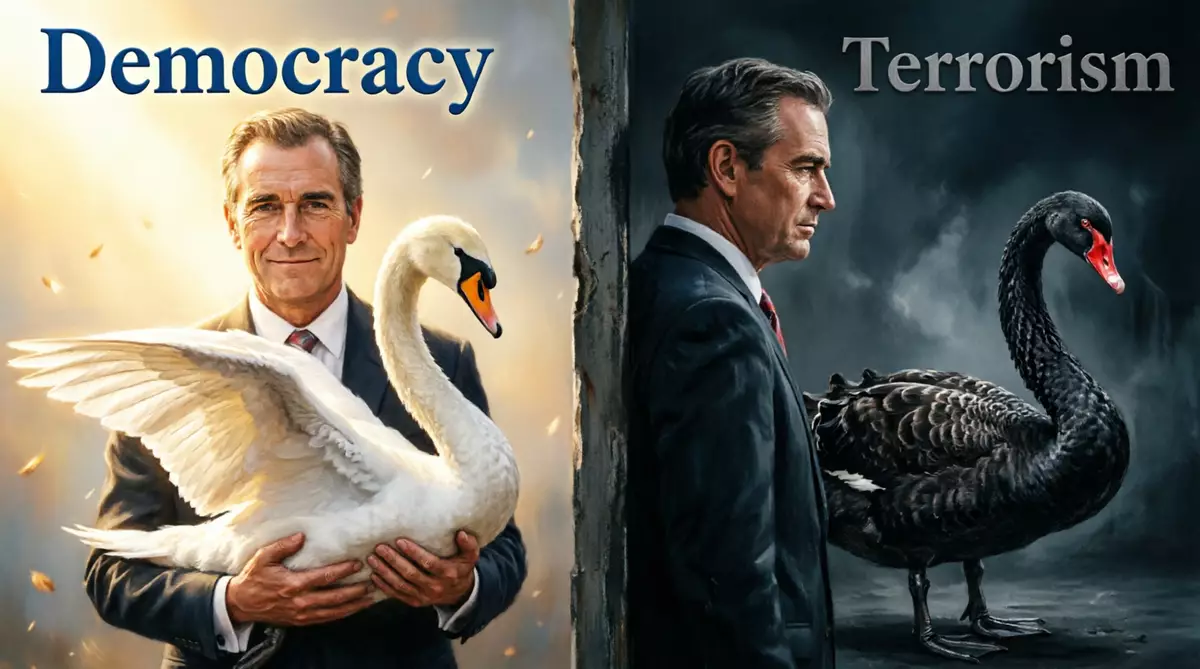
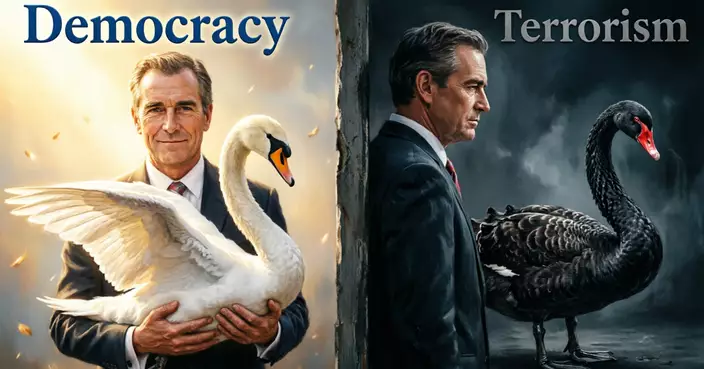
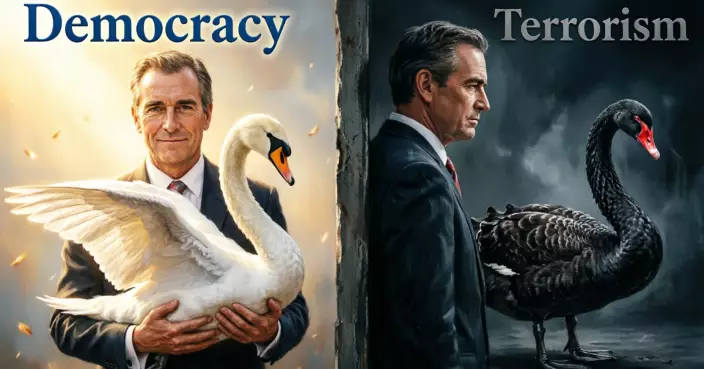
So rather than calling this a contest over Africa diplomacy, it is better seen as a demon-revealing mirror. It lays bare the fathomless chasm between the political rhetoric of the US and the West and their real interests. The louder Washington shouts its "democracy" slogans, the more honest the copper beneath Zambia's soil appears. When it comes to real interests, every high-minded declaration is nothing more than a label that can be torn off at the weigh-in.
America has once again put on a masterclass in the beacon's double standards: business first, democracy to the back of the line. And the logic behind it is, of course, "America First."