Vegetable prices in China declined in May as a result of seasonal factors, with the national vegetable basket price index reaching 114.38 in the month, down 3.07 points from April, or 2.08 points year on year, according to the Ministry of Agriculture and Rural Affairs on Monday.
In May, the average wholesale price of 28 key monitored vegetables across the country was 4.2 yuan (about 62 U.S. cents) per kilogram, a 5.4 percent drop from the previous month and a 2.3 percent decrease year on year. In breakdown, 21 types of vegetables saw price declines month on month, while seven experienced price hikes. Notably, cucumber, pumpkin and Chinese cabbage saw price increases of over 15 percent month on month.
"In May, the prices of vegetables fluctuated and then stabilized at a low level. The open-field vegetables from northern production areas were intensively supplied to the market. The distance between major production areas and consumption areas was shortened, reducing transportation and preservation costs. At the same time, multiple production areas in Shandong, Hebei and Liaoning supplied vegetables simultaneously, resulting in overlapping in the supply chain and a rapid decline in the prices of some varieties," said Zhang Jing, assistant researcher with the Agricultural Information Institute under the Chinese Academy of Agricultural Sciences (CAAS).
Zhang said that since the end of May, some areas in the south have experienced multiple rounds of heavy rainfall, which may affect the prices of vegetables in a future period of time.
"It is expected that the prices of vegetables will remain at a seasonal low in a coming period of time, but the room for further decline will be limited. Attention should be paid to the delayed impact of the continuous rainfall in the south on the output and quality of vegetables in the fields, especially in the high-altitude vegetable production areas in southern and southwestern regions. This impact may gradually become apparent within the next one to two months," she said.
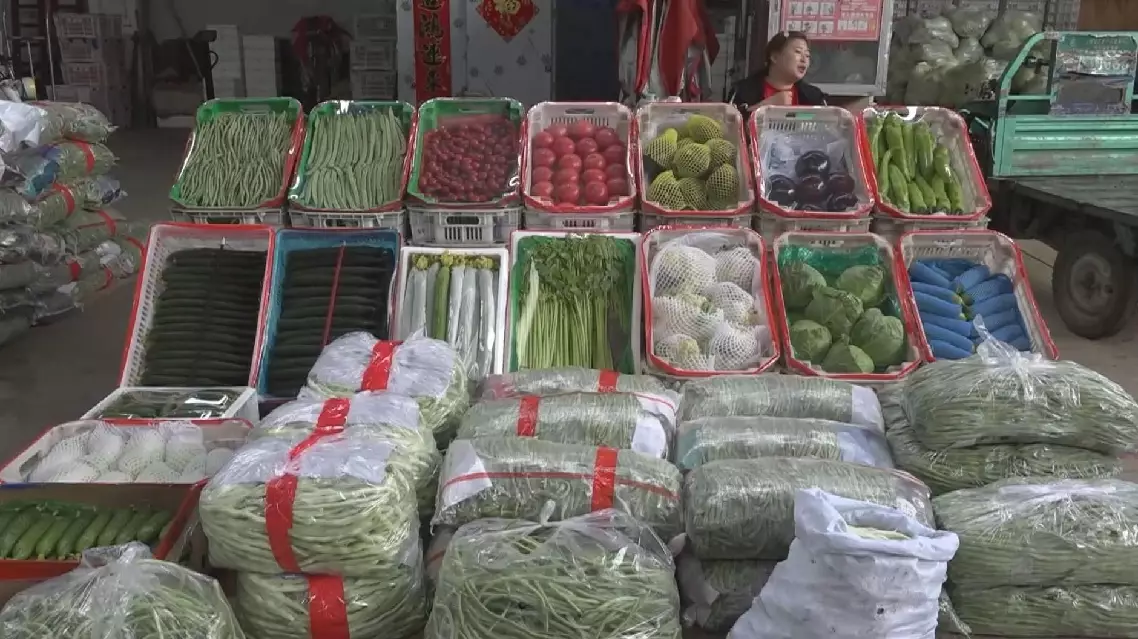
China's vegetable prices drop in May due to seasonal factors
U.S. President Donald Trump says he remains optimistic that a ceasefire agreement can be reached soon, despite reports that Iran has suspended indirect talks with the United States and is considering a full blockade of the Strait of Hormuz amid escalating regional tensions.
Iran has halted talks and exchanges of draft proposals with the United States via mediators in protest against Israel's actions in Lebanon, Iran's semi-official Tasnim news agency reported Monday.
"There will be no dialogue" until Iran's demands on "immediate cessation" of Israeli operations in Gaza and Lebanon are secured, it reported.
A ceasefire in Lebanon is one of Iran's preconditions for accepting the April truce with the United States, but the truce has now been violated on all fronts, it reported.
In an NBC News phone interview on Monday, Trump said he had not received any word from Iran regarding a suspension of negotiations with the United States, adding that Iran has not formally notified the U.S. of such a move. He also stated that the U.S. will continue its blockade of Iranian ports.
Also on Monday, Trump told ABC News that he expects an agreement "over the next week" to extend the current ceasefire and reopen the Strait of Hormuz. "I think you're talking about over the next week," he said, noting he has "a few more points" to finalize and suggesting a peace deal could be "even better than a military victory."
"So it's not an easy thing for them. It's actually not easy from our standpoint either. But we're getting what we need to get," Trump said, adding that negotiations are continuing at a rapid pace.
Earlier in the day, Iranian Foreign Minister Seyed Abbas Araghchi said in a social media post that violating the ceasefire between Iran and the United States on any front equals violating it on all fronts.
Iran's Parliament Speaker Mohammad Bagher Ghalibaf said the U.S. anti-Iran naval blockade and Israel's escalation of "war crimes" in Lebanon are "clear evidence of U.S. noncompliance with the ceasefire."
Meanwhile, Iranian Foreign Ministry spokesman Esmaeil Baghaei told a weekly press conference that U.S. "new and contradictory" demands have prolonged the process of negotiations to end the war.
Iran and the United States reached a ceasefire on April 8 after 40 days of fighting. They then held one round of peace talks in Pakistan's Islamabad on April 11 and 12, which failed to yield an agreement.
Over the past weeks, the two sides reportedly exchanged several proposed plans outlining conditions for peace through Pakistan's mediation, and are working to finalize a memorandum of understanding aimed at ending the war.
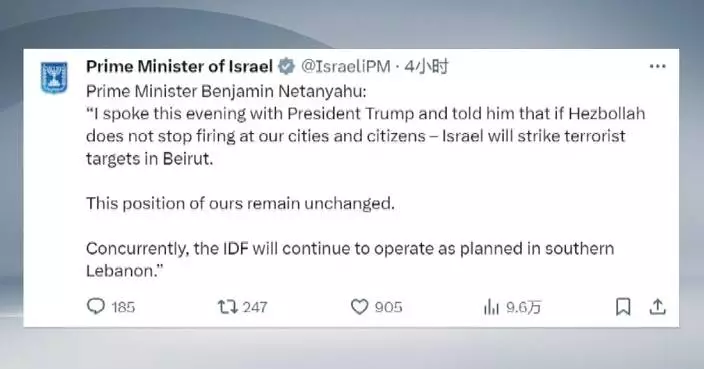
Israel and Lebanon reached a ceasefire in mid-April, despite which Israel has continued near-daily strikes in Lebanon, while Hezbollah has launched attacks on Israeli military positions.
On Sunday, Israel claimed having captured southern Lebanon's Beaufort Ridge, including the strategic castle at its summit, an area beyond the "security zone" Israel has maintained since its ceasefire with Lebanon.
The move, which media reports called Israel's "deepest advance into Lebanon" in over 20 years, was condemned by the Arab world, as well as France, Germany and Britain.
Trump expects Iran deal within week despite stalled talks, Hormuz blockade