BEREA, Ohio (AP) — Andrew Berry echoed the thoughts of many Cleveland Browns fans when he said he did not expect a news conference discussing a Myles Garrett trade this spring.
However, Berry took his place at the podium at the team complex on Tuesday morning to discuss trading the two-time AP Defensive Player of the Year to the Los Angeles Rams for pass rusher Jared Verse, a 2027 first-round selection, a second-round pick in 2028 and a 2029 third-round selection on Monday.
“The why now is just honestly the opportunity was too great. It wasn’t like a Plan A going into the offseason,” Berry said. "Quite honestly, we would have operated differently if it was, but sometimes things come across your path that you’re not expecting, and you can’t be so dogmatic in your strategy and planning that you can’t adjust and be flexible to great opportunities.”
Berry said he had three objectives in mind whenever he got calls about trading Garrett — any deal would need to have short- and long-term benefits, the trade had to include a young premium player on a cost-controlled contract and it also had to include premium draft picks.
The Rams first approached the Browns before the draft when Garrett agreed to modify his contract and defer option payments over the 2026-28 seasons. The first payment of around $10 million was moved to near the start of the regular season instead of shortly after the start of the new league year in March.
Berry told the Rams that Garrett wasn't available, but GM Les Snead was persistent in coming up with the framework for a deal. Talks picked up after the draft and progressed to the point where owners Jimmy and Dee Haslam met with Garrett last Saturday.
“There’s a very small set of deals that really satisfy those constraints. So when it got to the point with our negotiations with the Rams, when all those things were satisfied, it really caused us to take a step back and really think about the decision,” Berry said.
Berry said Garrett remained in communication with him regarding offseason travel plans as well as the team's plans in free agency and the draft. Coach Todd Monken said two weeks ago he had not had a face-to-face meeting with Garrett since being hired in late January.
Garrett has skipped offseason workouts the past couple of seasons before attending the mandatory veteran minicamp.
“We did not blindside Myles with the news yesterday. He was made aware about a week ago that it was a possibility and that’s a courtesy that obviously we owe him. So, the communication was good with him,” Berry said.
Verse — the 2024 AP Defensive Rookie of the Year — is expected to arrive in Cleveland on Tuesday night and be on the field Wednesday when the Browns hold their eighth voluntary organized team activity practice.
Cleveland has its mandatory minicamp next week to conclude offseason workouts.
Verse, the 19th overall pick in the 2024 draft, had 4½ sacks as a rookie and 7½ sacks last season, along with three forced fumbles.
“He’s a perfect DNA match for our attacking front. He’s really a terror in both phases, both as a run defender and a pass rusher,” Berry said. “He allows us to continue to play defense at a high level. He was very excited yesterday when we talked to him on the phone. He’s ready to go. I think he’s really excited to play in this scheme.”
AP NFL: https://apnews.com/hub/nfl
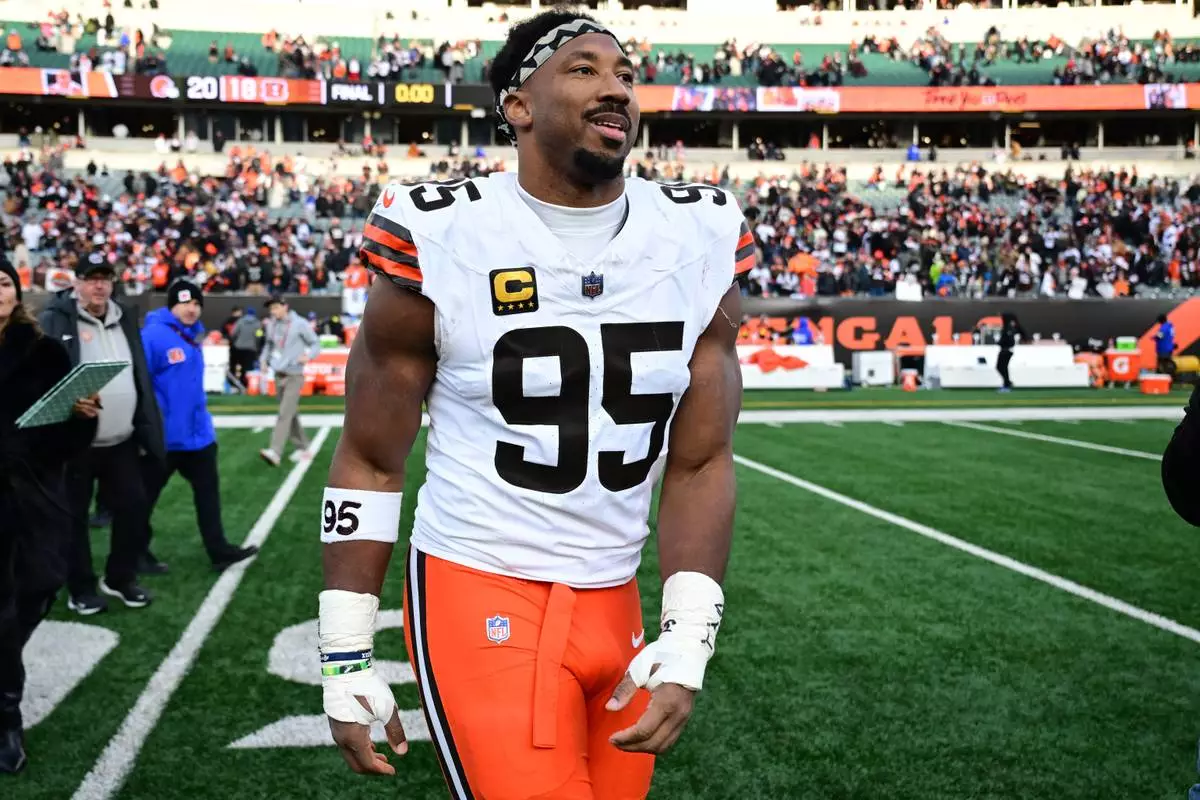
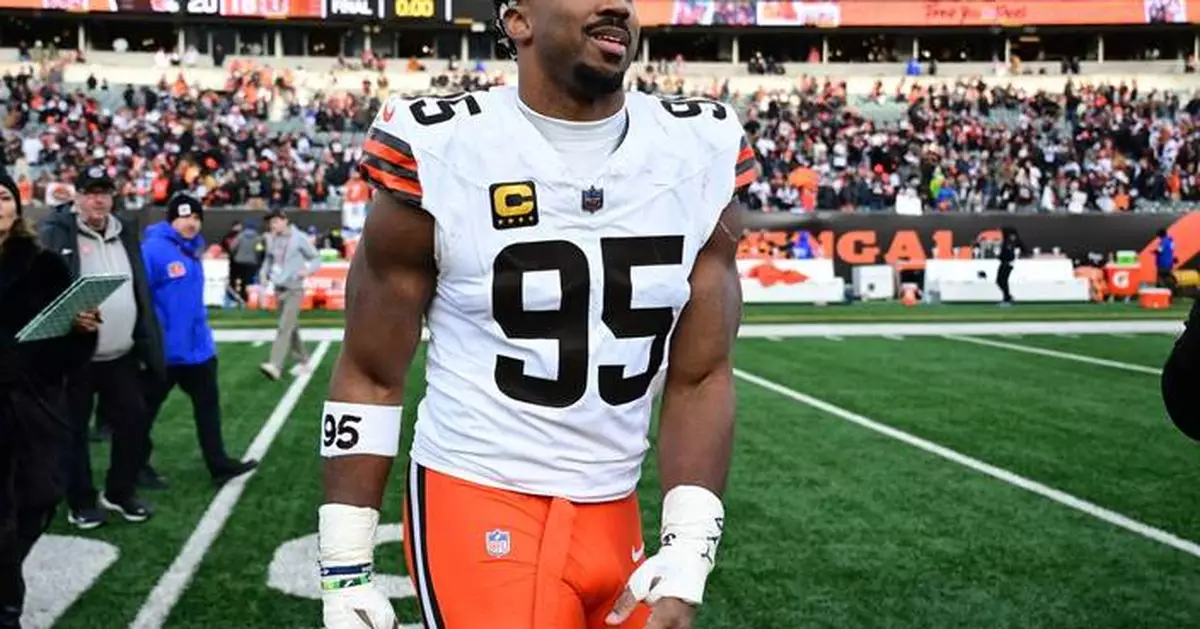
FILE - Cleveland Browns defensive end Myles Garrett celebrates with fans after an NFL football game against the Cincinnati Bengals in Cincinnati, Jan. 4, 2026. (AP Photo/David Dermer, File)
BOSTON (AP) — A federal judge heard Tuesday from voting rights groups and a coalition of two dozen states that want the courts to halt President Donald Trump’s executive order creating a federal voter list and limiting mail voting,
The plaintiffs argued in two lawsuits that Trump’s order aimed at ensuring only citizens vote should be found unconstitutional because the states and Congress, not the president, have the power to set election rules. They also told the court that the move puts a costly burden on state election officials to comply and would spread fear over concerns they could be prosecuted.
"This is going to be a sea change in way that some states administer their ballots," said Michael Cohen, who was part of a team representing California, adding that “it will be difficult to overstate the disruption that this will cause.”
The American Civil Liberties Union, which represented the League of Women Voters in the other lawsuit, has called the order “a dangerous attempt to disenfranchise eligible voters nationwide." The group said the orders transforms "the U.S. Postal Service from a neutral mail carrier to an arbiter of who may cast a ballot by mail.”
“This case challenges an extraordinary and abusive assertion of executive power over the administration of federal elections,” the organization said in its complaint.
The hearing comes less than a week after another judge declined to halt the order. U.S. District Judge Carl Nichols, a Trump appointee in Washington, agreed with the Republican Trump administration’s contention that it was too early to block the order because it has yet to be implemented.
The Trump administration, in its motions to dismiss the lawsuits, argued plaintiffs lack standing to bring their claims. They also argued the motions are premature and plaintiffs lack the legal basis to bring their Administrative Procedure Act claim, which governs how federal agencies develop and issue regulations.
Stephen Pezzi, a lawyer for the Trump administration, said the harms the plaintiffs referenced were subjective, since much can change with the voting list before it is finalized. He also said no one would be prosecuted for violating the executive order.
Missouri Solicitor General Lou Capozzi, speaking for the states supporting the list, argued it was too early to say how his state might use the list but it was “unlikely” that any voter would be removed this year from the voter rolls because of it.
“We are not exactly sure how we would use it,” Capozzi said, adding that "we don't want this process to be strangled in the crib so to speak.”
U.S. District Judge Indira Talwani took the requests for motions to halt the order along with motions to dismiss the cases under advisement.
During oral arguments, Talwani expressed concerns about whether the federal system could be ready for upcoming elections and risks posed to election workers who rely on a state list that is different than the federal one. She also raised doubts about the reliability of a federal list — noting, for example, women who changed their names after getting married or someone who has moved from state to state might be missed.
“Isn’t there a reasonable fear and concern on behalf of voters that they will be precluded?” Talwani asked.
Trump issued the order in March after a bill he supported to overhaul voting stalled in Congress. The order would have had the federal government create a list of eligible voters and then directed the Postal Service to deliver mail ballots only to those on the list. Election officials argued it was ripe for abuse and could cause chaos, and the postal union has objected to the idea of mail carriers policing ballots.
The Postal Service has published a proposed rule required by Trump's executive order in the Federal Register. Among other things, the rule would not apply to primary elections or overseas ballots.
Since his 2020 presidential election loss to Democrat Joe Biden, Trump has groundlessly claimed mail voting is rife with fraud and has launched a federal investigation into that year’s vote, even though repeated audits and investigations, including ones run by Republicans, found it was free of widespread fraud. Trump also has said he wants to “take over” election administration in Democratic areas.
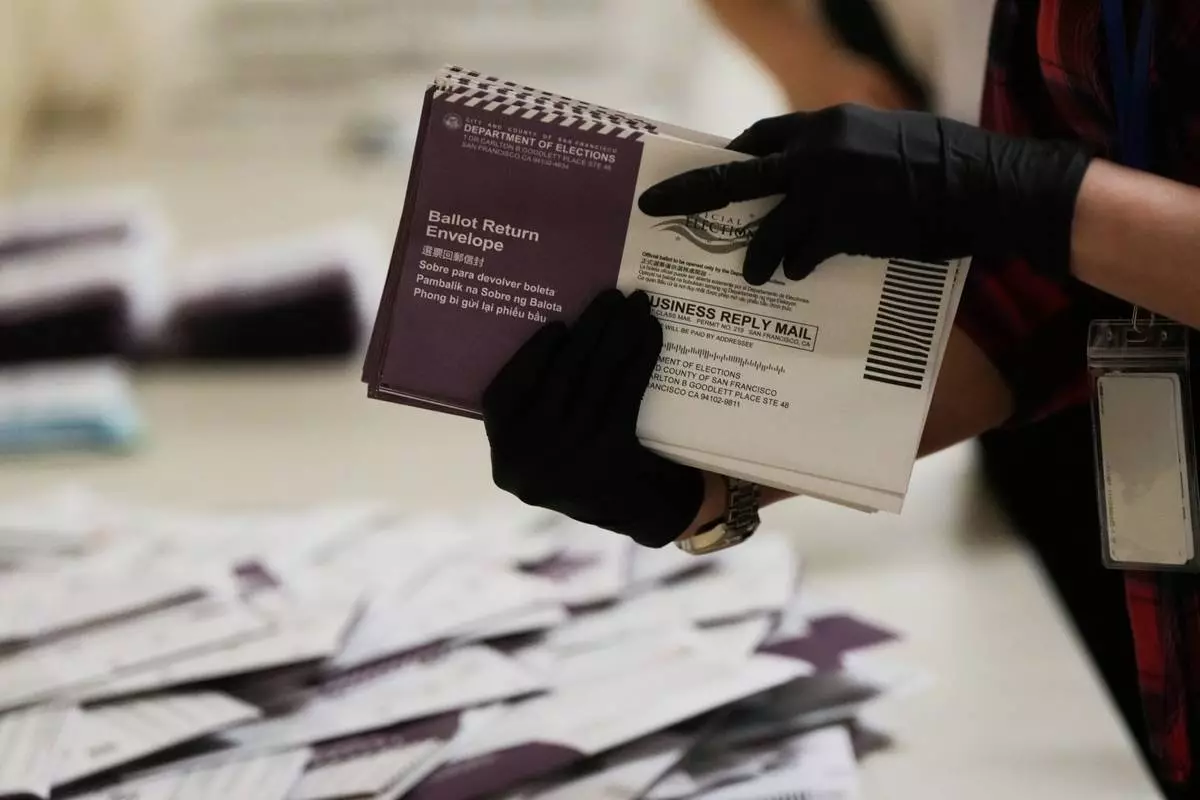
Department of Elections workers sort mail-in ballots for the California primary election at City Hall on Tuesday, June 2, 2026, in San Francisco. (AP Photo/Jeff Chiu)