China and Laos have enhanced their cooperation in trade, tourism, and people-to-people exchanges in recent years, supported by the landmark China-Laos Railway.
Stretching over 1,000 kilometers, the cross-border railway connects Kunming City in southwest China's Yunnan Province with the Lao capital, Vientiane, serving as a key transport corridor between the two countries.
Since entering service in late 2021, the railway has operated more than 100,000 passenger train services and carried over 73 million passengers, including around 840,000 cross-border travelers from more than 120 countries and regions.
Among its frequent passengers is Khampilom Vannaphone, a Lao student and vlogger based in Kunming. As a regular traveler, he has witnessed firsthand how the railway has changed daily life along the route.
"Whenever I go home on holidays, I take the China-Laos Railway. I can see how quickly my hometown is developing, with many Chinese tourists visiting," said Vannaphone.
The railway is bringing Chinese and Lao travelers closer together, while also drawing visitors from around the world, a trend further supported by China's expanded visa-free policies.
"It’s a very interesting culture for us to discover. We wanted the children to see China with their eyes, to see how it has changed a lot in 14 years, last time we came," said Alexis Drzemczewski, a French tourist.
Beyond passenger travel, the railway is also reshaping regional trade. To date, it has transported around 20 million tons of cross-border cargo, providing a faster and more cost-effective logistics route between China and Southeast Asia.
A key highlight is the region's tropical fruit trade. Official figures show that more than 100,000 tons of tropical fruits entered China via the railway in the first five months of this year, with durian shipments surging.
"To meet demand during the peak durian season, the Lancang-Mekong Express freight service operates an average of three to four trains a day, with as many as six on peak days. Each train carries more than 600 tons of durians," said Li Zongzhi, a staffer from the Kunming branch of China Railway Special Cargo Logistics.
As connections grow along the railway, so do opportunities for people-to-people exchanges.
Vannaphone is one such example. Inspired by his own experience studying in China, he now runs an education consultancy in Laos and has helped more than 30 Lao students pursue higher education in China. After graduation, he plans to work in China and hopes to promote cultural and tourism exchanges between the two countries by running businesses in both Laos and China.
Today, China and Laos are collaborating to further improve the efficiency and quality of railway operations. As connectivity continues to grow, so too does the shared future between the two countries.
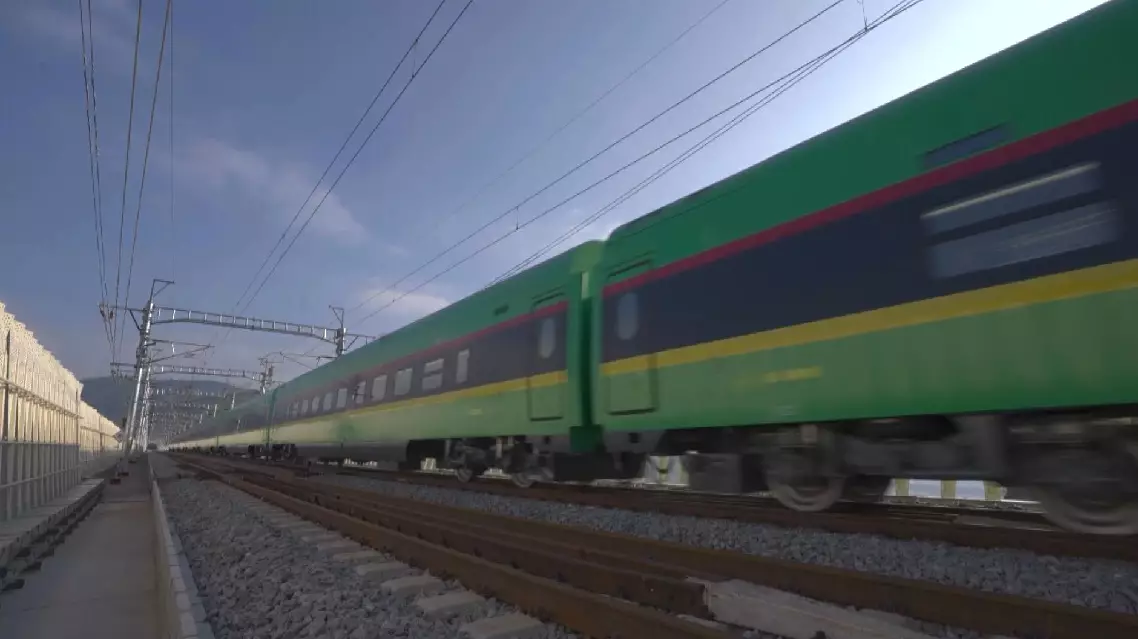
Cross-border railway boosts connectivity, cooperation between China, Laos