Skip to Content Facebook Feature Image

Divergent narratives reflect divisions between Iran, US: Chinese expert

HotTV

HotTV

HotTV

Divergent narratives reflect divisions between Iran, US: Chinese expert

2026-06-04 16:24 Last Updated At:06-05 12:24

The divergent narratives and attitudes of Iran and the United States towards peace talks reflect the broader, unresolved divisions between the two countries, said a Chinese expert.

While Tehran has threatened to suspend communication with Washington and hinted at opening a new front in the Bab el-Mandeb Strait, U.S. officials insist a deal remains within reach. The mixed messages have coincided with sporadic military exchanges between the two countries, underscoring the fragility of the diplomatic process.

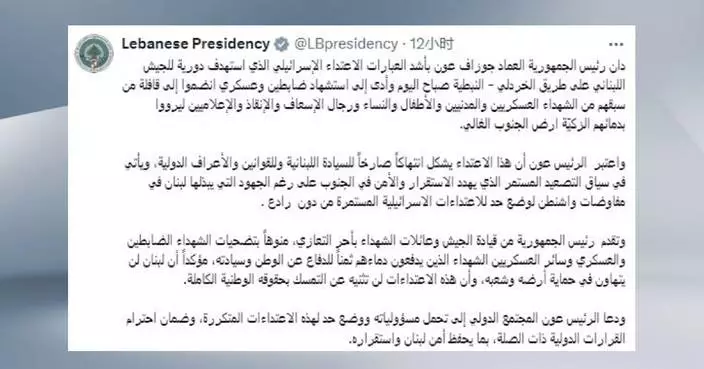
In recent days, Iran has reportedly halted negotiations with the United States via mediation, citing continued Israeli military operations in Lebanon and accusing Washington of failing to uphold the truce, while the U.S. side insisted that the U.S.-Iran talks are ongoing.

On Monday, Iran's semi-official Tasnim news agency reported that Tehran has halted talks and exchanges of draft proposals with the United States, saying that "there will be no dialogue" until Iran's demands on "immediate cessation" of Israeli operations in Gaza and Lebanon are secured.

It added that Iran and its allies have determined "on the agenda to completely block the Strait of Hormuz, and to activate other fronts, including the Bab el-Mandeb Strait," in retaliation.

Hours after the Iranian announcement, U.S. President Donald Trump said that U.S.-Iran talks "are continuing, at a rapid pace," and expressed confidence that the United States would reach an agreement with Iran within next week to extend the ceasefire and reopen the Strait of Hormuz.

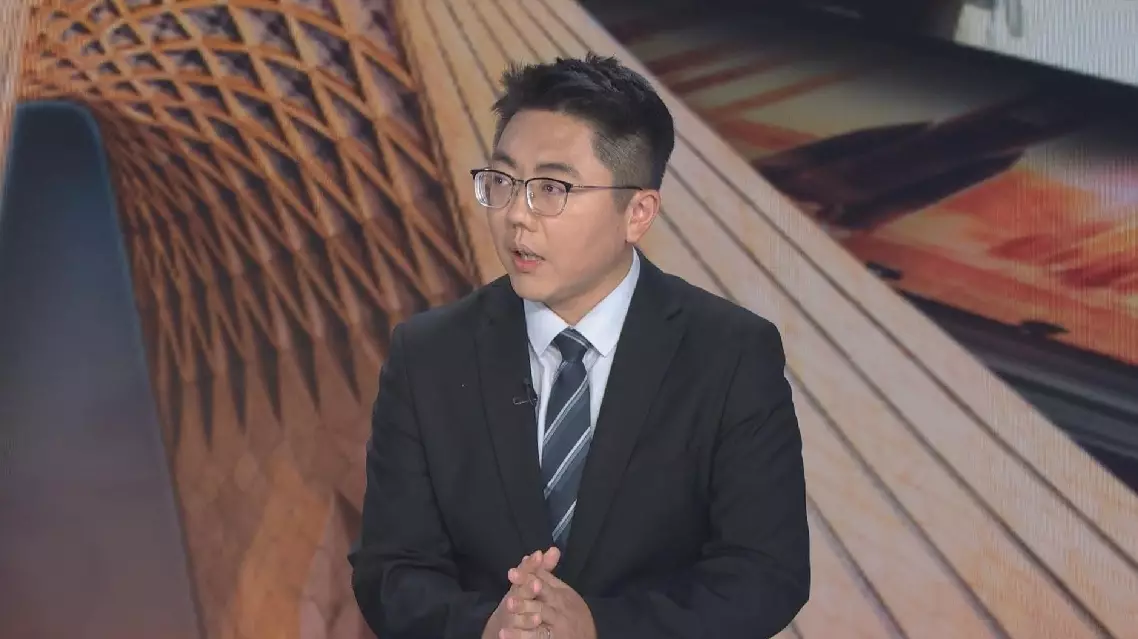
"The divergent narratives of the United States and Iran now are not due to an information gap, but rather because the two sides are actually in different domestic political pressure environments and different negotiation strategies. For the United States, we know that it is now facing the midterm election at the end of the year. So for the White House, what is extremely urgent now is to demonstrate to the outside world that it has control over the current situation in the Middle East. Therefore, it needs to describe some intentional goals as a kind of relevant consensus that has already been reached," said Li Zixin, an assistant research fellow at the China Institute of International Studies.

"So, it shows that, in fact, the United States has now exaggerated the progress of some related negotiations. And such an exaggeration, in reality, is not directed at Iran or the international community, but at those domestic voters in the United States. So against such a backdrop, we can see that many of the White House's statements now seem optimistic about the current negotiations," Li said.

"But for Iran, what it needs now is, most importantly, to ensure that it will not be deceived by the United States again. Because We know that from the 2015 Iranian nuclear deal to the various negotiations between the United States and Iran in recent years, Iran has repeatedly experienced U.S. bad faith and breach of commitments during the talks. So, in such a situation, Iran is worried that a similar scenario will recur, so it must demand that the United States come up with a verifiable and mutually beneficial change. So during this process, Iran's statements have become very cautious. It is precisely for this reason that we have witnessed such a huge divergence in the statements made by the United States and Iran," the expert said.
Divergent narratives reflect divisions between Iran, US: Chinese expert

Divergent narratives reflect divisions between Iran, US: Chinese expert

China's new regulation on outbound investment is not only about regulating domestic enterprises but also about sending a global signal of cooperation that benefits all overseas partners seeking long-term, stable growth, according to a Chinese economic expert.

The regulation, which will take effect from July 1, enhances policy transparency and clarifies regulatory boundaries to boost investment stability and efficiency. It aims to promote China's high-standard opening up and the high-quality development of its outbound investment, protect the legitimate rights and interests of investors and their outbound investment, and safeguard national sovereignty, security and development interests.

To that end, the 34-article regulation highlights efforts to align with international high-standard economic and trade rules, advance high-quality Belt and Road cooperation, and promote international cooperation in industrial and supply chains.

The regulation applies to all domestic investors in China. Without official approval, these investors cannot export or use restricted goods, technologies, services or data in overseas investment, nor covertly transfer restricted resources by sending technical personnel abroad.

For the first time, specific penalties are set: regulators may order violators to halt prohibited investment, dispose of overseas assets, confiscate illegal gains, and impose fines of up to one percent of the total investment value for non-compliance.

Nonetheless, experts note that the new regulation does not mark a policy shift toward curbing outbound investment. Instead, it equips authorities with clearer legal grounds for investor protection and reciprocal countermeasures.

"I would say that the Chinese government is trying to improve the efficiency and also the stability of China's outward direct investment. As China is playing a more and more important role in the global outward investment regime, I would say that it is likely that the Chinese government should do more to help enterprises enjoy the benefits by investing in other countries in the proper ways. So, this kind of new regulation -- it's not just trying to regulate Chinese enterprises themselves, but also trying to give better and clearer signals to the world, like the home countries for the investment," said Zhou Mi, a senior research fellow at the Chinese Academy of International Trade and Economic Cooperation.

Experts widely agree that the core purpose of the regulation is to enhance cross-government coordination and policy transparency. This will provide a more predictable environment for outbound investment, benefiting not only Chinese investors but also their overseas partners seeking stable, long-term growth.

"We would like to open our channels for cooperation with local governments on improving the stability of investment. I think that China's outward investment is growing very fast. It's not only in traditional industries, but also in many of these new and innovative industries. So, we are facing so many uncertainties about some of the possible technical improvements or the threats related to national security. It is not only a concern for China, but also for other partners," Zhou said.

China's new outbound investment regulation to boost transparency, global cooperation: expert

China's new outbound investment regulation to boost transparency, global cooperation: expert

Recommended Articles