Surging fuel prices are prompting more Vienna residents to leave their cars at home and take the train instead, a shift they say supports the broader goal of encouraging people back onto public transport by driving less.
Across Europe, soaring fuel costs are reshaping travel habits and pushing governments to find ways to keep mobility affordable, from cutting public transport fares to lowering fuel taxes.
Lithuania has temporarily cut train fares in half, Germany has scrapped planned ticket price increases, and Austria is offering a risk-free, two-month trial of its nationwide annual transport pass.
"We want to give people an opportunity to try out the public transport system in Austria and experience the benefits firsthand," said Sarah Batke with One Mobility Group, a global automotive engineering and manufacturing company.
Experts warn that cheaper fuel or temporary fare cuts may only provide short-term relief. Building stronger public transport networks, they say, is a more sustainable solution, though in many rural areas cars remain the only practical option.
"People are still in very, very many cases dependent on their cars and need to be able to afford using their cars. But what this crisis shows us: it's not the first one, it will not be the last one. We really need to find ways in between crises to build up our structural way to get people out of usual oil-dependent transport," said Klara Schenk, policy officer of VCÖ, a public-benefit organization specializing in mobility and transport.
Expanding rail lines and upgrading transport systems often costs far more than temporary fuel tax cuts. Consumers are hoping governments can find lasting solutions to keep mobility both accessible and affordable.
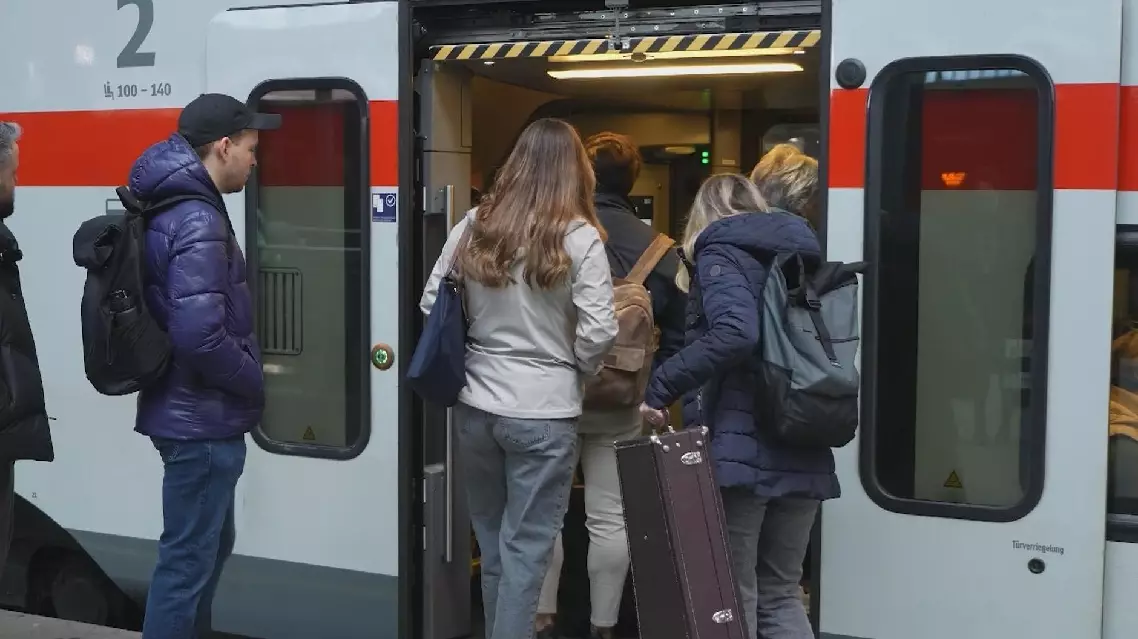
Vienna residents turn to public transport as fuel prices soar
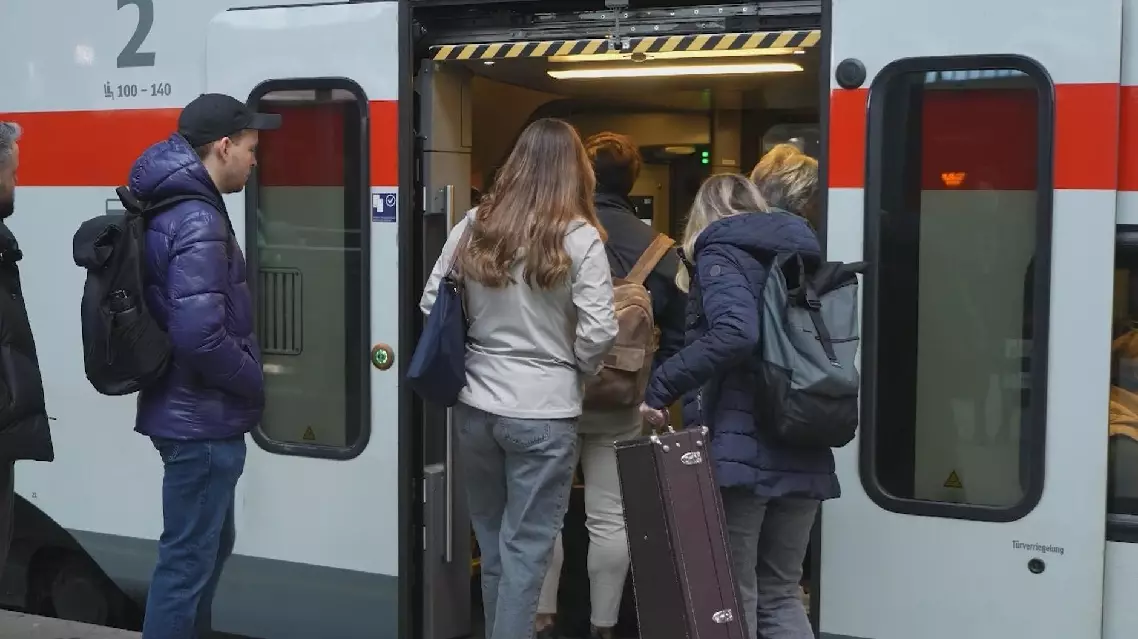
Vienna residents turn to public transport as fuel prices soar
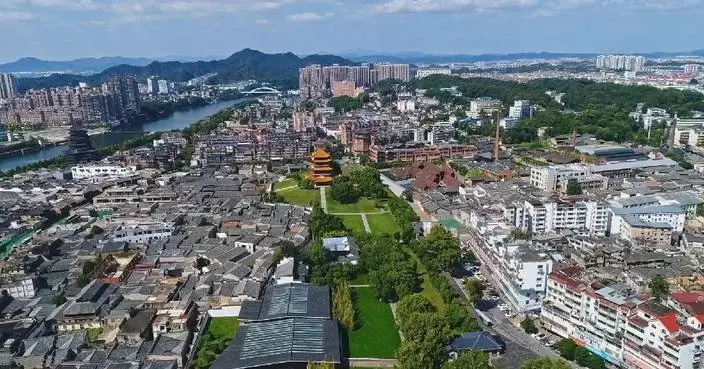
For more than 1,000 years, Jingdezhen, the "porcelain capital" in east China's Jiangxi Province, has shaped how the world understands porcelain, with even discarded shards preserving a living tradition.
Weng Yanjun, president of the Jingdezhen Imperial Kiln Institute, reflected on the scale and challenge behind Jingdezhen's historic creations.
"When I look at this gigantic dragon jar, I couldn't help going back to 600 years ago, when the emperor had this order to create something bigger than ever before. The failure rate of the dragon jar is so high. It could be nine out of 10. Even making failure products like this takes courage, takes techniques and takes commitment," said Weng.
Those failed attempts, once discarded, now preserve the evidence of how Jingdezhen pursued perfection.
For more than 1,000 years, Jingdezhen's porcelain industry has endured through the Song, Yuan, Ming and Qing dynasties (960-1911). What has survived is not only its porcelain, but also a living heritage of raw materials, workshops, kilns and specialized craftsmanship.
Those firings produced masterpieces as well as failures, with the discarded pieces forming another kind of archive.
At the Jingdezhen Imperial Kiln Institute, Weng told archaeology students that fragmented specimens sometimes provide more information than complete artifacts.
Weng leads the development of the world's first Ancient Ceramics Gene Bank, which extracts and catalogs the defining characteristics of each ceramic shard.
"For our institute alone, we have excavated more than 20 million pieces of shards for the past over 1,200 years. Among those shards, we do sorting, we do restoration, and we do scientific tests. And then we find, wow, a small shard can tell us much more information than even a whole piece," said Weng.
Using a standardized sample library and unified data framework, the project records each piece's shape, decoration, body material, glaze, color, firing marks and inscriptions, creating a valuable resource for authentication and research around the world.
"The whole city is a wonderful lab and space range makes Jingdezhen uniquely a wonderful example of how the handicraft ancient industry with porcelain as the focus survived even to today," Weng added.
Jingdezhen once helped establish benchmarks for how porcelain was made. Now, the gene bank is turning fragments into a language that can be read beyond the city. For French artist and researcher Yann Colleu, learning to read that language has also changed the way he creates.
"Since my childhood, my parents had these teapots, tea sets, plates and cups. I was very curious about the pattern, like the meaning, what was behind it? Actually when I discovered in Jingdezhen that it was a bat, because of 'fu' and 'fu' is fortune, but also you have the 'wufu,' like the five blessings. I was like a child with stars in the eyes, discovering the world for the first time," said Colleu, PhD candidate at Jingdezhen Ceramic University.
What once seemed abstract became part of Yann's own visual language. In his work, traditional Jingdezhen motifs and production scenes are reimagined through a contemporary, cross-cultural lens.
"Jingdezhen is a timeless city. The past, the present and even the future are tied together. This is one of illustration of 72 traditional steps developing during the Ming Dynasty (1368-1644). The difference is, instead of using Chinese characters, I use foreigners. I want to use the past to talk about the present and even the future with Jingdezhen," said Colleu.
The Jingdezhen Handicraft Porcelain Industry Sites were inscribed on the UNESCO World Heritage List on Saturday. The inscription recognizes not just a single kiln or masterpiece, but an entire production system, from its archaeological remains and traditional craftsmanship to its industrial knowledge and global influence.
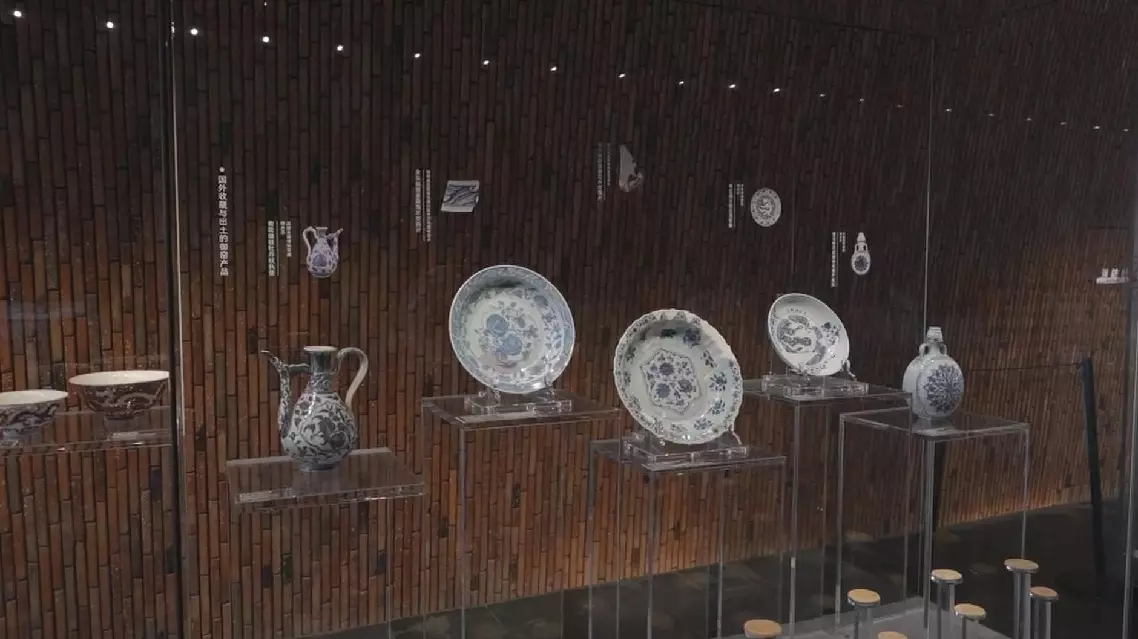
Porcelain shards preserve Jingdezhen’s timeless legacy