Flying cars are moving into critical development stages in China, with new models expected to reshape urban transport and drive the country’s low‑altitude economy in the near future.
The low‑altitude economy, which covers activities of manned and unmanned aircraft operating below 3,000 meters, has been identified by China as a key strategic emerging sector, with nationwide efforts now underway to unlock its potential.
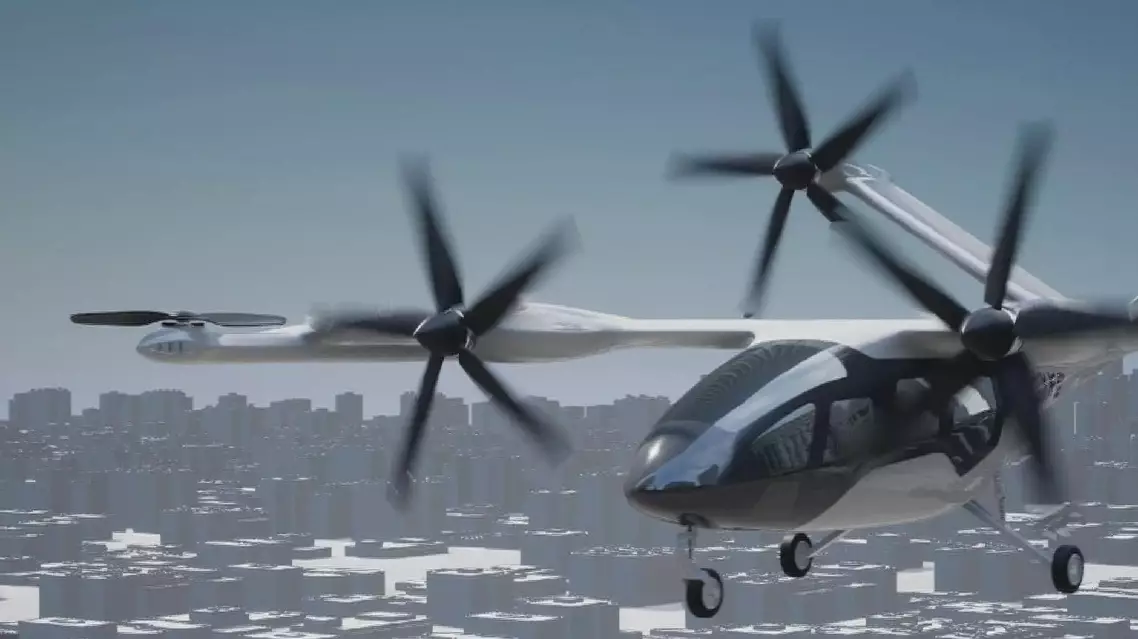
In Chengdu City, southwest China's Sichuan Province, a six-seat electric flying car designed for urban transport is currently undergoing airworthiness certification. The newly designed cabin features a flexible layout and automatically adjustable seats, with an interior comparable to that of a multi-purpose vehicle (MPV).
"The comfort level and tactile experience inside are the same as today's high-end new-energy MPVs. [The flying car] has a maximum range of 200 kilometers, is able to, for example, travel point-to-point between cities and rapid connections along scenic routes," said Liang Jiong, spokesman of Aerofugia, a subsidiary of China's electric vehicle giant Geely Auto.
This flying car reaches a top speed of 230 kilometers per hour, with its first phase of verification test flights already completed. Future applications are expected in low‑altitude tourism, urban travel, and emergency rescue.
"For example, flying directly from Qingcheng Mountain to Shuangliu International Airport would take just nine minutes. We have accumulated nearly 2,000 intent orders domestically and hundreds of confirmed orders," said Liang.
In south China's Guangzhou, another flying car model has cleared its first public flight while undergoing airworthiness certification. With a maximum takeoff weight of 950 kilograms and an eight‑meter fuselage and wingspan, it is built for medium‑ to long‑distance travel across cities, seas, and mountains.
"If features car-style, side-opening doors and two seats. It can take off and land from rooftops. Eight propellers lift the aircraft vertically off the ground, and a rear pusher propeller provides strong power," said Feng Shuai, chief technology officer of EHang, an advanced air mobility technology platform company in China.
Zhang Yangjun, professor at Tsinghua University's School of Vehicle and Mobility, said flying cars are currently used in high‑value, time‑sensitive scenarios such as emergency medical transport, specialized firefighting, and premium point‑to‑point transfers.
Professor Yangjun believes that over the next decade, as technology matures and costs fall, flying cars could enter the mass market, allowing passengers to book aerial rides through ride‑hailing apps.
"We expect large-scale adoption of flying cars around 2035. Once flying cars become a daily mode of transportation for the general public, they could drive a market worth 10 trillion yuan (about 1.47 trillion U.S. dollars)," said Zhang.
Flying cars expected to reshape China's urban transport, unlock trillion‑yuan market