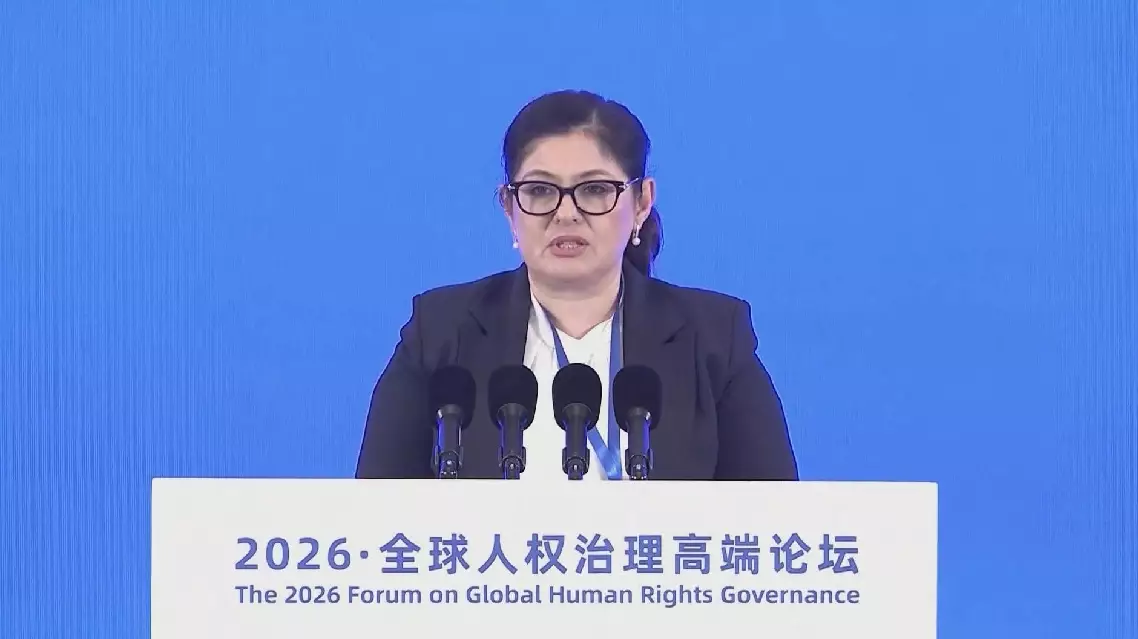
A senior Uzbek human rights official on Thursday called for stronger international cooperation and equal access to opportunities to ensure the effective realization of the right to development, as global challenges continue to reshape the development landscape.
Speaking at the 2026 Forum on Global Human Rights Governance in Beijing, Dilnoza Muratova, deputy director of the National Center for Human Rights of Uzbekistan, put forward three critical lessons that have emerged in the push to operationalize the right to development, advancing it beyond mere acknowledgment to tangible practice.
"Forty years after the adoption of the Declaration on the Right to Development, three lessons stand out. First, sustainable development and human rights are mutually reinforcing development criteria creates conditions for the enjoyment of rights, while human rights make development more inclusive. Second, development must remain people-centered. The remarkable achievements of the People's Republic of China in improving living standards and expanding opportunities demonstrates the power of long-term development policies. Third, the realization of the right to development requires international cooperation, as no country can address global challenges alone," said Muratova.
Muratova identified three major challenges to the right to development: the growing technological divide, climate change, and unequal access to resources and opportunities.
"These challenges require not only national action, but also international solidarity. In this regard, I would like to put forward several proposals. First, strengthen the international cooperation to support those rights to development as a universal right of all people. Second, ensure that technological progress, including artificial intelligence, contributes to inclusive development. Third, Uzbekistan is convinced that the next stage of evaluation of the right to development should be focused in on investing in human potential," said the human rights official.
She also called for expanded exchange of best practices in human capital development, social protection and sustainable development.
"Our common responsibility is to ensure that every nation and every person has access to opportunities necessary to realize the right to development. The Chinese philosophical tradition, harmony, is the sense of balance between development and justice and between present and future generations. This reflects the essential of the right to development. Development must serve people and expand opportunities for all," said Muratova.
The two-day Forum, which jointly hosted by China's Information Office of the State Council and the Ministry of Foreign Affairs, and opened Wednesday, attracted over 400 participants from over 100 countries and international organizations, including the United Nations.
Uzbek official calls for equal access, global solidarity in advancing right to development