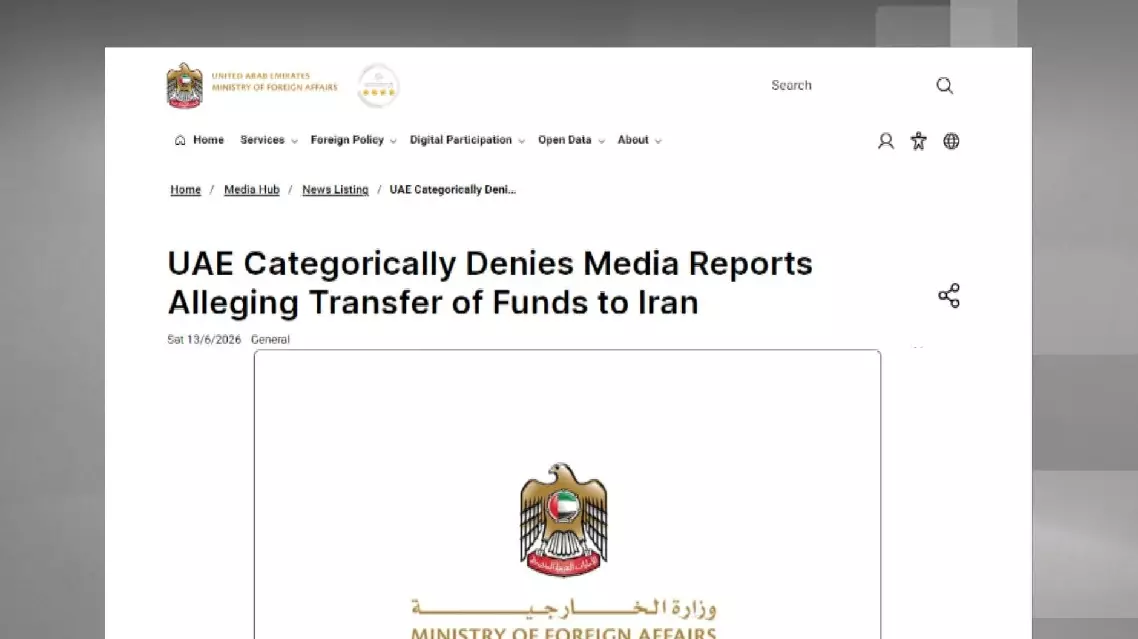
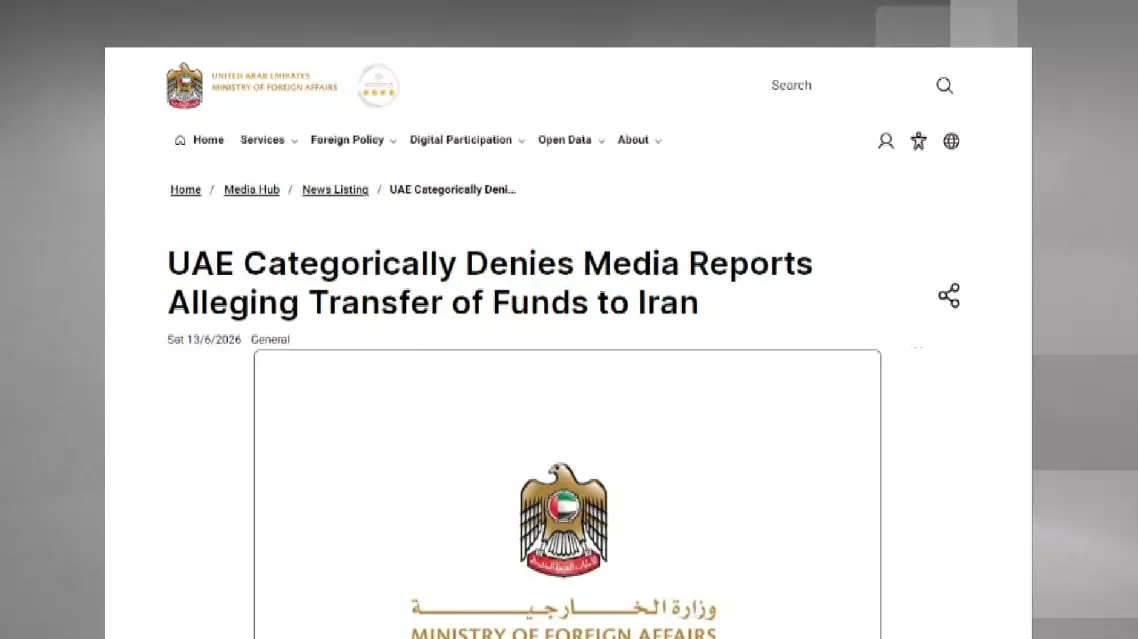
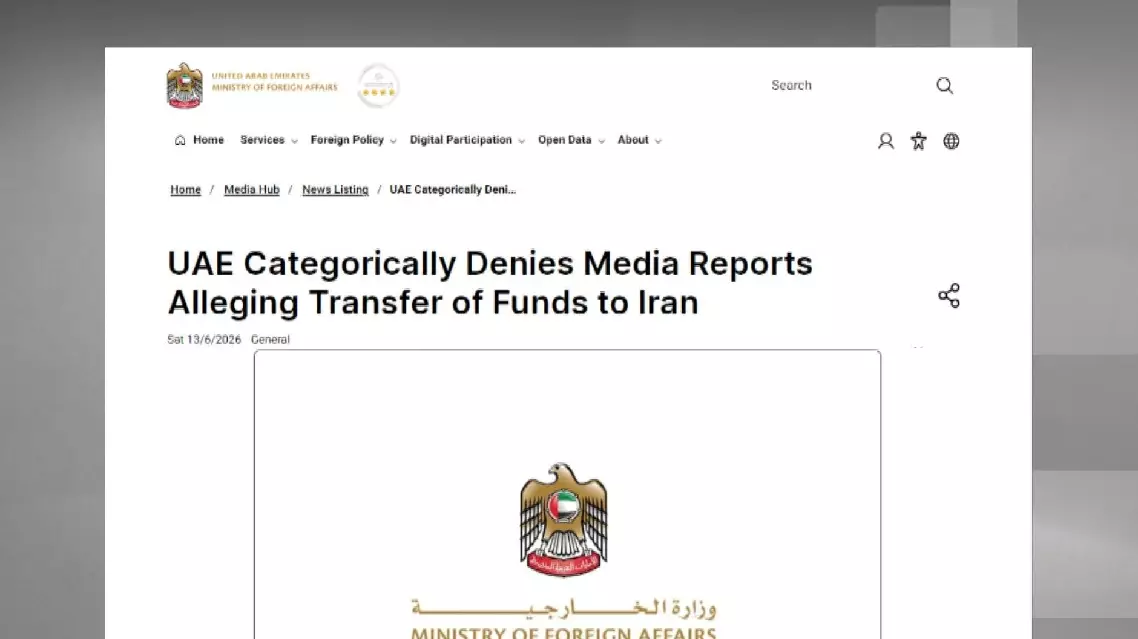
The Ministry of Foreign Affairs of the United Arab Emirates (UAE) issued a statement Saturday to firmly deny media reports that claimed the UAE has transferred funds to Iran, including allegations involving 3 billion U.S. dollars.
The statement said the allegations "are entirely false and unfounded," and reiterated the UAE has not unfrozen, transferred or assisted in transferring any Iranian funds.
On Friday, media outlets citing unnamed sources reported that the UAE had agreed to unfreeze at least 10 billion U.S. dollars in funds for Iran, with over 3 billion allegedly already in place.
UAE denies reports of transferring funds to Iran
UAE denies reports of transferring funds to Iran
UAE denies reports of transferring funds to Iran
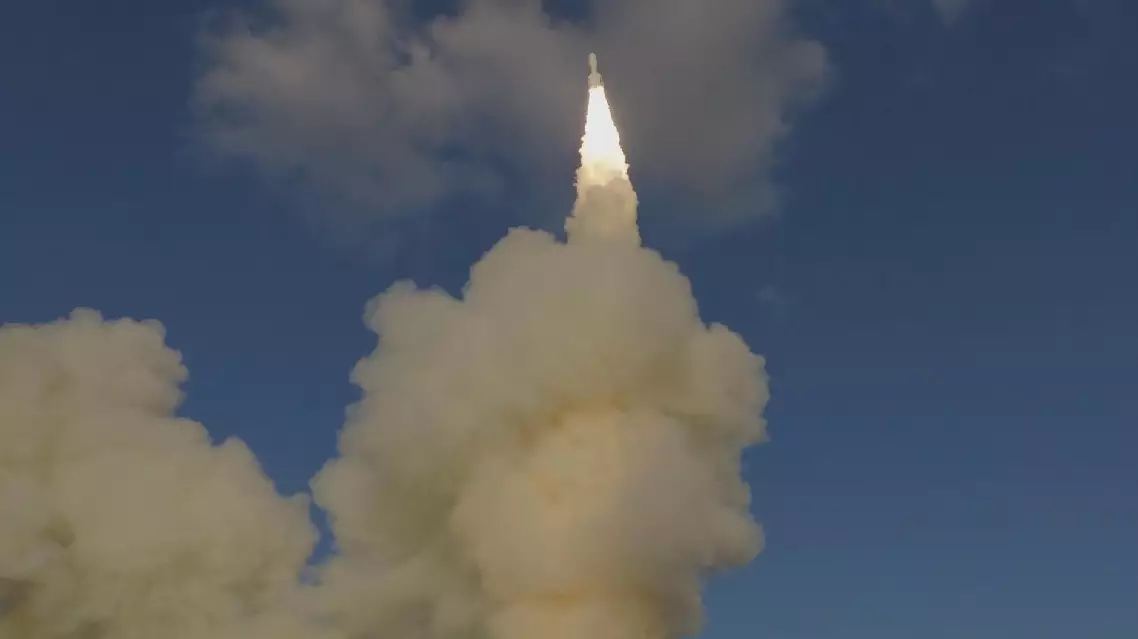
China's Gravity-1 Y3 carrier rocket successfully placed nine satellites into planned orbits during a sea launch from the eastern waters off Shanghai at 06:00 Beijing time on Wednesday,, setting new records for payload weight and orbit altitude in a single mission.
The mission was carried out by the Taiyuan Satellite Launch Center. The rocket carried a new group of Qianfan Constellation satellites and an EUHT technology test satellite. It was the fourth flight of the Gravity-1 rocket.
Gravity-1 is a solid-fuel rocket developed by a Chinese commercial aerospace company, OrienSpace, with a maximum payload capacity of 6.5 tonnes. This launch was the second time Gravity-1 conducted a far-sea maneuver and launch, following the first on July 22, when the Gravity-1 Y4 rocket lifted off from the same area and sent nine satellites into the planned orbits.
It once again fully tested the rocket's adaptability to high temperature, high humidity and high salt fog at sea, further verifying its reliability, according to experts.
"We've fully used the rocket's entire carrying capacity, just leaving a ballistic margin of slightly more than 100 kilograms, with everything else devoted to launch payload. For the 800-kilometer orbit, our current utilization has exceeded three tonnes," said Xu Guoguang, chief designer of Gravity-1 at Orienspace.
The mission also marked the world's first solid rocket launch of stacked satellites, designed to meet the networking needs of large-scale constellations. Gravity-1 adopted a stacked arrangement, placing multiple satellites on top of one another like "stacking blocks" to improve the utilization of space inside the fairing and the payload ratio.
"In the past, when it came to multi-payload launch, the satellites were usually mounted on a load-bearing cylinder in a wall-mounted way, so the rocket's space utilization was not particularly high. The biggest advantage of stacked satellites is that they significantly boost rocket efficiency. For the satellites, the average launch cost is correspondingly lower," Xu said.
China's Gravity-1 commercial rocket successfully carries nine satellites into orbit