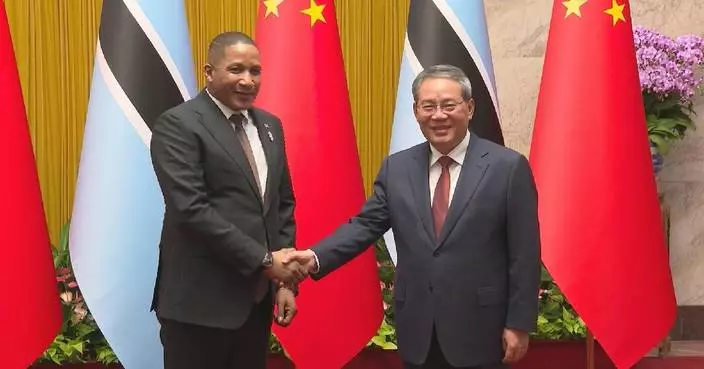
Myanmar President Min Aung Hlaing on Wednesday highlighted the friendship and mutual trust between Myanmar and China, adding that "Pauk-Phaw" friendship between the two countries will be further cemented.
In an interview with the China Media Group in Beijing during his five-day state visit to China which ended on Friday, the president said Myanmar and China share a deep historical friendship that should be carried forward and built upon in the future.
"Myanmar and China have a long history of exchanges. As friendly neighbors, the two countries share a border stretching more than 2,000 kilometers. We not only enjoy a 'Swe Myo' 'Pauk-Phaw' friendship, but have also reached consensus on building a mutually beneficial Myanmar-China community with a shared future of sharing weal and woe. I believe that, in developing bilateral relations, Myanmar and China are not merely neighbors sharing a border -- we should also carry forward and promote our traditional bilateral friendship," he said.
He also offered a detailed explanation of the "Pauk-Phaw" friendship -- its meaning and significance -- while stressing that Myanmar will continue to be a friendly neighbor of China.
"The history of friendly exchanges between Myanmar and China is long and profound. 'Pauk-Phaw' means brothers. The term 'Swe Myo' refers to kinship by blood, and also represent a very close and trustworthy relationship. We use terms such as 'Swe Myo' and 'Pauk-Phaw' to describe Myanmar and China as brothers sharing the same bloodline. The cooperation between Myanmar and China is deep in scope and diverse in coverage. Whether in the present or for the long term, we are firmly committed to continuously deepening bilateral cooperation, and to steadily consolidating mutual trust and nurturing friendship. We will work hand in hand to promote regional solidarity and collaboration. This is the best path forward, and Myanmar will continue to be a friendly neighbor of China," he said.
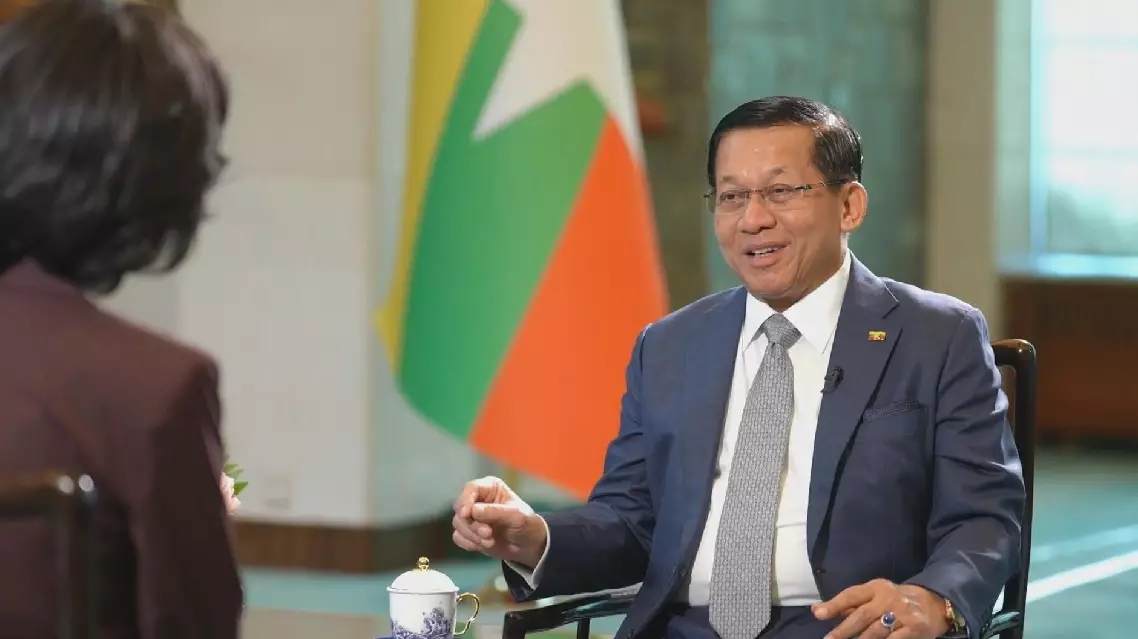
Myanmar president highlights 'Pauk-Phaw' friendship with China
Yemen's Houthi group said that it had carried out multiple attacks on Saudi and Saudi-led coalition targets, while the Saudi-led coalition said it intercepted a Houthi missile, and Yemeni government forces reported operations against the group on several fronts.
In a statement released early Thursday, the Houthis said they used a surface-to-air missile to hit a Saudi Typhoon fighter jet. The aircraft, they said, had taken off from Saudi Arabia's Taif Air Base and was hit over Yemen's Sa'adah Province. Saudi Arabia has not yet responded to the claim.
Earlier on Wednesday, the Houthis said they launched a large-scale attack using ballistic missiles, cruise missiles and drones against oil facilities of energy giant Saudi Aramco in Dhahran in eastern Saudi Arabia, as well as King Khalid International Airport and a Saudi Aramco refinery in the Saudi capital, Riyadh.
The Houthis said in a separate statement released Wednesday evening that the group had fired one more ballistic missile at King Khalid International Airport and launched three ballistic missiles at Saudi-led coalition targets in southern Yemen.
Turki al-Maliki, spokesman for the Saudi-led coalition, said on Wednesday that they had intercepted and destroyed a Houthi ballistic missile fired toward Riyadh. Saudi Arabia's General Directorate of Civil Defense said in a statement on Wednesday that fragments from the intercepted missile fell in Riyadh, injuring one person.
Meanwhile, the Houthi-run al-Masirah TV reported that late on Wednesday the Saudi-led coalition carried out an airstrike on a residential building in the Al Maravi'ah area of Hodeidah province, which is under Houthi control. Early on Thursday, al-Masirah also reported that Yemen's capital, Sanaa, had come under Saudi attack.
According to a Houthi statement issued on Wednesday evening, the Saudi-led coalition launched 42 airstrikes and missile attacks on Houthi-controlled areas in the previous 24 hours. The Houthis said that Saudi attacks on islands in the Bab el-Mandeb Strait directly threatened the safety of maritime shipping routes.
Separately, Yemeni government forces said on Wednesday that they continued to strike Houthi targets and personnel on the eastern and southern fronts.
Yemen has been mired in conflict since late 2014, when the Houthis seized the capital Sanaa and much of northern Yemen, prompting a Saudi-led coalition to intervene in 2015 in support of the Yemeni government.
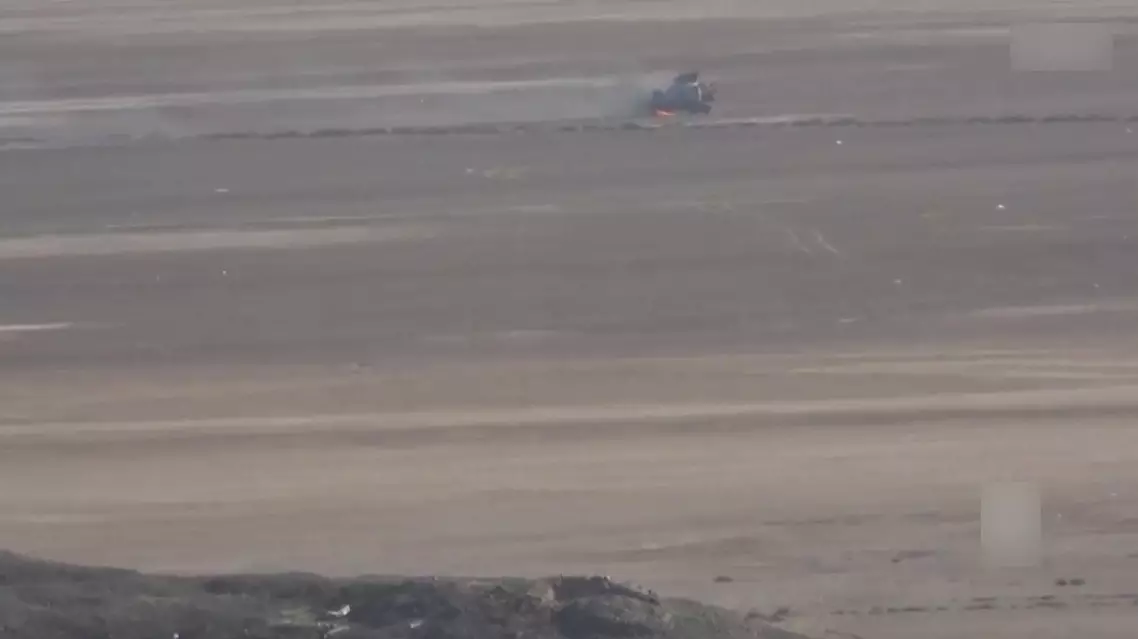
Houthis, Saudi-led coalition report fresh military actions against each other