Exports of Chinese-made thermal insulation products have soared in the first five months of 2026 as global consumers study the health habits of the Chinese lifestyle, with many companies reporting booming demand and record shipments to international markets.
Early this year, the viral "Becoming Chinese" trend began sweeping across global social media. From drinking warm water infused with goji berries and practicing Tai Chi, to cooking authentic Chinese cuisine and taking foot baths, people around the world are increasingly embracing the Chinese lifestyle. More than a mere wellness craze, the trend reflects a global appreciation of China's traditional wisdom.
Among the various Chinese lifestyle practices, the tradition of drinking hot beverages has gained particular traction. Easy to follow and seamlessly integrated into daily routines, it has struck a chord with many overseas consumers, driving market demand for insulated beverage containers.
Foreign travelers visiting China affirmed that knowledge of the practice is now mainstream in their countries.
"I have heard about these things before. So like drinking hot water is very popular and mixing with honey and like ginger or something else. It's also a well-known fact," said Adelia, a foreign tourist.
Chinese exporters that deal in related products are welcoming the trend. According to the General Administration of Customs (GAC). In the first quarter of this year, exports of thermal mugs hit five billion yuan (about 740 million U.S. dollars), while electric kettles reached about 200 million yuan (about 29.44 million U.S. dollars). At the Waigaoqiao port area in Shanghai, a shipment of insulated cups, flasks, and containers weighing a total of 6.6 tons is about to be loaded onto vessels for export. The foreign trade company handling this shipment said that precise adaptation and localized design have been the key to success. "We have optimized the interior capacity and lining materials of our thermal cookers to suit the dietary habits of the Latin American market, properly accommodating local users' need for long-lasting heat retention when cooking beans and similar dishes. For the North American market, [we] have launched portable thermal insulation kits designed for both road trips and camping, catering to outdoor needs. These new locally tailored products represent a new highlight for us," said Ge Tingting, customs affairs manager of a local foreign trade company.
Customs officials at the port have also noticed the popularity of these exports. "In the first five months of this year, Shanghai Waigaoqiao Port Customs supervised over 5.2 million cross-border e-commerce parcels shipped by sea, with a total value exceeding 5.8 billion yuan (about 850 million U.S. dollars), representing an 80-fold increase year-on-year. Riding the wave of cross-border e-commerce and social media, insulated containers with advanced technology, such as smart thermal mugs, are gradually becoming favorites in the market," said Xu Weizhong, deputy section chief of the Second Inspection Section of Shanghai Waigaoqiao Port Customs.
The "Becoming Chinese" trend has also prompted global social media users to adopt a range of other lifestyle habits, including practicing Baduanjin (an ancient Chinese wellness exercise), exploring traditional Chinese medicine, and preparing basic Chinese dishes.
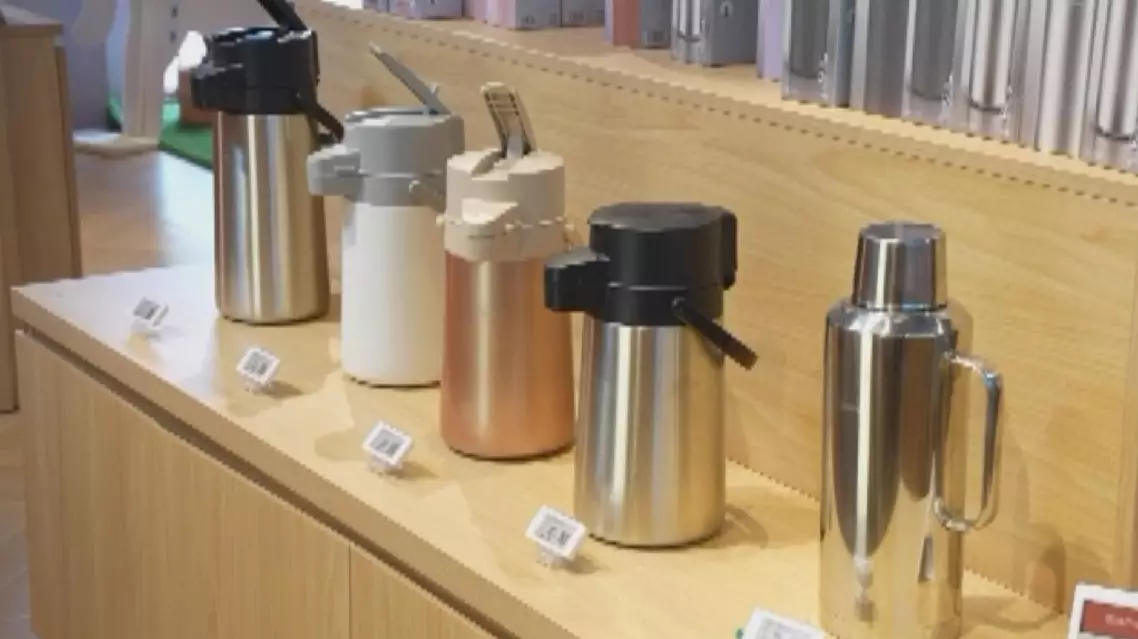
China's thermal insulation exports ride wave of "Becoming Chinese" trend