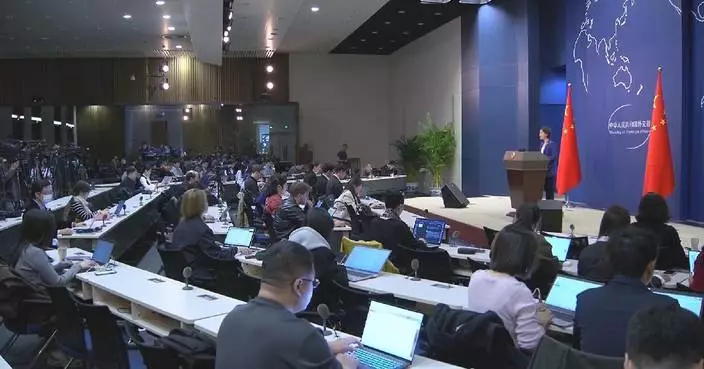
The Philippines' territorial expansion attempts in the South China Sea undermine the international legal system and pose a threat to regional peace and stability as well as the post-WWII order arrangement, said a report released on Wednesday.
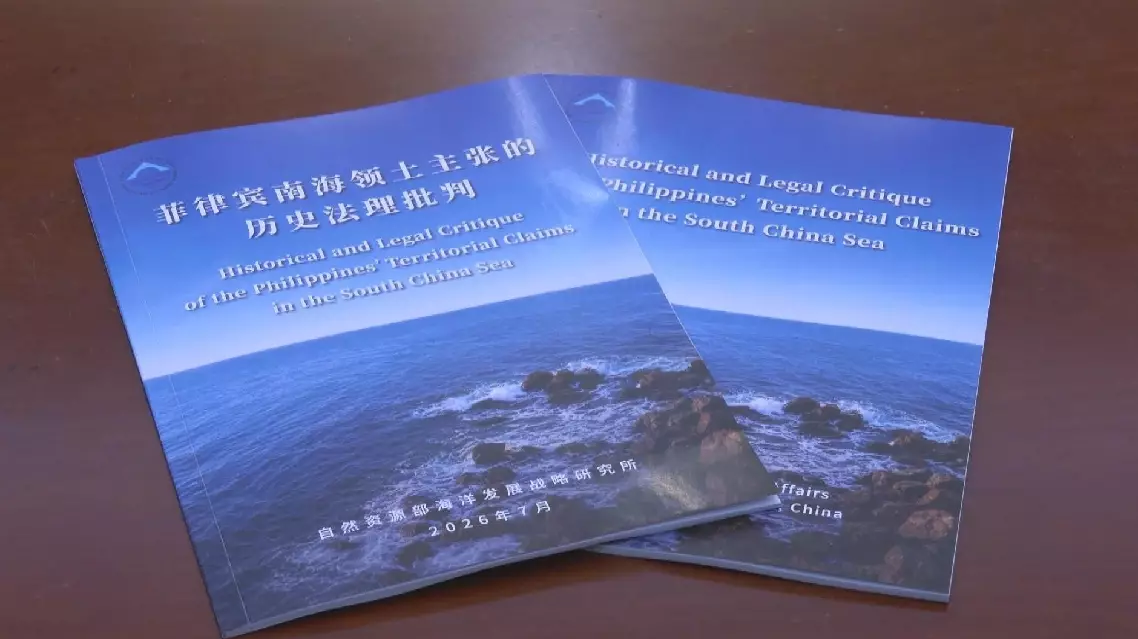
The report, titled "Historical and Legal Critique of the Philippines' Territorial Claims in the South China Sea," was released by the China Institute for Marine Affairs under the Ministry of Natural Resources.
It reviews the formation process of the Philippines' territorial boundaries. According to the report, the Philippines' land territorial boundaries gradually took shape during the Spanish and American colonial periods and were established through three international treaties.
However, since the 1970s, the Philippines has made territorial claims to China's Huangyan Dao and some islands and reefs of the Nansha Islands under various excuses by issuing island occupation notices and presidential decrees, amending the constitution, and enacting laws. It has repeatedly emphasized that Huangyan Dao and the Nansha Islands are closer to the Philippines in an attempt to explain the rationality and legality of its territorial claims.
"If ownership were based solely on proximity, the global order would be in chaos, and national borders would be a mess. For example, some British archipelagos such as the Channel Islands lie in the English Channel off the coast of France. Even more uncommonly, some French islands lie in the Atlantic Ocean off the coast of Canada. Following the Philippines' logic, all national borders would have to be redrawn. Therefore, this logic is flawed and impossible," said Zhang Haiwan, a researcher at the China Institute for Marine Affairs.
The report concludes that the Philippines' attempt to breach the territorial boundaries defined by a series of treaties with international legal force and extend its reach to Huangyan Dao and parts of the Nansha Islands lacks basic historical basis and clearly violates the rules of international law concerning territorial acquisition, thus lacking historical and legal basis. Besides, the Philippines' illegal moves will also bring multiple harms.
"One harm is that it undermines the system and stability of international law. Secondly, it also disrupts peace and stability in the entire South China Sea region. Because of these illegal moves, China will definitely take countermeasures. Thirdly, it undermines the international legal order established since World War II. No state can seize or occupy another's territory by force and illegal means. The Philippines' illegal moves have completely destroyed the international consensus established after World War II, so the harm is significant," said Zhang.
Philippines' territorial expansion attempts undermine int'l legal system: report