U.S. businesses and workers who depend on cross-border commerce are preparing for an uncertain future, following the country's decision on July 1st not to renew the United States-Mexico-Canada Agreement (USMCA).
For more than three decades, free trade has helped turn the U.S.-Mexico border into one of the world's busiest commercial corridors. The recent decision has given rise to concerns that trade flows will see a sharp drop off.
That scenario would put employment at risk, including the jobs of many truck drivers. Each year, truckers carry billions of dollars worth of goods through Eagle Pass, Texas, where bridges across the Rio Grande see a constant flow of freight vehicles in both directions.
In downtown Eagle Pass, an area already struggling with decreased tourism volumes from across the river, the news has many locals concerned.
"I don't know what's going to happen. Like me, as a small business owner, I'm trying to do more things. Hopefully we don't come to another recession, hopefully. But how I see everything, it's like if you are in a desert, everything is so calm in the business side," said Gustavo Garcia, a local businessman.
Goods traveling between these countries overwhelmingly move on 18-wheelers, and truckers like Julio Garcia fear the impact of lower volumes.
"We worry a lot about that. It's not good because it's gonna lower our jobs. I live in a border town, so we've got a lot of commercial trucks coming from Mexico to Laredo. It's going to be bad," said Garcia.
However, the U.S. decision not to renew the USMCA doesn't abruptly end the pact, instead triggering a "sunset clause" that mandates yearly reviews for another ten years. While the community in Eagle Pass remains nervous, that period is giving people hope that a new deal guaranteeing free trade will ultimately emerge.
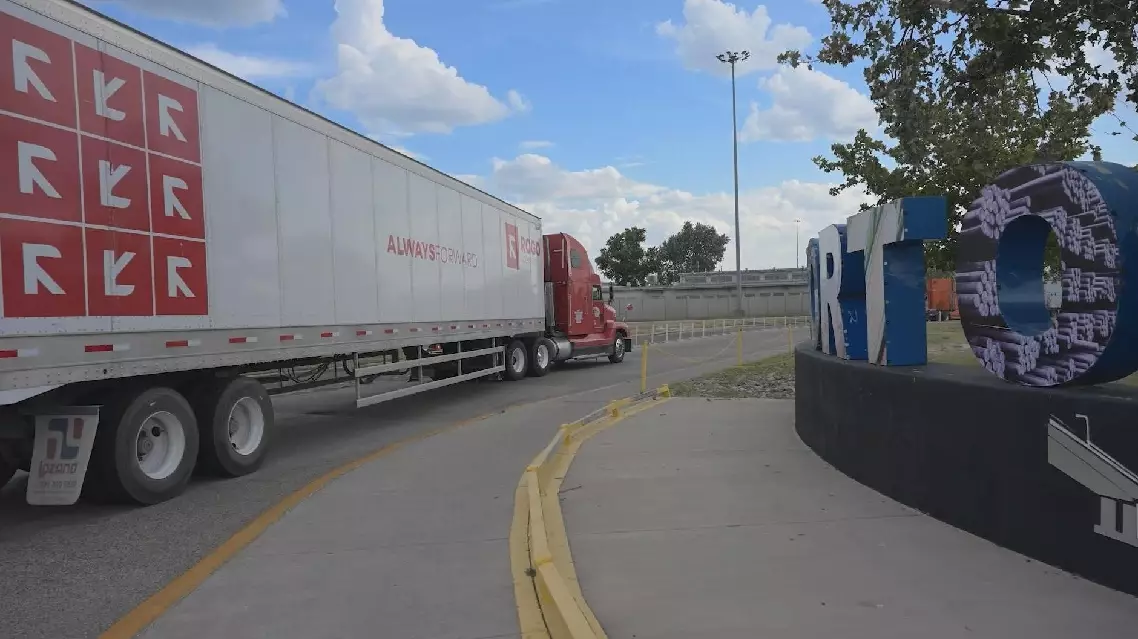
Border businesses fear losses after USMCA trade pact not renewed