SEATTLE (AP) — President Donald Trump fired the new top U.S. prosecutor in Seattle on Wednesday less than an hour after the attorney was unanimously appointed by the federal judges in the district, highlighting tensions between the courts and the president over the powerful positions.
Roger Rogoff, a former judge and veteran state and federal prosecutor, was sworn in as U.S. attorney before 8 a.m. at the U.S. courthouse in downtown Seattle. In a phone interview, he said he then went to the U.S. Attorney's Office and asked to meet with Charles Neil Floyd, whose 120-day interim term in the position ended in February.
As he waited in a lobby, Rogoff said, he received an email from the Trump administration informing him he'd been removed. He is consulting with other lawyers about suing over his firing, he said.
Presidents normally appoint U.S. attorneys, the top federal prosecutor in each judicial district. The positions require Senate confirmation, except in temporary appointments. When temporary appointments expire before a nominee is confirmed, the judges in a judicial district can name a U.S. attorney.
But under Trump, the Justice Department has sought to leave unconfirmed prosecutors in their positions indefinitely, often through novel personnel maneuvers.
“District court judges can appoint a temporary U.S. Attorney, and POTUS can fire them,” Acting U.S. Attorney General Todd Blanche said in a social media post Wednesday. He added that the judges who appointed Rogoff “abandoned the time-honored process of consultation with the administration so that the selected U.S. Attorney is qualified to serve in the administration.”
Trump named Floyd, who previously served as an immigration judge, interim U.S. attorney last October but never forwarded his nomination to the Senate. When Floyd’s time as interim U.S. attorney expired, Trump simply shifted his title, a tactic the administration has also tried in other federal judicial districts: It named him first assistant U.S. attorney, while leaving the top post empty.
In May, a U.S. appeals court panel expressed skepticism that the maneuver was legal. The federal judges in the city decided to take applications for the position, and it appointed a bipartisan panel to review the applications.
On Wednesday morning the court — comprising 17 active and senior judges appointed by five presidents — issued its unanimous order naming Rogoff the U.S. attorney for western Washington.
Democratic Washington U.S. Sen. Patty Murray, who had opposed Floyd for the U.S. attorney job, blasted Rogoff's quick firing.
“Throughout his career, he has demonstrated an outstanding commitment to public service, and he was appointed legally by the federal judges in the Western District of Washington,” the senator said in a written statement. “This administration doesn’t want to deal with advice and consent—they just want to install cronies to carry out a corrupt political agenda.”
In December, Alina Habbaresigned as the top federal prosecutor for New Jersey after an appeals court said she had been serving in the post unlawfully.
Lindsey Halligan, who pursued indictments against a pair of Trump’s adversaries, left her position as an acting U.S. attorney in Virginia after a judge concluded her appointment was unlawful and that indictments she brought against James and former FBI Director James Comey must be dismissed.
The judges there named James Hundley, who had handled criminal and civil cases for more than 30 years, but the administration fired him. It also fired a court-appointed U.S. attorney in northern New York.
Rogoff, who spent 20 years as a state prosecutor and six as a federal prosecutor before becoming a state judge, said he knew the administration might fire him immediately. But he said he had no qualms about the potential conflict he was walking into. Being U.S. attorney is “the best job there is” for a prosecutor, he said.
“I'm really proud of my career," Rogoff said. "The fact that the judges of this district — most of whom I've spent my career appearing in front of, or trying cases against, or working with — believed that I was the right person to do this work is just really humbling and amazing.”
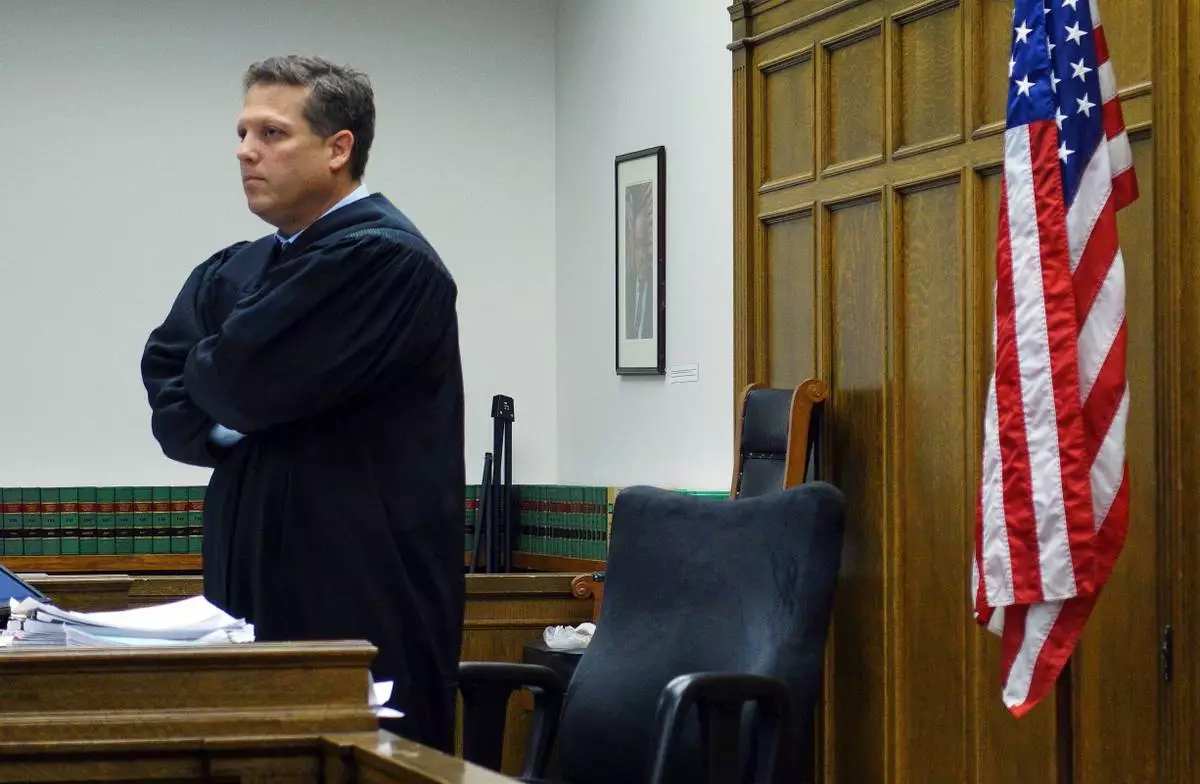
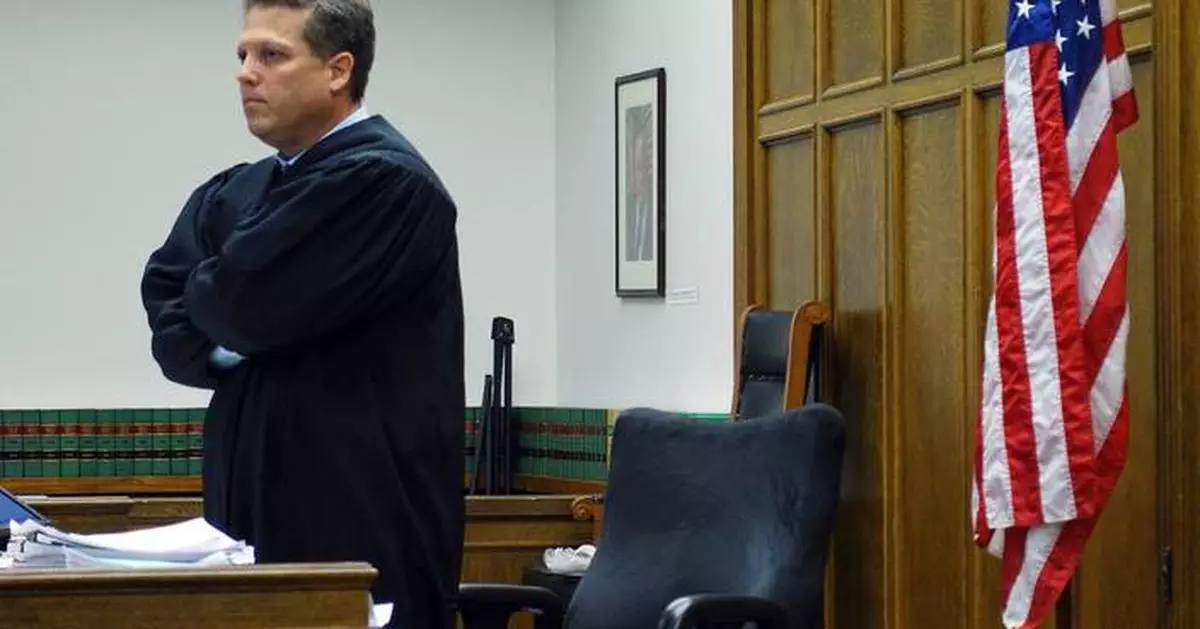
FILE - King County Superior Court Judge Roger Rogoff stands in court on Oct. 10, 2016, in Seattle. (AP Photo/Ted S. Warren, File)
DUBAI, United Arab Emirates (AP) — The United States intensified its strikes targeting Iran early Thursday, hitting targets further north as American forces also fired into a ship it accused of trying to break its naval blockade on the Islamic Republic. Iran retaliated with missile and drone fire targeting Bahrain and Kuwait before dawn.
Days of back-and-forth strikes by the U.S. and Iran across the Middle East — and renewed threats to the Strait of Hormuz — have shredded the interim deal to end the Iran war and coupld tip the region back into all-out war. Already, Iranian officials say U.S. strikes have killed more than 35 people and wounded more than 300 others. Strikes also reached into areas around Iran's capital, Tehran, for the first time of this latest round of violence.
When the U.S. and Israel launched the war on Iran on Feb. 28, Tehran effectively closed the strait to shipping traffic — a move that sent the price of oil, fertilizer and many other goods soaring far beyond the region and gave Iran major leverage in negotiations.
Those rising prices pose a particular challenge to U.S. President Donald Trump and his Republican Party, which hopes to retain control of Congress in elections in November. But Washington has struggled to successfully reopen the waterway, leading to Trump reimposing the naval blockade Wednesday.
Iran’s parliament speaker and lead negotiator, Mohammad Bagher Qalibaf, said Iran was prepared for a fuller military confrontation if the U.S. does not live up to the terms of the interim deal, and Iran’s paramilitary Revolutionary Guard threatened to halt all energy exports from the Middle East over the blockade.
“The export of oil and gas from the region will be either for everyone or for no one,” the Guard said.
Trump again insisted Iran was ready to strike a peace deal, but he did not elaborate.
“They don’t like what we’re doing, and they do want to settle. We’ll find out whether or not we settle with them, or we just finish it off,” he said Wednesday at the U.S. Army War College in Pennsylvania.
The U.S. strikes early Thursday hit around Tehran, state media reported. It also reported American attacks targeted Semnan province, home to Iran’s ballistic missile production and space program.
On Wednesday, the U.S. resumed striking Iran during daylight — further showing the increasing tempo of the attacks. Its attack on Greater Tunb Island, a strategic point in the Strait of Hormuz — targeted Iranian defense and missile sites, Central Command said.
Meanwhile, the U.S. military said it opened fire on the Curacao-flagged oil tanker Belma sailing toward Kharg Island, Iran's main oil export terminal in the Persian Gulf. After the ship “ignored multiple warnings,” a U.S. aircraft disabled the merchant vessel by firing a missile into the ship’s smokestack.
Another American strike Wednesday targeted a barracks for Iran’s 388th Mechanized Infantry Brigade, which operates tanks and armored vehicles, in Sistan and Baluchestan province, Iranian state television reported. The report said Americans fired at least 13 missiles in the attack and the seven dead included conscripts and career soldiers. A number of troops were wounded.
The latest round of fighting is focused on the Strait of Hormuz. How to reopen the strait has bedeviled the U.S. since Iran choked it off in the early days of the war.
During the interim deal, some ships began moving through the passage using a route near Oman overseen by the U.S. military that is outside Tehran’s control.
In recent days, Iran attacked ships using that route — and back-and-forth attacks ensued. The U.S. has threatened to reopen the strait by force — but experts say that would require a much bigger armada if not tens of thousands of ground troops. Imposing the blockade is another way to put pressure on Iran.
But in the meantime, oil prices are rising. The price for Brent crude oil, the international standard, traded above $85 a barrel on Thursday — more than 15% higher than the price before the war, but still well below the nearly $120 reached at the height of the conflict.
Associated Press writers Michelle Price, Konstantin Toropin, Will Weissert, Collin Binkley and Fatima Hussein in Washington, Christopher Weber in Los Angeles, and Nasser Karimi in Tehran, Iran, contributed to this report.
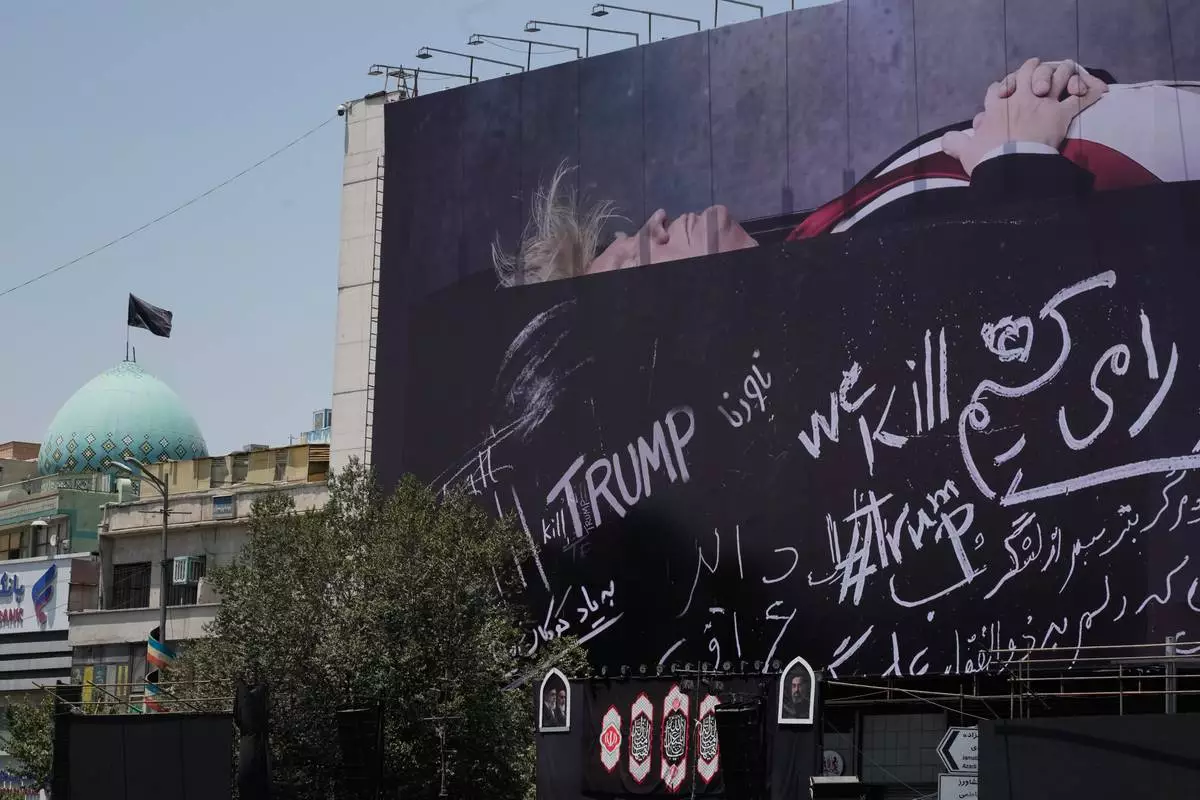
A billboard depicting U.S. President Donald Trump lying on what appears to be a coffin and bearing anti-Trump messages, including the phrase "We Kill Trump," is seen at Islamic Revolution Square in downtown Tehran, Iran, Wednesday, July 15, 2026. (AP Photo/Vahid Salemi)
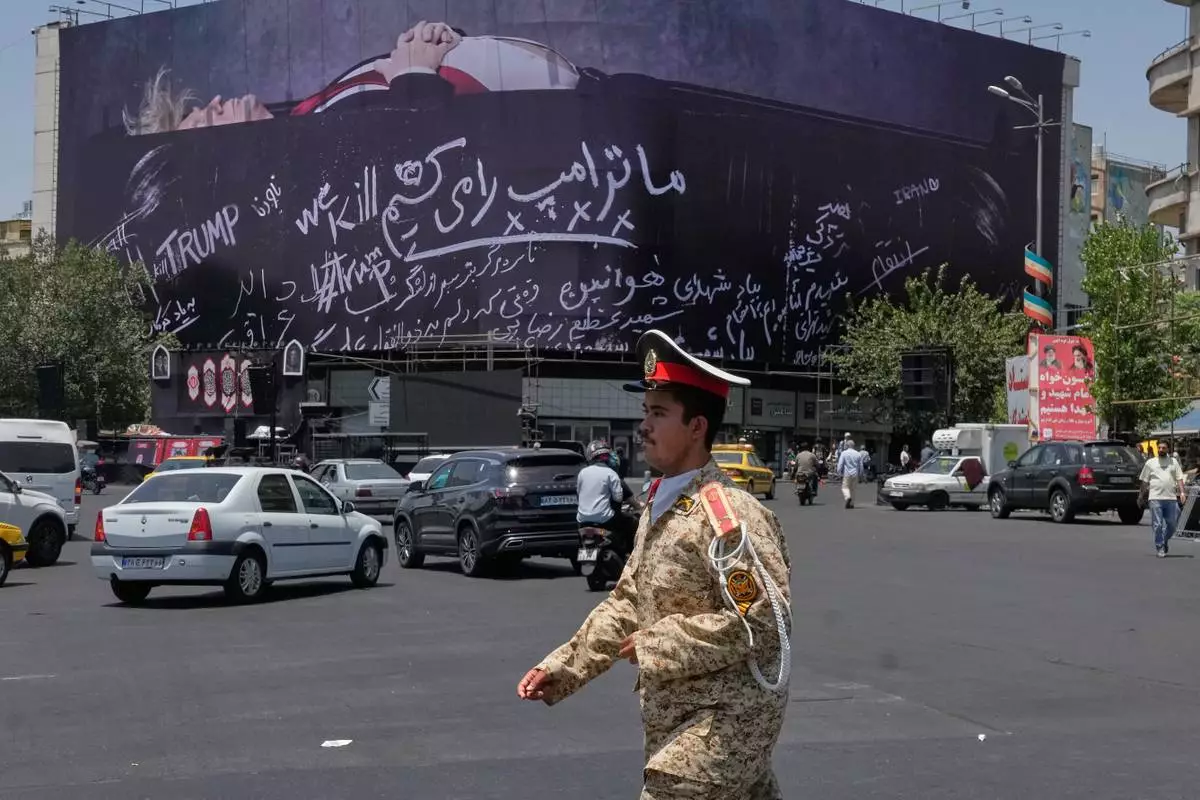
An army cadet walks past a billboard bearing anti-Trump messages, including the phrase "We Kill Trump," at Islamic Revolution Square in downtown Tehran, Iran, Wednesday, July 15, 2026. (AP Photo/Vahid Salemi)
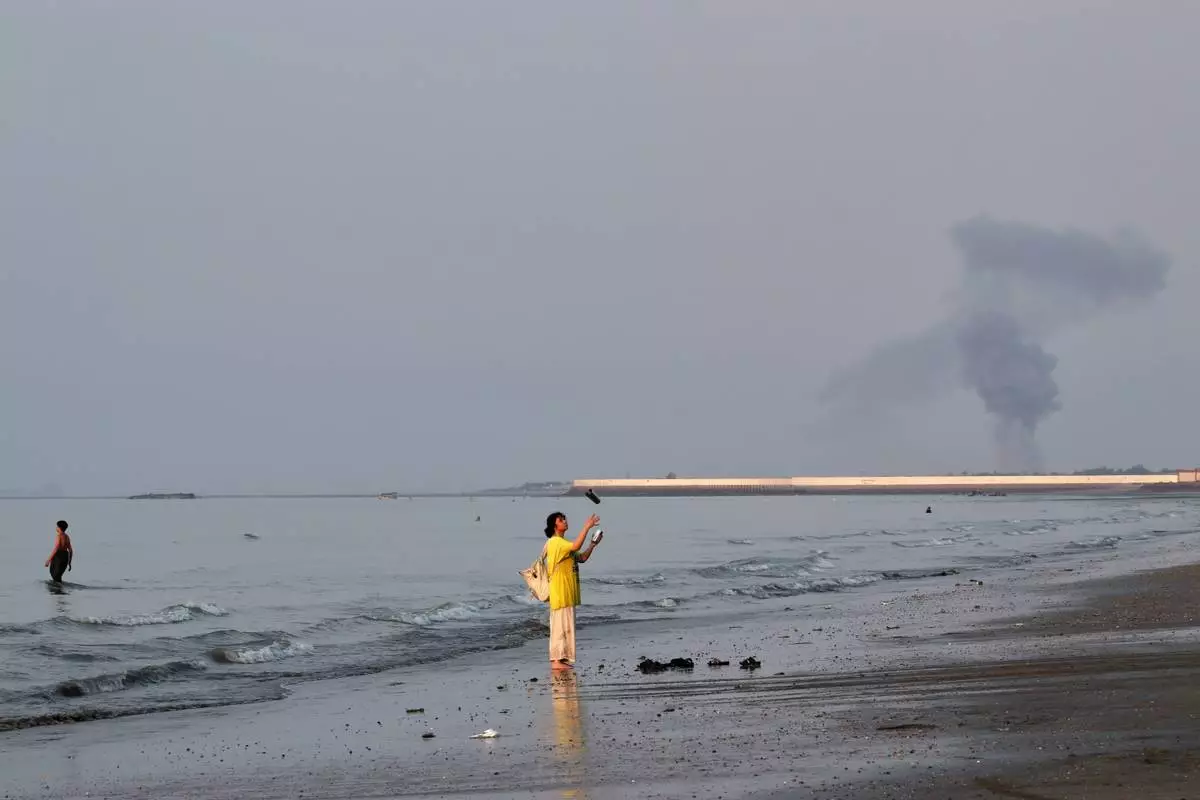
A woman stands at the water's edge along the Strait of Hormuz as a plume of smoke rises in the background following an explosion, off Bandar Abbas, Iran, Monday, July 13, 2026. (Razieh Poudat/ISNA via AP)
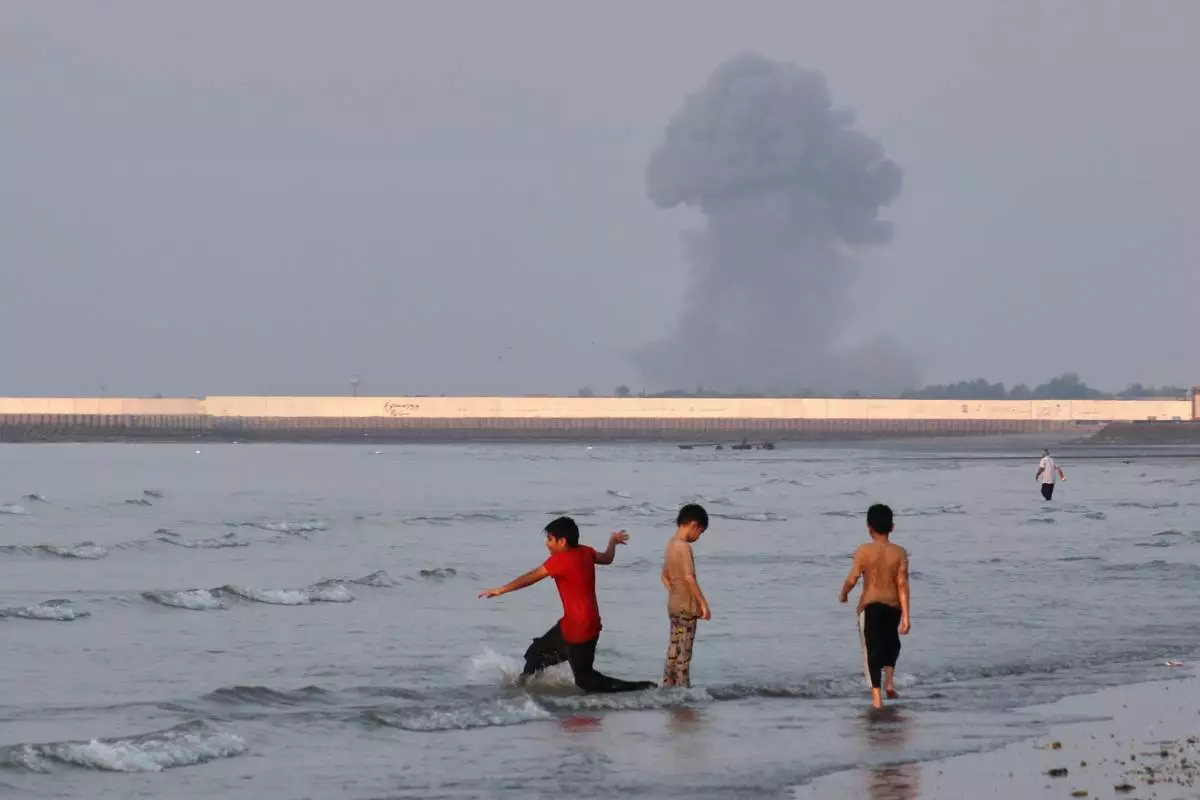
Three boys play in the shallow waters of the Strait of Hormuz, as a plume of smoke rises from an explosion in the background, off Bandar Abbas, Iran, Monday, July 13, 2026. (Razieh Poudat/ISNA via AP)
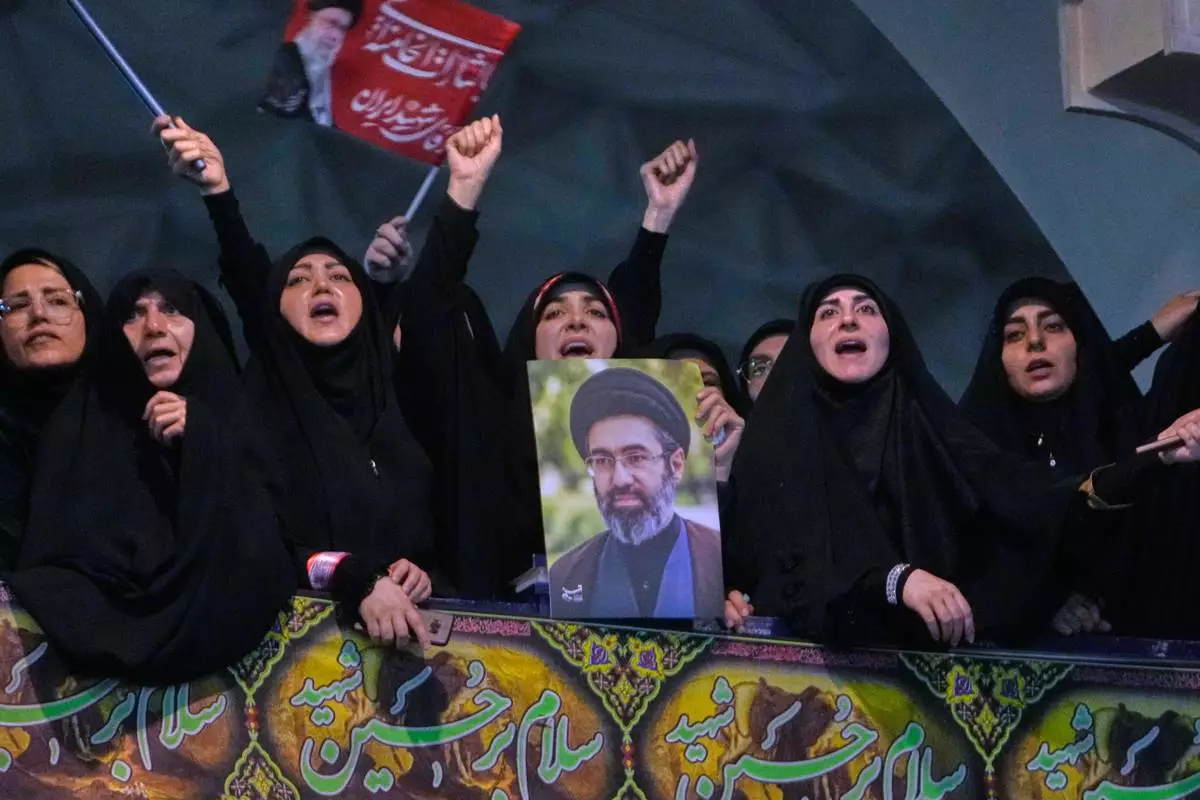
Mourners chant slogan as one of them holds a poster of the Supreme Leader Ayatollah Mojtaba Khamenei in a ceremony commemorating the late Supreme Leader Ayatollah Ali Khamenei at the Imam Khomeini Mosalla Grand Mosque in Tehran, Tuesday, July 14, 2026. (AP Photo/Vahid Salemi)