WASHINGTON (AP) — Immigration and Customs Enforcement has been rapidly expanding its workforce, hiring thousands of new officers as part of the Trump administration's attempt to ramp up immigration arrests and deportations.
The supersizing of ICE -- fueled by an infusion of billions of dollars granted by Congress — has raised concerns about the agency's hiring practices and whether officers being brought on are receiving proper vetting. Those concerns have been rejected by the Department of Homeland Security.
Relatives of the ICE officer who shot a Colombian man in Maine this week told The Associated Press he struggled with serious mental health issues since early childhood and never should have been given a badge and gun to patrol American streets.
The precise circumstances surrounding the officer's hiring were not immediately clear. But the revelations about the man, David Brouillette, shine a new spotlight on ICE's hiring spree and the Trump administration's immigration crackdown.
Here is a look at the agency's hiring and training practices:
In January, Homeland Security said it had hired 12,000 new officers and agents since the hiring surge began and said thousands of those new officers were already out on the streets assisting with investigations. The number includes both deportation officers and agents for Homeland Security Investigations, a separate agency that falls under ICE.
ICE has said the majority of new hires are police and military veterans. But evidence has been mounting that applicants with questionable histories were either not fully vetted before they were brought on or were hired in spite of their past, an investigation by The Associated Press earlier this year found.
At the time, Homeland Security, ICE’s parent agency, would not answer questions about specific hiring decisions. It did say some applicants received “tentative selection letters” and offers to begin working on a temporary status before they had been subjected to full background checks.
It defended its hiring practices, saying it does rigorous vetting.
ICE’s former acting director, Todd Lyons, said during a congressional hearing in February that he was proud of the hiring campaign, which drew more than 220,000 applications.
“This expansion of a well-trained and well-vetted workforce will help further ICE’s ability to execute the president’s and secretary’s bold agenda,” he said.
The vetting process includes reviewing applicants' criminal histories and credit scores and conducting background investigations that include interviewing prior employers and other associates, which can take weeks. ICE also promised signing bonuses of up to $50,000, advertised that college degrees were not required and lowered the age of new recruits to 18.
An internal memo, first reported by Reuters in February, told ICE supervisors that if they receive “derogatory information about a newly hired employee’s conduct” they should refer the allegations to an internal affairs unit for investigation. Such information could include the employees’ termination or forced resignations, the memo said.
The DHS inspector general last August announced plans to audit ICE’s hiring and training processes, but no findings have been released.
Recent job advertisements for deportation officers spell out the current qualifications, including that the person must be a U.S. citizen to apply and will have to pass a background investigation and a drug test.
New deportation officers also have to take a physical fitness test and be able to obtain and maintain a security clearance. Once hired, new deportation officers may have to serve a one-year probationary period.
According to the job advertisement, deportation officers are required to carry a firearm, which means anyone convicted of domestic violence is ruled out.
Applicants undergo a medical exam and should be prepared to possibly be polygraphed. The application cautions that any false statements on the application can translate into the job offer being pulled or, if the person has already started work, they can lose their job or go to prison.
The background investigation can include a credit check, reviews of any financial problems like failure to pay child support or taxes and a look at the person’s criminal and drug history.
Claire Trickler-McNulty, a former ICE official under the Obama, first Trump and Biden administrations, said hiring a new deportation officer is similar to any other federal hiring.
Generally, applications are reviewed by a hiring manager who decides which candidates to advance. Once someone gets a tentative offer, the agency conducts a background check.
When people are applying for jobs that involve getting a security clearance, Trickler-McNulty said, they have to disclose on their application any drug use, interactions with police, groups they’re affiliated with, mental health concerns, prior addresses and job history.
Depending on the clearance level, they’ll also ask for references that a background investigator will contact. If there’s red flag such as a DUI or a history of debt, that can trigger a deeper investigation.
“You want to make sure the person is appropriate for a public trust position,” she said.
Generally, new candidates for deportation officer positions have to go through a 50-day immigration law enforcement training program, according to the job advertisement.
Ryan Schwank, a former lawyer at ICE who was responsible for training new deportation officers, told The Associated Press that the agency reduced the overall amount of training new recruits received and reduced the testing needed to pass before graduating. Homeland Security has denied that it has removed any training requirements or lessened requirements for officers.
Trickler-McNulty said she has concerns over reports the agency shortened training as it was aiming to hire thousands of new officers. ICE officials revamped the training as part of efforts to swiftly hire and train an additional 10,000 deportation officers with an infusion of billions of dollars last summer from Congress.
At the time, the agency had about 6,500 deportation officers. That led to allegations that the department was cutting corners in an effort to get more officers in the field, which Homeland Security and ICE repeatedly denied.
In June, Homeland Security Secretary Markwayne Mullin said the agency would be increasing the amount of training for new officers starting this month, from 42 days to 72 days.
__
Associated Press reporter Jonathan J. Cooper contributed to this report from Phoenix.
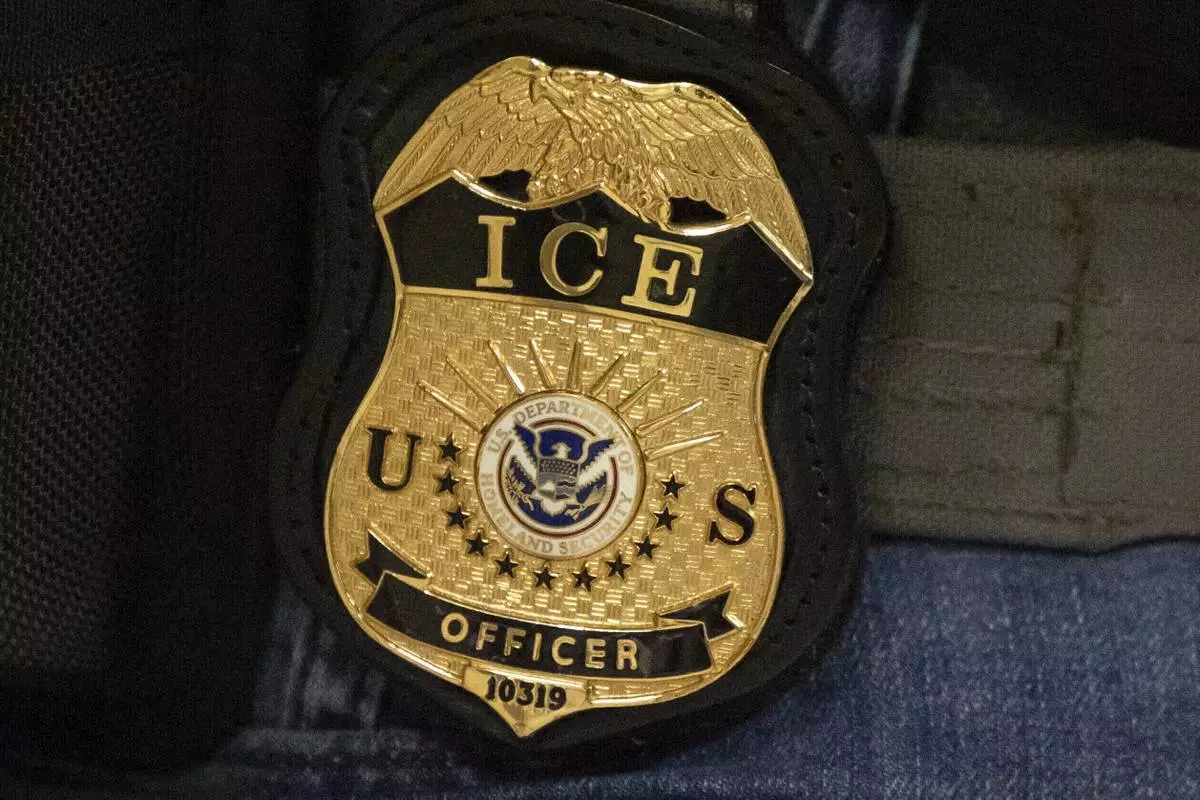
FILE - A federal agent wears an Immigration and Customs Enforcement badge in New York, June 10, 2025. (AP Photo/Yuki Iwamura, File)