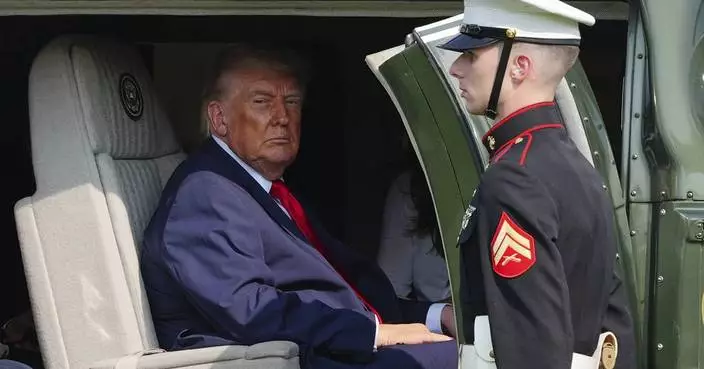
In a speech to the nation Thursday evening, President Donald Trump said Americans deserve secure elections, and he claimed to be using federal authority to prevent them from being “stolen.”
In fact, one of the strongest security features of U.S. elections is the fact that they aren’t conducted at the federal level. America votes in more than 10,000 different election jurisdictions, each with different rules set by state and sometimes local governments.
That structure makes the nation's elections extraordinarily complicated — and also safe from widespread fraud. And when misconduct does happen — rarely — security protocols frequently catch it.
America's highly decentralized system of voting exists because the nation’s Founding Fathers gave authority over elections to the states, rather than the federal government. While Congress has the power to regulate elections — and has used that authority to pass such laws as the Voting Rights Act — the Constitution makes clear that states have primary authority to set the “times, places and manner” for elections.
There also is no national election agency that administers the presidential contest, something that's different from many other countries. And when it comes to doing the day-to-day work of running an election, the responsibility falls to officials at the local level — usually a clerk or election supervisor — with help from staff and volunteers.
While differences in election laws can get confusing, election security experts say this structure is a strength. That's because to pull off stealing a presidential election — as Trump falsely claims was done to him in 2020 — it would require large numbers of election workers in the most competitive counties across the country who are willing to risk prosecution, prison time and fines while working with officials from both parties willing to look the other way. And everyone somehow would have to keep quiet — a highly unlikely scenario.
There are also shared practices and security measures in place across the country that together work to ensure that only eligible voters can cast a ballot and only one ballot is counted for each.
Most Americans by now have probably heard stories about someone casting multiple ballots, or voting in the name of dead relatives, or stealing mail ballots from mailboxes.
When these incidents happen, they are often caught and prosecuted.
Voting more than once, tampering with ballots, lying about your residence to vote somewhere else or casting someone else’s ballot are crimes that can be punished with hefty fines and prison time. Non-U.S. citizens who break election laws can be deported.
For anyone still motivated to cheat, election systems in the United States are designed with multiple layers of protection and transparency intended to stand in the way.
For example, for in-person voting, most states either require or request voters provide some sort of identification at the polls. Others require voters to verify who they are in another way, such as stating their name and address, signing a poll book or signing an affidavit.
For absentee voting, all states require a voter's signature, and many states have further precautions, such as having bipartisan teams compare the signature with other signatures on file, requiring the signature to be notarized or requiring a witness to sign.
That means even if a ballot is erroneously sent to someone’s past address and the current resident mails it in, there are checks to alert election workers to the foul play.
Trump has spent six years insisting he won the 2020 election, a campaign he lost to former President Joe Biden.
An Associated Press review in 2021 dug into every potential case of voter fraud in the six battleground states that Trump disputed. It found fewer than 475 cases — a number that would have made no difference in that race.
Allegations from Trump of massive voting fraud have been refuted by a variety of judges, state election officials and an arm of his own administration’s Homeland Security Department. In 2020, then-Attorney General William Barr, a Trump appointee, told the AP that no proof of widespread voter fraud had been uncovered. “To date, we have not seen fraud on a scale that could have effected a different outcome in the election,” he said at the time.

President Donald Trump gestures after speaking in the East Room of the White House, Thursday, July 16, 2026, in Washington. (Saul Loeb/Pool via AP)
TOKYO (AP) — Japan’s parliament enacted Friday a historic revision to the 19th century Imperial House Law by insisting only paternal-lineage men can become emperor, sparking fear that it could doom the already shrinking imperial family.
The revisions include adoption of distant male relatives to father future heirs and allowing princesses to keep their royal status after marrying commoners.
Royal watchers and experts fear the new measures could doom the 1,500-year-old hereditary institution by insisting that only men can be emperor, sparking worry about the shrinking, fast-aging imperial family.
Emperor Naruhito ’s 24-year-old daughter is hugely popular, and many Japanese want her to be his successor, but Princess Aiko is ineligible because she is a woman. Japan’s male-only succession rule means the line must move to the emperor's younger brother, then to his 19-year-old nephew Prince Hisahito. Next in line after him is the emperor's 90-year-old uncle.
In an imperial family that places a premium on male royal babies, Hisahito is the first such boy to be born in four decades. Only five of the 16 adults in the imperial family — there are no children — are men.
This matters, as Prime Minister Sanae Takaichi and other conservatives insist the male bloodline is “the only source of the emperor’s authority and legitimacy,” which will be the basis for the upcoming measures.
While an emperor's mother can be a commoner, as is the case with the current one, only boys born to men with royal blood can be heirs to the throne, according to the Imperial House Law.
On Friday, the parliament was to pass a revision to the antiquated law meant to solidify the principle of that crucial bloodline by allowing the adoption of distant royal male relatives to father future heirs.
The new measures would also allow princesses to keep their royal status if they marry a commoner.
“It’s a declaration to prevent female monarchs ... and to defend the male-lineage at all costs,” said Hideya Kawanishi, a Nagoya University expert on monarchy. “They cannot say it’s male chauvinism, so they call it tradition.”
There have been eight female monarchs. The last was Empress Gosakuramachi, who ruled from 1762 to 1770.
The paternal-line male succession was stipulated for the first time in the 1890 Imperial House Law, when Japan promoted patriarchal systems. That law was largely carried over to the current 1947 version.
Friday’s proposal has led to protests from Japanese who see the government efforts as meant to eliminate Aiko from ruling and to justify discrimination against women and a patriarchal system.
“It’s very ironic that the first female prime minister herself is the leading proponent of the obsession with male-succession,” Chizuko Ueno, a prominent feminist scholar, wrote recently referring to Takaichi.
Ueno said the new measures “treat male royals as stallions and put female royals under pressure as ‘childbearing machines’ to produce male offspring.”
After Aiko’s birth, her mother Empress Masako, a Harvard-educated former diplomat and a commoner, developed a stress-induced mental condition, apparently over criticism for not producing a male heir.
Because of the male-only succession rules and the dismissal of princesses who marry commoners, the monarchy after Hisahito is “extremely unstable,” former Imperial Household Agency chief Shingo Haketa told Kyodo News recently.
Historians say the male-only system is unworkable today, as Japan more broadly faces a fast-aging, dwindling population.
It only worked in the past because concubines produced half the emperors until about 100 years ago, when the practice ended under Naruhito’s great-grandfather, Emperor Taisho.
There was a government proposal in 2005 to allow female monarchs, but it was scrapped following Hisahito’s birth.
Naruhito's two male heirs are his 60-year-old brother, Crown Prince Akishino, who is only six years younger than the emperor and has reportedly said he would be too old to serve, and Hisahito, Akishino’s 19-year-old son. Third in line is Naruhito's uncle, Prince Hitachi, who is 90.
The more controversial of the two measures allows unmarried male descendants, aged 15 or older, of distant imperial relatives — but only of paternal lineage — to be adopted into the royal family.
Fifty-one members from 11 branch families renounced their royal status in 1947, mainly to ease the postwar financial burden on the monarchy, Imperial Household Agency official Yoshimi Ogata told a recent parliamentary session.
These people are at least 36 generations removed from Naruhito because they split from a common male-line ancestor 600 years ago, Ogata said.
There is criticism of what some see as the government's extraordinary efforts to make sure that male royals are producing male emperors.
“Who wants the son of an adoptee who nobody knows to be emperor instead of Aiko?” asked Yoshinori Kobayashi, a cartoonist campaigning for Aiko’s succession.
It may also be unrealistic to ask former royals to reenter a very strict family known as “an enclave without human rights.” Royals cannot choose their jobs or homes, and must follow other serious constraints.
“I wonder if anyone would raise a hand,” 81-year-old Asahiro Kuni, whose family renounced its royal status when he was 3, told TBS television. “I imagine many people, by age 15, have some idea about their future. It’s cruel to tell them ... to change the course of their life.”
Kuni, who worked as an engineer at a major Japanese company, said he would tell his family to decline if asked by the palace. “You are asked to sacrifice your life for the happiness of the people. I can’t tell my family to choose such a difficult life.”
He also expressed support for female monarchs in interviews with other Japanese media.
Aiko, known for her engaging smile, enthusiasm and witty conversation, is a public favorite.
Five single princesses, including Aiko and her popular cousin Kako, 31, may be affected by the other main revision to the Imperial House Law, which would allow them to keep their royal status and continue serving official duties if they marry commoners, although their spouse and children wouldn't be accepted as royals.
Aiko’s elder cousin Mako renounced her royal status and moved to New York after marrying her college boyfriend, a commoner who now is a lawyer. The move was largely seen as her attempt to flee from the restrained imperial life.
Ueno calls the system inhumane and urges the princesses to follow Mako's example and leave when they can.
Hisahito, possible adoptees and their future wives will face enormous pressure to produce male offspring, Kawanishi said.
“The emperor is a symbolic figure, and I don’t see why women cannot serve in the role,” said 78-year-old Junichiro Tsujimaru, a sushi chain founder.
Yoshio Iwase, also 78, says Aiko, as the daughter of the emperor, is the legitimate successor. “I think it’s fine because there used to be female emperors in the past.”
There is worry that the government's push will upset former Emperor Akihito's legacy, which included making amends for the victims of World War II, fought in his father’s name.
Akihito, who abdicated in 2019, also tried to bring what was seen as an aloof monarchy closer to the people, an example followed by his son, Naruhito, and his family.
Akihito reportedly supports Aiko's succession. He avoided directly answering a question about the 2005 government proposal but said female royals served a major role in the monarchy and that its role was to work for the happiness of the people — a remark interpreted as his support for female monarchs.
Naruhito also said in June that he hoped discussions about the measures would reach a conclusion that “will gain understanding of the people,” a comment palace watchers said was his nuanced displeasure.
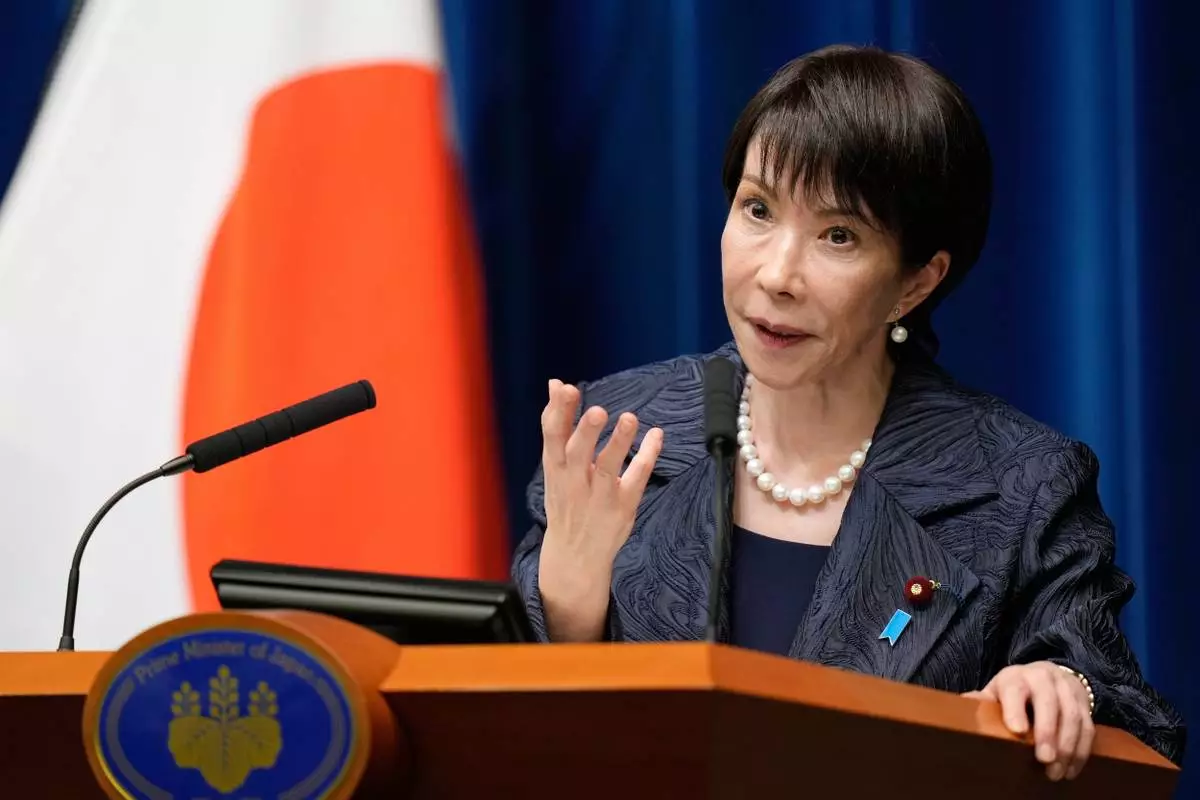
FILE - Japan's Prime Minister Sanae Takaichi speaks during a news conference at the prime minister's office in Tokyo, Oct. 21, 2025. (AP Photo/Eugene Hoshiko, Pool, File)
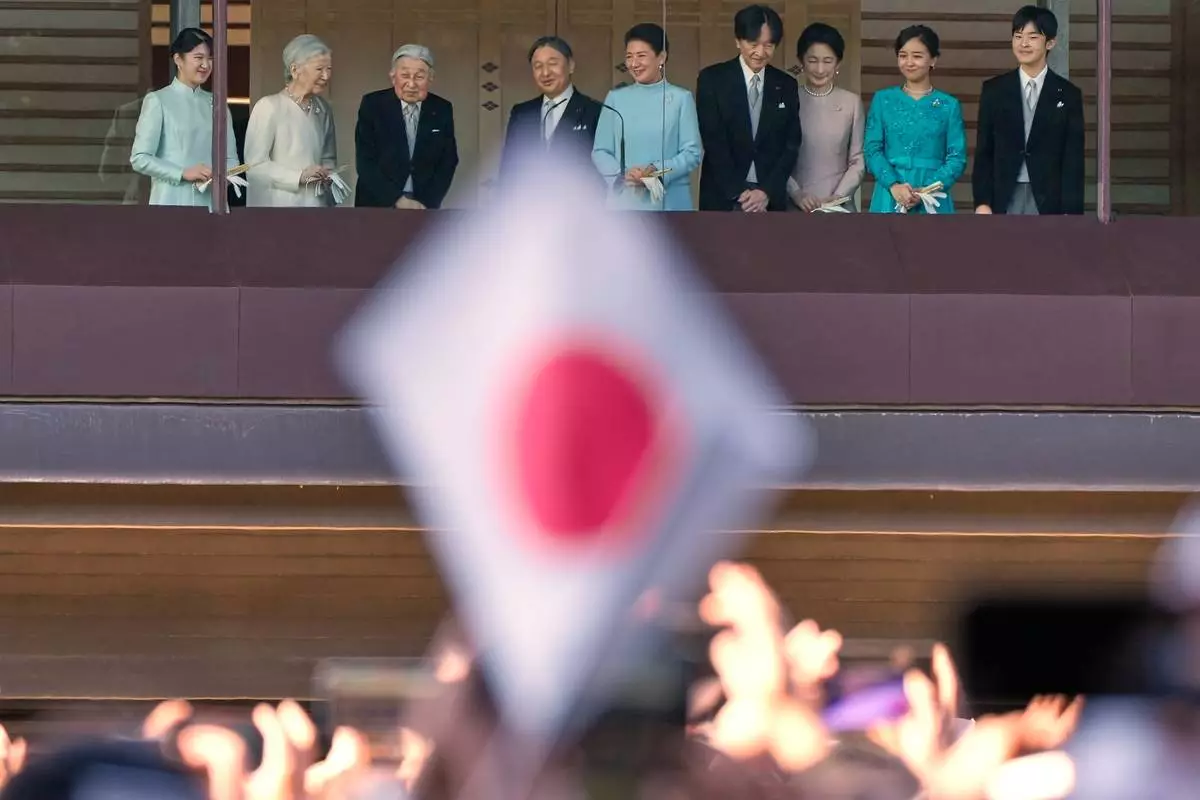
FILE - Japan's Emperor Naruhito, fourth left, Empress Masako, fifth left, and other royal family members greet well-wishers from the balcony during a public appearance for New Year's celebrations at the Imperial Palace, Jan. 2, 2026, in Tokyo. (AP Photo/Eugene Hoshiko, File)
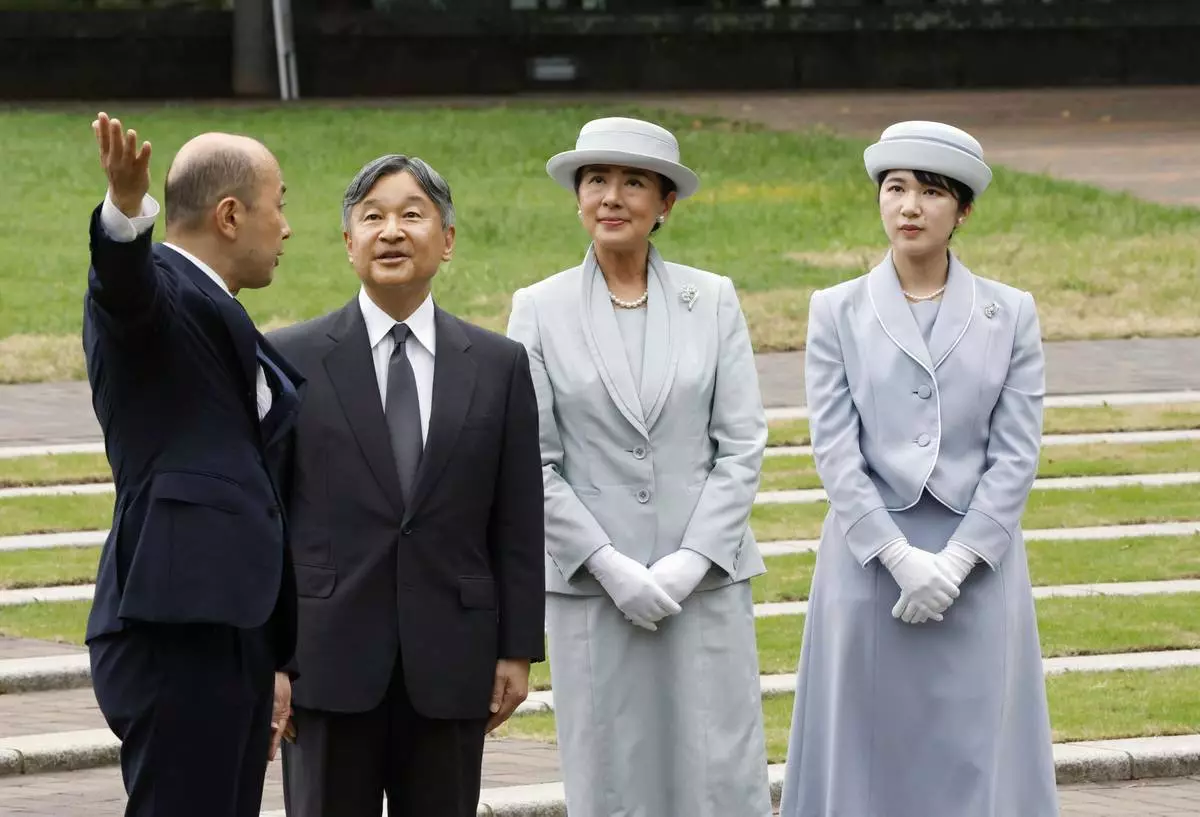
FILE - Japanese Emperor Naruhito, center left, Empress Masako center right, and Princess Aiko, right, listen to Nagasaki Mayor Shiro Suzuki as they visit the cenotaph for the atomic bombing victims at the peace park in Nagasaki. western Japan, Sept. 12, 2025. (Kyodo News via AP, File)
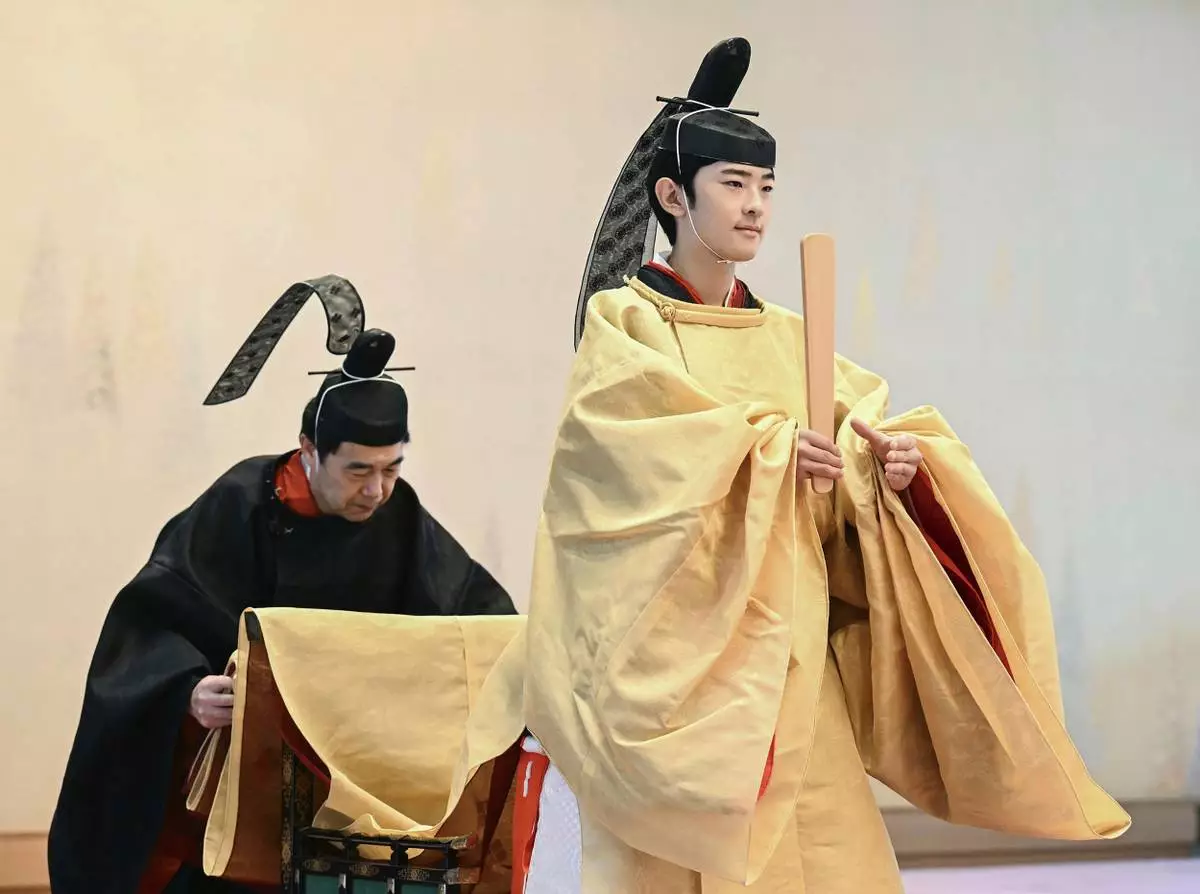
FILE - Japan's Prince Hisahito, right, attends his coming-of-age rituals on his 19th birthday at the Imperial Palace in Tokyo, on Sept. 6, 2025. (Japan Pool/Kyodo News via AP, File)
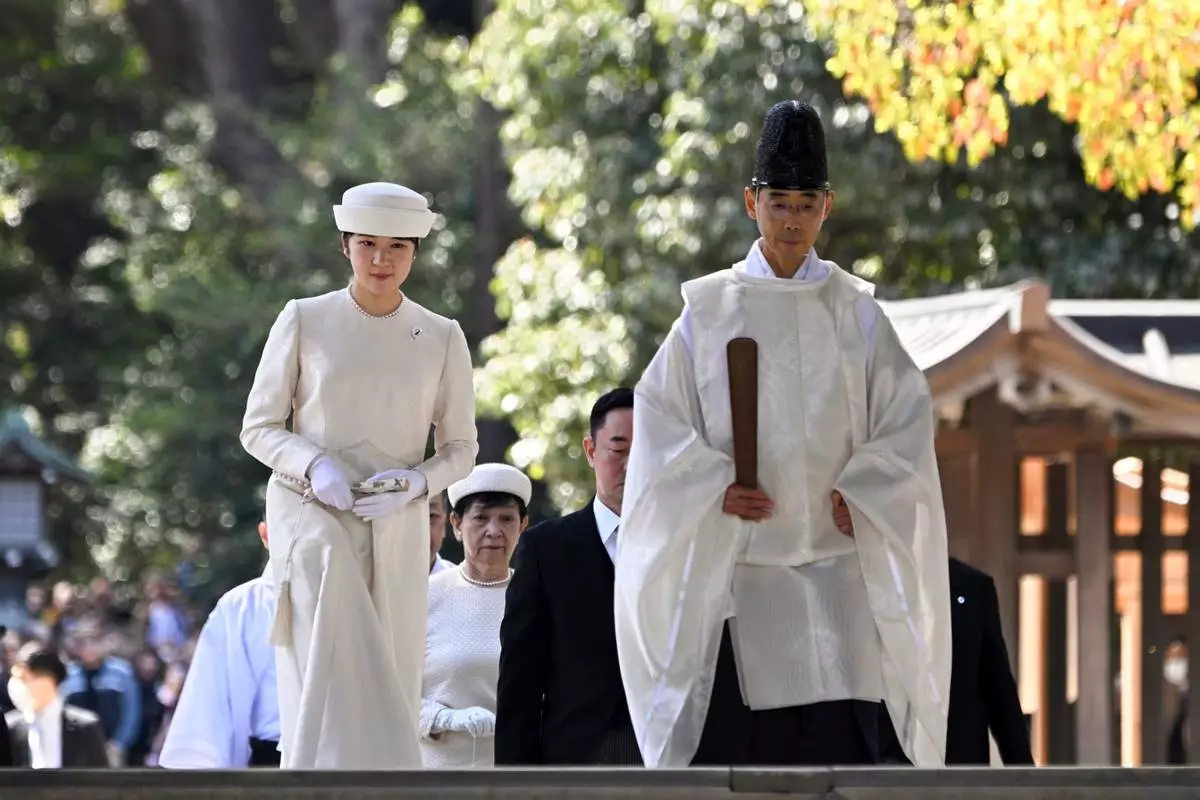
FILE - Japan's Princess Aiko, left, the daughter of Emperor Naruhito and Empress Masako, arrives to mark the 110th anniversary of the death of the wife of former emperor Meiji at Meiji Shrine in Tokyo, on April 10, 2024. (Kazuhiro Nogi/Pool Photo via AP, File)