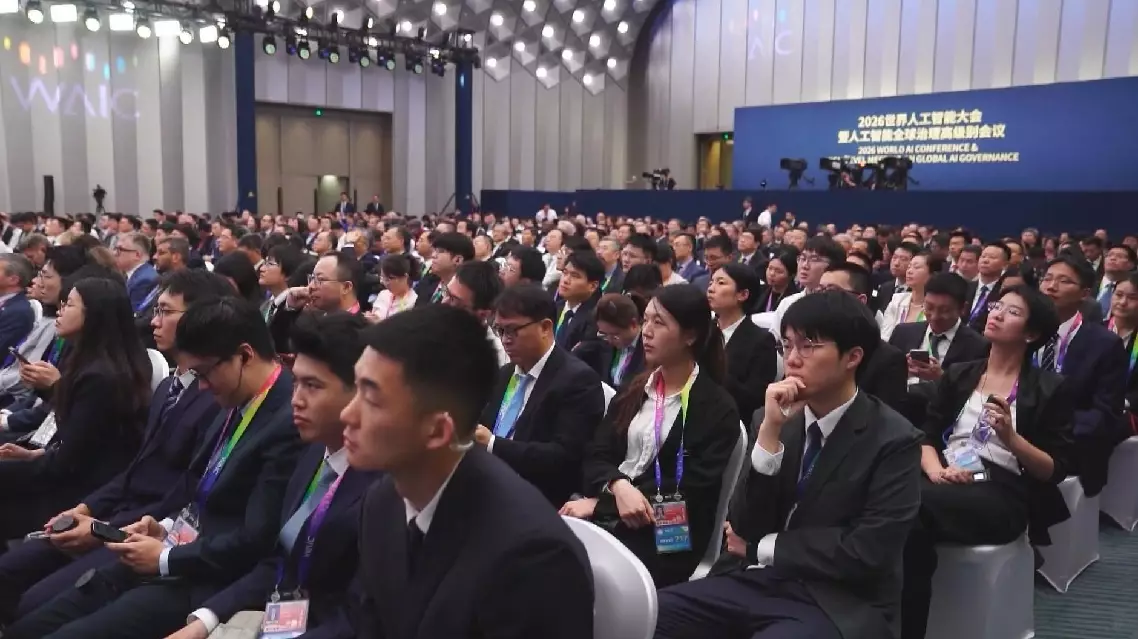
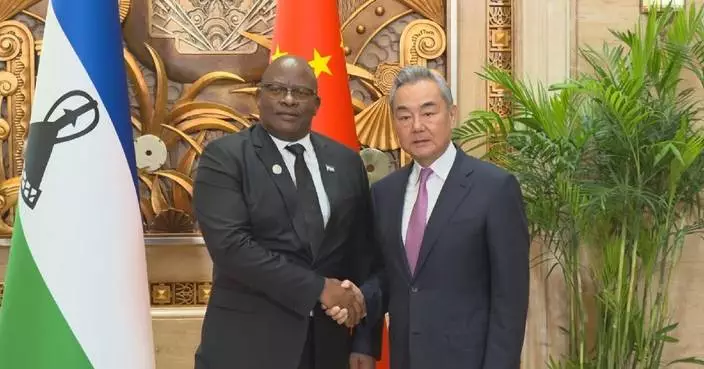
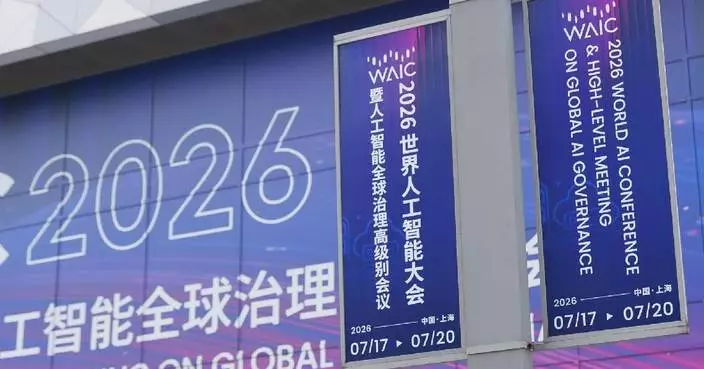
The China Meteorological Administration (CMA) on Friday officially handed over an upgraded version of MAZU, China's artificial intelligence (AI)-powered meteorological early warning solution, to Djibouti at a meteorological sub-forum of the 2026 World Artificial Intelligence Conference and High-Level Meeting on Global AI Governance in Shanghai.
In July 2025, China donated MAZU-Urban, an AI-powered early warning system for multi-hazard disaster prevention, to Djibouti. It became the first version of MAZU deployed in that country.
The upgraded version combines an intelligent terminal incorporating meteorological chips and forecasting models with the existing system, forming an integrated solution for weather monitoring, forecasting and warning.
It improves forecast resolution from 9 km to 3 km, provides forecasts up to three days in advance and updates them every six hours. It also uses phased-array radar, AI forecasting models and Fengyun meteorological satellites to improve extreme weather monitoring and early warning.
The upgraded system is expected to be put into operation in Djibouti by the end of this year. The solution can also be adapted for cities, ports, airports and other weather-sensitive areas in developing countries.
"We are a semiarid country. We get floods, we get heatwave, we got cycle. We have so many disasters. So this MAZU will help us a lot," said Ismail Nour, director-general of the Djibouti National Meteorological Agency.
MAZU, an acronym for Multi-hazard, Alert, Zero-gap and Universal, is China's cloud-based AI early-warning solution. Jointly developed by the World Meteorological Organization and the China Meteorological Administration (CMA), it aims to provide timely and convenient weather and climate services while supporting multi-hazard risk reduction across regions.
"We will also leverage multilateral platforms of international organizations such as the World Meteorological Organization to develop the MAZU solution into a globally accessible public meteorological service product, contributing Chinese strength to global climate governance and sustainable development," said Zhang Xingying, director of the Department of International Cooperation under the CMA.
The meteorological sub-forum gathered guests from 18 countries and regions and six international organizations to discuss how AI empowers early warnings for all in response to climate change.
At the event, the China-Thailand Joint Laboratory for Intelligent Prediction and Early Warning of Meteorological Disasters was launched. According to the CMA, it is the world's first bilateral international laboratory dedicated to AI-driven meteorological applications.
In addition, China released the Fenghe meteorological service large language model and launched a global open-source plan at the forum. The plan aims to promote open sharing, strengthen international cooperation on disaster risk reduction, and broaden access to AI-enabled meteorological services.
This year, the 2026 World AI Conference runs from Friday to Monday under the theme of "AI Partnership for a Brighter Future."
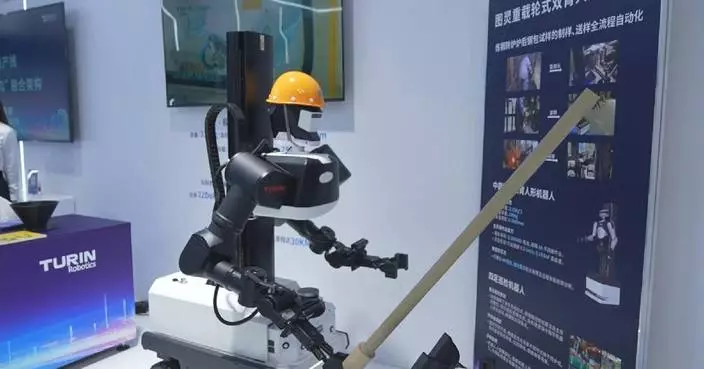
The CMA set up a booth at the Shanghai World Expo Exhibition and Convention Center to showcase the application effectiveness of MAZU, its innovative achievements in meteorological AI, and application scenarios in the meteorological service industry, while sharing China's experience in early warnings and disaster prevention and mitigation.
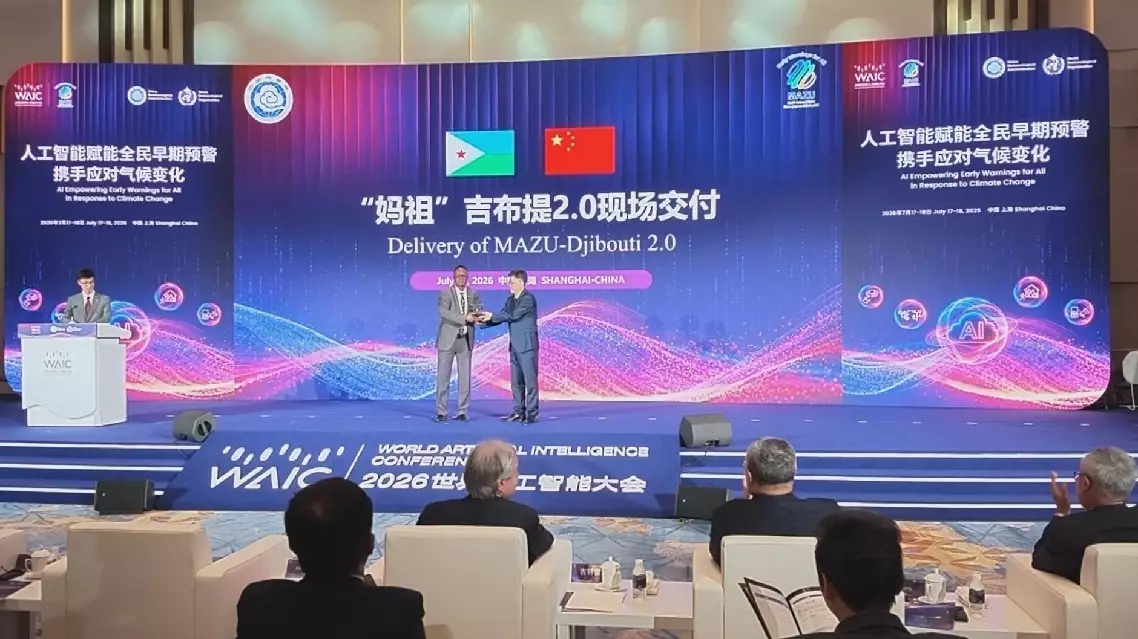
China hands over upgraded MAZU early warning solution to Djibouti