A new tourist train departed from Urumqi, the capital of northwest China's Xinjiang Uygur Autonomous Region, on Saturday morning as the region ramps up efforts to meet surging summer travel demand.
Y933, the 15th tourist train launched by China Railway Urumqi Group Co., Ltd during this year's summer travel peak, will take passengers on a 12-day journey covering nearly 4,000 kilometers.
The train connects major tourist attractions across the Tianshan Mountains -- a 2,500-kilometer range that spans central Xinjiang, dividing the region into north and south. Highlights along the route include the Kanas scenic area, Keketuhai town, and the ancient city of Kashgar.
This tourist train's unique route design allows passengers to enjoy scenic beauty and experience cultural heritage in both northern and southern Xinjiang.
Dubbed China's New Oriental Express, the train is designed for comfort, convenience, and entertainment. It features onboard amenities including dining car, pub car, and passenger carriages with two-person and four-person compartments, each equipped with a private bathroom. Newly added family rooms allow those traveling with children or in groups to enjoy both shared moments and private space.
"More tourists are seeking immersive experiences, hoping to slow down, stay longer, and immerse themselves in the journey. During this summer travel season, we plan to operate 28 tourist trains, more than last year's, and our 15th train this season departed 10 days earlier than it did in 2025," said Lin Wen, Party branch secretary of the Tourism Business Department of Xinjiang Railway Tourism Development Group Co., Ltd.
The China Railway Urumqi Group Co., Ltd plans to operate 100 tourist trains this year. So far, 56 trains have been deployed, receiving over 17,000 tourists.

Xinjiang launches new tourist train in summer travel peak
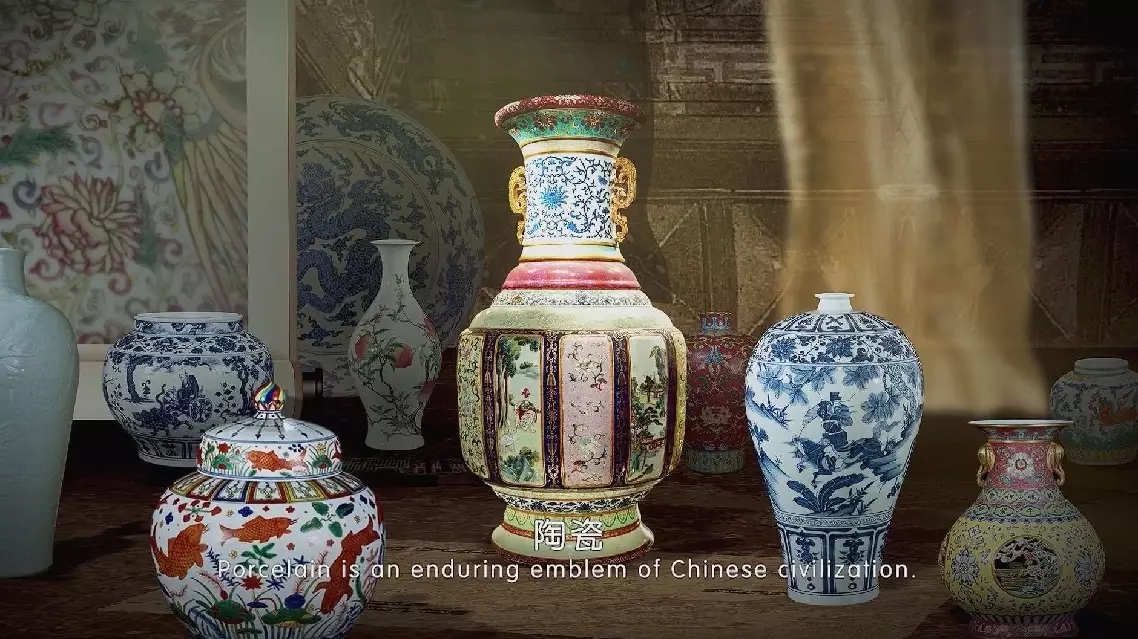
China has released a promotional video introducing its Jingdezhen Handicraft Porcelain Industry Sites, which secured inscription on the United Nations Educational, Scientific and Cultural Organization (UNESCO) World Heritage List on Saturday.
The video gave a brief introduction to the serial heritage nomination of the Jingdezhen Handicraft Porcelain Industry Sites, which UNESCO added to the World Heritage List at the 48th session of the World Heritage Committee held in Busan, South Korea.
The inscription marks China's first complete handicraft porcelain production system to earn global cultural heritage recognition and brings the country's total number of World Heritage sites to 61.
Located in east China's Jiangxi Province, the Jingdezhen Handicraft Porcelain Industry Sites is a serial property of five component parts covering a total heritage zone of 1,979 hectares. The five component parts reflect the processes of the production of porcelain, including the extraction and transportation of raw materials, innovations in kiln design, and the spatial and social organization of production on an immense scale, according to both the video and UNESCO.
Together, these five heritage sites portray the evolution of the production of handicraft porcelain in China from the 10th to 19th centuries, which has had profound industrial, artistic and trading influences both in the country and globally.
Also importantly, they reflect the fusion of porcelain-making techniques, culture and art from China and other parts of the world. As one of the earliest globalized commodities, ceramics have built a bridge for mutual learning between Eastern and Western civilizations, the promo video showed.
Jingdezhen was also a center of technological innovation in porcelain production, including the "binary formula" of mixing kaolin and porcelain stone. Porcelain of the highest quality was produced at Jingdezhen, and its blue-and-white porcelain and designs became a prized global commodity and a symbol of Chinese culture and artistry, according to both the video and UNESCO.
Today, Taoxichuan, a vibrant creative art district and cultural hub in Jingdezhen, continues to gather young artists from around the world, a testament to Jingdezhen's growing appeal as the "porcelain capital" of the world.
China releases promo video of ancient handicraft porcelain industry sites