NEW YORK--(BUSINESS WIRE)--Jul 29, 2026--
Cloudaware, Inc., a provider of cloud asset management and observability solutions, today announced a partnership with Datadog, the observability and security platform for cloud applications, to bring Cloudaware LogSight to the Datadog Marketplace. The new integration helps joint customers answer a question most organizations can't: is every cloud service actually sending logs to Datadog?
This press release features multimedia. View the full release here: https://www.businesswire.com/news/home/20260729322132/en/
Cloud logs are notoriously fragmented – ELB logs route to S3, VPC Flow Logs to CloudWatch, CloudTrail to its own bucket, and two identical load balancers can send logs to entirely different destinations. As organizations spin up new infrastructure daily, log forwarding to Datadog doesn't happen automatically, creating blind spots that security teams, auditors, and incident responders don't discover until it's too late. Manually tracing log configurations across hundreds of cloud accounts and thousands of services is no longer feasible, and compliance frameworks increasingly require documented proof – not assurances – that critical infrastructure is fully logged and monitored.
Cloudaware LogSight closes that gap in three steps: it auto-discovers every configuration item across AWS, Azure, and GCP using Cloudaware's CMDB; reconciles that inventory against Datadog's API to determine which sources are actually being ingested; and produces an actionable gap report identifying exactly which services, accounts, and regions are missing log coverage, with clear remediation paths. The result is continuous, automated verification – not a one-time audit – of log coverage across a customer's entire cloud estate.
For Datadog, LogSight also converts a blind spot into an expansion opportunity: every coverage gap LogSight surfaces represents a log source the customer should be forwarding to Datadog. As customers act on LogSight's findings, they onboard new log sources, directly increasing Datadog log management consumption.
“Security and compliance teams don't lack log data – they lack visibility into where it's missing,” said Jordan Spiers, VP Strategic Partnerships at Cloudaware. “LogSight gives Datadog customers a continuous, automated answer to a question that used to take days of manual auditing. We're excited to bring this directly to Datadog customers through the Marketplace.”
“Datadog is in the business of breaking down customer silos. LogSight advances that mission by automating steps on the customer side to ensure their critical infrastructure is fully logged & monitored,” said Ty Connor, Sr. Director Datadog Channel & Alliances.
Key capabilities
Availability
Cloudaware LogSight for Datadog is available now on the Datadog Marketplace, with a 30-day free trial and no credit card required.
About Cloudaware
Cloudaware provides a cloud asset management platform (CMDB) that discovers, tracks, and governs infrastructure across AWS, Azure, GCP, Oracle, and Alibaba Cloud, covering more than 3,000 cloud service types. Cloudaware helps security, compliance, and platform engineering teams close visibility gaps that manual audits and point tools miss. For more information, visit cloudaware.com.
About Datadog
Datadog is the leading observability and security platform for the AI era, providing businesses with unified visibility across the technology stack to manage complexity at scale. It brings applications, infrastructure, data, models, and security into one place, using AI to detect and resolve issues before they impact customers. Trusted globally by Fortune 500 companies and high-growth AI leaders, Datadog enables businesses to move faster with clarity and confidence.
Cloudaware and Datadog Partner to Close Cloud Log Coverage Gaps with LogSight
Pavel Durov, the billionaire founder and CEO of the Telegram messaging app, has repeatedly run into trouble with both the Kremlin and Western officials as he cast himself as a champion of free speech.
On Wednesday, Russia's Federal Security Service, or FSB, accused him of aiding what it called terrorist activities. It also said it was adding Durov’s name to international wanted lists.
The Russian-born Durov, 41, responded to the charges by posting an image of himself raising a middle finger on Telegram's official account on X. He has denounced previous Kremlin attempts to restrict Telegram as an attack on freedom of expression.
The case marks an escalation of the Kremlin’s efforts to tighten control over the internet and digital communications as it prepares for parliamentary elections in September amid rising public fatigue with the 4-year-old war in Ukraine and its growing economic fallout.
What to know about Durov, Telegram and the charges against him:
Durov was born in Leningrad, now St. Petersburg, and now also holds citizenship in France, the United Arab Emirates and the Caribbean island nation of St. Kitts and Nevis.
In 2006 at age 22, Durov and his brother, Nikolai, founded VKontakte, Russia’s largest social network that is similar to Facebook. The company later came under pressure from authorities after mass anti-Kremlin protests in 2011-12, eventually prompting Durov to sell his stake in VKontakte.
In 2013, he and Nikolai founded Telegram. In 2014, Durov left Russia and moved to Dubai.
Durov, who has a net worth of $6.6 billion according to Forbes, said in a 2024 interview with conservative talk show host Tucker Carlson, that Dubai was “the best place for a neutral platform like ours to be in if we want to make sure we can defend our users’ privacy and freedom of speech.”
A disciple of fitness and healthy living, Durov shared photos of his lean and muscular build achieved via a daily regimen of 300 pushups, intense gym sessions and outdoor activities. He promotes a strict diet excluding processed foods and alcohol.
He has six children from three former partners and once declared he had donated sperm that fathered 100 children in 12 countries.
Telegram, which Durov and his brother launched in 2013, boasts over 1 billion monthly active users worldwide.
It allows for one-on-one conversations, group chats and large “channels” that let people broadcast messages to subscribers. Unlike rivals such as Meta’s WhatsApp, Telegram’s group chats allow as many as 200,000 people, compared to a maximum of 1,024 for WhatsApp. Experts have raised concerns that misinformation spreads easily in such large group chats.
Telegram offers users end-to-end encryption for their communications, but users must manually activate the option. It’s only available for individual conversations and doesn’t work with group chats. That contrasts with rival Signal and Facebook Messenger, where chats are encrypted end-to-end by default.
Telegram long has faced criticism in both Russian and the West for a lack of content moderation, which experts say opens up the platform for potential use in money laundering, drug trafficking and sharing material linked to the sexual exploitation of minors. Russian authorities and Western governments have criticized Telegram for refusal to share information about suspected bad actors when required by law.
Russian authorities tried but failed to block Telegram between 2018 and 2020.
Since Moscow's full-scale invasion of Ukraine in 2022, Russian authorities have taken methodical steps to control the internet. WhatsApp and Telegram have been restricted and many social media platforms, including Facebook, Instagram and X, have been banned. YouTube has been throttled, as well. Vkontakte has come under the control of Kremlin-friendly companies. Telegram has been repeatedly fined for failing to comply with official regulations.
It's still possible to bypass some of the restrictions by using virtual private network services, but many are blocked.
Even as Telegram has been throttled, the Kremlin and the ministries of defense and foreign affairs, as well as other government agencies, still use it regularly.
Earlier this year, Durov announced that the Russian authorities opened a criminal inquiry against him and accused them of fabricating pretexts to restrict access to Telegram as part of efforts to “suppress the right to privacy and free speech.”
In August 2024, Durov was arrested in Paris amid allegations that his platform was being used for illicit activity including drug trafficking and the distribution of images of child sexual abuse. He was released after four days of questioning on bail of 5 million euros.
Commenting on Durov's arrest at the time, Russian President Vladimir Putin described the French action as “selective,” arguing that many countries, including Russia, have raised concerns about bad actors using Telegram for harmful activities, and “all platforms of this kind are guilty of this.”
Kremlin officials have cast the French case against Durov as proof of the West’s double standard on freedom of speech.
Moscow has rejected Western accusations of using Telegram to coordinate and recruit people to carry out acts of arson and sabotage in Ukraine and across Europe.
The FSB accused Telegram’s administration of failing to remove channels allegedly used by “Ukrainian intelligence agencies, terrorist and extremist organizations to prepare and coordinate acts of sabotage and terrorism, mass murder, and cyberfraud” in Russia.
It accused Ukrainian security services of using a popular dating chatbot on Telegram to lure and recruit Russians for “sabotage and terrorist activities.” The Daivinchik or Leo-Dating chatbot has 13.6 million monthly active users.
The FSB said 46 users of the chatbot aged from 12 to 22 have been detained across Russia over the past year for assaulting law enforcement officers, arson and other acts.
Durov could face up to life in prison if convicted.
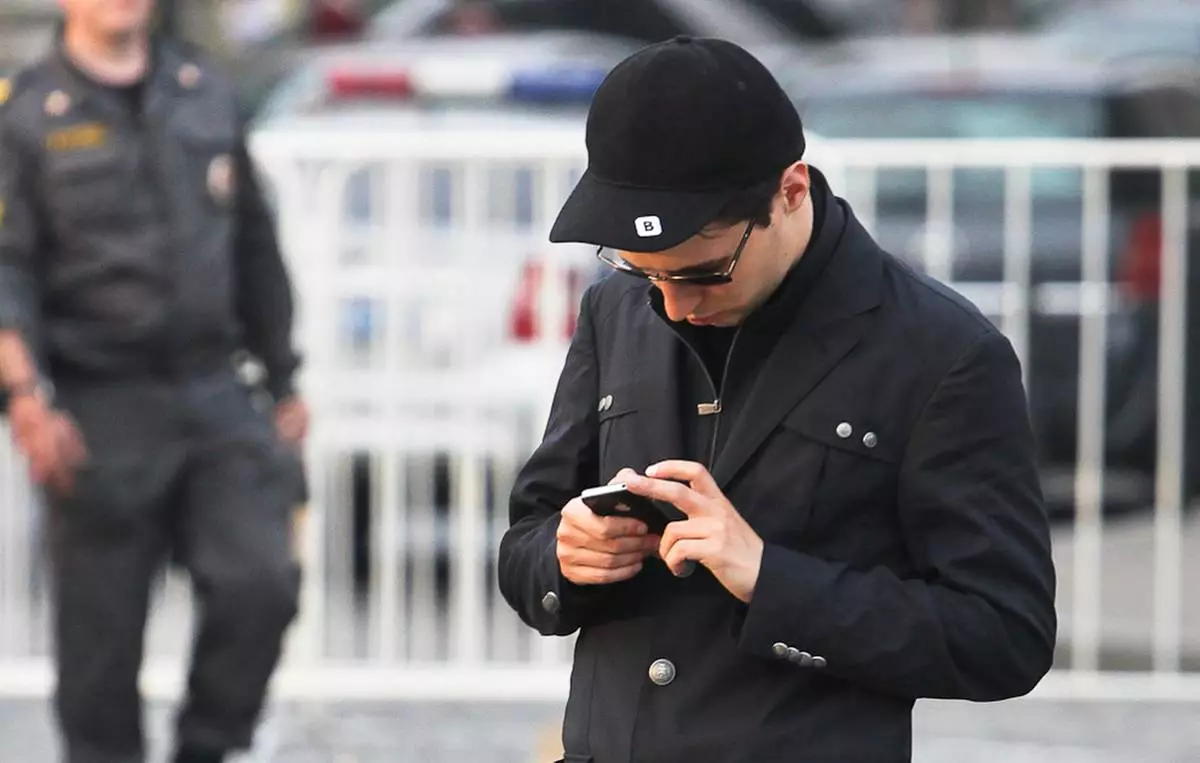
FILE - Pavel Durov, founder of Russia's leading social network site VKontakte, or "in contact", stands in Red Square in Moscow, Russia, on Saturday, May 19, 2012. (AP Photo/Roman Kulik, File)
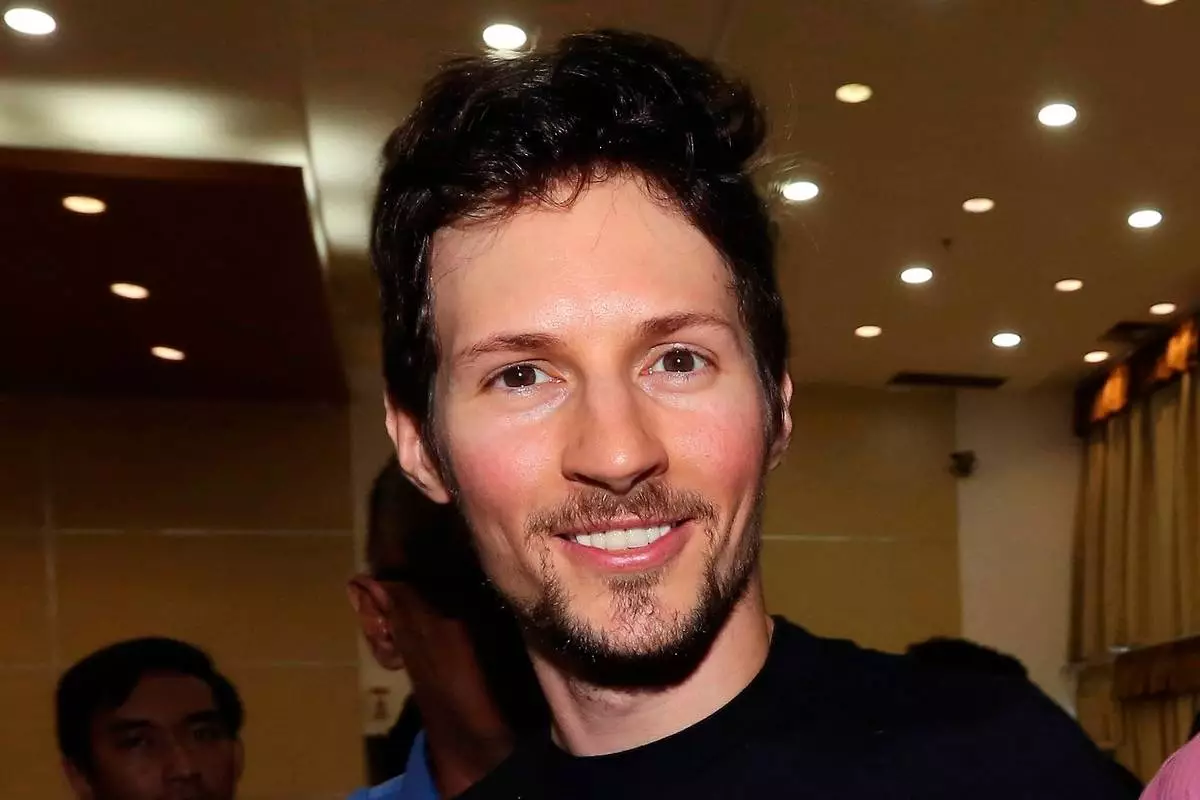
FILE - Telegram co-founder Pavel Durov smiles following his meeting with Indonesian Communication and Information Minister Rudiantara in Jakarta, Indonesia, on Aug. 1, 2017. (AP Photo/Tatan Syuflana, File)
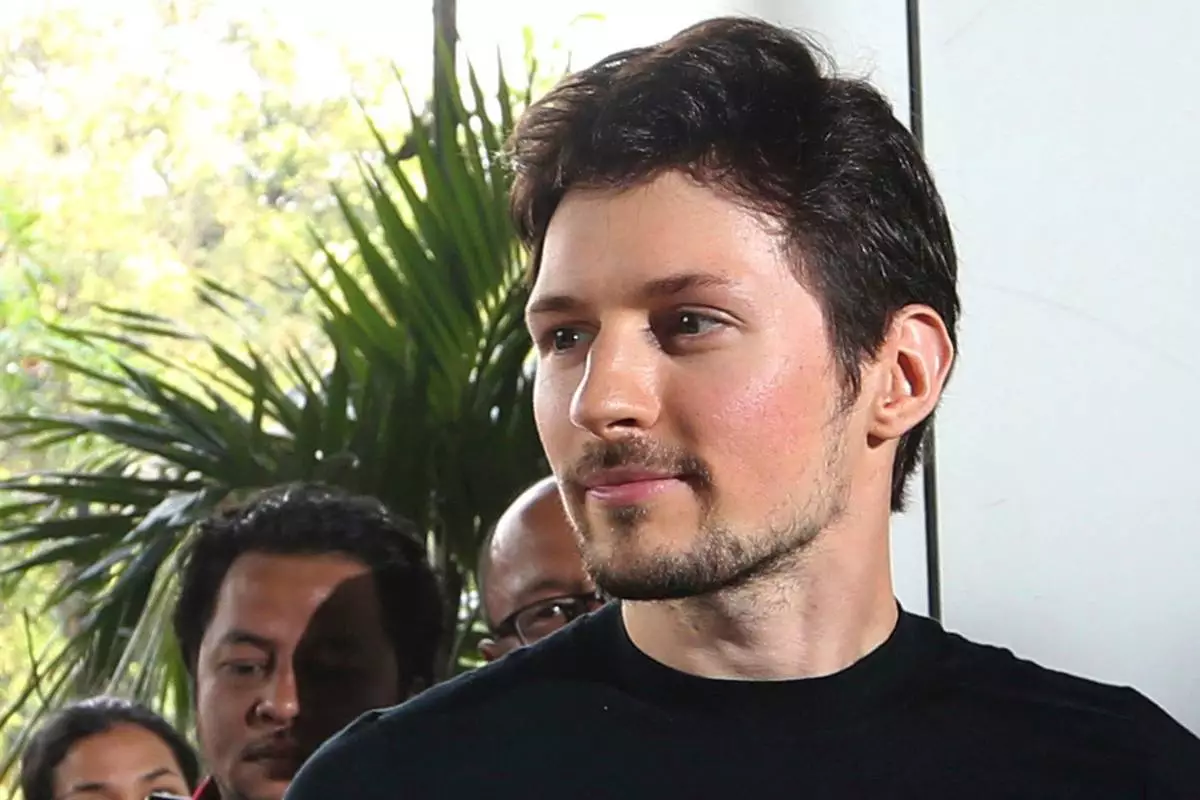
FILE - Telegram co-founder Pavel Durov appears at an event on Aug. 1, 2017 in Jakarta, Indonesia. (AP Photo/Tatan Syuflana, File)