DETROIT (AP) — The jokes practically wrote themselves as an eclectic group of progressive pastors, imams and a rabbi walked into a room, finding their seats around a table to talk about religion and politics.
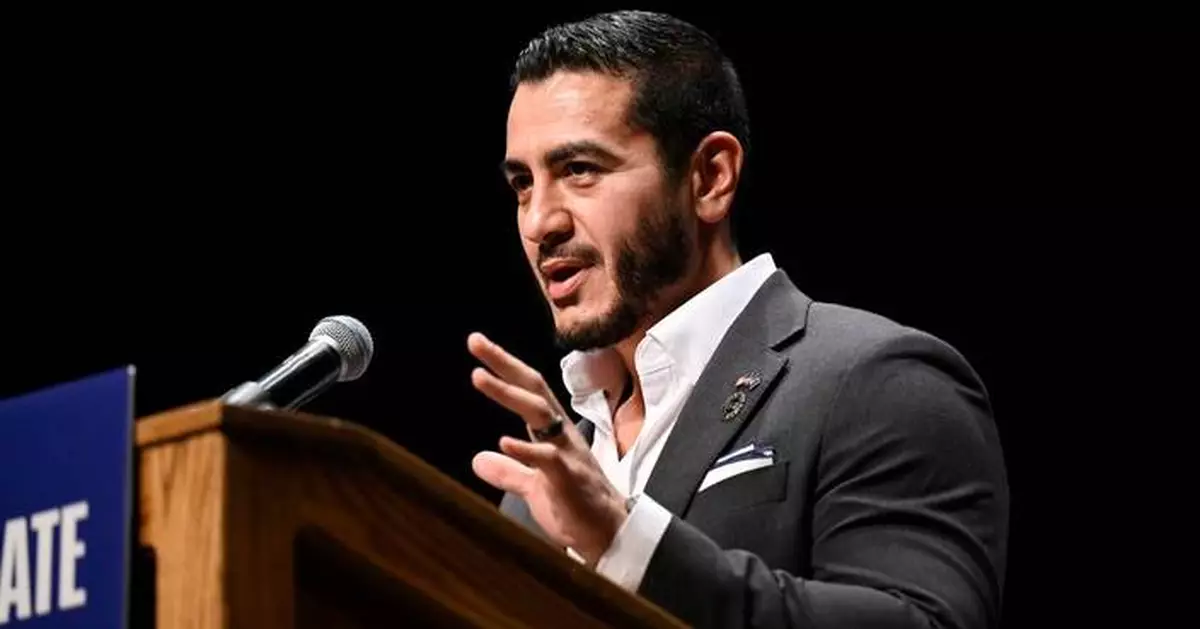
Though there was no shortage of levity, a sense of urgency filled the Detroit meeting room as Abdul El-Sayed, a former gubernatorial candidate who is running as a Democrat for the U.S. Senate in Michigan, began speaking about how his Muslim faith informs his progressive views.
The public health researcher asked the group of faith leaders ahead of Tuesday’s primary, “What does the inspiration of holding yourself accountable to something bigger than you mean for what you do for the people around you?”
El-Sayed added, “If you can’t eat food and I have something to do about it, I better do it.”
Progressive Democratic politicians have won major electoral victories across the country in recent months amid growing frustrations surrounding inequality, affordability and potential threats to job security posed by artificial intelligence. As the economy becomes a flashpoint for the November midterms, many of these candidates and voters who support them are citing religion as a justification for their positions.
“We’re in an era of historical inequality,” El-Sayed told The Associated Press. “Most faith traditions — certainly the Abrahamic faith traditions — put a lot more burden on the wealthy.”
The interfaith roundtable took place days after a high-profile rally for El-Sayed, who has made “Medicare for All” a fixture of his campaign and is running against the more moderate Rep. Haley Stevens. It featured speeches from progressive heavy hitters like Sen. Bernie Sanders of Vermont and Rep. Alexandria Ocasio-Cortez of New York.
Though not a member of the Democratic Socialists of America, El-Sayed is being endorsed by liberal allies, many of them members of the DSA, while being criticized by Republicans and centrist Democrats for being too far left to be electable in a swing state.
If elected in November, he would be the first Muslim senator in U.S. history.
Representatives for Stevens, who is identified in congressional profiles as a Protestant, did not respond to requests for comment.
Religious support for progressive economic and labor movements is not new, even if it has ebbed and flowed in the U.S. over the centuries. Pope Leo XIV’s recent encyclical was in many ways an ode to “Rerum novarum,” Pope Leo XIII’s seminal 1891 text on labor, wages and unions that helped shape Catholic social teaching.
This embrace of religion isn't unique to the Democratic Party's progressive wing. More moderate candidates like James Talarico, the seminarian running for the U.S. Senate in Texas, also highlight their faith. But as left-leaning Democrats and democratic socialists like New York Mayor Zohran Mamdani, who is Muslim, score wins in local and national races, Republicans have repeatedly decried the party's progressive wing as communists devoid of religion.
“Republicans and conservatives believe in natural rights that flow from a creator. I think communism rejects that. It espouses a very atheistic, centralized sort of secular view of society,” said Douglas Blair, a spokesperson for Heritage Action for America.
Megan Romer, a DSA national co-chair and ordained ruling elder within the Presbyterian Church (USA), conceded socialism is a troubling concept for some people of faith.
“People’s idea of it is, ‘Oh, that’s when you’re not allowed to have a religion, right?’ Which has been true in some socialist projects,” she said.
But experts say that narrative carries less weight among many younger Americans who have no memory of the Cold War and the anti-religious associations it begot.
Though there are more Democrats unaffiliated with religion than Republicans, many people of faith do not see progressive ideologies like socialism as contradictory to their beliefs. They cite Black religious activists who were outspoken critics of capitalism, including Martin Luther King Jr., Malcolm X and W.E.B. Du Bois, as models for their thinking about the relationship between religion and politics.
The Rev. Andrew Wilkes, who co-pastors the Double Love Experience Church in New York City, became interested in democratic socialism more than a decade ago after presiding over a funeral for someone whose insurance wouldn’t cover a critical operation. “It was not God that sent him home but an unjustly organized healthcare system and economy,” he said.
“There’s an increasing recognition, I would say, connecting socialism to a sense of a moral compass,” Wilkes said, adding that religion can bring optimism and creativity in a time of pessimism. “There’s a level of world-building that faith can speak to.”
Romer, who joined the DSA in 2018 in part because of Sanders’ unsuccessful presidential run two years earlier, thinks there is a theological component to why Christianity in particular has thrived among conservatives.
“That flavor of Christianity is a very individualistic one. They talk a lot about your personal relationship with God,” she said. “My interpretation of Christianity is one that, I think the early Christians — they were not communists in the modern sense, but they lived in communal situations.”
This faith-driven economic focus is not limited to elections.
Clergy and Laity United for Economic Justice is a nonprofit organization that works with congregations throughout Southern California to support workers’ rights. Earlier this month, it facilitated a visit to Live Oak United Church of Christ in Brea, California, to support efforts to unionize a local grocery store chain.
“We just feel very, very overworked,” Luis Cueva, a Mother’s Market employee, told members of the congregation after their Sunday service as he asked for support.
“Jesus was a socialist,” Cueva said after the meeting, citing his teachings about it being difficult for rich people to go to heaven. “It means a lot to know that the church is willing to help.”
About half of U.S. adults have a positive view of capitalism, according to a poll last year from Gallup, down from 61% in 2010. Democrats have driven part of the shift, but favorable views of capitalism have also declined among independents.
President Donald Trump and other Republicans have cast these attitudes and candidates as being fundamentally at odds with religion.
“These are hard core, godless communists,” Trump said recently during a speech to the Faith & Freedom Coalition. “All communists are godless. They don't believe in God.”
Although there are myriad points of contention within the Democratic Party, such as support for Israel, El-Sayed considers economic issues a top issue for his campaign.
“I talk about taking money out of politics because it’s the reason life is not affordable,” he said. “People are realizing that politicians on both sides of the aisle really are being paid off by the same people.”
The son of Egyptian immigrants, El-Sayed is aware that his Islamic faith can be weaponized or misunderstood. But since having a religious experience in college that followed a rebellious childhood, he takes seriously the implications of his faith.
“If you put your morals on a mantel, they’re not morals. They’re just, you know, things that you can admire and then you give yourself the permission to step away from them when it’s convenient,” he said.
As the roundtable concluded, leaders from each faith took turns praying. Their heads lifted, but the Rev. Horace Sheffield chimed in with one last request on behalf of El-Sayed.
“I don’t think y’all were specific enough. So I’m gonna say it real simple,” he said. “Lord, let him win.”
Associated Press religion coverage receives support through the AP’s collaboration with The Conversation US, with funding from Lilly Endowment Inc. The AP is solely responsible for this content.

From left foreground, U.S. Rep. Alexandria Ocasio-Cortez, D-N.Y., Michigan Democratic U.S. Senate primary candidate Abdul El-Sayed, and U.S. Sen. Bernie Sanders, I-VT. join hands together following a campaign rally, Saturday, July 18, 2026, in Detroit. (AP Photo/Jose Juarez)
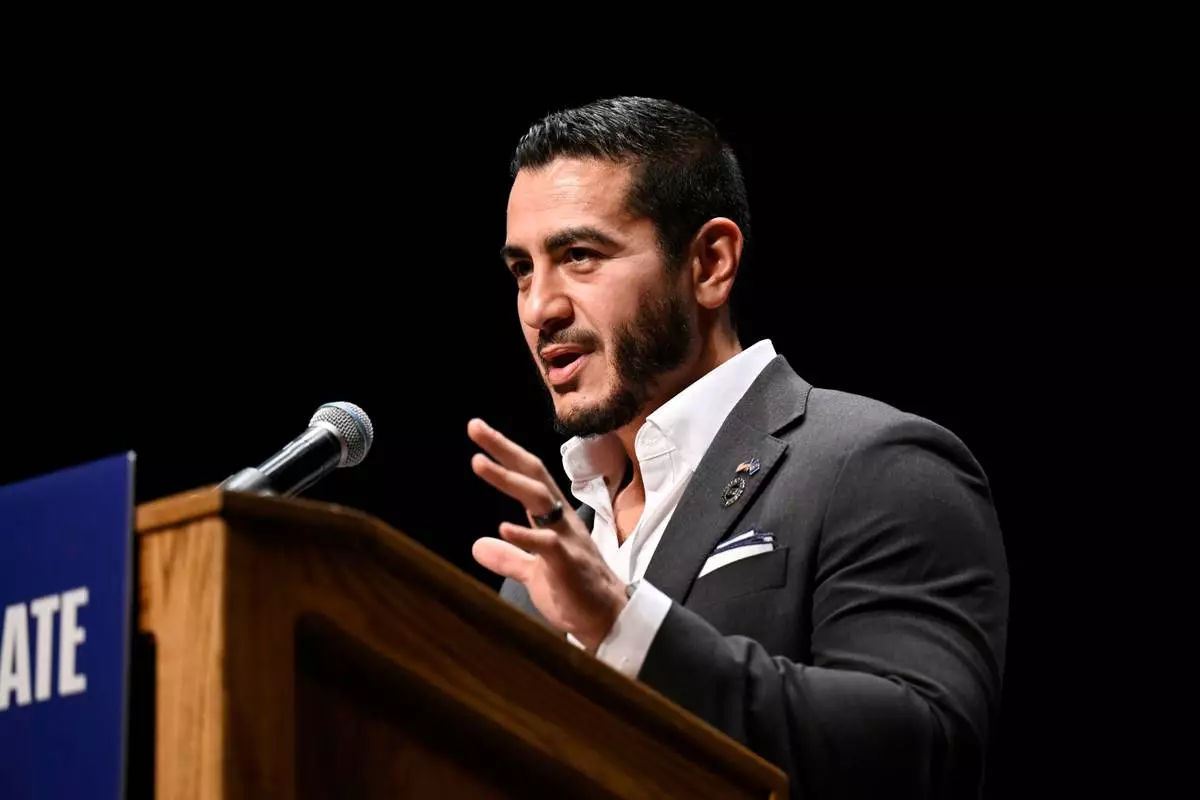
Michigan Democratic U.S. Senate primary candidate Abdul El-Sayed addresses the crowd during a campaign rally, Saturday, July 18, 2026, in Detroit. (AP Photo/Jose Juarez)
CEUTA, Spain (AP) — At least 18 migrants have died trying to reach the Spanish territory of Ceuta after thousands of people breached the frontier with Morocco and poured in.
The border crisis boiled over Thursday and continued on Friday with security forces clashing with migrants on the Moroccan side of the border.
Spanish Prime Minister Pedro Sánchez condemned the breach of the border on Friday speaking in Ceuta, describing the events as "a violation of Spain's territorial integrity.”
The Spanish leader cast blame on human smugglers, saying they "deceive so many young people, and ultimately lead many of them to their deaths — whether in the ocean or, as in this case, at Spain’s border in the autonomous city of Ceuta.”
Live footage of the border showed hundreds of migrants gathered on a hill overlooking Ceuta being dispersed with tear gas by Moroccan forces, while others continued to swim to the Spanish territory.
At the same time, large groups of migrants walked back from Ceuta toward Morocco to return home.
Rachid Sbihi, who leads a local workers association representing Civil Guard officers, called the situation a “serious humanitarian crisis," saying thousands of migrants, including unaccompanied children, were left sleeping in parks and on sidewalks, while others roamed the streets aimlessly.
“People are still entering. The reinforcements, including Spanish military troops, that have arrived are only helping the injured and other humanitarian efforts,” he said. "It’s chaotic.”
Among the 18 who died, many drowned, Sbihi said, but some were also killed in a stampede to cross the breakwater fence at Tarajal beach, an urban beach near a border checkpoint with Morocco.
Ahmed Karim, a 33-year old Moroccan, said he had crossed into Ceuta because of the lack of jobs in his country.
“Many people want to go to Europe, America, but they don’t have the opportunity,” Karim said.
On Friday morning, the waters near the border fence were littered with buoys, shoes and other belongings left behind.
Moroccan police deployed additional personnel, used water cannons and fired warning shots into the air to prevent migrants from crossing into Ceuta, according to rights groups in Morocco.
“Despite the heavy police presence, people crossed through the waterway, while the land border remained closed,” said Achraf Maimouni, a human rights activist in Fnideq, the Moroccan city bordering Ceuta.
Migrants arrested at the border were taken farther into Morocco, away from Ceuta, “but people are still coming,” he said.
Morocco’s ambassador to Spain expressed hope that those who crossed from Morocco into the Spanish exclave would return. Karima Benyaich described the situation in Ceuta as difficult, saying it had unfolded against Morocco’s wishes.
“We have always prioritized legal, orderly and safe migration for all,” she said. Benyaich did not comment on what prompted the migrants to cross into Ceuta.
But authorities in both Ceuta and Madrid, linked it to a recent decision by Spain's Supreme Court that ruled migrants arriving by sea could not be summarily deported, unlike those who cross by land or climb the border fence.
Sánchez said migrant smugglers misinterpreted the ruling, but acknowledged that it may have played a role in sowing chaos.
“It appears that this interpretation of the Supreme Court’s ruling spread like wildfire over the past few hours through the networks of human trafficking organizations, triggering the kind of mass surge we witnessed yesterday," Sánchez said.
Spain is a main point of arrival into Europe for migrants seeking better economic opportunities or an escape from violence in their home countries.
To reach Ceuta, located on the northern African coast, migrants often swim from the Moroccan town of Fnideq, covering about 3 miles (5 kilometers) to reach Spanish territory. Others attempt the crossing from the nearby town of Belyounech, where the distance is shorter.
Sánchez has bucked the anti-migration trend that has gained ground across Europe and in the U.S.. While the Trump administration and other European countries have tightened their borders and stepped up deportations, Spain earlier this year moved to give residency and work permits to hundreds of thousands of migrants already living in the country without permission.
Sánchez, a Socialist, argued that it would be good for the economy and the demographics of an aging Spain. Migrants who entered irregularly after January 1, 2026, were not included.
But his critics have jumped the opportunity granted them by the endless reels of young Moroccans streaming into Ceuta to attack his policy, saying it encouraged more migrants to come to Spain.
“Sánchez allows Spain to be invaded through Ceuta,” Spanish conservative politician Isabel Díaz Ayuso wrote on X.
Sánchez on Friday distanced the migrant legalization push from the events unfolding in Ceuta.
The chaos had ripple effects abroad as well. Premier Giorgia Meloni threatened to suspend Italy’s open-border Schengen agreement with Spain “to defend our borders and ensure the safety of our citizens,” even though Italy doesn’t share a border with Spain and is also a main entry point for tens of thousands of migrants crossing the Mediterranean from North Africa each year.
French Interior Minister Laurent Nunez said France would also strengthen border checks with Spain, writing on X that he had activated the Rapid Intervention Border Force.
“This crisis in Ceuta has nothing to do with the regularization of migrants adopted by the Government of Spain, as is being falsely claimed by some," the Spanish government said in a statement late Thursday after Meloni's announcement. It also summoned Italy’s ambassador in Madrid.
“This crisis stems from an interpretation of a Supreme Court’s decision, according to which people who swim illegally across the border cannot be returned," the Spanish government said. The decision has been exploited by smugglers who take advantage of vulnerable migrants, it added.
Some activists in Morocco expressed doubt that the ruling was behind the surge, arguing most migrants would have been unaware of such legal decisions.
Migrants from Morocco also attempted to cross into Melilla, Spain’s other territory at the tip of North Africa.
There was widespread chaos in Bni Nsar, the Moroccan town bordering the Spanish territory, where migrants clashed with police, throwing rocks and setting police vehicles ablaze, according to local media and rights groups. They reported injuries among security forces and the arrest of dozens of people attempting to cross.
Omar Naji of the local branch of the Moroccan Association of Human Rights told the AP that the crossing attempts into Melilla appeared to be linked to the situation in Ceuta.
Like Ceuta, Melilla is a Spanish autonomous city on the North African coast. Many Moroccans consider both cities to be occupied territory.
Juan Jesús Vivas, the head of Ceuta’s regional government, had warned earlier this week that migrant reception centers were overwhelmed as arrivals by sea had steadily been increasing before the chaos erupted Thursday.
Spain’s Interior Ministry would not confirm the number of migrants who had made it to Ceuta but said it would publish its next migration report on Monday.
Spanish media, citing unnamed government and security sources, estimated between 30,000 and 49,000 migrants had crossed in the past 24 hours. A member of Spain's civil guard who spoke on condition of anonymity because he was not authorized to release figures to the media said that 49,000 people were estimated to crossed. That's more than half of Ceuta's nearly 84,000 population.
Sbihi, of the civil guard workers association, said it was difficult to know exact numbers but believed tens of thousands of migrants had made it through.
Ceuta has been a Spanish possession since 1580. Its mixed population of Christians and Muslims, Spanish and Moroccan residents and day workers, lives in relative harmony.
——
Naishadham reported from Madrid, Brito from Barcelona, Spain. AP journalists Joseph Wilson in Barcelona, Spain, Akram Oubachir in Casablanca, Morocco, and Antonio Sempere in Ceuta, Spain, contributed.
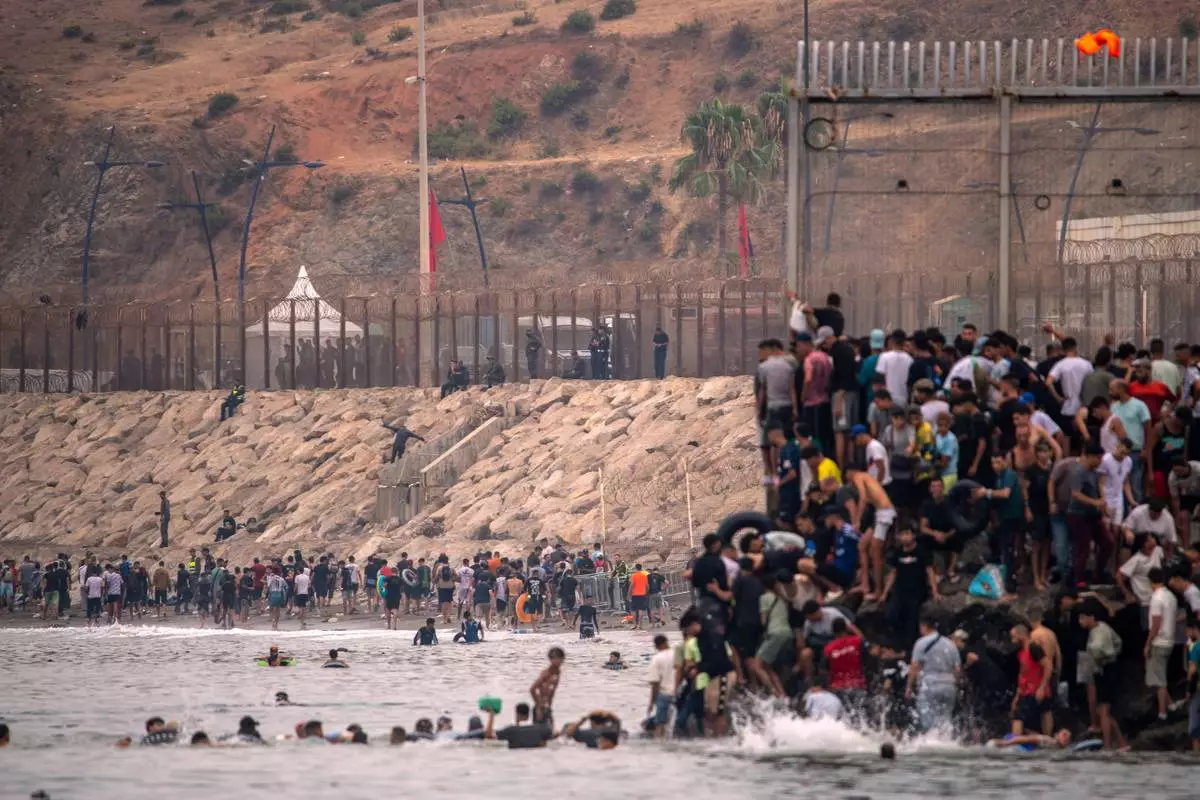
Migrants return to Morocco from the Spanish enclave of Ceuta, Friday, July 31, 2026. (AP Photo/Antonio Sempere)
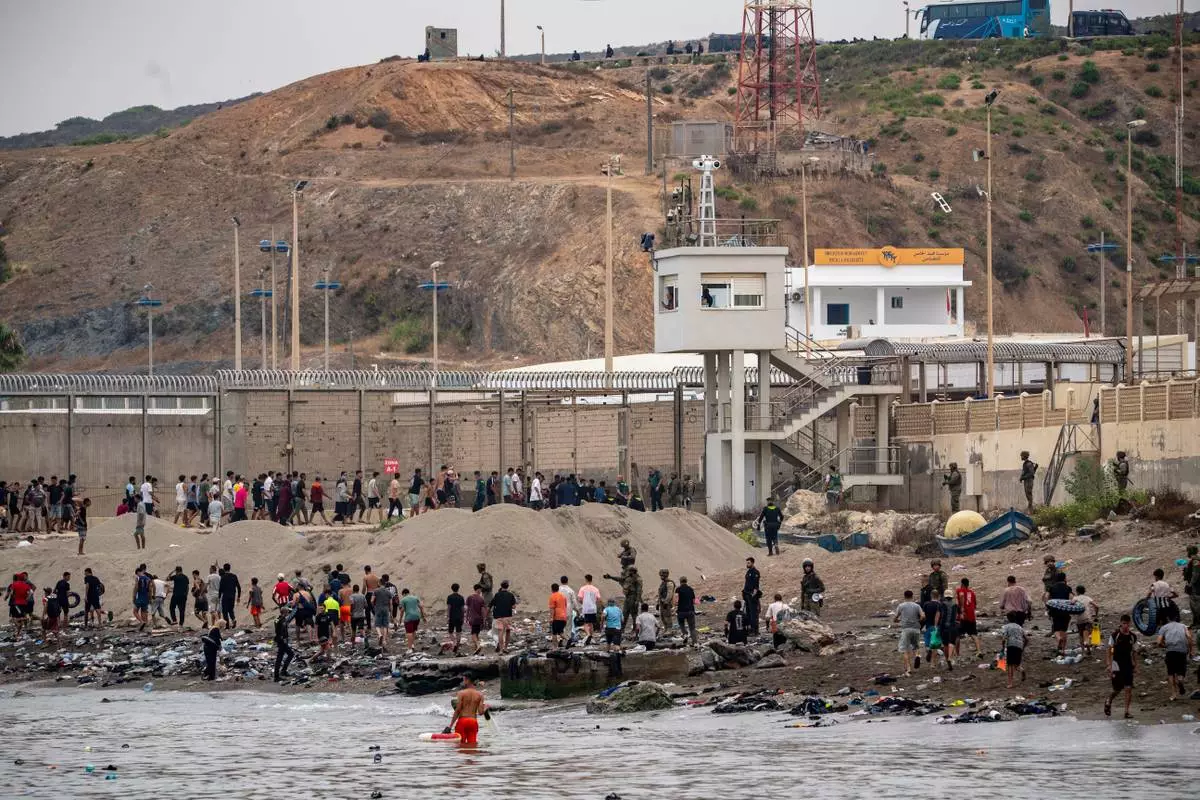
Migrants return to Morocco from the Spanish enclave of Ceuta, Friday, July 31, 2026. (AP Photo/Antonio Sempere)
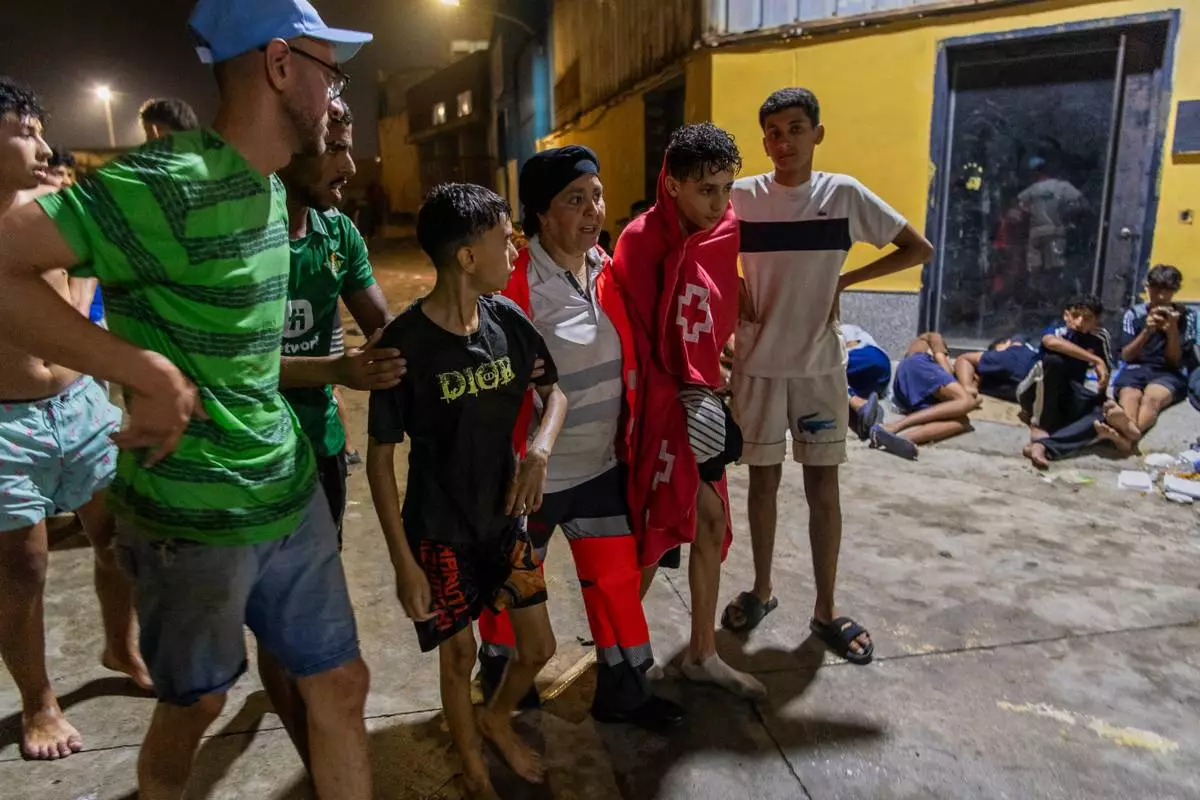
Unaccompanied minors who crossed into Spain from Morocco spend the night on the streets in the Spanish enclave of Ceuta, Friday, July 31, 2026. (AP Photo/Antonio Sempere)
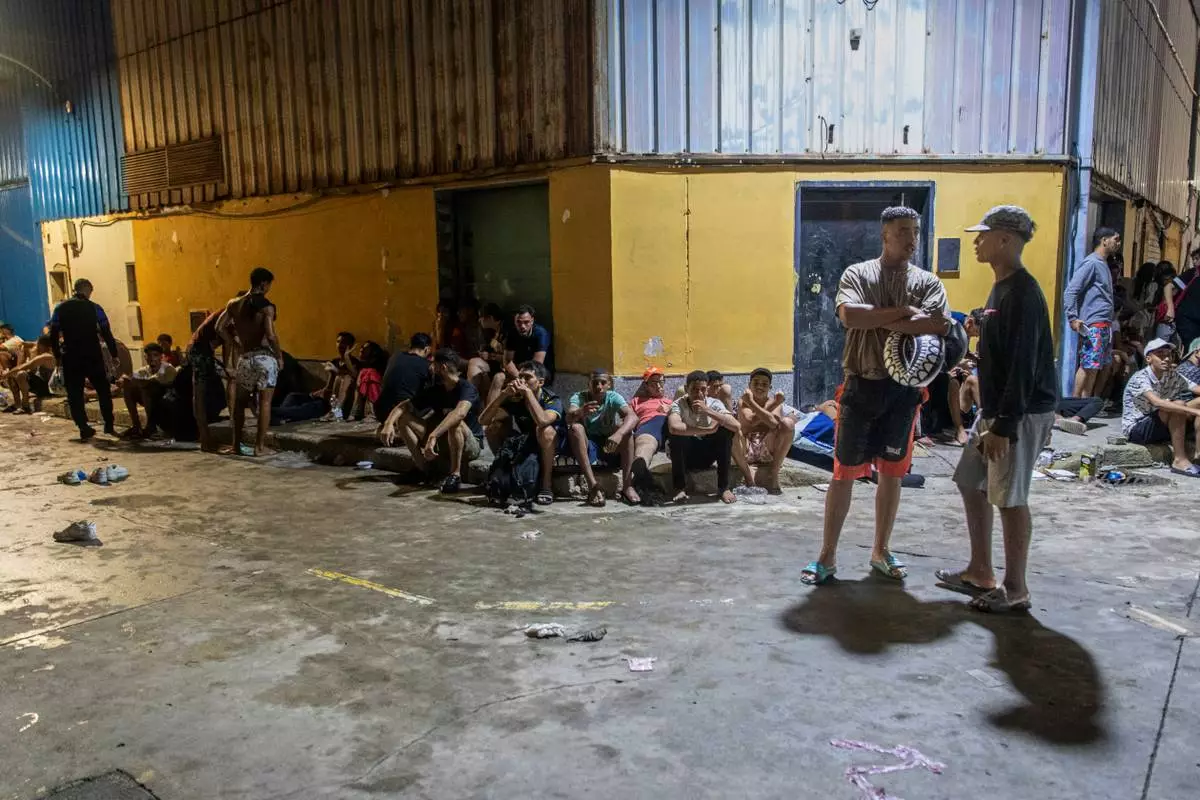
Migrants spend the night on the streets after crossing from Morocco into the Spanish enclave of Ceuta, Friday, July 31, 2026. (AP Photo/Antonio Sempere)
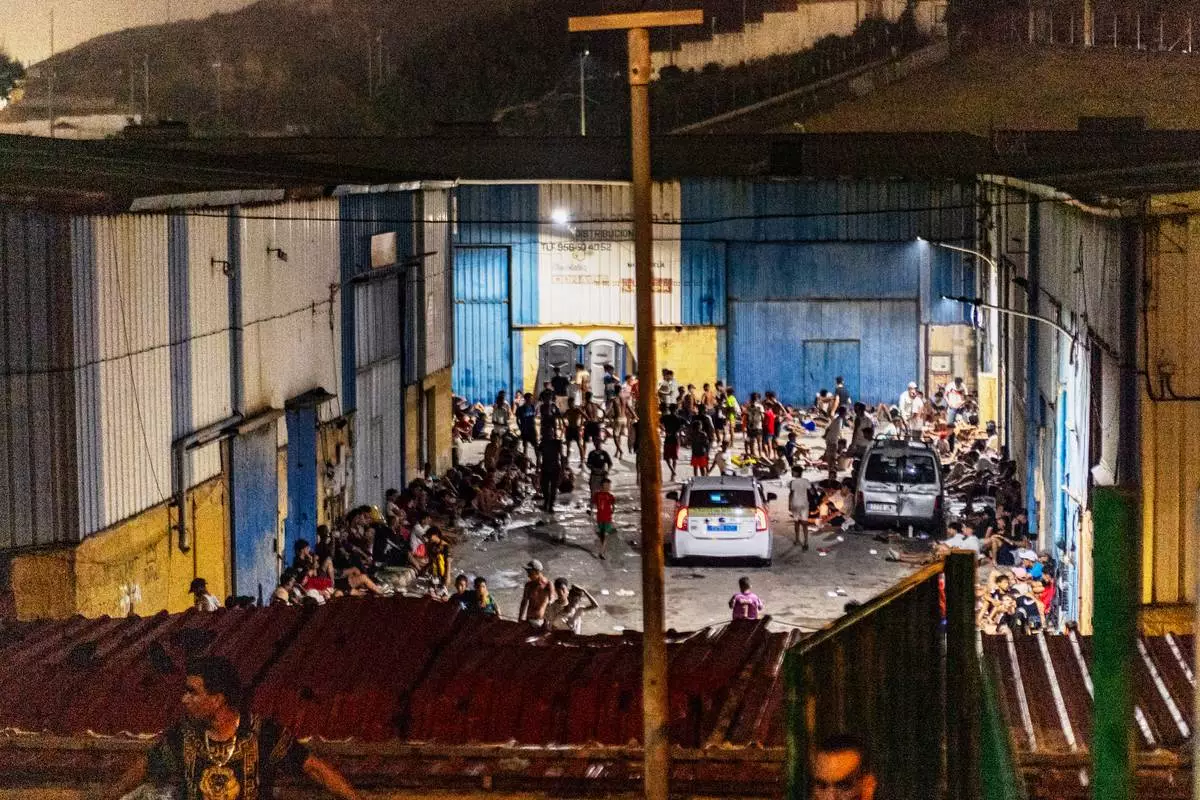
Migrants spend the night on the streets after crossing from Morocco into the Spanish enclave of Ceuta, Friday, July 31, 2026. (AP Photo/Antonio Sempere)
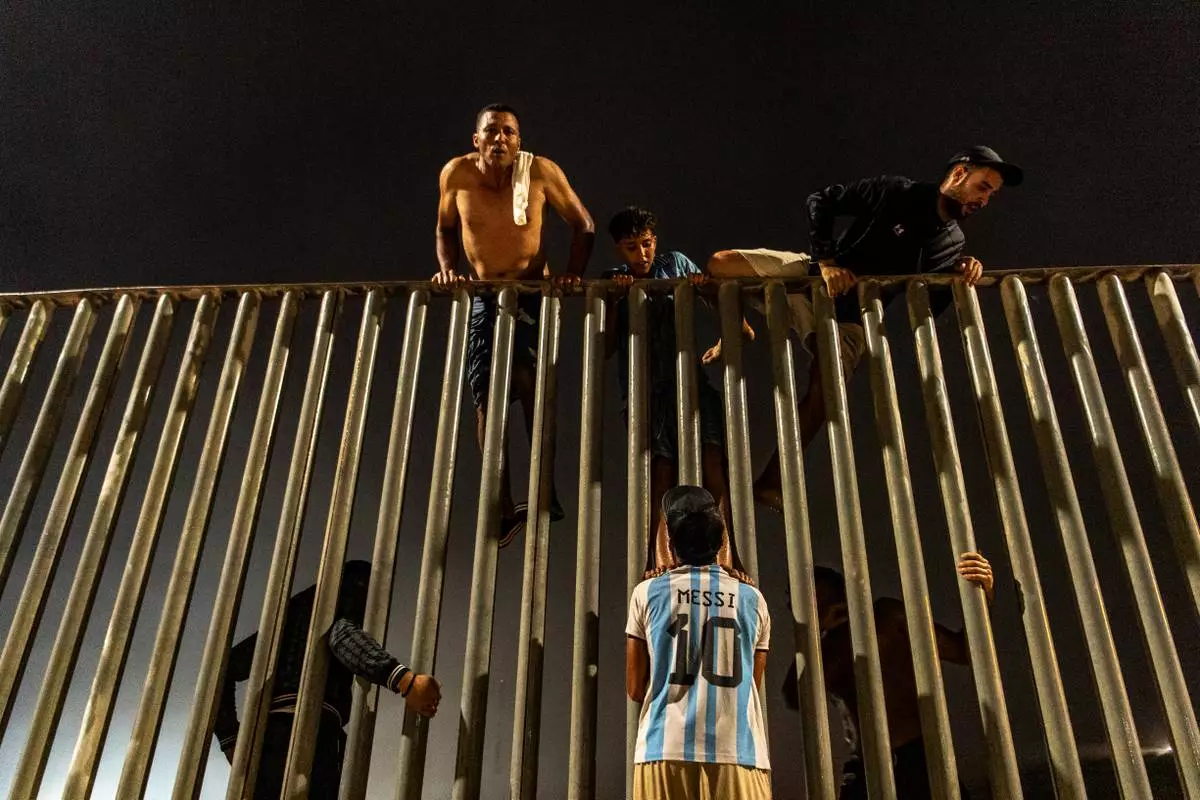
Migrants try to cross from Morocco into the Spanish enclave of Ceuta, Friday, July 31, 2026. (AP Photo/Antonio Sempere)