COLOMBO, Sri Lanka (AP) — A Sri Lankan court on Friday sentenced a former police chief and a former top Defense Ministry official to death after finding them guilty of criminal negligence that allowed Islamic State-inspired bomb attacks on Easter Sunday in 2019, which killed more than 260 people.
A death penalty in Sri Lanka typically means life in prison because the country has had a moratorium on executions since 1976. Current President Anura Kumara Dissanayake supports maintaining the moratorium.
Former Police Chief Pujith Jayasundara and former Defense Ministry Secretary Hemasiri Fernando were convicted and sentenced Friday by the three-member High Court bench. They have the right to appeal the ruling.
The near-simultaneous bombings in 2019 were carried out at three tourist hotels and three churches — two of them Catholic and one Protestant — and killed 42 foreigners. A parliamentary committee found that police and intelligence officials failed to act on repeated intelligence warnings of the attacks.
The court delivered the verdict against Jayasundara first and then against Fernando later in the day. The death sentence came as a majority decision, with two judges agreeing and one judge writing a dissent arguing that both should go free.
Two Sri Lanka-based Islamic militant groups were accused of carrying out the bombings, and none of those believed to have been directly involved are living. Separate trials are taking place for people allegedly connected with the perpetrators.
Sri Lanka’s Catholic Church has claimed that those identified so far as perpetrators are not the masterminds behind the bombings, and that there was a bigger conspiracy behind the attacks.
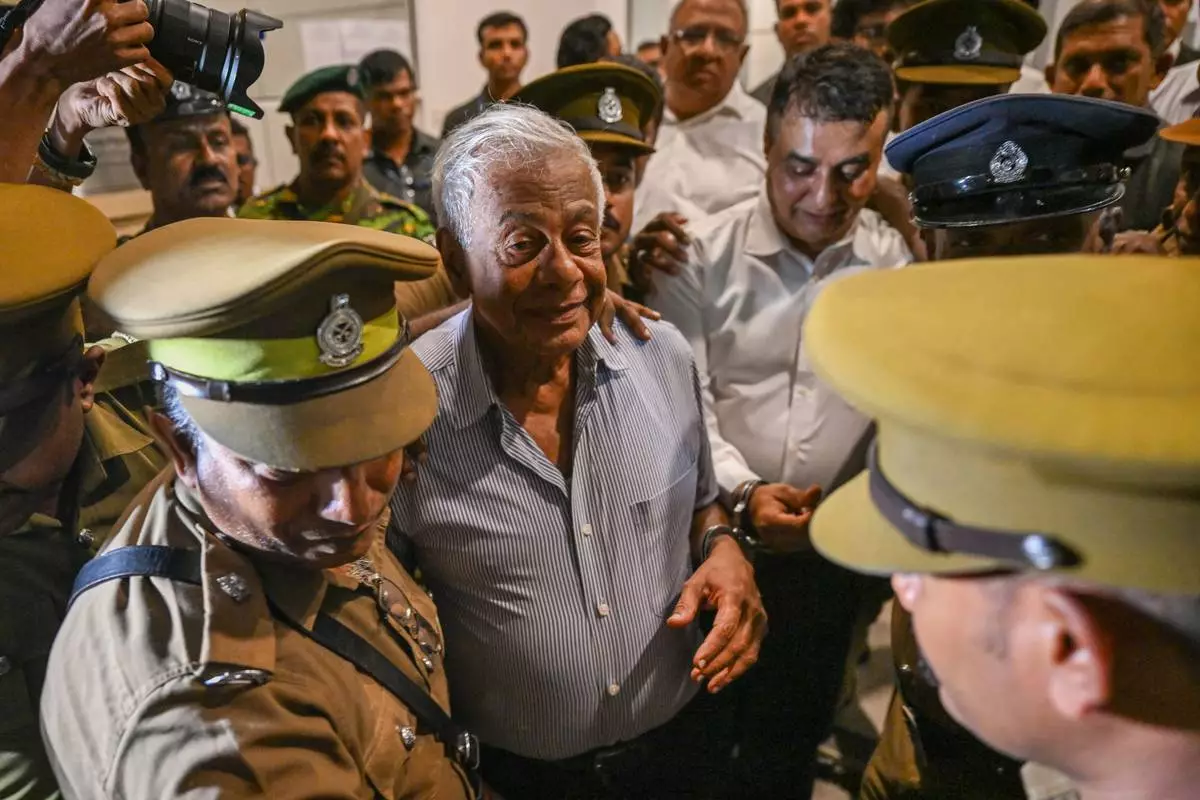
Sri Lankan police officials escort former Defense Ministry Secretary Hemasiri Fernando, center left, and former Police Chief Pujith Jayasundara, center right, outside a court in Colombo, Sri Lanka, Friday, July 31, 2026. (AP Photo)
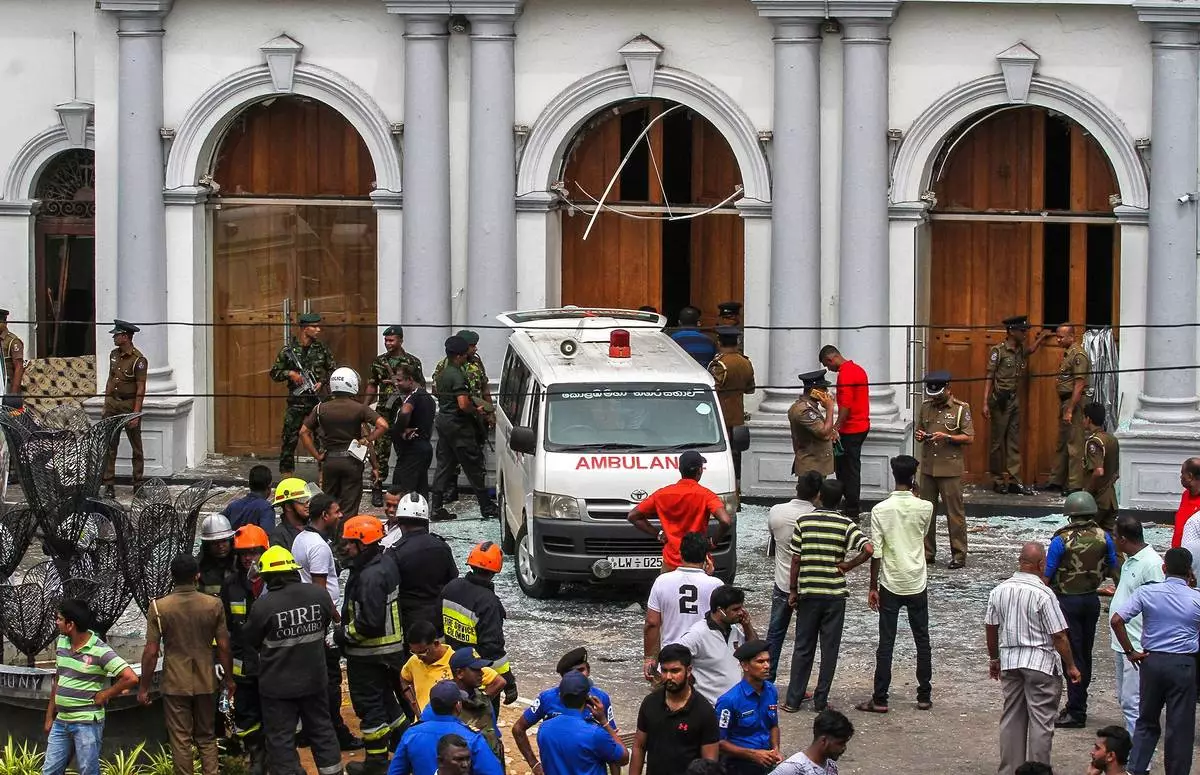
FILE - Sri Lankan Army soldiers secure the area around St. Anthony Shrine after a blast in Colombo, Sri Lanka, April 21, 2019. (AP Photo/Chamila Karunarathne, File)
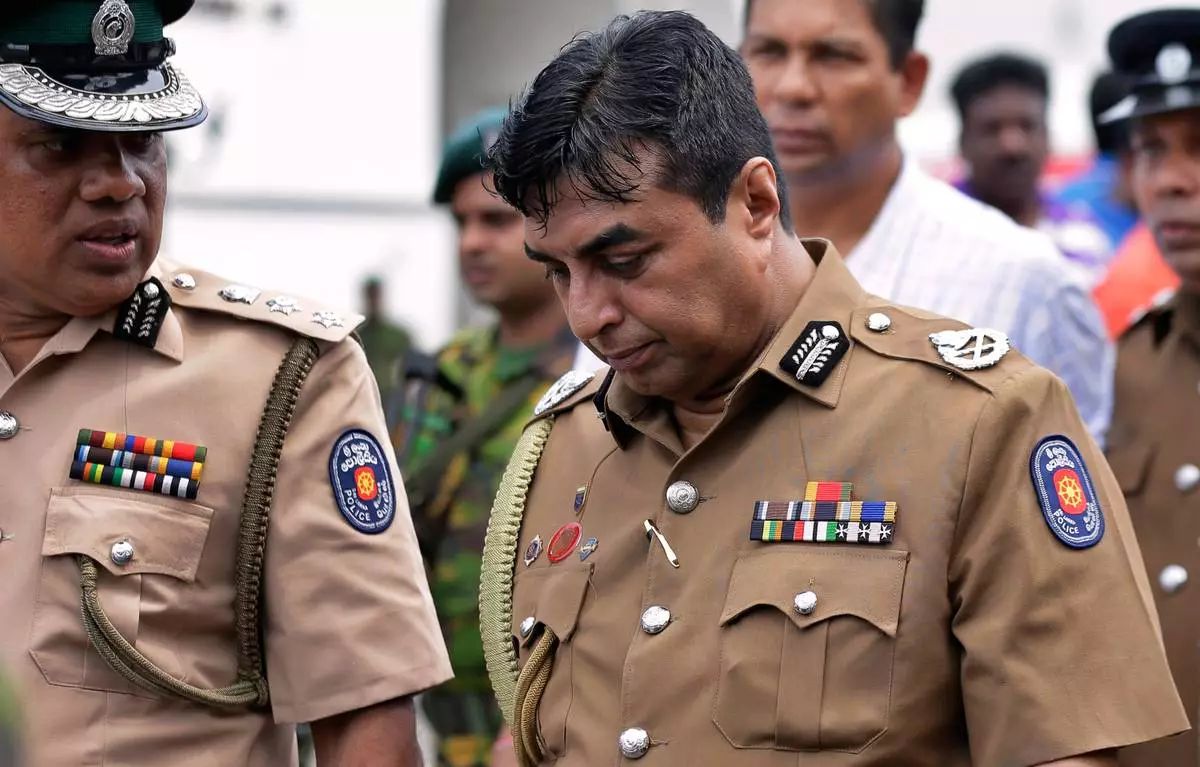
FILE - Sri Lankan police chief Pujith Jayasundara, right, leaves after an inspection at St. Anthony's church, one of the sites of Easter Sunday explosions in Colombo, Sri Lanka, April 21, 2019. (AP Photo/Eranga Jayawardena, File)
In the debate over which college football conference is strongest, the Southeastern Conference argues its superior depth makes up for the Big Ten winning the last three national titles.
The Big Ten calls its reputation as a top-heavy conference unfair.
Big Ten Commissioner Tony Petitti considers those three College Football Playoff championships — from Michigan in 2023, Ohio State in 2024 and Indiana in 2025 — testaments to the league’s strength from top to bottom.
“You cannot send your top teams out into the CFP unless they’ve played — and have them be successful, which we have been very successful — if they’re not going through a gauntlet in the regular season,” Petitti said this week. “This idea that the middle of our conference isn’t hard is just not right.”
The balance of power between college football’s heavyweight conferences has been a major talking point at the leagues’ media days.
Petitti spoke to reporters while standing beside the Big Ten’s three recent CFP trophies. Illinois coach Bret Bielema said the SEC was living in the past. Indiana coach Curt Cignetti said “there’s no doubt” the Big Ten is best.
“The numbers speak for themselves,” Cignetti said. “We don’t run a hype machine up here in the Midwest. We believe everything is earned, not given. When we fall short, we say, ‘We fell short.’ We don’t cry a river, whine and complain. That’s why we’re the best.”
SEC Commissioner Greg Sankey argued his league’s case a week earlier.
“When you look at our schedule, no one has created the kind of weekly competition that exists in the Southeastern Conference,” Sankey said.
Five different SEC schools combined to win 13 national titles from 2006-22, but no SEC team has reached any of the last three championship games.
In the first two years under a 12-team CFP format, seven different SEC schools have made eight playoff appearances. The Big Ten had four schools total seven playoff berths.
Certain metrics support the idea that the 16-team SEC is stronger than the 18-school Big Ten at the bottom. ESPN’s Bill Connelly produces the SP+ rankings, a predictive measure rating each team’s efficiency while adjusting for tempo and an opponent’s strength.
The Big Ten had three of the top four teams in the 2025 season-ending SP+ rankings, while the SEC had nobody in the top five. But seven Big Ten programs ranked below the lowest SEC team on the list: No. 67 Kentucky.
Over the last two seasons, the Big Ten went 10-7 against the SEC, including a 3-0 playoff record and a 5-2 mark in other bowl games. The Big Ten won as an underdog in all five of those non-playoff victories.
Illinois produced two of those upsets, beating South Carolina in the Citrus Bowl in 2024 and defeating Tennessee in the Music City Bowl last season. So Bielema had reason to feel good about himself and his conference this week when he commented that SEC backers “kind of want to live in 2005 forever.”
The 2005 reference was curious because Texas won the title that season when it was still a Big 12 member, a year before the SEC began a string of seven straight titles. Bielema said he chose 2005 because that’s the year before his head coaching career began at Wisconsin.
“The transfer portal and revenue share or NIL, however you want to describe it, when those two elements came into college football, the whole world changed,” said Bielema, who went 29-34 while coaching SEC school Arkansas from 2013-17. “I mean, it’s overly obvious to say that, but I think anything to predate that is just a different time in college football. It just is.”
Fourteen of the 22 playoff games over the last two years have featured Big Ten teams, including two in which conference rivals faced off. No wonder even Big Ten coaches with SEC backgrounds claim bragging rights.
“I just look at what the stats are, you know, and the last three years, the national champion has come out of this conference,” said Purdue’s Barry Odom, who went 25-25 at Missouri from 2016-19. “You also look at the number of playoff wins compared to any other conference, we’ve won twice as many as the next conference in the playoffs.”
UCLA quarterback Nico Iamaleava has experience playing in both conferences after reaching the playoff with Tennessee in 2024.
“I think it’s two great leagues — two great, physical leagues,” Iamaleava said. “I think the SEC brings a lot of physicality, but over the years, it’s kind of leveled out in terms of the playing field.
I think everybody is able to get high-level athletes. ... I think there’s definitely a lot of tough SEC teams, so that every week is going to be a game, but I feel the same way in the Big Ten.”
The intensity of the debate frustrates coaches eager to settle it on the field, perhaps with more head-to-head matchups.
“You never hear in the NFL, ‘Wow, the NFC’s better than the AFC,’” Washington coach Jedd Fisch said. “You don’t ever hear, ’Check us out, we’ve won the Super Bowl the last few years.' We’ve kind of made this some competition rather than just take a step back and say, ‘Who cares?’ Let’s play.”
AP freelance writer Luke DeCock contributed to this report.
AP college football: https://apnews.com/hub/ap-top-25-college-football-poll and https://apnews.com/hub/college-football
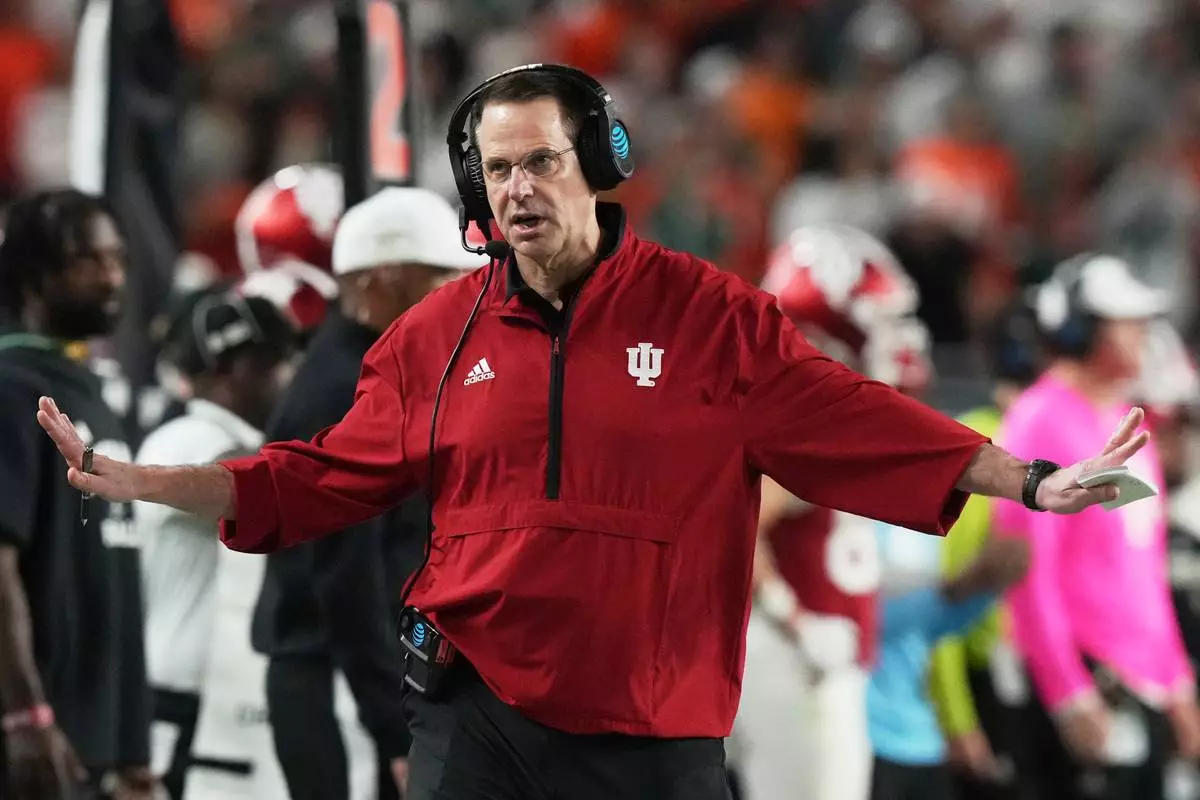
FILE - Indiana head coach Curt Cignetti reacts during the second half of the College Football Playoff national championship game against Miami, Jan. 19, 2026, in Miami Gardens, Fla. (AP Photo/Marta Lavandier)