Skip to Content Facebook Feature Image

EU to expand enforcement of AI Act from Sunday

China

China

China

EU to expand enforcement of AI Act from Sunday

2026-08-01 16:37 Last Updated At:17:07

The European Commission said on Friday that it will begin enforcing a broader range of provisions of the European Union (EU) Artificial Intelligence (AI) Act on August 2, when new transparency requirements for AI systems also take effect.

Under the rules, chatbots and other interactive AI systems must inform users that they are interacting with AI rather than a human. AI-generated or altered images, videos and audio, including deepfakes, must be clearly labelled and carry machine-readable markings.

The requirements are aimed at reducing deception and manipulation while helping users identify AI-generated content, the Commission said.

The Commission's AI Office will enforce rules covering providers of general-purpose AI models, including advanced models that may pose systemic risks. Providers will be required to document relevant information, adopt copyright policies and publish sufficiently detailed summaries of the content used to train their models.

Providers of the most advanced models must also take measures to address risks linked to cybersecurity, harmful manipulation, loss of human control and threats to fundamental rights.

Enforcement will also begin for prohibited AI practices, including systems that manipulate people, exploit vulnerabilities or conduct certain forms of social scoring.

The AI Office, national competent authorities and the European Data Protection Supervisor will share responsibility for enforcement.

The Commission said more than 180 organizations have signed a voluntary code of practice designed to help companies comply with the transparency requirements.

Under the AI Omnibus, rules for certain high-risk AI systems have been postponed until December 2027, while requirements for high-risk systems integrated into regulated products will apply from August 2028.

The EU AI Act, which entered into force on Aug 1, 2024, is being implemented in phases.

EU to expand enforcement of AI Act from Sunday

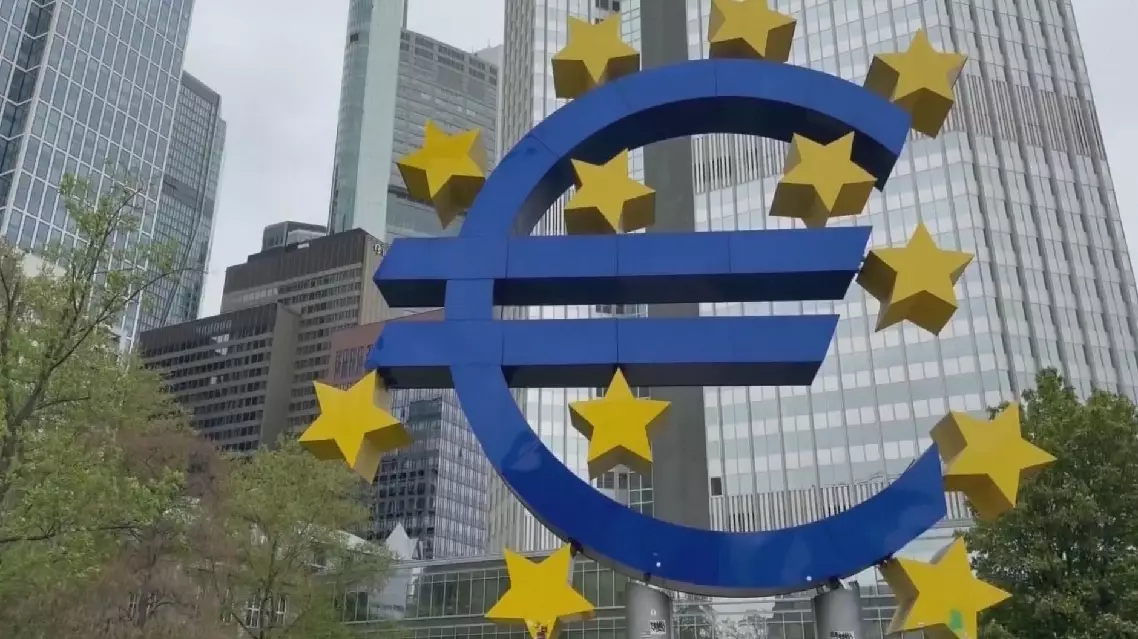
EU to expand enforcement of AI Act from Sunday

Annual inflation in the eurozone is expected to edge up to 2.9 percent in July from 2.8 percent in June, according to a flash estimate released by Eurostat on Friday.

The increase was mainly driven by renewed energy price pressure. Energy prices are expected to rise 10.0 percent year-on-year in July, up from 8.5 percent in June, according to Eurostat, the statistical office of the European Union (EU). Services inflation is also expected to rise to 3.3 percent from 3.2 percent a month earlier.

Food, alcohol and tobacco prices are estimated to rise 1.2 percent year-on-year, down from 1.5 percent in June, while non-energy industrial goods are expected to post an annual inflation rate of 0.9 percent, up from 0.7 percent. Core inflation, which excludes energy, food, alcohol and tobacco, is estimated at 2.5 percent in July, up from 2.4 percent in June.

According to Eurostat data, inflation rose in three of the eurozone's largest economies in July. Germany's rate increased to 2.8 percent from 2.4 percent in June, France's to 2.4 percent from 2.0 percent, and Spain's to 3.8 percent from 3.6 percent. Italy's rate, meanwhile, edged down to 2.9 percent from 3.0 percent.

Among eurozone members with available data, Lithuania is estimated to have posted the highest annual inflation rate in July at 5.6 percent, while Estonia is estimated to have posted the lowest at 2.0 percent.

The data came after the European Central Bank (ECB) decided last week to keep its three key interest rates unchanged. The ECB said that the outlook for energy prices remained highly volatile and the full inflationary impact of the energy shock had yet to play out.

Eurozone inflation edges up to 2.9 pct in July as energy prices rise

Eurozone inflation edges up to 2.9 pct in July as energy prices rise

Recommended Articles