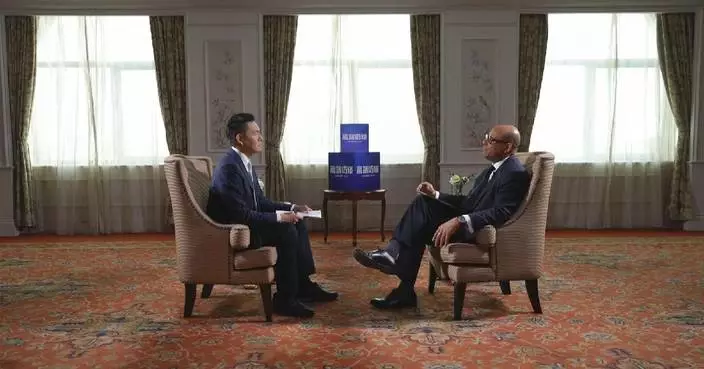
A fair and inclusive global energy transition that leaves no country behind is critical to meeting climate goals, with the Belt and Road Initiative (BRI) channeling climate and energy investment into the Global South, a senior United Nations (UN) climate official said in an interview released Friday.
Simon Stiell, executive secretary of the UN Framework Convention on Climate Change (UNFCCC), said the Green BRI is delivering on-the-ground projects that demonstrate international cooperation, with significant investments in developing countries supporting climate action and the energy transition.
"Through the Belt and Road Initiative, significant investments have been made in developing countries, including in the areas of climate action and with regard to the energy transition. So again, demonstrable, putting words into action, but also showing what international cooperation is all about within the Global South. So it is an example of how countries need to work together to help one another in terms of development and progress," he said.
Launched by China in 2013, the Belt and Road Initiative is a vast infrastructure and investment program spanning Asia, Africa, Europe, and beyond. Its "Green BRI" component emphasizes clean energy and sustainable projects, aiming to support developing countries in climate action and the global energy transition.
Global climate finance gained momentum at COP29, the UN climate summit held in Baku, Azerbaijan, in 2024, where countries reached a landmark agreement on funding for developing nations.
"We left Baku at COP 29 with the decision on the new finance goal, so the 300 billion dollars per year by 2035 and the road map to 1.3 trillion and this is support for developing countries. We've seen levels of investment last year alone of 2.1 trillion in renewables compared to 1 trillion in fossil fuels," he said.
While the shift from fossil fuels to renewables is underway, the distribution of green investment remains deeply uneven across the developing world.
"That is a very clear signal of the finance flows that are shifting from fossil fuels to renewables. The challenge we have, with the exception of China, that when we look at those levels of investment, it's very, very uneven. Those flows need to flow more evenly and ensure that all developing countries are able to take advantage of those investment opportunities. So that they can also transition away," he added.
This widening disparity is a core reason Stiell has repeatedly advocated for the principle of a fair and just global energy transition.
"I mean, that's at the heart of the Paris Agreement, ensuring that no one is left behind with regard to the energy transition. It's not a transition, it's transitions. Every country, every region is on a different path. Not everyone is starting at the same point. We all need to end up in the same place in order to get us to the 1.5 [degrees Celcius] goal," he said.
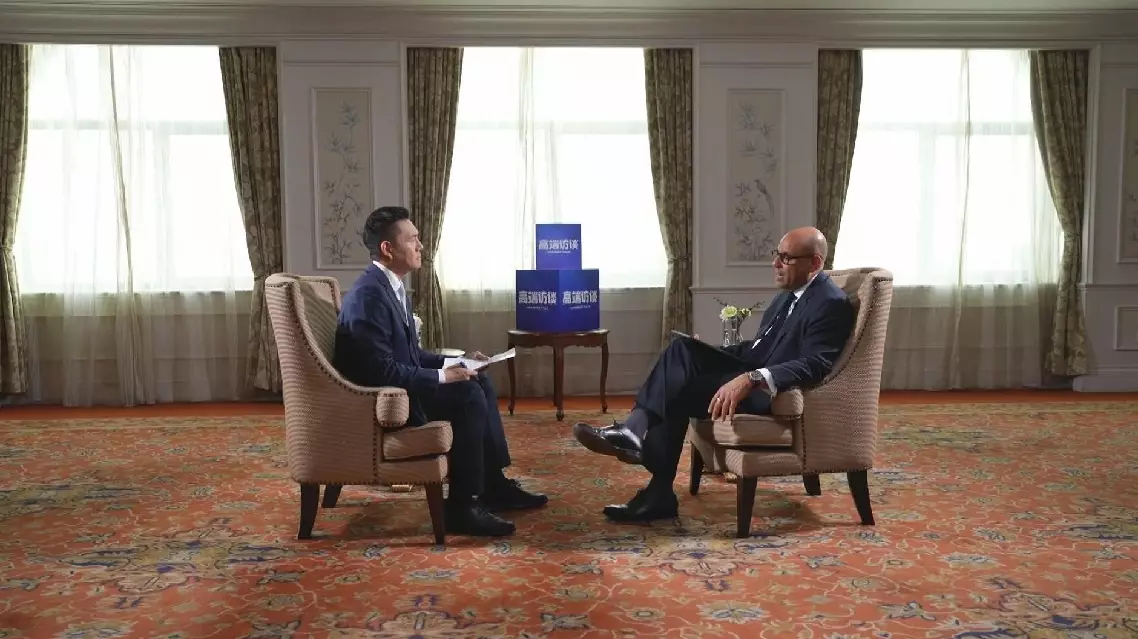
UN climate chief stresses investment in energy transition for all countries