--(BUSINESS WIRE)--Aug 12, 2026--
Infosec:
This press release features multimedia. View the full release here: https://www.businesswire.com/news/home/20260812554085/en/
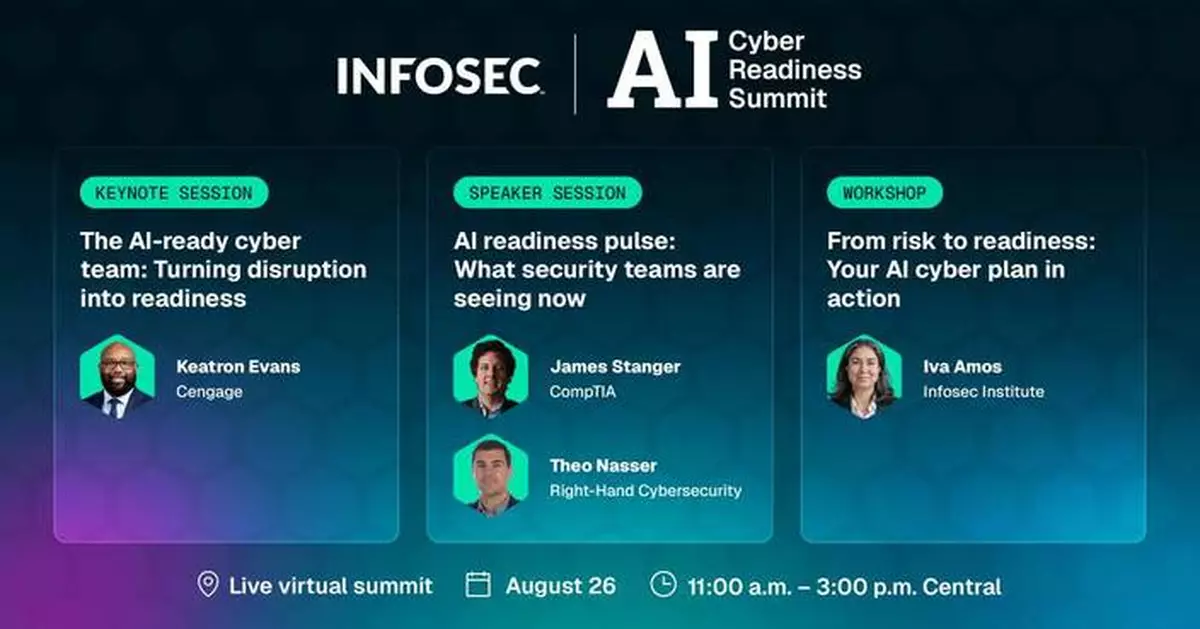
What: Infosec Institute, part of Cengage, will host the AI Cyber Readiness Summit, a free virtual event for security leaders and AI security champions on Aug. 26. The summit will examine how AI is reshaping cyber risk, cybersecurity work and leadership priorities, giving attendees practical guidance for building AI-ready security teams.
Keatron Evans, Vice President, AI Enablement and Strategy at Cengage, will deliver the keynote, followed by a moderated AI cyber readiness discussion with James Stanger, Chief Technology Evangelist at CompTIA, and Theo Nasser, CEO and Co-Founder of Right-Hand Cybersecurity. The broader program includes sessions led by Infosec instructors and an interactive AI cyber readiness workshop.
“AI cyber readiness starts with visibility — where AI is being used, what value it creates, what it costs and what new risks it introduces,” said Evans. “That understanding gives leaders a basis for better decisions, stronger controls and clearer expectations for how their teams need to adapt.”
Turning AI cyber readiness into action
The AI-ready cyber team: Turning disruption into readiness — Keatron Evans will explore how AI is reshaping cyber risk and cybersecurity work, and what leaders should consider as they invest in and scale AI adoption.
AI readiness pulse: What security teams are seeing now — James Stanger and Theo Nasser will draw on new findings from Infosec’s AI Cyber Readiness Pulse Poll to examine emerging threats, governance challenges and practical priorities for security leaders.
From risk to readiness: Your AI cyber plan in action — Iva Amos, Sr. Cybersecurity Curriculum Developer & Manager at Infosec, will lead an interactive workshop to help leaders identify where AI is already present, assess readiness gaps and define practical next steps.
Additional instructor-led sessions and a live Q&A will cover responsible AI governance, securing generative AI and deep learning for network anomaly detection. View the full AI Cyber Readiness Summit agenda.
When: Wednesday, Aug. 26, 2026, from 11 a.m. to 3 p.m. Central
Where: Live virtual event. Registration is free, and sessions will be available to registrants on demand through Sept. 25, 2026.
Learn more and register for the AI Cyber Readiness Summit.
About Infosec Institute
Infosec Institute, part of Cengage, makes cyber workforce readiness a reality. Through role-based training that spans certification boot camps, skills development, security awareness and human risk management, we develop the capabilities your entire workforce needs to stay ahead of today’s threats. The result: SOC analysts defending the perimeter, security engineers building secure systems and front-desk employees spotting advanced phishing attempts. 70% of the Fortune 500 have trusted Infosec for more than two decades. Follow Infosec on LinkedIn, YouTube,TikTok,Facebook and Instagram for the latest news, or visit the Infosec Resource Center or infosecinstitute.com for more information.

Infosec Institute’s AI Cyber Readiness Summit Brings Security Leaders Together to Build AI-Ready Teams
PEREIRA, Colombia (AP) — The search for survivors in the rubble of Colombia’s powerful earthquake grew more desperate on Wednesday, two days after the quake brought down buildings, buckled roads and crushed cars.
The devastation has tested Colombia’s new President Abelardo de la Espriella and his government as it scrambles to respond to the natural disaster and civil society as it pushes to provide aid to the vulnerable communities most affected by the quake.
By Tuesday, de la Espriella said the 7.4 magnitude earthquake had killed at least 181 people and left 2,595 more injured in the west of the country. He said at least 195 remained missing, but civilian-run databases put that number closer to 4,000.
Teams continued to pick through the rubble overnight in the hardest-hit cities of Cali, Pereira, Manizales and Quibdo, as time ticked away for victims to be found — and rescued — alive.
Aid agencies consider the first 48 to 72 hours crucial for retrieving survivors, though that threshold can be extended if they have access to food and water.
There have been fleeting moments of hope amid the devastation: rescuers pulling a baby covered in dust through a hole in a concrete wall, and onlookers cheering as teams lifted a woman onto a stretcher.
In many areas, the official response to the disaster has been complicated by the ongoing crises of deep poverty and civil warfare that has forced displacement for decades.
“This earthquake compounds an already severe humanitarian situation, and there is a need for increased support for the humanitarian response,” said Giovanni Rizzo, Colombia director for the Norwegian Refugee Council.
Many aid organizations were already on the ground at the epicenter of the quake in Colombia, supporting a 2016 peace accord between the government and leftist rebels and responding to violence involving other armed groups that has persisted since then, particularly in Choco.
That presence allowed humanitarian workers to quickly pivot to disaster relief, said María José Torres, the U.N. resident coordinator in Colombia.
“We have a presence on the ground. Therefore, our ability to be there, present with the people, I think, has increased exponentially,” Torres said in a statement Tuesday.
At the same time, aid from other countries and nonprofits abroad continued to roll in.
The U.S. has offered over $15 million in aid and Mexico’s president said she is prepared to send hundreds of search and health workers, tons of health supplies and other equipment.
On Tuesday afternoon, Salvadoran President Nayib Bukele said his country would send two planes loaded with 100 tons of aid in the coming days.
“Our prayers are with the families of the victims, the wounded and all the Colombian people,” Bukele wrote on X.
Suarez reported from Bogota, Colombia, and Janetsky reported from Mexico City. Associated Press writers Edith M. Lederer at the United Nations and Manuel Rueda in Bogota contributed to this report.
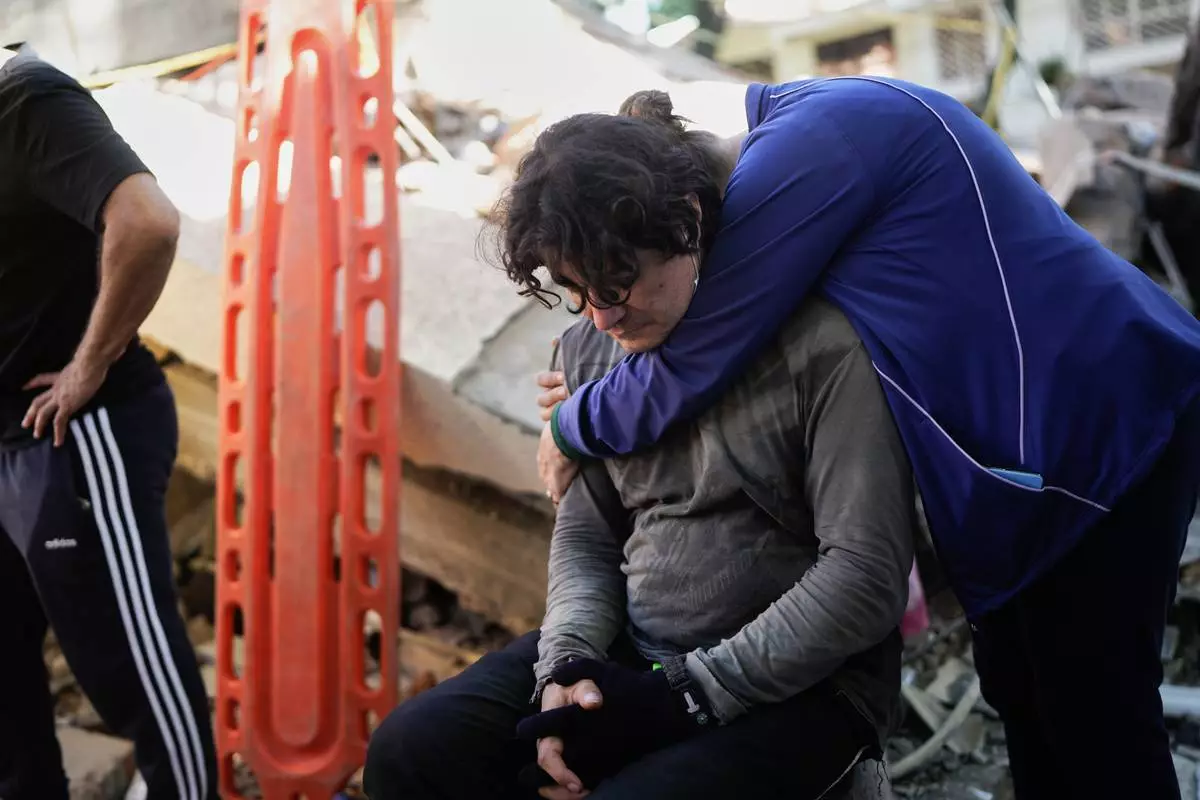
Neighbors embrace as rescue workers search through the rubble of a collapsed apartment building the day after an earthquake struck Cali, Colombia, Tuesday, Aug. 11, 2026. (AP Photo/Ivan Valencia)
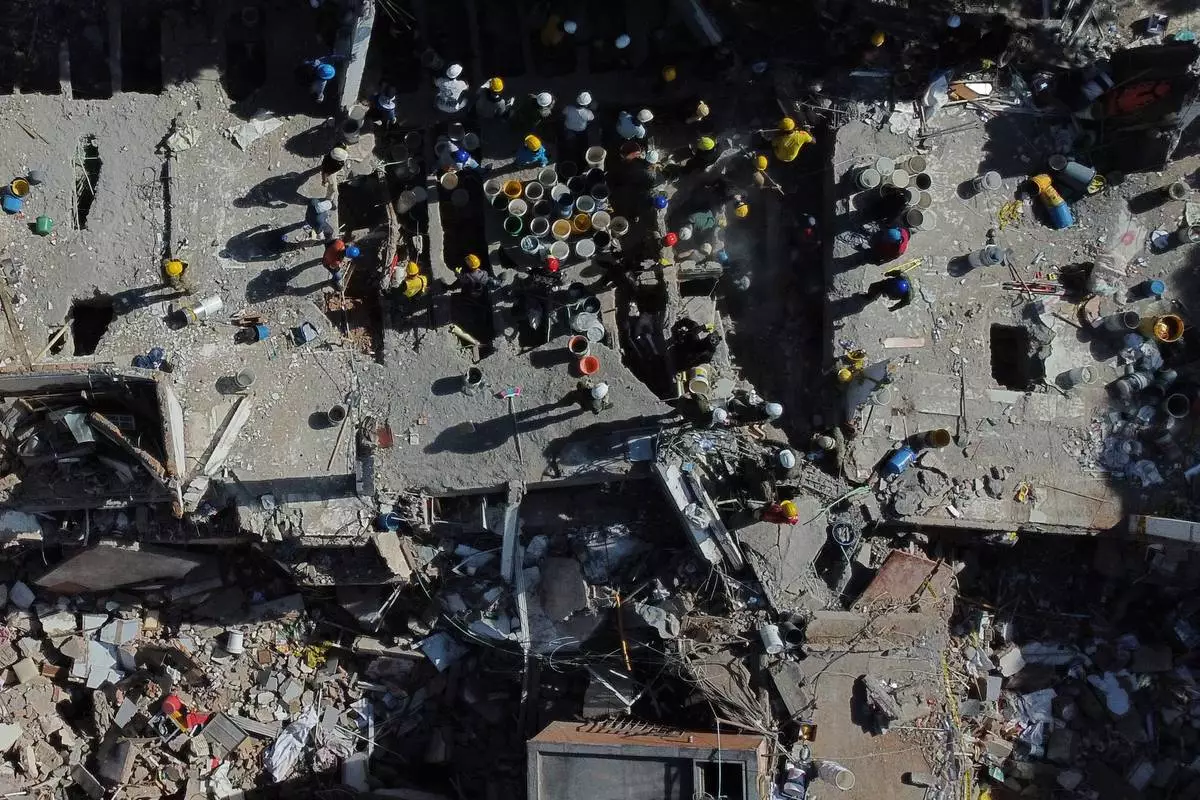
Volunteers and rescue workers use buckets to remove debris of a collapsed building a day after an earthquake struck Cali, Colombia, Tuesday, Aug. 11, 2026. (AP Photo/Santiago Saldarriaga)
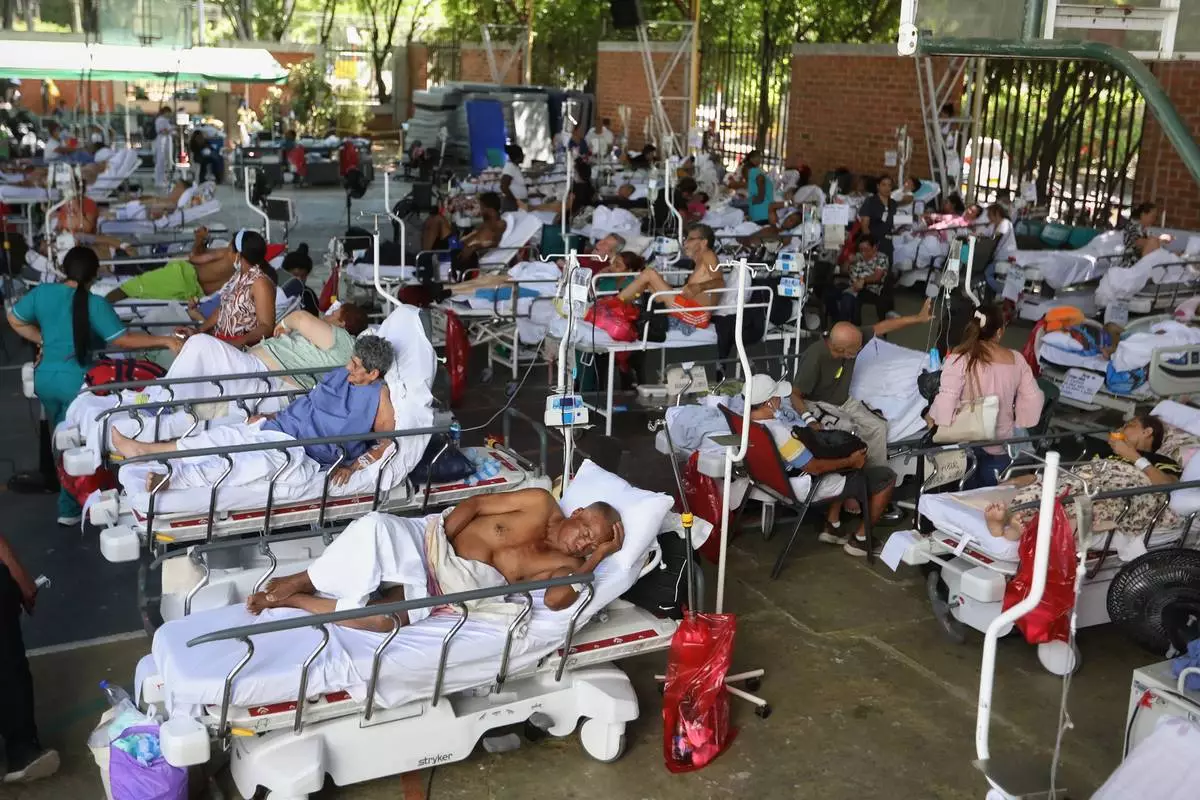
Patients from a clinic evacuated due to earthquake damage lie in beds at a temporary facility set up in a gymnasium at a nearby school in Cali, Colombia, Tuesday, Aug. 11, 2026. (AP Photo/Santiago Saldarriaga)
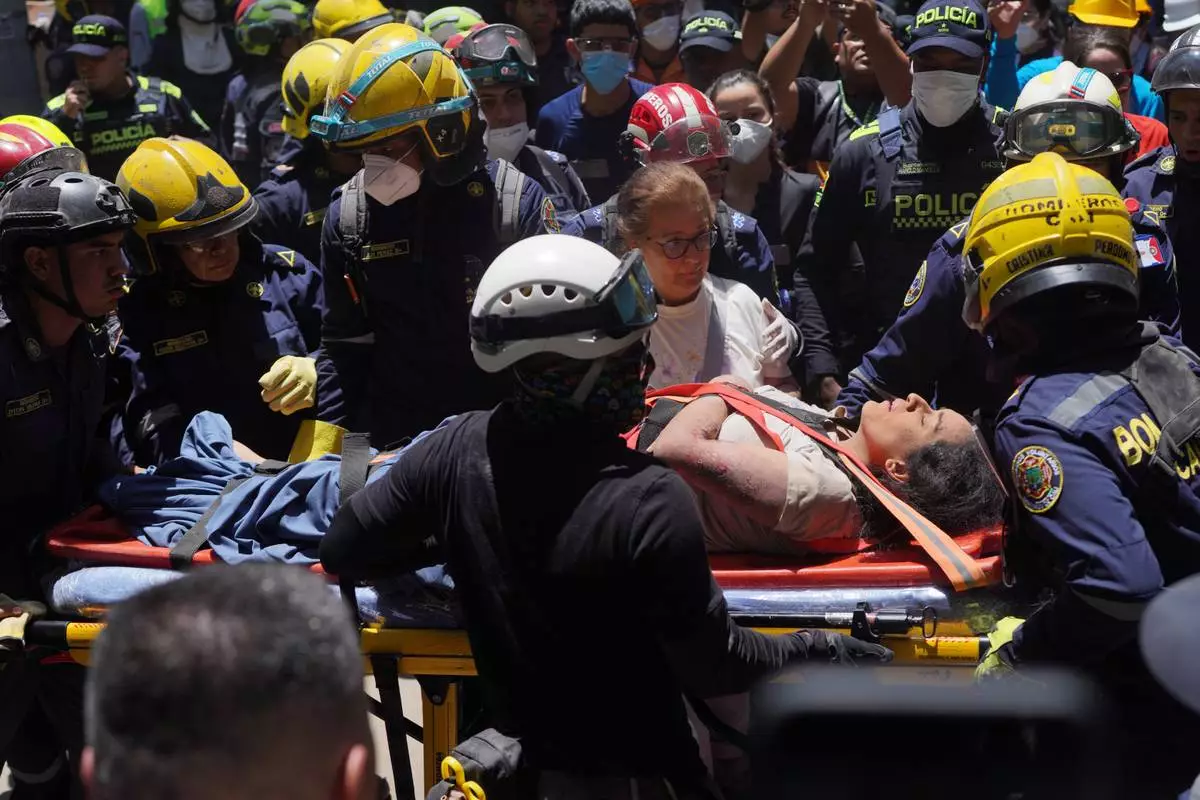
Rescue workers carry Diana Troncoso after pulling her from the rubble the day after an earthquake struck Cali, Colombia, Tuesday, Aug. 11, 2026. (AP Photo/Ivan Valencia) CORRECTION: Changes city to Cali, not Pereira.