Once Upon a Time in the Middle East, one of the summer's biggest blockbusters, packed Wuhan theaters on Thursday, driving up both ticket sales and consumer spending in the city.
The film offers a heartfelt take on war, peace and human kindness through the unlikely lens of food.
Rather than relying on grand battle scenes, the film is set almost entirely in a small Chinese restaurant in war-torn Iraq in 2003. Played by celebrated comedian Shen Teng, Xu Fu is a chef looking to make a living abroad and finding a quiet life. But when war suddenly erupts, he and restaurant manager Ma Junsheng, played by Jiang Qiming, choose to keep the kitchen running, serving authentic Chinese dishes and creating a safe haven for local civilians and children amid the chaos.
The promotional event in Wuhan turned out a sellout, with director Wen Muye and the cast greeting a lively and packed audience.
"The first thing that hit me was how mind-blowing the acting was," said Luo Xirui, a moviegoer.
"I got up early and caught the 8:55 train from Jingmen to Hankou this morning to watch the film for the second time. I was very excited," said Li Lin, another moviegoer.
Strong word-of-mouth has kept the movie among the summer's top hits.
"We are very optimistic about this film, so we've allocated 50 percent of our screenings to it. It now accounts for about 80 percent of our daily box office. It's the main driver of our revenue. Today's roadshow screening sold out within two hours of tickets going on sale and brought in over 60,000 yuan for that single show," said Zhang Yuchen, manager of the Wuhan Huaxia Cinema at Lugang.
The film's popularity isn't just a win for theaters. Nearby cafes and stores are also cashing in as crowds turn a movie night into a night out.
"After the movie, (my daughter) said there were plenty of good places to eat around here, so I brought her to grab something," said a moviegoer.
"The series of fan events have given a clear boost to consumption in our mall. In August, the number of visitors rose by 7 percent year on year. A large number of moviegoers choose to shop, dine, and spend time here after watching the film," said Liu Yousheng, general manager of Wuhan Luxiang Plaza.

Film buzz boosts box office, consumer spending in Wuhan
China strongly deplores Japan's negative moves related to the notorious Yasukuni war shrine, and has lodged serious protests against Japan, a Chinese foreign ministry spokesperson said on Saturday.
The spokesperson made the remarks after Japanese Prime Minister Sanae Takaichi made a monetary offering to the Yasukuni Shrine on August 15, which marks the day of Japan's unconditional surrender in World War II, and certain cabinet members also visited the shrine.
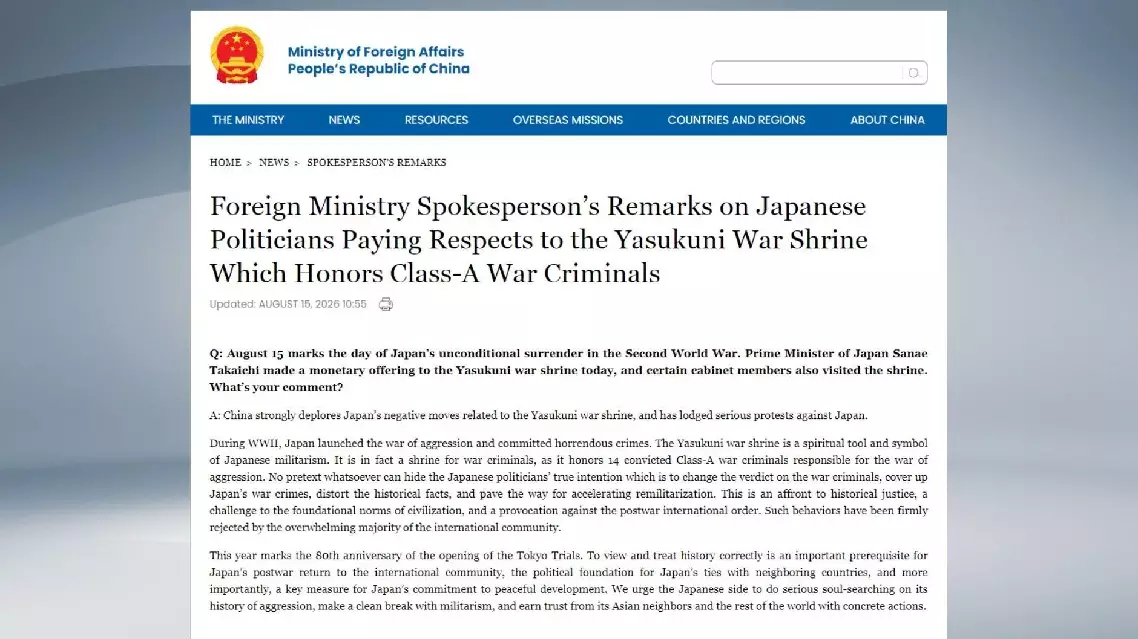
China strongly deplores Japan's negative moves related to the Yasukuni war shrine, and has lodged serious protests against Japan, the spokesperson said in a statement posted on the official website of the Chinese Foreign Ministry.
During World War II, Japan launched the war of aggression and committed horrendous crimes. The Yasukuni war shrine is a spiritual tool and symbol of Japanese militarism. It is in fact a shrine for war criminals, as it honors 14 convicted Class-A war criminals responsible for the war of aggression, said the spokesperson, noting that no pretext whatsoever can hide the Japanese politicians' true intention which is to change the verdict on the war criminals, cover up Japan's war crimes, distort the historical facts, and pave the way for accelerating remilitarization.
This is an affront to historical justice, a challenge to the foundational norms of civilization, and a provocation against the postwar international order. Such behaviors have been firmly rejected by the overwhelming majority of the international community, said the spokesperson.
The spokesperson said this year marks the 80th anniversary of the opening of the Tokyo Trials. To view and treat history correctly is an important prerequisite for Japan's postwar return to the international community, the political foundation for Japan's ties with neighboring countries, and more importantly, a key measure for Japan's commitment to peaceful development.
China urges the Japanese side to do serious soul-searching on its history of aggression, make a clean break with militarism, and earn trust from its Asian neighbors and the rest of the world with concrete actions, said the spokesperson.
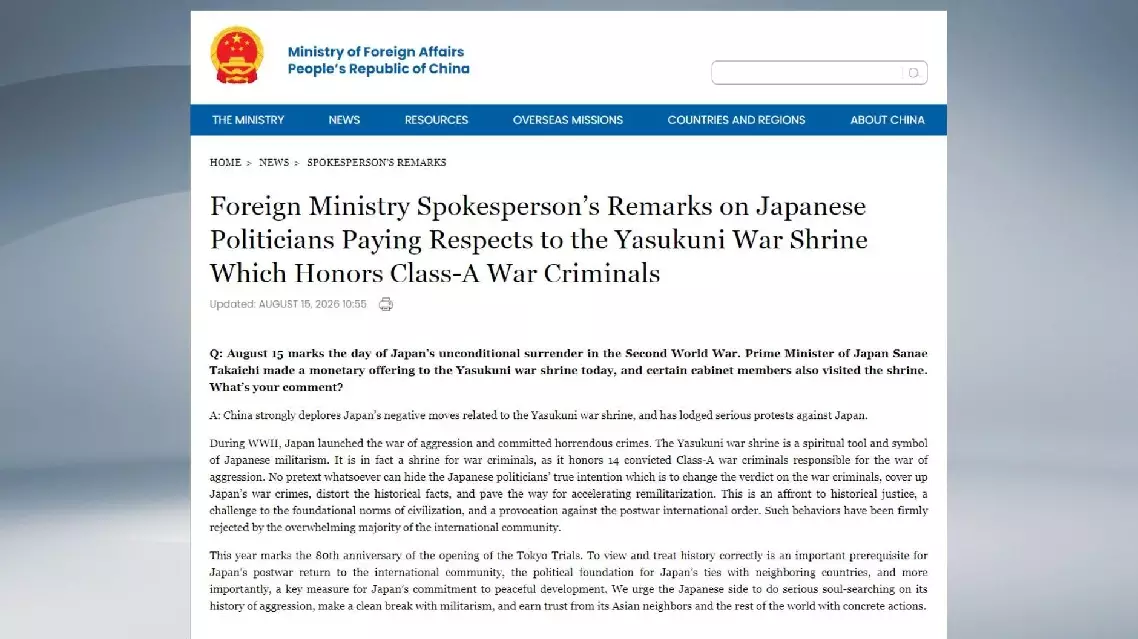
China lodges protests against Japan's negative moves related to Yasukuni Shrine
China lodges protests against Japan's negative moves related to Yasukuni Shrine