Iran on Saturday rejected U.S. President Donald Trump's claim of control over the Strait of Hormuz and vowed to keep the waterway blockaded.
Iran also stressed that only Iran can decide whether the strategic waterway is open or closed.
Iranian Deputy Foreign Minister Kazem Gharibabadi expounded Iran's stances in a post on X after Trump said he would soon declare the strait to be U.S. territory following Iran's defeat.
"The Strait of Hormuz cannot be seized with a tweet, an aircraft carrier, an executive order or an election speech," Gharibabadi wrote. "Iran neither fears threats nor is intimidated by displays of force."
"The Strait of Hormuz has always belonged to Iran and always will. Only Iran can open or close it," he said.
Gharibabadi said Iran will continue enforcing its blockade of the strait as long as the United States refuses to accept the "reality of defeat" or gives up its "fanciful delusions."
Trump, speaking on Long Island in New York on Thursday, said he would declare the Strait of Hormuz as the U.S. territory after defeating Iran.
In a social media post on Wednesday, Trump said the United States had full control of the waterway, and that Iran could do nothing about it.
The Strait of Hormuz, between Iran and Oman, is a vital route for oil shipments from Gulf producers.
Iran's Khatam al-Anbiya Central Headquarters said in a statement carried by the Islamic Republic News Agency on Thursday that the strait is under Iran's "full control", and that no vessel could pass through it safely without Iran's permission.
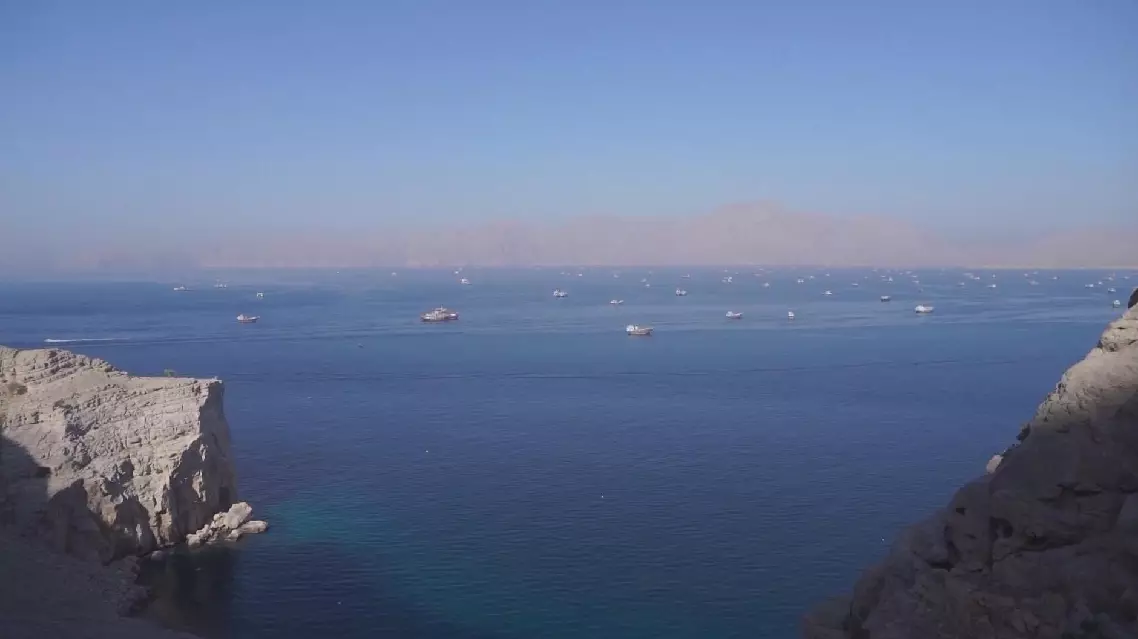
Iran rejects Trump's claim over Strait of Hormuz
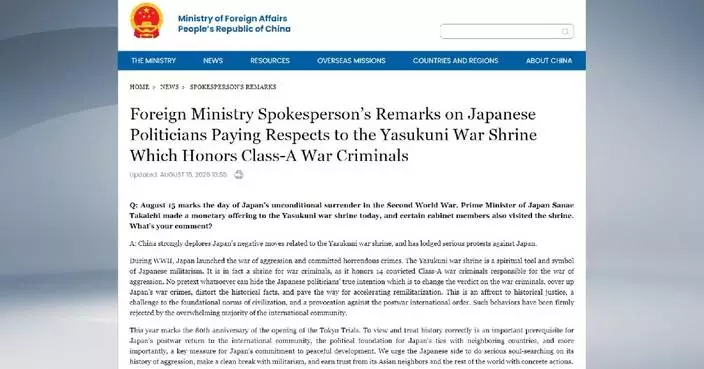
Visits to the notorious war-linked Yasukuni Shrine are fundamentally unacceptable, as historical revisionism and nuclear policy shifts could lead Japan further down a dangerous path, said a prominent Japanese scholar.
The Yasukuni Shrine is a spiritual tool and symbol of Japanese militarists' war of aggression. It honors 14 convicted Class-A war criminals with grave responsibilities for the war crimes committed during World War II.
Japanese Prime Minister Sanae Takaichi made a monetary offering to the Yasukuni Shrine on Saturday, which marks the day of Japan's unconditional surrender in World War II, and certain cabinet members also visited the shrine, including Defense Minister Shinjiro Koizumi.
Atsushi Koketsu, an honorary professor at Yamaguchi University, pushed back firmly against all such acts.
"I believe that no visits to the Yasukuni Shrine, whether indirect or direct, should be made, including the ‘tamagushi’ ritual offerings," he said.
This year marks the 80th anniversary of the start of the Tokyo Trials. On this occasion, Kouketsu further elaborated his views on Japan's historical awareness.
He noted that historical truth cannot be distorted and established historical verdicts must not be challenged. Japanese society must draw proper lessons from the Tokyo Trials and foster a correct view of history.
"Even today, many groups and political figures in Japan are still unwilling to recognize the historical facts such as the Nanjing Massacre. It is regrettable that 80 years after the Tokyo Trials, we must say that many Japanese people still have not fully learned the lessons from the Tokyo Trials," he said.
Regarding the recent efforts by the Japanese government to revise the country's long-held Three Non-Nuclear Principles, Kouketsu stressed that such moves send a dangerous signal, and Japan must firmly adhere to the principles.
"I believe that the new 'three security documents' are expected to be issued within the year. In these documents and even in the Defense White Paper released on August 4, there has already emerged an atmosphere of re-examining the 'Three Non-Nuclear Principles.' There have already been discussions in Japan regarding whether it can possess nuclear-powered submarines, among other issues. In other words, Japan is steadily and forcefully pushing forward, step by step, toward nuclear armament. This must never be allowed to happen. We should make 'no more nuclear-weapon states' as a national policy of Japan and strictly adhere to the Three Non-Nuclear Principles," he said.
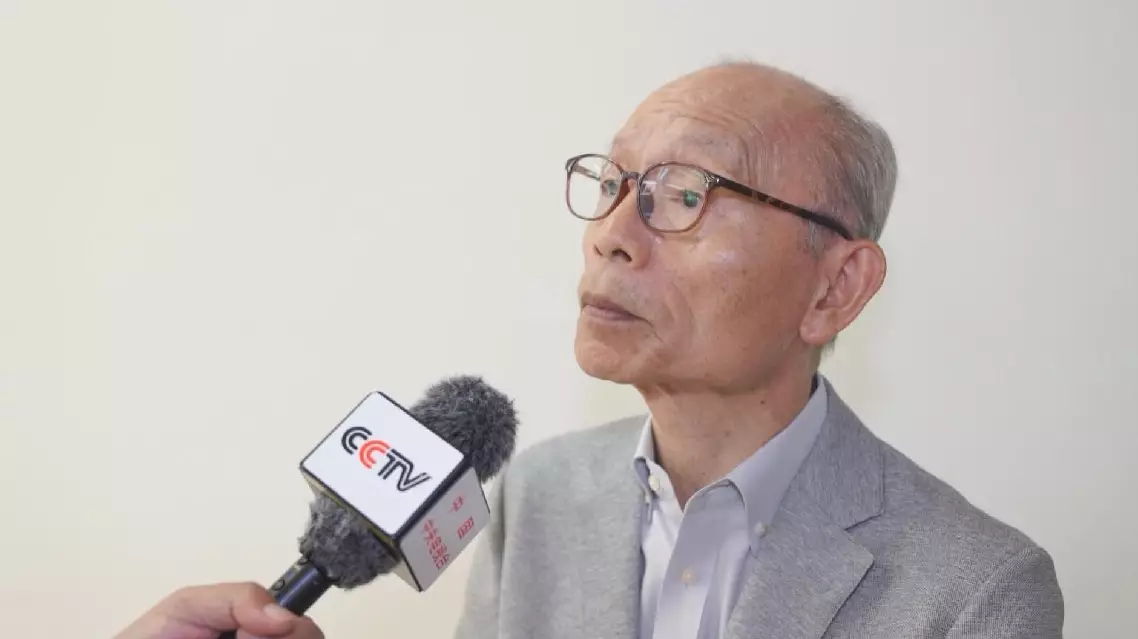
Yasukuni Shrine visits pushes Japan further down dangerous path: scholar