Skip to Content Facebook Feature Image

South China Sea marine ecology stable in 2025: reports

China

China

China

South China Sea marine ecology stable in 2025: reports

2026-08-18 21:27 Last Updated At:08-20 11:58

The South China Sea region showed stable marine ecological conditions in 2025, with improving coral coverage, healthy mangrove ecosystems and the return of rare species, according to two reports released by the South China Sea Bureau of the Ministry of Natural Resources on Friday.

The 2025 South China Sea Marine Ecological Early Warning and Monitoring Report and the 2025 South China Sea Marine Ecological Protection and Restoration Report were published at an event in Haikou City of south China's Hainan Province to mark the National Ecology Day, which fell on Saturday this year.

The reports indicated that the overall marine ecological status remained stable in the South China Sea region last year. Mangrove ecosystems were in good condition, with canopy coverage exceeding 75 percent.

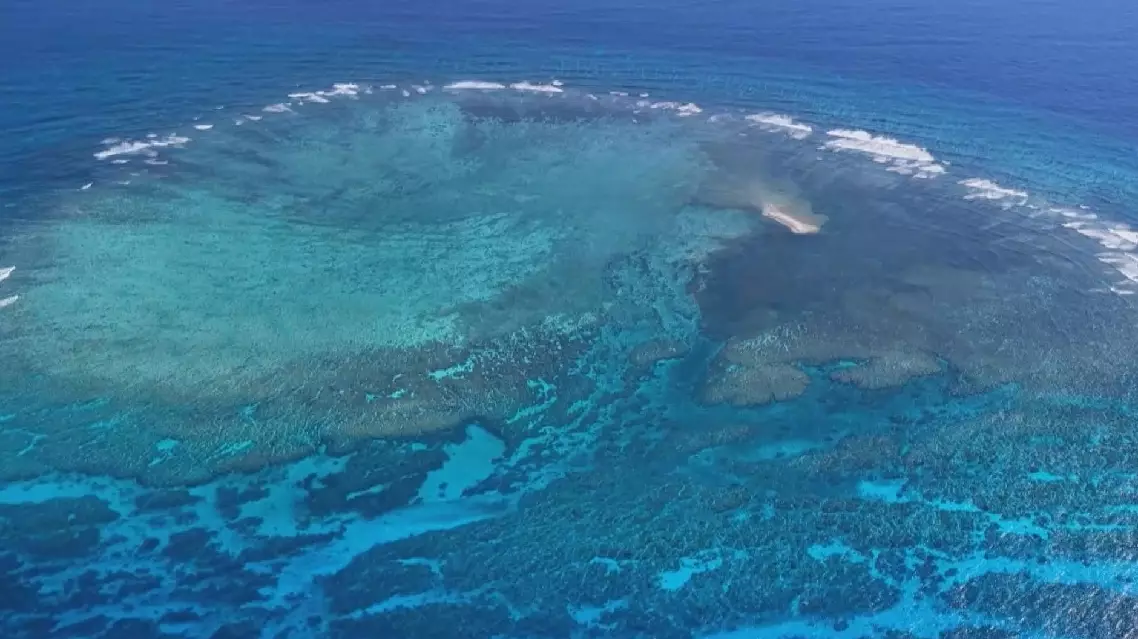
For the first time, a comprehensive assessment of island reef ecological conditions was provided across the Xisha, Zhongsha and Nansha islands, covering nine reefs in detail. This has provided a fundamental basis for strengthening the classification, protection and management of islands and reefs.

The ecological conditions of the Xisha Islands are showing positive signs of recovery, while Huangyan Dao (Island) in the Zhongsha Islands features a unique and diverse ecosystem, the reports said.

In 2025, a total of 66 marine ecological restoration projects were carried out in the South China Sea region with a cumulative investment nearing five billion yuan (about 74.18 million U.S. dollars), according to the reports.

By the end of 2025, the region had designated marine ecological protection redline areas covering about 2.66 million hectares and marine protected areas spanning around seven million hectares.
South China Sea marine ecology stable in 2025: reports

South China Sea marine ecology stable in 2025: reports

The U.S. National Highway Traffic Safety Administration (NHTSA) has opened an investigation into Tesla's certification that its new Cybercab meets all applicable Federal Motor Vehicle Safety Standards (FMVSS).

The probe, formally designated as an Audit Query, was opened on Sept. 3 and covers an estimated 1,000 Cybercab vehicles, according to an NHTSA investigation document made public on Friday. It will examine the process and technical data Tesla relied upon when certifying the Cybercab, as well as related issues. Tesla began commercial deployment of a small number of Cybercab vehicles in Austin, Texas, on Thursday and notified the agency that it had certified the vehicles as compliant with all applicable FMVSS. Tesla also told the NHTSA that it plans to gradually expand commercial deployment of the Cybercab to include additional vehicles and locations.

The vehicles lack permanently attached conventional manual controls, such as a brake pedal, gas pedal, steering wheel and mirrors, according to the NHTSA.

The agency said the inquiry will examine, among other issues, the extent to which Tesla's certification depended on determinations that certain FMVSS are inapplicable to the Cybercab.

In the United States, the NHTSA establishes vehicle performance requirements, while automakers must certify that their vehicles meet applicable standards before entering the U.S. market, subject to agency oversight to confirm compliance. The NHTSA said it conducts investigations when certified vehicles appear not to adhere to those requirements.

U.S. regulator opens probe into Tesla Cybercab self-certification

U.S. regulator opens probe into Tesla Cybercab self-certification

Recommended Articles