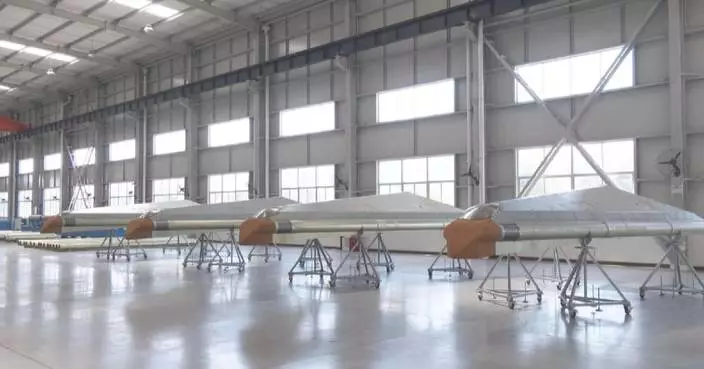
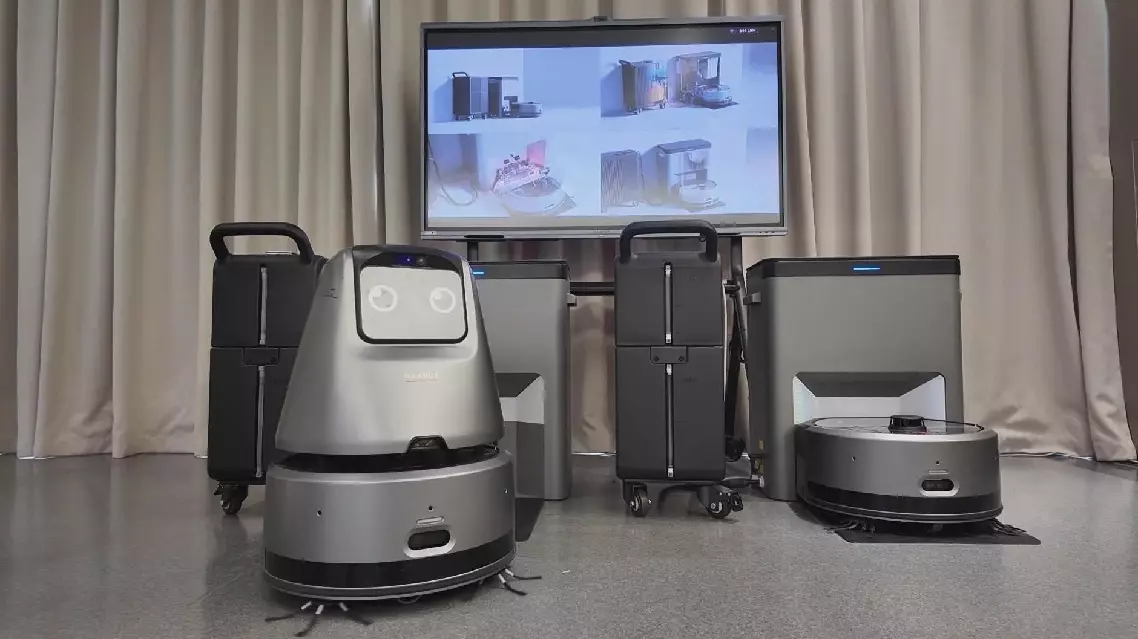
South China's Guangdong Province has seen its robot manufacturers lead the transition from sending out samples for trial use to fulfilling large-scale overseas orders as one of China's major hubs for foreign trade and smart equipment.
Since the start of 2026, domestically built robots have been given a major opportunity to expand on a large scale in global markets.
Notably, a dedicated customs tariff code for cleaning robots took effect in January, marking a significant step toward large-scale exports for the sector.
The momentum has remained strong in the second half of the year, with overseas orders continuing to grow.
The surge in demand is turning domestically built robots into a new growth engine for China's high-end equipment exports.
"Our overseas shipments are performing extremely well right now. Our cleaning robots are particularly popular in Europe, Japan, Republic of Korea, Southeast Asia and the Middle East. We have seen year-on-year doubling of growth compared with last year. We review production plans for the cleaning robots on a weekly and monthly basis, and shipping schedules are fully booked," said Gong Ziyu, head of CVTE's robotics business group.
"Robots can take over high-risk, high-pressure work, sustaining stable demand. Overseas orders are rising steadily, registering around 40 percent year-on-year growth compared with last year," said Huang Jian, executive of Guangdong Lingdu Intel-tech Development Co., Ltd.
Guangdong-made robots see expansion in overseas orders
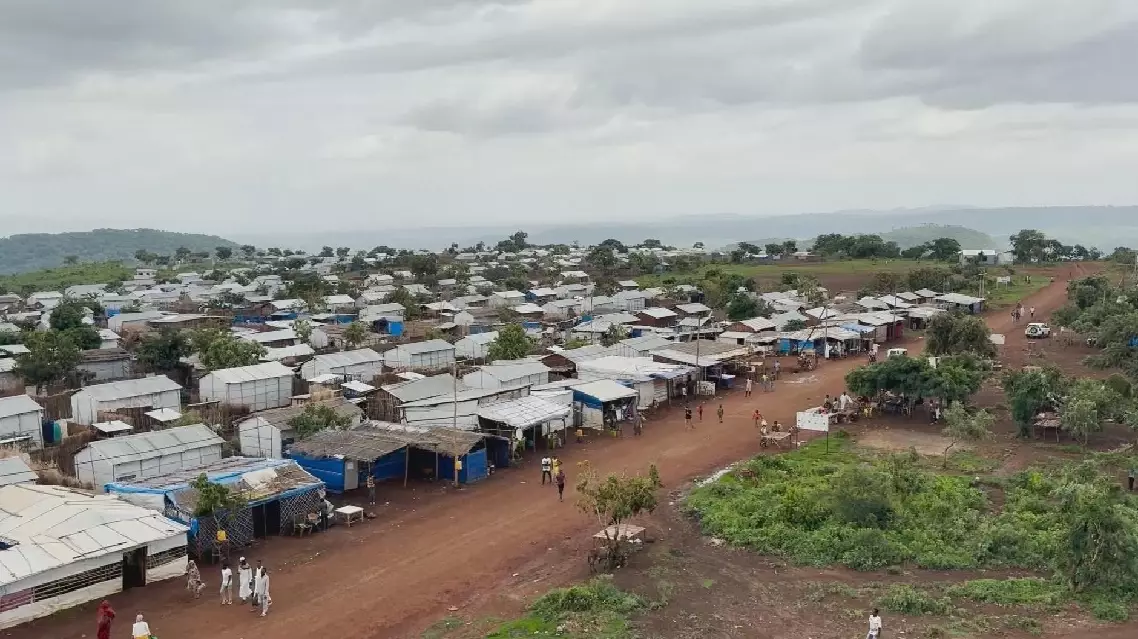
Amid a severe shortage of humanitarian aid, the Ethiopian government and international agencies are shifting their focus toward fostering self-reliance for the more than 1.1 million refugees and asylum seekers now residing in the East African country.
As the world marked the World Humanitarian Day on Wednesday, refugees and asylum seekers at the Ura refugee settlement in Ethiopia were grappling with a harsh reality: dwindling humanitarian funds.
The United Nations World Food Program (WFP) estimates that it needs about 83 million U.S. dollars to sustain its operations in Ethiopia over the next six months.
"Our funding situation is not very good. We often have shortages. That's the reason why we are not able to provide the full package that would normally come under the international standards. At the moment, we require somewhere in the range of 83 million dollars for the next six months, meaning until the end of January, in order to continue our operations. And we constantly have this struggle that at times, food pipeline, as we call it, or our cash pipeline, becomes low, and then this brings at risk our future distributions," said Zlatan Milisic, WFP Country Director in Ethiopia.
The impact of these shortfalls is felt directly on the ground by those who rely on the aid. Abdulhe Mohammed, a refugee from Sudan, talked about his daily struggles at the settlement.
"Since we arrived here, the food aid we receive has always been very limited. It's simply not enough to sustain my children and me for a month. I can't just rely on aid, but to take action myself," said Mohammed.
Recognizing that effective humanitarian assistance must encompass both emergency life-saving measures and long-term recovery and development, the Ethiopian government and international agencies are actively working to create livelihood and employment opportunities for these displaced people.
"One of the solutions that we are pursuing is how do we find solutions for them to take care of themselves, give them the possibility, the opportunity to work so that they can have additional revenue that helps them," said Aissatou M. Ndiaye, Country Representative of the Office of the United Nations High Commissioner for Refugees (UNHCR) in Ethiopia.
Funding shortfall drives Ethiopia to push for refugee self-reliance