Chinese Foreign Minister Wang Yi and Indonesian Foreign Minister Sugiono met in Jakarta, the capital of Indonesia, on Friday, ahead of two major diplomatic meetings expected to expand bilateral cooperation beyond trade into security and defense coordination.
The meetings include the first Conference of China-Indonesia Comprehensive Strategic Dialogue Mechanism and the Second Ministerial Meeting of China-Indonesia Joint Foreign and Defense Ministerial Dialogue.
Wang, also a member of the Political Bureau of the Communist Party of China Central Committee, is in Indonesia at the invitation of Sugiono. This marks Wang's first visit to Indonesia in two years.
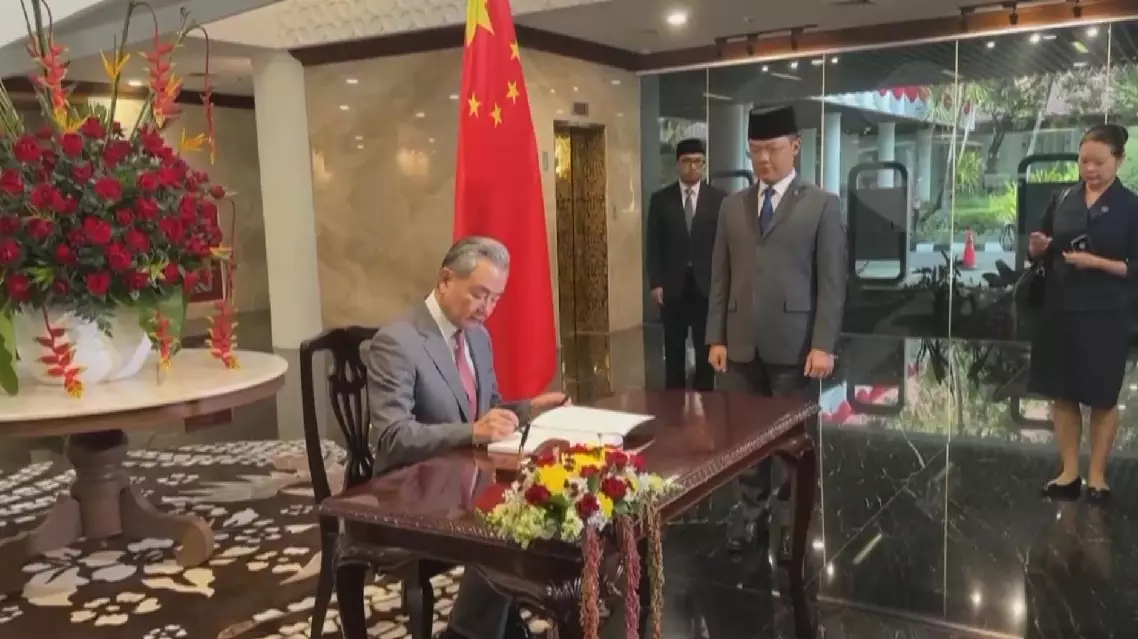
Chinese FM meets his Indonesian counterpart ahead of two major diplomatic meetings
Confirmed Ebola cases in the Democratic Republic of the Congo (DRC) have topped 5,200, but Africa's top public health agency warned Thursday that the official count may account for only 30 to 40 percent of infections, suggesting the outbreak could be up to three times larger than reported.
The warning came as the DRC government launched an emergency initiative Thursday to reinforce surveillance along the Congo River, seeking to prevent one of Central Africa's busiest transport corridors from carrying the virus toward major cities, including the capital Kinshasa.
According to the latest figures from the DRC's health authorities, as of Aug. 18, 5,208 confirmed cases, including 2,476 deaths, had been reported across six provinces, with a case fatality rate of 47.5 percent. Another 1,115 patients had recovered.
The Africa Centers for Disease Control and Prevention (Africa CDC) said Thursday that modeling conducted jointly with the DRC's National Institute of Biomedical Research and other partners suggested that the actual burden was substantially higher than confirmed figures indicated.
"We are detecting just 30 to 40 percent," Kyeng Mercy, an Africa CDC official, said at an online press briefing Thursday. "If you have to look at the real burden, we should be over 10,000 to 15,000 cases."
Mercy cautioned that the figures were model-based estimates and therefore subject to uncertainty, but said multiple indicators consistently pointed to significant under-detection.
"Models also have their caveats in terms of uncertainty," said Mercy. "We are just saying that we are not detecting as much as we should, based on certain indicators."
Yap Boum II, head of emergency preparedness and response at Africa CDC, said Thursday at the online briefing that based on the assessment, the outbreak could be three times the current size in terms of the number of confirmed cases.
He also said that fewer than 10 percent of detected cases are currently among known contacts, while fewer than 40 percent of cases have an epidemiological link to another confirmed infection.
Against that backdrop, the DRC government on Thursday launched the "Congo River Without Ebola" initiative, aimed at preventing the country's main river transport artery from becoming another route for the virus to spread.
The plan is designed to block transmission toward major riverside population centers, particularly Kinshasa, a megacity of nearly 20 million people where no Ebola case has been confirmed, while reducing the risk of cross-border spread to the Republic of the Congo and the Central African Republic.
Vaccination is also set to become a larger part of the response. An initial 70,000 doses of Ervebo vaccine would be allocated to the DRC, although the vaccine is licensed against Zaire ebolavirus rather than the Bundibugyo strain.
According to the WHO, the International Coordinating Group on Vaccine Provision informed the DRC government of the immediate release of an initial 70,000 doses.
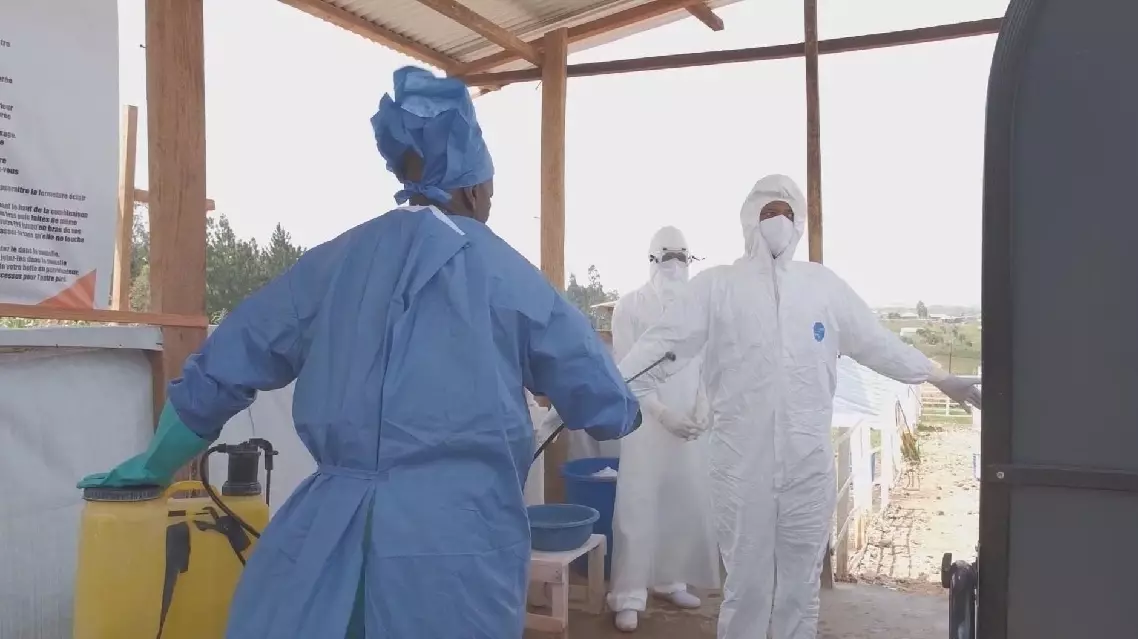
DR Congo Ebola cases top 5,200 as Africa CDC warns outbreak may be far larger