Despite a complex international landscape, China has succeeded in promoting high-quality joint construction of the Belt and Road in cooperation with partner countries since the beginning of this year, continuously expanding new space for all-win development.
In 2013, Chinese President Xi Jinping proposed joint construction of the Silk Road Economic Belt and the 21st Century Maritime Silk Road, which are now known as the Belt and Road Initiative (BRI).
Today, the BRI has covered more than 150 countries and over 30 international organizations, and become an important practical platform for promoting the building of a community with a shared future for humanity.
"Joint construction of the Belt and Road is not only a major step for China to advance high-standard opening-up, but also, more significantly, a vast platform for the world to share in the dividends of development. Joint construction of the Belt and Road focuses on connectivity, deepens practical cooperation in trade and industry, opens up new space for mutually beneficial collaboration in green, digital and innovative sectors, and extensively fosters people-to-people exchanges and cooperation for better livelihood, creating tangible opportunities for shared prosperity among nations," said Liang Linchong, director general of the Department of Regional Opening-up of the National Development and Reform Commission -- China's top economic planner.
In the summer of this year, a record-breaking heatwave has swept across Europe. At the Xi'an International Port Station in northwest China's Shaanxi Province, a series of China-Europe freight trains fully loaded with air conditioners set off for timely shipment. Unlike before, these freight trains operate on a full schedule, with fixed train trips, fixed routes and fixed scheduling times. In particular, the fastest journey from Xi'an to Duisburg, Germany takes only 11 days, which is about 30 percent more efficient than ordinary freight train trips.
"The 30 percent increase in speed means a comprehensive upgrade in port connectivity, cross-border scheduling and route organization. The model of 'Railway Express Clearance' has shortened the customs clearance time from half a day to less than half an hour," said Qiang Dongfeng, staff member of the Xi'an International Port Construction Operation Company.
From January to July, China-Europe freight trains made 12,988 trips, an increase of 17.6 percent year on year.
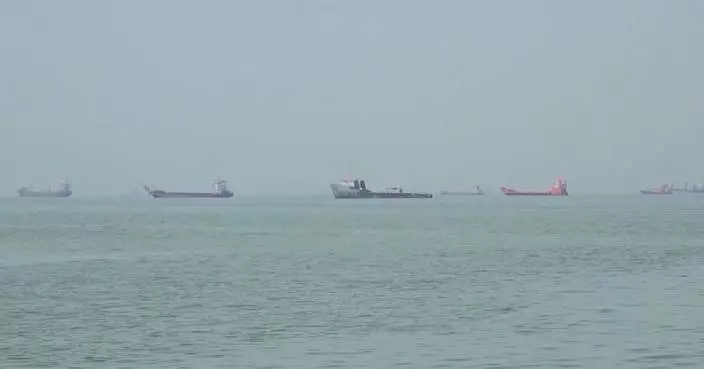
In the first half of the year, over 190,000 flights operated on the "Air Silk Road," while the number of named shipping routes of the "Silk Road Maritime" network has now reached 148, connecting 150 ports across 48 countries and regions.
Alongside improved connectivity, BRI cooperation in emerging sectors has also expanded. In the first seven months, China's exports of the "new trio" products -- electric vehicles, lithium batteries and solar products -- to other countries covered by the BRI reached 482.24 billion yuan (about 71.75 billion U.S. dollars), up 59.8 percent year on year.
Green cooperation solves hard energy problems, while digital technology opens up new space for innovative development. In Malaysia, traditional rubber factories have adopted Chinese AI algorithms and industrial robots, reducing the production costs by 30 percent.
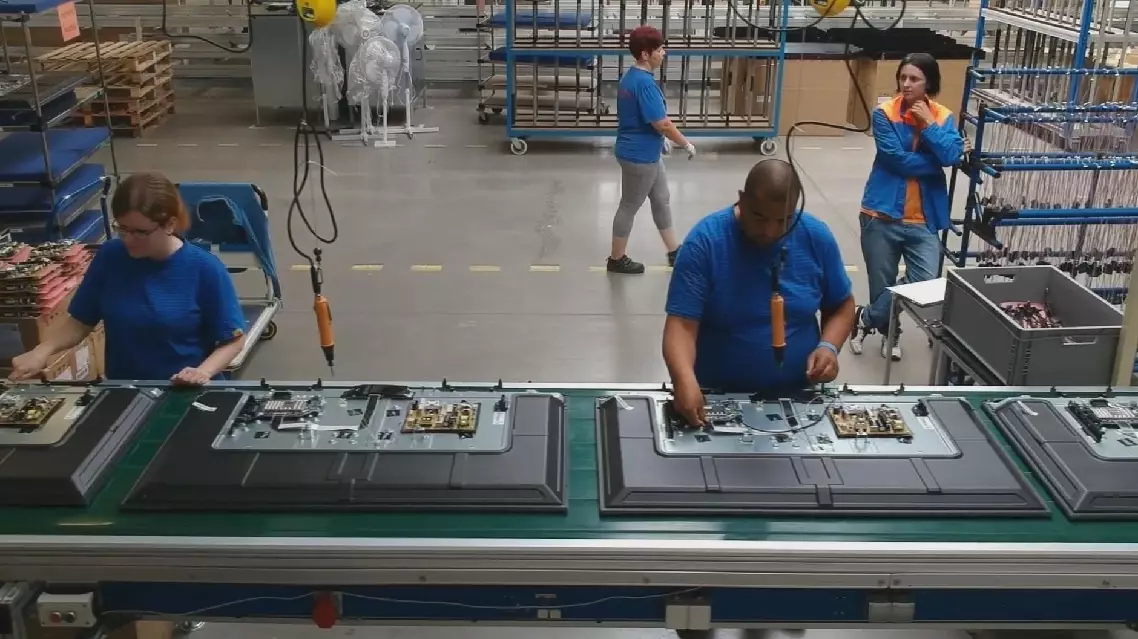
In the Czech Republic, Chinese TV manufacturing enterprises have led over 30 local suppliers to jointly participate in research and development and accelerate product iteration through an intelligent supply chain management platform, significantly enhancing the manufacturing capabilities of the suppliers.
"The smart platform has really helped us and made our partnership much closer and stronger. We are not just a supplier any more. We are not deeply involved in the whole industry chain. We are growing together with Chinese companies and together we are getting better and better," said Fabian Hammerschmidt, staff member of a Czech TV manufacturing supplier.
In the January-July period, China's trade with BRI partner countries rose 16.9 percent over the same period of last year.
Adhering to the principle of extensive consultation, joint contribution and shared benefits, China, together with BRI partner countries, has been continuously expanding cooperation areas and innovating cooperation models, injecting greater impetus into high-quality construction of the Belt and Road and promoting improvement of the livelihood in partner countries.
China succeeds in promoting high-quality joint construction of Belt and Road together with partners