Foreign direct investment (FDI) in China's high-tech industries surged 32.7 percent year on year in the first seven months of 2026, accounting for a record 41.6 percent of total FDI and underscoring the country's improving investment structure, official data showed Friday.
From January to July, China's actual utilized FDI reached 438.33 billion yuan (about 71.9 billion U.S. dollars), while more than 37,000 new foreign-funded enterprises were established, up 4.4 percent year on year, according to the Ministry of Commerce.
By sector, manufacturing attracted 109.43 billion yuan in FDI, while the service sector attracted 319.95 billion yuan.
Within the high-tech sector, FDI in research and development and design services, commercialization of scientific and technological achievements, and electronic and communication equipment manufacturing continued to grow rapidly.
Saudi Arabia, France and the Republic of Korea posted the sharpest increases in actual investment in China, with growth rates of 343.7 percent, 36.1 percent and 15.8 percent, respectively.
"We have seen rapid growth in investment from emerging markets into China. Middle Eastern capital is focusing on energy transition and green manufacturing, while Southeast Asian investors are leveraging dividends of the Regional Comprehensive Economic Partnership (RCEP) to expand their presence in electronics supporting industries. Over 40 percent of foreign capital is now channeled into scientific and technological innovation, with high-tech industries remaining the core growth driver and further enhancing the stability of China's FDI inflows," said Xu Yingming, director of the International Market Research Institute at the Chinese Academy of International Trade and Economic Cooperation under the Ministry of Commerce.
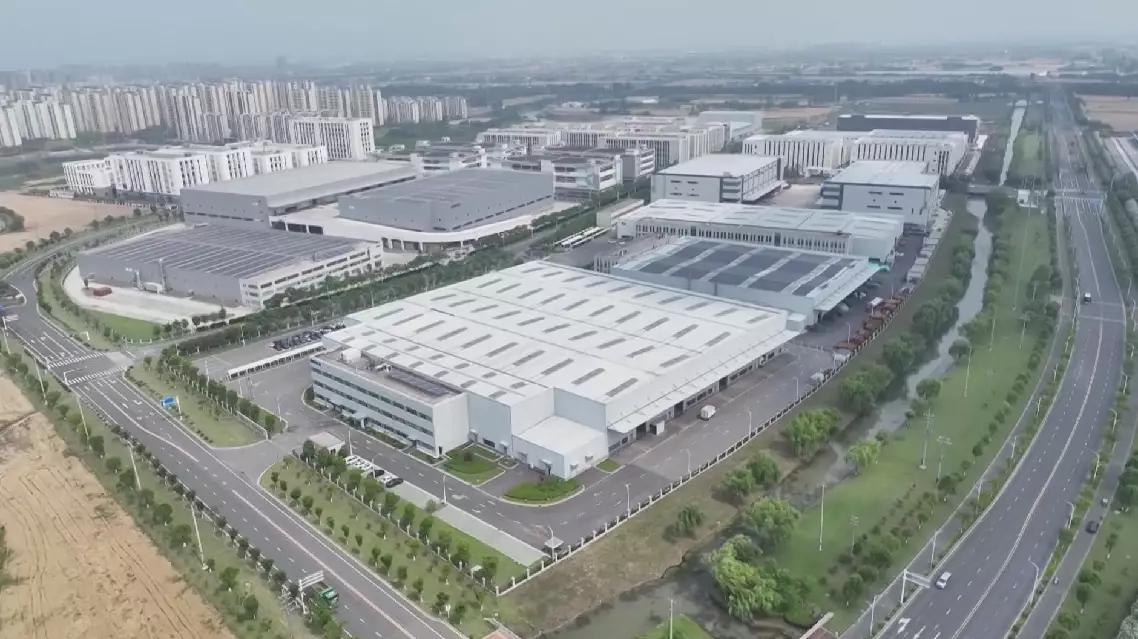
China's high-tech FDI surges 32.7 pct in Jan-July period
With more than 2,000 humanoids converged in Beijing, the second World Humanoid Robot Games unfolds a high-tech showcase of the latest advances in robotic athleticism and motion control with over 50 competitions set for robot athletes.
Co-hosted by the Beijing Municipal People's Government and China Media Group, the games features 30 competitive sports events and 21 real-world scenario challenges, a major expansion over the previous edition.
The atmosphere quickly hit a fever pitch at the very beginning. In the 100-meter preliminary race during the opening ceremony, a robot clocked 9.39 seconds, breaking the human world record of 9.58 seconds. At a following demonstration of standing high jump, a robot competitor cleared 2.88 meters, while a free combat display saw a robot land a spinning kick that showcased remarkable body control.
The athletes' entrance also featured a massive phalanx of humanoid robots marching onto the stage, each one moving under independent control and computation while dynamically adjusting their postures to stay in formation.
Beyond the main arena, robot contestants have spent months testing their skills in real-world environments. Starting at Milan, where the 2026 Winter Olympics was held, the robots took part in challenges across China to pay tribute to the Olympic Torch Relay. After picking tea in east China's Fujian, racing dragon boats in southwest China's Sichuan, and practicing in horseback archery in northwest China's Xinjiang, the robots gathered at the event to bring training data and nation-wide expertise to the Beijing stage.
"It's been so great to see all of the many robots and the many different sports that they announced in the opening ceremony. These are getting more and more capable every single year with the jumps and flips and all of the moves. Come a long way in 12 months, yes, we are playing with more robots on the same fields, and with are playing with bigger fields. So its getting harder and harder every year," said Timothy Wiley, an audience from Australia.
Jiang Guangzhi, director of the Beijing Municipal Bureau of Economy and Information Technology, said the values of the Games are beyond a robot sport show.
"The World Humanoid Robot Games are not only a sporting arena but also a testing ground for new technologies. Compared with last year, this year's humanoid robots are more robust, more coordinated, more autonomous, more responsive, and more dexterous. We hope that through this platform, we can see the direction ahead and also explore a beautiful future of human-robot coexistence," he said.
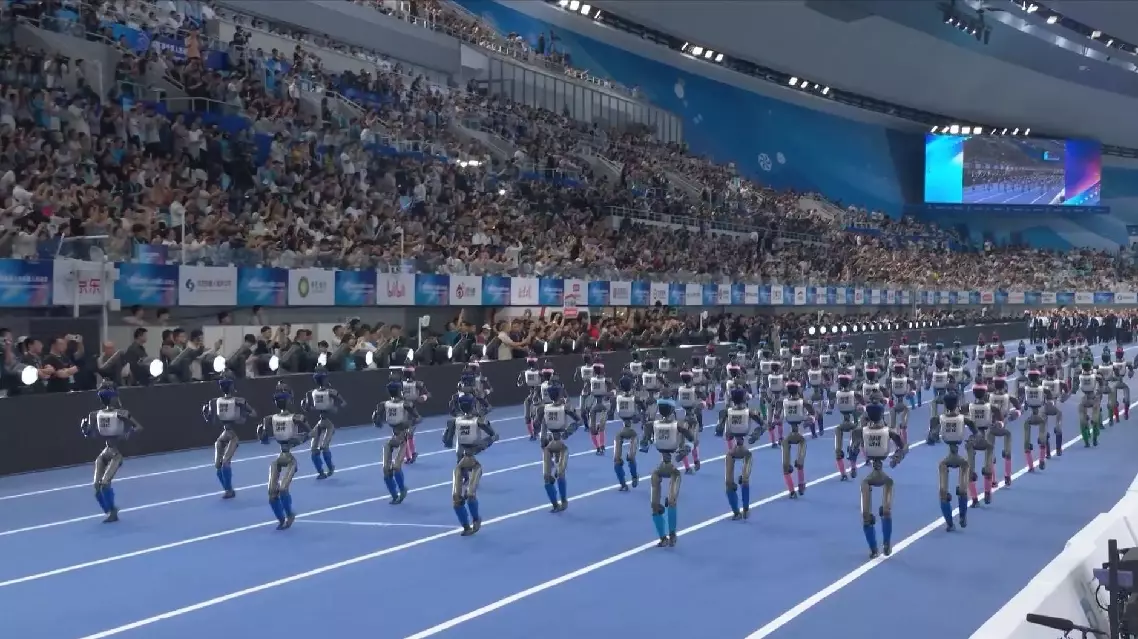
Humanoids flex controllability, athleticism at 2nd World Humanoid Robot Games in Beijing