
Skip to Content Facebook Feature Image

Safe at 2 AM: How "Chinese-Style Safety" Stuns Young Foreigners

Blog

Safe at 2 AM: How "Chinese-Style Safety" Stuns Young Foreigners
Blog

Blog

Safe at 2 AM: How "Chinese-Style Safety" Stuns Young Foreigners

2026-08-24 12:28 Last Updated At:12:28

In the "Chinamaxxing" narrative, high-tech symbols like high-speed rail and space rockets often take center stage. Yet, what truly stuns young foreigners isn't these grand symbols—it's the sheer peace of mind when walking alone on the street at 2 AM.

In the English-speaking world, this feeling is dubbed "Chinese-style safety"—or, put more bluntly, the simple luxury of dropping your guard late at night.

From "Survival Instinct" to "Culture Shock"

For many Western Gen Zers, "stay indoors after dark" is a cardinal rule drilled into them from childhood. In Johannesburg, London, or Los Angeles, nighttime streets trigger an immediate risk assessment: Is this neighborhood safe? Should I tuck my phone away? Where is my wallet?

In China, however, that survival logic crumbles.

In early 2026, Lizzy, a 29-year-old South African content creator (YouTube channel "Because I'm Lizzy"), conducted a bold experiment in Chongqing. She left her backpack—filled with personal belongings—unattended on a bustling street while she wandered around the city for nearly 100 minutes. When she returned, her bag was completely untouched.

She later admitted in a Xinhua interview: "This isn't the first time. Time and again in China, it's been proven to me that 'nothing gets stolen.' This sense of safety is the number one reason I choose to stay here."
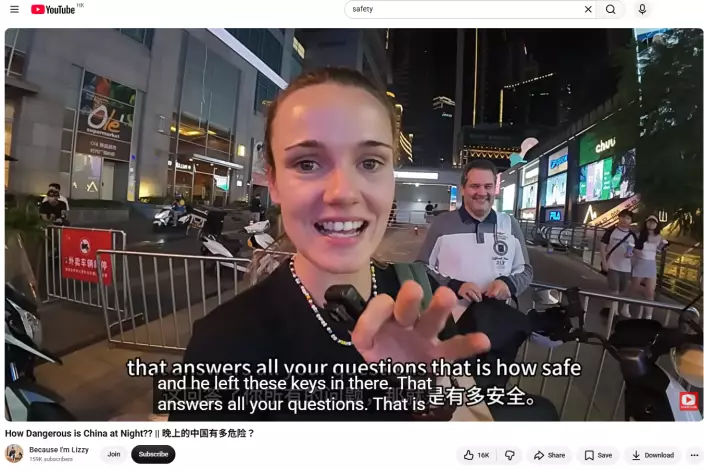
South African blogger Lizzy tests Chongqing's safety: her backpack was left unattended for 100 minutes without being stolen. Source: YouTube @BecauseImLizzy.

South African blogger Lizzy tests Chongqing's safety: her backpack was left unattended for 100 minutes without being stolen. Source: YouTube @BecauseImLizzy.

Meanwhile, British vlogger Jason ("Living in China") ran similar tests in Chongqing and Kunming. Filming himself strolling through the city at midnight, he noted that the streets were still vibrant and lively, without "a single hint of unease." As he put it in his video: "Back in the UK, if I'm out late at night, I constantly look over my shoulder. But in China, that thought never even crosses my mind."
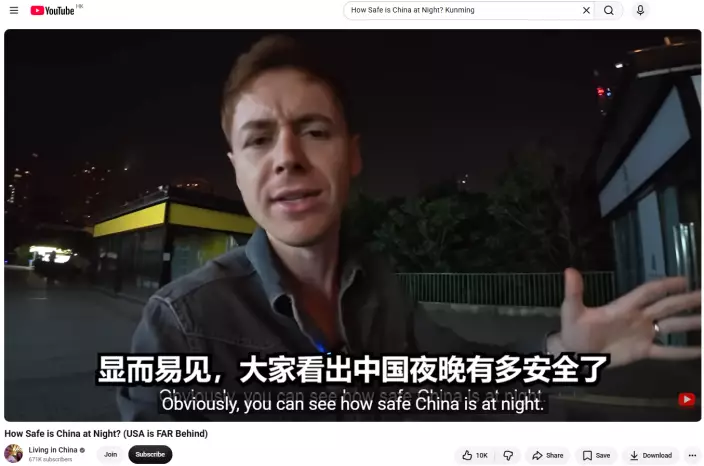
British vlogger Jason takes a midnight stroll in Chongqing, marveling at "how safe the night is in China!" Source: YouTube @Living in China

British vlogger Jason takes a midnight stroll in Chongqing, marveling at "how safe the night is in China!" Source: YouTube @Living in China

Mind-Blowing Moments

This sense of security isn't just manufactured by a few online influencers; it reflects a broader observation embedded in daily life. Across platforms like Reddit, TikTok, and Xiaohongshu, foreign tourists regularly share similar experiences: leaving a backpack unattended on the street or in a scooter basket only to find it untouched; losing a phone or wallet and having a stranger or shopkeeper go out of their way to return it; or female travelers walking alone or taking public transit well past 10 PM without a second thought—scenarios almost unimaginable back home.

While these personal anecdotes are inevitably shaped by location, route, and luck—and cannot be generalized to mean "every neighborhood is 100% safe at night"—their sheer frequency points to a stark cultural difference. In China, the psychological barrier to asking a stranger for help or trusting them with lost property is remarkably low. For young Westerners accustomed to retreating indoors after dusk, this contrast alone represents one of the most frequently cited "mind-blowing" moments in the Chinamaxxing phenomenon.

Hard Data Behind the Peace of Mind

This peace of mind isn't just a subjective feeling—it is backed by solid data.

At the end of 2025, the global polling firm Gallup released its annual report. Among over 140 countries and regions surveyed, more than 90% of respondents in China reported feeling safe walking alone at night in their neighborhood. This result leaves the United States far behind—a report card issued by an American institution itself.

Furthermore, China's National Immigration Administration reported in July 2026 that foreign entries reached 22.914 million in the first half of the year, a year-on-year increase of 20.4%, with visa-free entries accounting for 77.7%. This indicates that more foreigners are taking advantage of spontaneous travel without cumbersome visa hurdles. When a foreign tourist feels completely comfortable strolling through a rural night market or hopping on a local county bus, that in itself is the ultimate vote of confidence in local public safety.

A sense of safety is a visceral experience—it cannot be staged, nor can it be fully conveyed through a polished promotional video.

Perhaps the core of Chinamaxxing lies right under that 2 AM streetlamp. It illuminates not just the pavement ahead, but a shared longing among young people worldwide for a different way of life. The moment they begin to envy this simple "freedom of a late-night stroll," the seeds of cultural influence have already taken root.


Chinamaxxing

** 博客文章文責自負,不代表本公司立場 **

The recent surge of interest in mahjong in the U.S. naturally invites a question: Is the game being played across the Pacific the same as the one familiar in Hong Kong?

The short answer: The tiles look similar, but the mechanics are worlds apart. American mahjong is not a mere offshoot of the Hong Kong version; it evolved into a modernized, standardized format between the 1930s and 1960s following its initial arrival in the United States in the 1920s. Side by side, the two variants reveal entirely different approaches to social interaction.

The Mechanics of American Mahjong

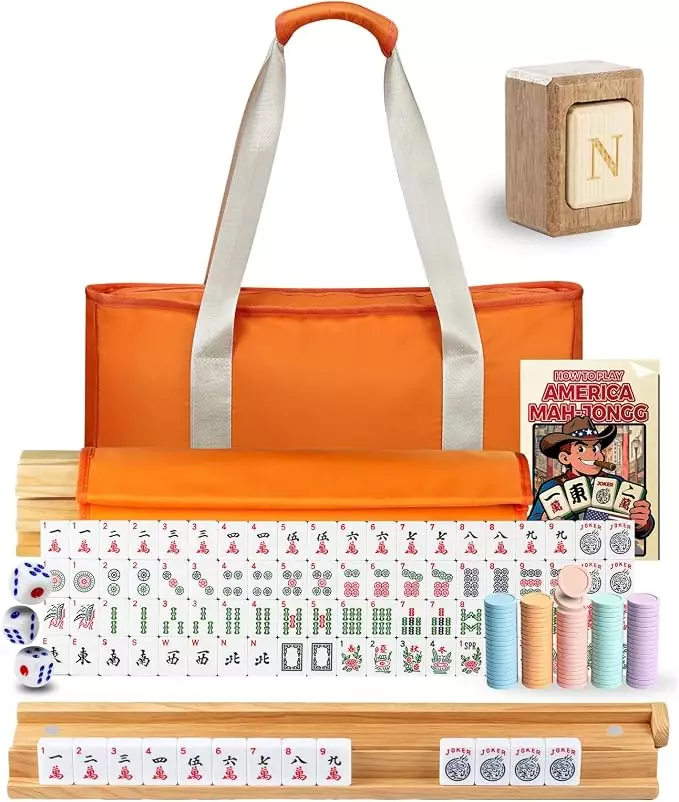
Tile Count: A 152-Tile SetHong Kong mahjong typically uses 144 tiles, including eight Flower tiles. The American version expands this to 152 tiles, primarily by incorporating eight Jokers. These wild cards cannot be used arbitrarily; they must align with strict combinations printed on the official annual card, adding a layer of strategic matching to every hand.

American mahjong set containing 152 tiles, including 8 Jokers. (Source: Amazon.com)

American mahjong set containing 152 tiles, including 8 Jokers. (Source: Amazon.com)

Winning Logic: The Annual Card vs. Flexible Combinations: This marks the fundamental split between the two styles. Hong Kong mahjong relies on the classic "four melds and a pair" structure, where players aim to complete valid suits and build hands with higher point values (fan).

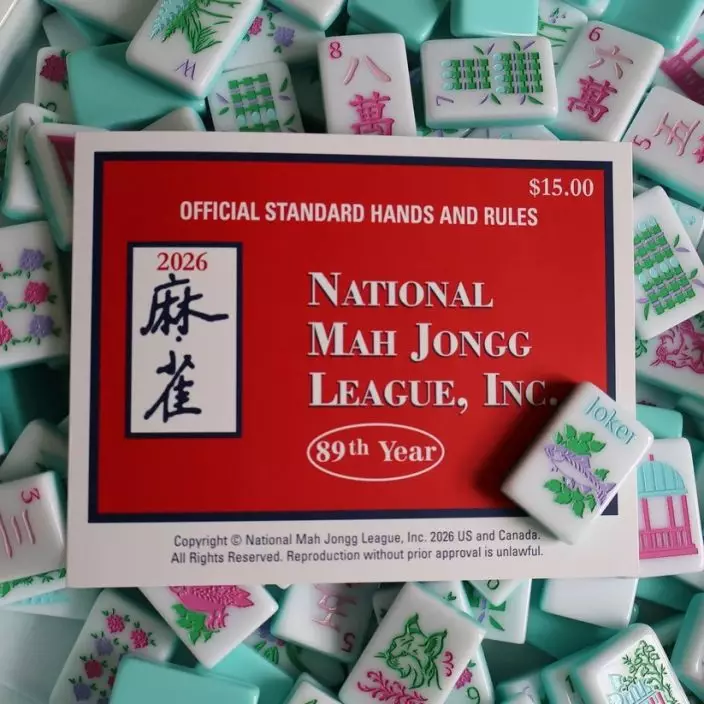
American mahjong, by contrast, is governed by an official card released every spring by the National Mah Jongg League (NMJL). The card lists roughly 60 to 70 specific winning patterns—such as "2468," "13579," or "Quints." A completed hand that fails to match a pattern listed on the current card is deemed invalid (foul). This design forces players nationwide to relearn valid hands each year, turning the game into a shared seasonal puzzle.

The NMJL 2026 Official Hands Card.

The NMJL 2026 Official Hands Card.

The Opening Ceremony: The Charleston: In Hong Kong mahjong, play begins immediately after rolling dice and drawing tiles. The American variant inserts a mandatory opening sequence called the Charleston. Players pass three unwanted tiles in a structured sequence: first to the right, then across, then to the left. A second pass is optional, followed by a courtesy pass of zero to three tiles across the table.

This ritual is often the most vocal part of the game, filled with banter and lighthearted warnings. It serves both as a strategic exchange and an instant icebreaker.

Cultural Context: Family Gatherings vs. Social Clubs

In Hong Kong, mahjong is a staple of holiday reunions and family celebrations, rooted in kinship and shared tradition. Fast-paced variants like Pai Gow Mahjong (or Pushing Meld) offer quick entertainment for casual downtime.

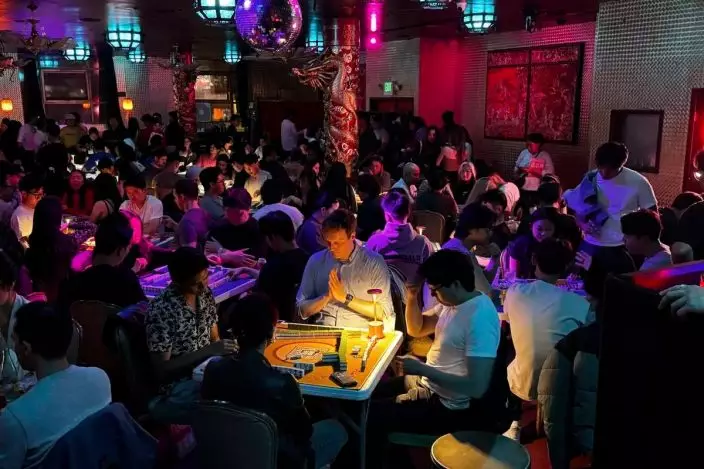
In the United States, mahjong holds a similarly strong social function, but within different spaces. From pop-up mahjong nights in San Francisco to regular club gatherings across the country, the game functions much like an organized social group. Supported by standardized rules and official annual cards, players can join a game in almost any city and follow the exact same format.

Ritual and Pace

Hong Kong mahjong prioritizes speed, calculation, and tactical reading of opponents—a sharp reflection of urban efficiency.

American mahjong emphasizes structure, shared ritual, and social bonding. By requiring all players—novices and veterans alike—to start fresh with a new card each year, the game lowers entry barriers and creates a level playing field. Meanwhile, the Charleston turns the opening deal into a lively, interactive exchange.

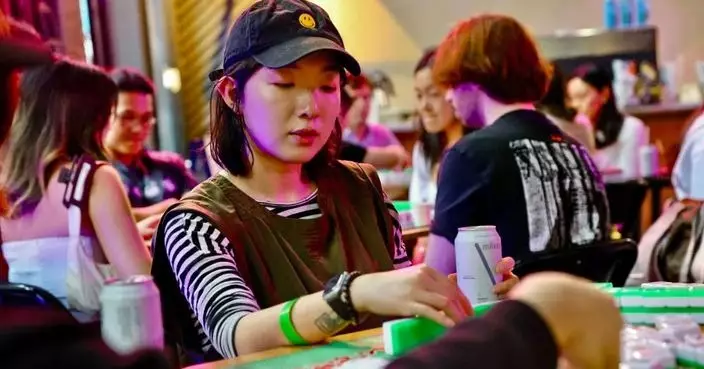
Participants focus on their games at a San Francisco mahjong club event, enjoying the social connection brought by the traditional game. (Source: AP Photo)

Participants focus on their games at a San Francisco mahjong club event, enjoying the social connection brought by the traditional game. (Source: AP Photo)

When Julia Roberts turns off her phone on Tuesday nights to shuffle tiles, or when young Americans gather at local clubs to decipher the annual card, it goes far beyond playing a simple game. It has evolved into a sought-after #Chinamaxxing ritual—borrowing an Eastern practice to cultivate order, mindfulness, and relaxed "slow-socializing" in their fast-paced lives.

That, perhaps, is the true magic of Chinamaxxing: as the culture travels abroad, the tiles remain the same, but the rules and state of mind adapt, breathing vibrant new life into an ancient tradition across different worlds.

Recommended Articles