
The recent surge of interest in mahjong in the U.S. naturally invites a question: Is the game being played across the Pacific the same as the one familiar in Hong Kong?
The short answer: The tiles look similar, but the mechanics are worlds apart. American mahjong is not a mere offshoot of the Hong Kong version; it evolved into a modernized, standardized format between the 1930s and 1960s following its initial arrival in the United States in the 1920s. Side by side, the two variants reveal entirely different approaches to social interaction.
The Mechanics of American Mahjong
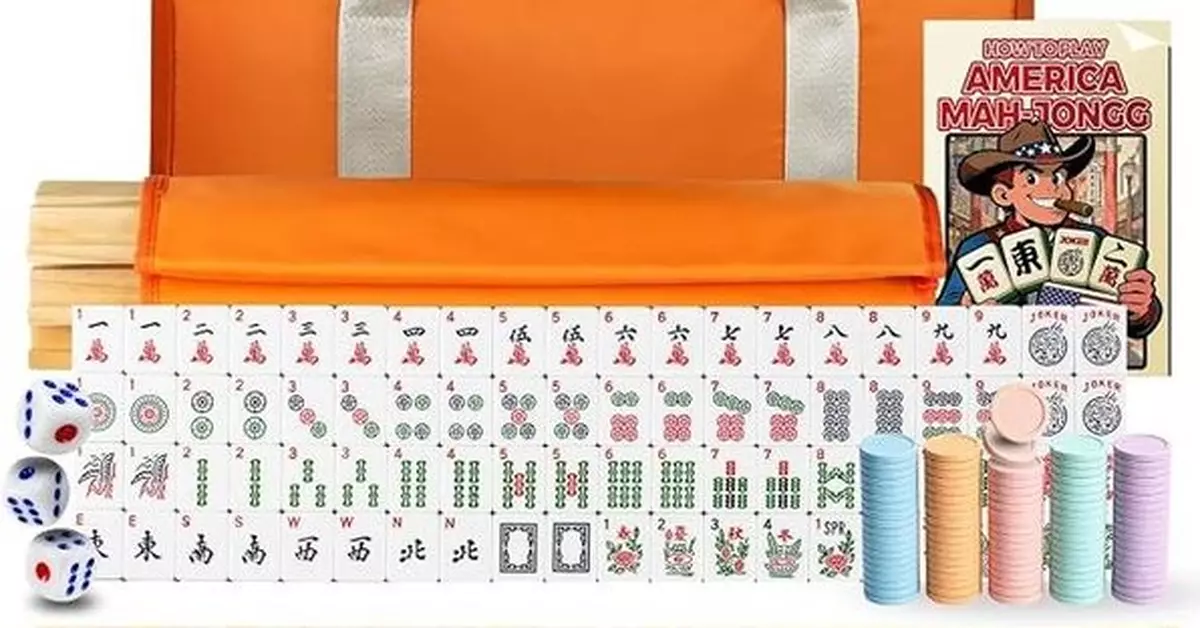
Tile Count: A 152-Tile Set:Hong Kong mahjong typically uses 144 tiles, including eight Flower tiles. The American version expands this to 152 tiles, primarily by incorporating eight Jokers. These wild cards cannot be used arbitrarily; they must align with strict combinations printed on the official annual card, adding a layer of strategic matching to every hand.
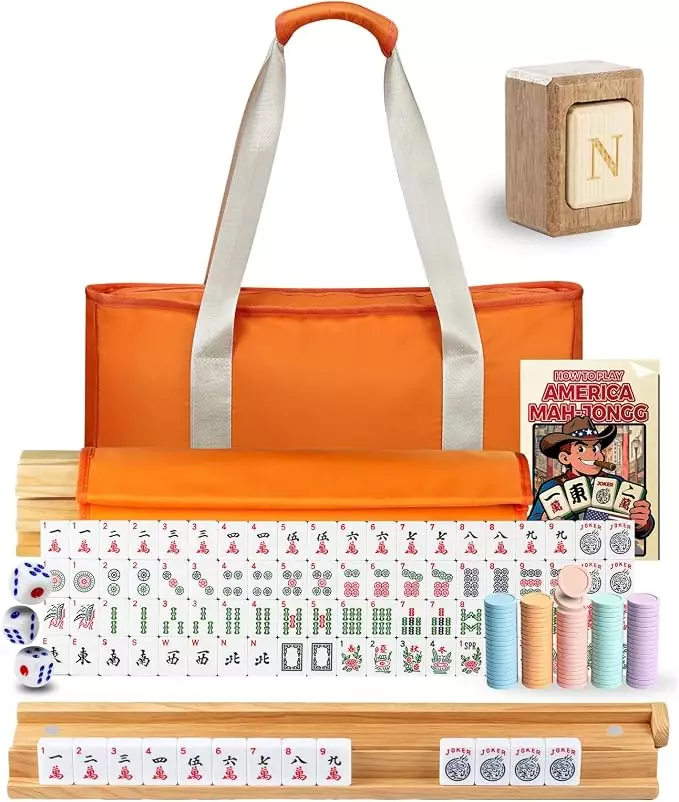
American mahjong set containing 152 tiles, including 8 Jokers. (Source: Amazon.com)
Winning Logic: The Annual Card vs. Flexible Combinations: This marks the fundamental split between the two styles. Hong Kong mahjong relies on the classic "four melds and a pair" structure, where players aim to complete valid suits and build hands with higher point values (fan).
American mahjong, by contrast, is governed by an official card released every spring by the National Mah Jongg League (NMJL). The card lists roughly 60 to 70 specific winning patterns—such as "2468," "13579," or "Quints." A completed hand that fails to match a pattern listed on the current card is deemed invalid (foul). This design forces players nationwide to relearn valid hands each year, turning the game into a shared seasonal puzzle.
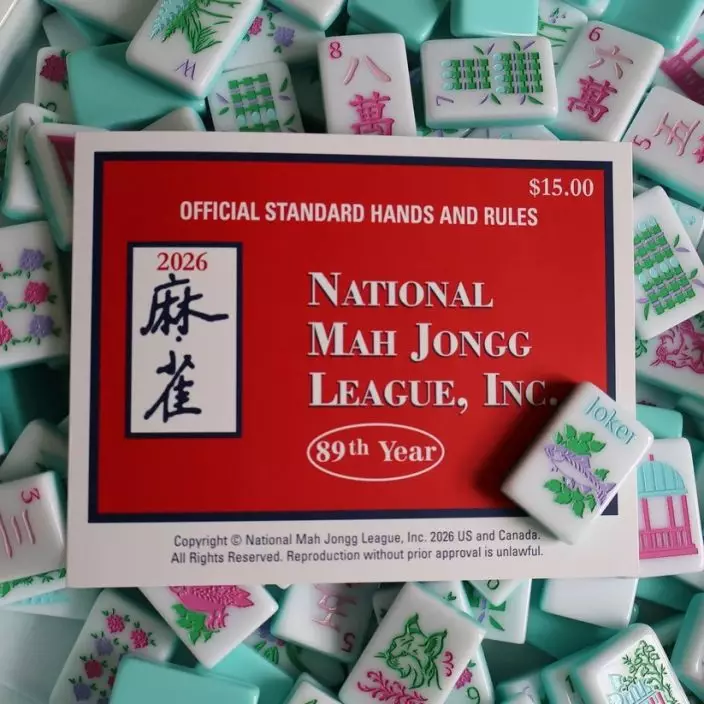
The NMJL 2026 Official Hands Card.
The Opening Ceremony: The Charleston: In Hong Kong mahjong, play begins immediately after rolling dice and drawing tiles. The American variant inserts a mandatory opening sequence called the Charleston. Players pass three unwanted tiles in a structured sequence: first to the right, then across, then to the left. A second pass is optional, followed by a courtesy pass of zero to three tiles across the table.
This ritual is often the most vocal part of the game, filled with banter and lighthearted warnings. It serves both as a strategic exchange and an instant icebreaker.
Cultural Context: Family Gatherings vs. Social Clubs
In Hong Kong, mahjong is a staple of holiday reunions and family celebrations, rooted in kinship and shared tradition. Fast-paced variants like Pai Gow Mahjong (or Pushing Meld) offer quick entertainment for casual downtime.
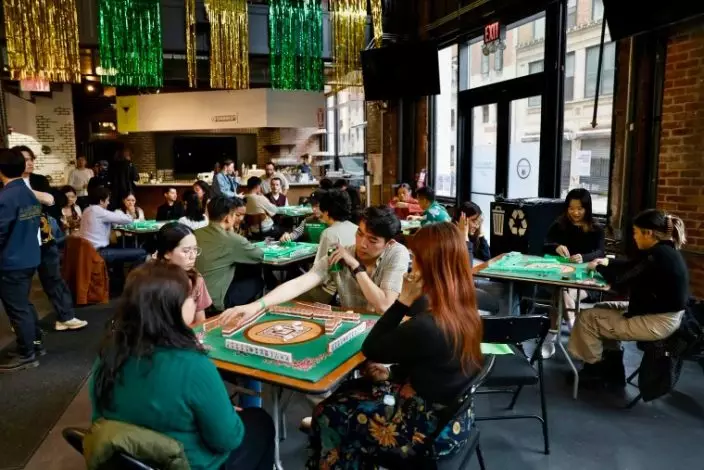
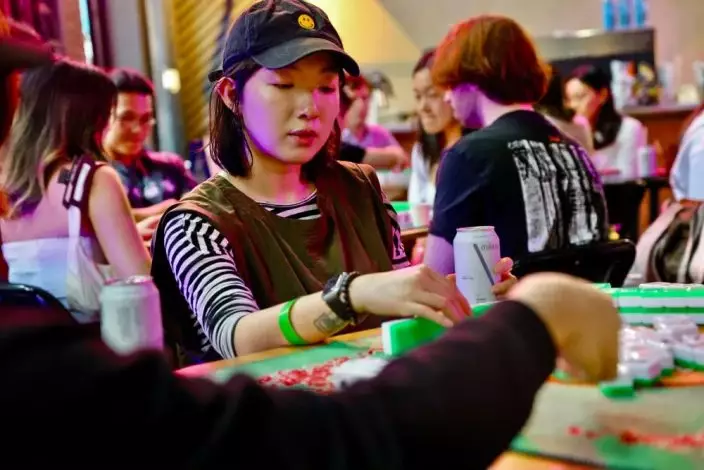
In the United States, mahjong holds a similarly strong social function, but within different spaces. From pop-up mahjong nights in San Francisco to regular club gatherings across the country, the game functions much like an organized social group. Supported by standardized rules and official annual cards, players can join a game in almost any city and follow the exact same format.
Ritual and Pace
Hong Kong mahjong prioritizes speed, calculation, and tactical reading of opponents—a sharp reflection of urban efficiency.
American mahjong emphasizes structure, shared ritual, and social bonding. By requiring all players—novices and veterans alike—to start fresh with a new card each year, the game lowers entry barriers and creates a level playing field. Meanwhile, the Charleston turns the opening deal into a lively, interactive exchange.
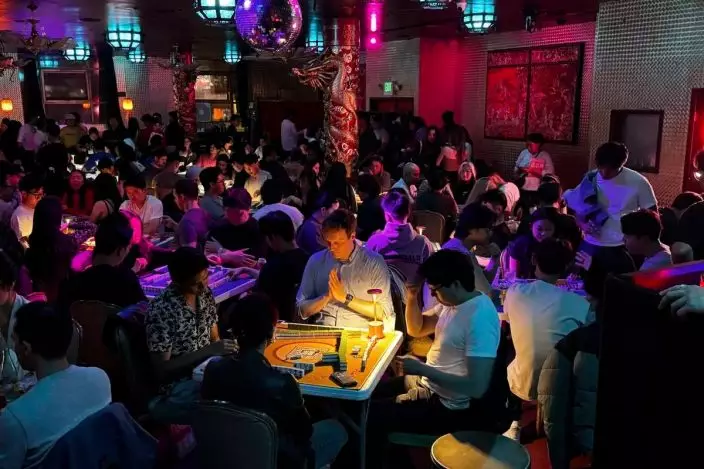
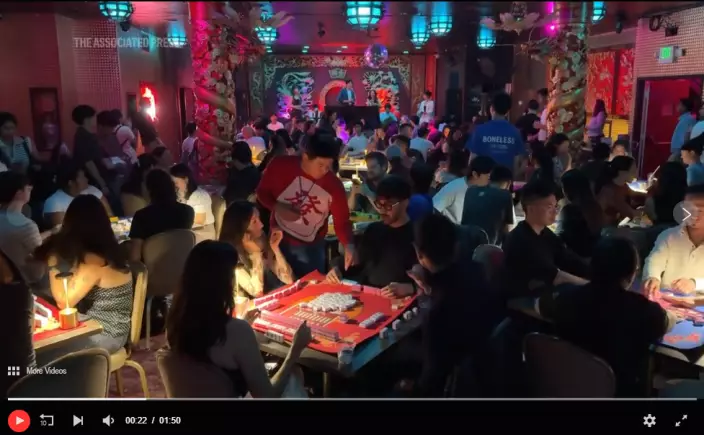
Participants focus on their games at a San Francisco mahjong club event, enjoying the social connection brought by the traditional game. (Source: AP Photo)
When Julia Roberts turns off her phone on Tuesday nights to shuffle tiles, or when young Americans gather at local clubs to decipher the annual card, it goes far beyond playing a simple game. It has evolved into a sought-after #Chinamaxxing ritual—borrowing an Eastern practice to cultivate order, mindfulness, and relaxed "slow-socializing" in their fast-paced lives.
That, perhaps, is the true magic of Chinamaxxing: as the culture travels abroad, the tiles remain the same, but the rules and state of mind adapt, breathing vibrant new life into an ancient tradition across different worlds.
Chinamaxxing
** 博客文章文責自負,不代表本公司立場 **