The Lingzhi‑09 Thai CubeSat, launched Tuesday aboard China's Long March‑6C rocket, marked the first time a Chinese commercial space firm has provided Southeast Asia with a complete satellite package, covering development, launch and in‑orbit delivery.
The rocket lifted off at 11:21 (Beijing Time) from the Taiyuan Satellite Launch Center in north China's Shanxi Province, placing seven satellites into the planned orbit to cover key areas including remote sensing, technology validation and science education.
The delivery covers satellite development, launch and in-orbit delivery, according to GalaxySpace, a Beijing-based commercial space firm.
The Lingzhi-09 Thai CubeSat, on the one hand, collects remote sensing data for land, agriculture, and ecology; while on the other hand, supports Thai universities through hands-on practice in satellite research and development, space tracking, and remote sensing applications.
"Lingzhi-09 Thai CubeSat is the first overseas satellite that GalaxySpace is responsible for. GalaxySpace not only offers satellite delivery, but also provides comprehensive solutions on ground system and talent training. This cooperation has testified the GalaxySpace's full-chain overseas delivery service, demonstrating a complete export of GalaxySpace system's engineering expertise," said Zhang Peng, general manager of GalaxySpace's solution department.
Different from selling a satellite, GalaxySpace helps Thai customers understanding satellites better by offering delivery, operation and training services.
"We believe that the international cooperation plays a vital role in advancing space technology and innovation. We value partnership with organizations and experts around the world. As such, collaboration brings unique knowledge, experience and perspective that contribute to the growth of our national space capability," said Phee Choosri, deputy executive director of Thai Geo-Informatics and Space Technology Development Agency's space technology department.
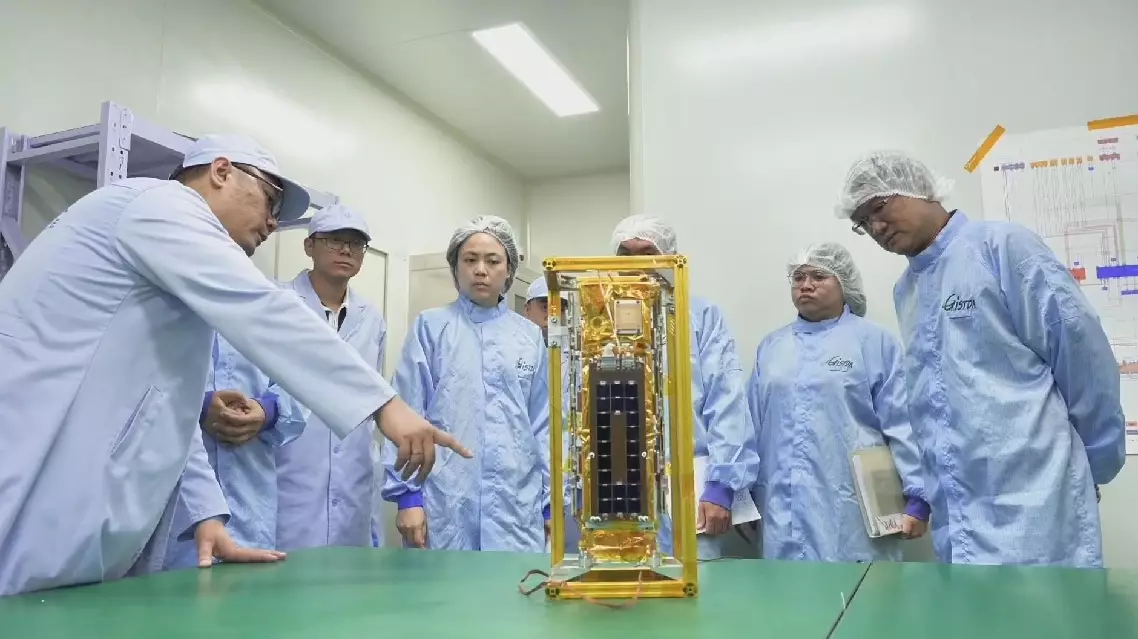
Chinese space firm launches first full-service satellite package to Southeast Asia
Russian political experts said the upcoming talks between Russia, the United States and Ukraine amount to technical consultations, with almost no room for negotiation on core issues, making major breakthroughs unlikely.
The trilateral talks on the Ukraine issue will be held in Abu Dhabi, the capital of the United Arab Emirates, from Tuesday to Wednesday. Security guarantees for the parties, confidence-building measures and humanitarian efforts are among the topics for discussion.
"These are consultations, not negotiations. Discussions are underway on important, but in principle, technical questions. That is, they will not talk about territories, they will not talk about the nature of the regime, they will not talk about Ukraine's internal rules regarding language and Russian culture," said Dmitry Trenin, chairman of the Russian International Affairs Council.
"In my view, the Ukrainian side is not independent. The shadow of the European Union is always looming there. And in current conditions, the Europeans, by and large, do not want to make concessions to Russia," said Andrey Sidorov, associate professor at the History Department of Moscow State University.
Russian President Vladimir Putin set out Moscow's position at a meeting with the Foreign Ministry leadership in June 2024, saying Russia would declare a ceasefire and begin talks as soon as Ukrainian forces withdraw from the Donetsk, Luhansk, Zaporizhzhia and Kherson regions and Kiev announces it will not join NATO.
"When our president articulated these demands, a corresponding caveat was made - that if you do not meet us halfway now, our positions may harden according to the real situation on the ground. And Ukraine and the West are letting the time slip away," said Andrey Koshkin, head of the Department of Political Analysis and Socio-Psychological Processes at Plekhanov Russian University of Economics.
Ahead of the Abu Dhabi talks, a humanitarian operation was carried out in the city of Oleshky in the Kherson region in southern Ukraine, evacuating hundreds of civilians to safe locations.
According to Russian presidential press secretary Dmitry Peskov, Russia prioritizes achieving its goals by peaceful means. On Friday, Putin also invited members of the Russian negotiation team to a meeting with Federal Security Council members to discuss the upcoming trilateral talks.
"It can be said with certainty that we will definitely not compromise on territories. But for everything else -- the size of the Ukrainian army, the security zone, security guarantees for Ukraine from the West, they can be discussed," said Konstantin Blokhin, a leading researcher at the Center for Security Studies at the Russian Academy of Sciences.
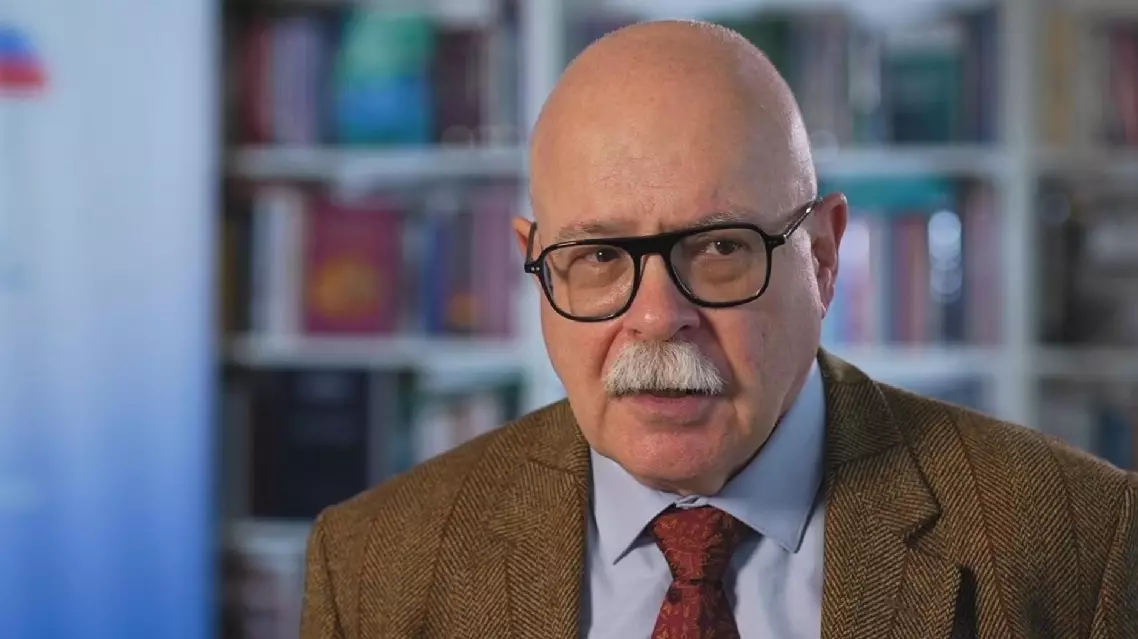
Russian experts expect little breakthrough from Russia-U.S.-Ukraine talks in Abu Dhabi