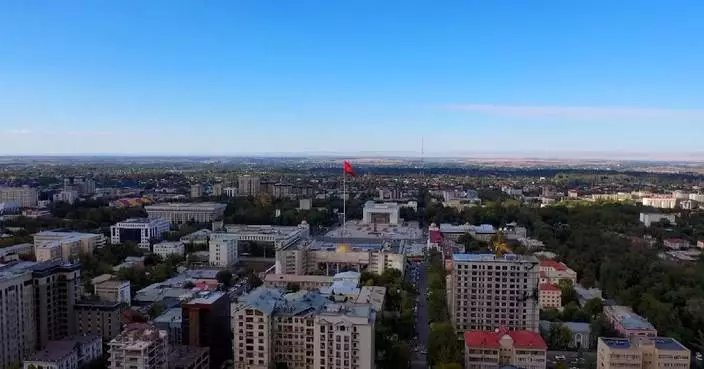
Russian President Vladimir Putin arrived at the meeting venue on Monday afternoon for meeting with Chinese President Xi Jinping in Bishkek, Kyrgyzstan.
Xi arrived in Bishkek on Sunday for the Shanghai Cooperation Organization (SCO) Summit 2026 and a state visit to Kyrgyzstan at the invitation of Kyrgyz President Sadyr Japarov.

Putin arrives for meeting with Xi
A China-Kyrgyzstan joint archaeological team has recently uncovered evidence of the two countries' shared history along the ancient Silk Road through excavations at the Krasnaya Rechka site in Kyrgyzstan.
Excavations at the site have yielded a batch of valuable cultural relics dating to around the 10th century AD, shedding light on how different cultures blended along the ancient Silk Road. "Our archaeological work officially started in Kyrgyzstan in 2018. Based on our preliminary research, the Chu river valley is a key area where many archaeological sites are distributed. The cities of Suyab, New City (Krasnaya Rechka site) and Talas, frequently mentioned in Chinese literature, are all related to the Chu river valley in Kyrgyzstan. Therefore, we selected the New City site for our archaeological work," said Shao Jing, deputy director of the Shaanxi Provincial Institute of Archaeology.
The Krasnaya Rechka site, located in Kyrgyzstan's Chui Region and covering an area of approximately 20 square kilometers, is known as New City as recorded in medieval Chinese and foreign documents.
After five years of systematic excavations, the joint archaeological team has made significant discoveries at important locations, such as Buddhist temples and city walls.
Among the findings were a batch of valuable artifacts from around the 10th century AD, which highlight the blending of diverse cultures along the ancient Silk Road. The discoveries provide important physical evidence for studying the interaction and integration among oasis civilization, steppe civilization and Central Plains civilization.
During the medieval period, Sogdian merchants traveled through the Chui Region to reach the East, while the Tang Dynasty (618-907) established the ancient city of Suyab, spreading advanced Central Plains technology and culture deep into Central Asia.
The joint excavations have also further fostered inter-civilization mutual learning and strengthened the deep-rooted friendship between the two countries. "In recent years, we have brought relatively mature technologies, methods and theories from China to Kyrgyzstan, including archaeology methods for settlement sites, city site excavation techniques, advanced surveying and mapping technologies, as well as remote sensing technologies. These methods and technologies have facilitated the presentation of some very important archaeological findings at the New City site. We have also demonstrated the crucial interconnectedness of the Silk Road from its origin to its course with archaeological evidence," said Shao.
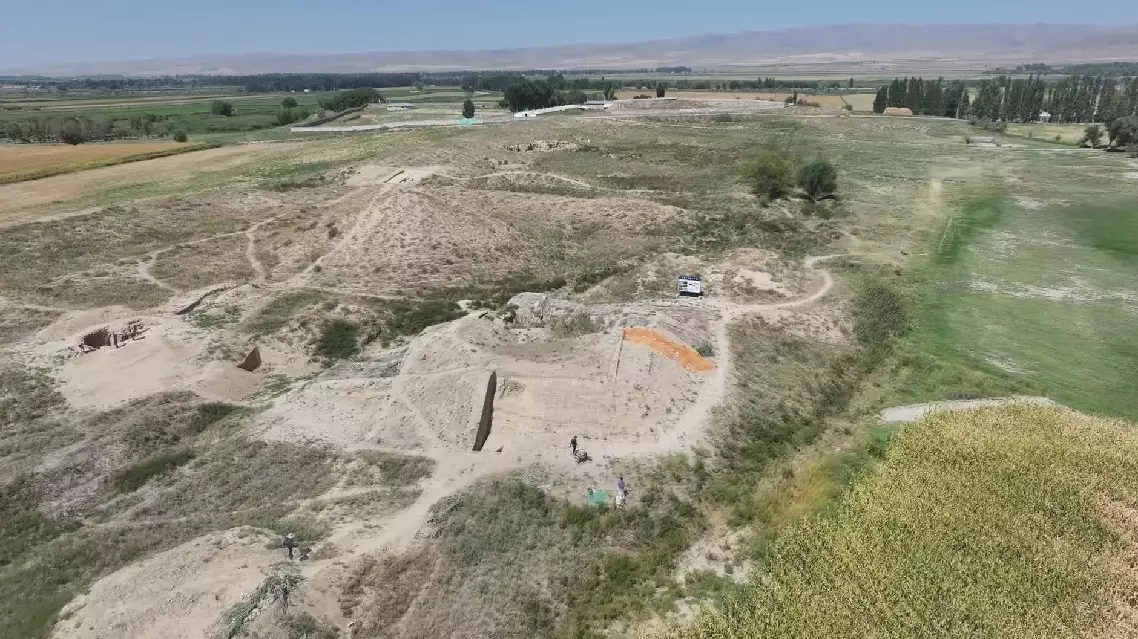
Chinese, Kyrgyz archaeologists uncover shared history along ancient Silk Road